
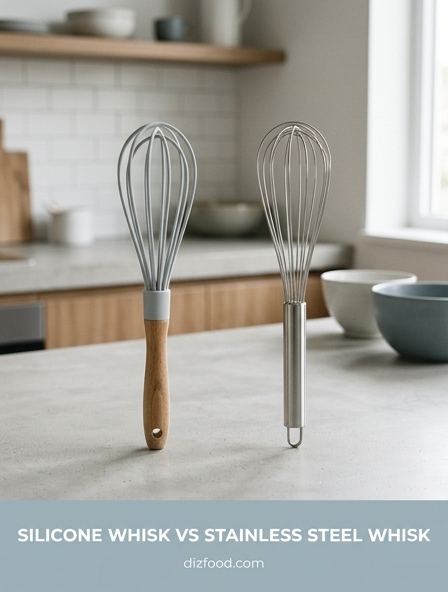
Choosing between a silicone and a stainless steel whisk often comes down to a balance between protecting your cookware and achieving professional-level aeration. If you frequently cook with non-stick pans or ceramic coatings, a silicone-coated whisk is an essential investment to prevent surface scratches and extend the life of your kitchenware. However, for chefs who prioritize speed and precision, the rigid, thin wires of a traditional stainless steel whisk are unbeatable for whipping egg whites into stiff peaks or creating seamless emulsions. While silicone offers a gentler touch and colorful aesthetics, stainless steel remains the high-durability standard for heavy-duty mixing and high-heat stovetop cooking. Understanding how these materials interact with your bowls and ingredients ensures you'll always have the right tool for everything from delicate sauces to dense batters.
| Feature | Silicone Whisk | Stainless Steel Whisk |
|---|---|---|
| Cookware Safety | Safe for non-stick, ceramic, and copper. | Can scratch or strip non-stick coatings. |
| Heat Resistance | High (typically up to 450°F / 230°C). | Excellent; unaffected by extreme heat. |
| Aeration Power | Moderate; thicker wires move less air. | Superior; thin, rigid wires create more volume. |
| Durability | Coating may peel or crack over time. | Highly durable; rust-resistant (18/10 steel). |
| Cleaning | Dishwasher safe; prevents food sticking. | Dishwasher safe; susceptible to hard water spots. |
| Best For | Deglazing non-stick pans and roux. | Meringues, whipped cream, and heavy batters. |
Choosing the Best Material for Your Kitchen Whisk
Selecting the right whisk material is a foundational decision for any home cook or professional chef. The debate primarily centers on stainless steel and silicone-coated wires, each offering distinct advantages depending on the culinary environment. Stainless steel has long been the industry standard, prized for its rigidity, precision, and ability to cut through heavy batters. Its thin wires are ideal for creating high-volume foams and emulsions. On the other hand, silicone whisks have gained massive popularity alongside the rise of nonstick cookware, providing a protective barrier that prevents scratches and preserves the longevity of expensive pans.
When choosing between these two, consider the following primary factors:
- Cookware Compatibility: Metal can damage Teflon or ceramic, while silicone is safe for all surfaces.
- Task Intensity: Heavy doughs require the stiffness of steel, whereas light stirring is suited for silicone.
- Tactile Feedback: Metal provides a clearer "feel" of the bowl's bottom, allowing for better control during deglazing.
- Aesthetic and Comfort: Silicone often comes in various colors and features ergonomic handles that reduce hand fatigue.
Ultimately, the "best" material is not universal; it is subjective to the tools already present in your kitchen. A kitchen equipped with cast iron and stainless steel pots may never require a silicone whisk, while a modern kitchen filled with nonstick surfaces would find a metal whisk destructive. Understanding these material properties ensures that your whisk complements your existing toolkit rather than hindering your cooking process.
Durability and Longevity of Metal Versus Silicone
In terms of pure longevity, stainless steel whisks generally outperform their silicone-coated counterparts. High-quality stainless steel is resistant to warping, snapping, and significant bending under pressure. The wires are usually anchored deeply into the handle, allowing the tool to withstand years of vigorous whipping without losing its structural integrity. Because steel is a single, solid material, there is no outer layer to peel or degrade over time, making it a "buy it for life" item for many enthusiasts.
Silicone whisks, while durable in their own right, face different wear-and-tear challenges. The core of a silicone whisk is typically metal, which is then encased in a silicone sheath. Over years of use, especially if exposed to sharp edges or high-heat cycles in the dishwasher, the silicone coating can nick, crack, or begin to peel away from the internal wire. Once the inner wire is exposed, the whisk loses its non-scratch properties and can become a hygiene concern if food particles get trapped between the layers. However, high-grade, BPA-free silicone is remarkably resilient to staining and odors, ensuring it stays looking new for longer than plastic alternatives. For maximum durability, users should inspect silicone whisks regularly for signs of "shedding" or cracks in the coating.
Best Whisk for Nonstick Pots and Pans
The primary selling point for silicone whisks is their total safety when used with nonstick, ceramic, or seasoned surfaces. Traditional stainless steel whisks have sharp, hard edges that can easily gouge the delicate PTFE or ceramic coatings found on modern cookware. Even a single session of vigorous whisking with metal can leave permanent micro-scratches that cause food to stick and eventually lead to the coating flaking off into your meals. Consequently, silicone is the undisputed winner for maintaining the integrity of nonstick pans.
| Cookware Type | Recommended Whisk | Risk Level |
|---|---|---|
| Teflon / Nonstick | Silicone | High (Metal Scratches) |
| Ceramic | Silicone | Moderate (Metal Scuffing) |
| Stainless Steel | Metal or Silicone | Low (Surface is Durable) |
| Cast Iron | Metal | Low (Helps Scrape Bits) |
| Copper | Silicone | Moderate (Aesthetic Scratches) |
While silicone is the safest choice for protection, it is worth noting that some cooks prefer "nylon" whisks. However, silicone is generally superior to nylon because it is softer and has a higher heat threshold. When making a roux or a delicate custard in a nonstick saucepan, the soft glide of silicone ensures that you can reach the corners of the pan without any abrasive noise or structural damage to the vessel.
Heat Resistance and Safety Standards Compared
Heat resistance is a critical safety factor when choosing kitchen tools. Stainless steel is essentially impervious to standard kitchen temperatures, with a melting point far exceeding anything achievable on a home stove. However, steel is a highly efficient thermal conductor. If a metal whisk is left resting in a hot pot of boiling sugar or thick gravy, the handle can become dangerously hot to the touch very quickly, necessitating the use of an oven mitt or resulting in a burn.
Silicone whisks are designed to be heat-resistant rather than heat-proof. Most high-quality food-grade silicone can withstand temperatures up to 450°F or 500°F (230°C to 260°C). This is more than sufficient for most stovetop tasks like making sauces or tempering eggs. Unlike plastic or nylon, silicone will not melt or leach chemicals into food at these temperatures. Furthermore, silicone acts as an insulator; even if the wires are submerged in a boiling liquid, the silicone-coated handle or the material itself remains relatively cool to the touch, providing a safer user experience. It is important to verify that the whisk is made of "100% Food Grade Silicone" to ensure it does not contain fillers that could off-gas or melt at lower temperatures. For high-heat candy making, metal is often preferred for its absolute temperature stability, but for daily cooking, silicone offers a balanced safety profile.
Aeration Efficiency and Wire Flexibility Differences
The efficiency of a whisk is largely determined by the thickness and flexibility of its wires. Stainless steel whisks typically feature very thin, high-tension wires. These thin wires are superior at cutting through liquids and air, making them exceptionally efficient for aeration. When whipping egg whites into a meringue or heavy cream into stiff peaks, the resistance of the thin metal wires creates more turbulence, trapping air bubbles faster and more effectively than thicker alternatives.
Silicone whisks have inherently thicker wires because the metal core must be wrapped in a layer of silicone. This increased diameter creates more drag as the whisk moves through the liquid. While this is helpful for emulsifying vinaigrettes or stirring a thick roux where "scraping" the bottom is more important than "lifting" air, it makes the whisk less effective for high-volume tasks. Furthermore, silicone wires tend to be more flexible and "floppy." While this flexibility allows the whisk to conform to the curves of a bowl, it lacks the "spring-back" force required to move heavy batters. If you find yourself frequently making sponges, soufflés, or meringues, the rigidity and sharpness of a stainless steel whisk will significantly reduce the physical effort and time required to achieve the desired consistency.
Cleaning and Dishwasher Safety Guidelines
Maintaining hygiene is straightforward for both materials, but they require different considerations. Most stainless steel whisks are completely dishwasher safe. Because they are made of a single material, they can withstand high-pressure water jets and high-heat drying cycles without risk of warping. However, the point where the wires meet the handle can sometimes be a "trap zone" for dried batter or egg remnants. Users should look for "sealed" handles that prevent water and food from entering the hollow handle, which could lead to internal mold growth over time.
Silicone whisks are also generally labeled as dishwasher safe, but they benefit from occasional hand washing. The porous nature of some lower-quality silicone can occasionally absorb strong odors (like garlic or onion) or retain a "soapy" film if the dishwasher detergent is too aggressive. One specific advantage of silicone is its non-stick property; dried sauces often slide right off the smooth coating compared to the way they might "glue" themselves to thin metal wires. To ensure a deep clean, follow these steps:
- Rinse the whisk immediately after use to prevent drying.
- Use a small brush to clean the junction where wires cross.
- Check the handle for water ingress after a dishwasher cycle.
- Store in a vertical crock to allow any trapped moisture to drain out.
Rust Prevention and Bacteria Resistance Factors
Hygiene in the kitchen is paramount, and the choice of whisk material plays a role in preventing contamination. Stainless steel is naturally rust-resistant, but it is not entirely rust-proof. Lower-grade steel (often labeled as 18/0) can develop pits or rust spots if left soaking in water or exposed to acidic foods for prolonged periods. For maximum protection, cooks should seek out 18/10 stainless steel, which contains a higher nickel content to prevent corrosion. Steel is non-porous, meaning it does not harbor bacteria once cleaned and dried correctly.
Silicone is also non-porous and naturally resistant to the growth of bacteria, mold, and mildew. It does not react with acidic foods, meaning it won't impart a metallic taste to a lemon curd or tomato sauce. However, the safety of a silicone whisk depends heavily on the integrity of its coating. If the silicone cracks, it creates a dark, moist environment between the coating and the metal core where bacteria can flourish unseen. Therefore, while silicone is excellent for hygiene, its lifespan is shorter than steel because any structural damage necessitates immediate replacement. In a professional setting where tools are subjected to constant sanitization, stainless steel is often favored for its ability to withstand harsh chemical sanitizers without any risk of material breakdown.
Ergonomic Grip and Weight Distribution Comparison
The comfort of a whisk can change the entire cooking experience, especially during labor-intensive tasks like hand-whipping mayonnaise. Stainless steel whisks often have a more traditional "weighty" feel. This weight can be an advantage, as the gravity of the tool helps it stay submerged in thick mixtures. However, many basic metal whisks have thin, slippery metal handles that can be difficult to grip if your hands are wet or oily. This often leads to hand cramping during long mixing sessions.
Silicone whisks are frequently designed with ergonomics in mind. They often feature bulkier, soft-touch handles made of silicone or rubber, which provide a non-slip grip and a more natural fit for the palm. The weight distribution in silicone whisks is typically more balanced toward the handle, making the tool feel lighter and more maneuverable. For elderly cooks or those with arthritis, the vibration-dampening properties of a silicone handle can be significantly more comfortable than the rigid feedback of a full-metal tool. When comparing the two, consider the "balance" point; a well-designed whisk should not feel "head-heavy," which causes it to flip out of small bowls when left resting against the rim.
Culinary Tasks Best Suited for Each Whisk
Different kitchen tasks demand different tool properties. Stainless steel and silicone are not interchangeable if you are aiming for culinary perfection. Metal whisks excel in tasks where precision, speed, and aeration are the goals. Conversely, silicone is the workhorse for heat-sensitive, surface-sensitive, and emulsification tasks. Choosing the right tool for the job prevents frustration and ensures the best possible texture in your finished dish.
- Use Stainless Steel For:
- Whipping egg whites for meringues or soufflés.
- Creating whipped cream with stiff peaks.
- Mixing heavy bread or pancake batters where resistance is high.
- Sifting and aerating dry ingredients like flour and cocoa powder.
- Use Silicone For:
- Stirring a roux or gravy in a nonstick skillet.
- Gently folding ingredients to prevent over-mixing.
- Whisking delicate custards or lemon curds over direct heat.
- Scraping the bottom and sides of a pan to prevent scorching.
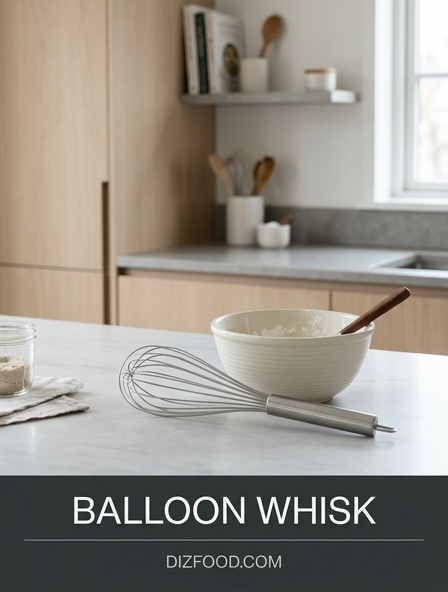
By delegating tasks based on material strengths, you prolong the life of your whisks and your cookware. For example, using a silicone whisk for a meringue is possible, but it will take significantly more time and physical effort than using the thin, sharp wires of a balloon-style stainless steel whisk.
Making the Final Choice for Your Cooking Style
Deciding between a silicone and a stainless steel whisk ultimately depends on your personal kitchen setup and the types of recipes you frequent. There is no need to limit yourself to just one; in fact, most well-equipped kitchens benefit from having both. If you are a baker who focuses on cakes, pastries, and breads, a high-quality stainless steel balloon whisk is an essential investment that will serve you for decades. Its ability to incorporate air and break up clumps is unmatched by silicone versions.
However, if your cooking style involves a lot of stovetop sauce making, stovetop puddings, or sautéing in nonstick pans, the silicone whisk is the more practical daily driver. It offers peace of mind by protecting your cookware and provides a quieter, more comfortable experience. When shopping, look for the following "gold standards": for metal, look for 18/10 stainless steel with a sealed handle; for silicone, look for a thick, high-heat rated coating with a sturdy internal core. If you must choose only one, evaluate your most expensive piece of cookware. If that piece is a nonstick pan, go with silicone. If you primarily use stainless steel or cast iron pots, the versatility and efficiency of a classic metal whisk make it the superior choice for your culinary endeavors.


Comments