
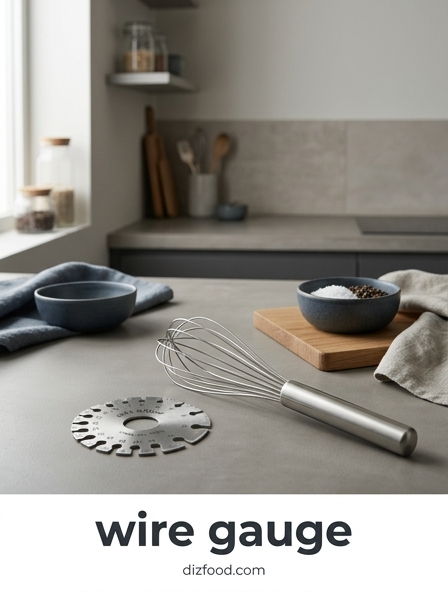
Understanding Wire Gauge Fundamentals
In the culinary world, the thickness of a wire, known as its gauge, is a critical specification for whisks, strainers, and cooling racks. Wire gauge is typically measured using the American Wire Gauge (AWG) system or in millimeters. Unlike standard measurements, a higher gauge number indicates a thinner wire, while a lower number signifies a thicker, more robust strand. In a kitchen setting, most professional whisks utilize stainless steel wires ranging from 12-gauge to 22-gauge. Understanding these fundamentals allows chefs to predict how a tool will interact with various ingredients under mechanical stress.
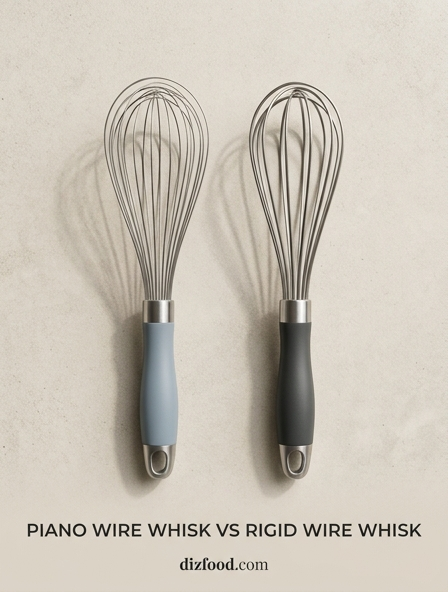
Thicker wires provide the rigidity necessary for moving heavy masses, whereas thinner wires offer the spring-like flexibility required for high-velocity aeration. This measurement affects not just the durability of the tool, but also the kinetic energy transferred to the food during the mixing process. When selecting equipment, one must consider the tensile strength and the resistance offered by the gauge to ensure the tool does not permanently deform. Mastering the nuances of wire thickness is the first step in achieving consistent results in professional food preparation.
Impact of Wire Flexibility on Aeration
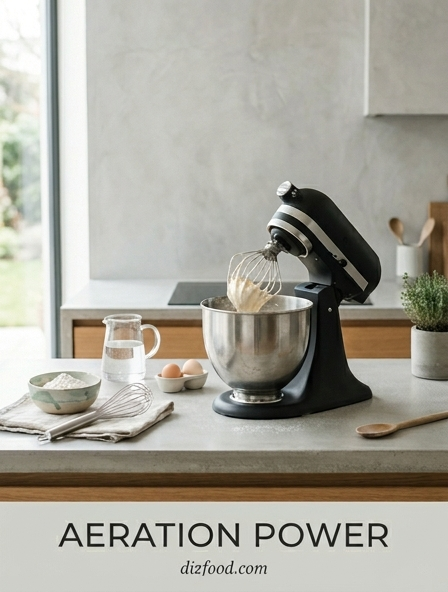
The flexibility of a wire is directly inversely proportional to its gauge thickness. When a chef uses a high-gauge, thin-wire whisk, the wires vibrate and oscillate as they move through a liquid. This rapid movement is essential for aeration, the process of incorporating air into a substance to increase its volume and lighten its texture. As the thin wires snap back into position, they create micro-turbulences that trap tiny air bubbles within the protein structures of egg whites or the fat globules of heavy cream.
- High flexibility allows for faster wrist movement without excessive fatigue.
- Thin wires slice through liquid with minimal resistance, increasing the stroke rate.
- Vibrational energy helps break surface tension more effectively than rigid tools.
Without sufficient flexibility, a whisk acts more like a paddle, pushing the liquid rather than folding air into it. This is why a balloon whisk, designed specifically for meringues and whipped creams, almost exclusively utilizes thin-gauge wires. The spring-back action ensures that the maximum amount of air is introduced with every rotation, leading to superior lift and a lighter finished product.
Thick Wires for Heavy Emulsions
Heavy emulsions and thick sauces require a tool that can withstand significant resistance without bending out of shape. Thick-gauge wires, typically ranging from 12 to 15 AWG, are preferred for these tasks because they possess the structural integrity to move dense fluids. When preparing a mayonnaise or a thick hollandaise, the whisk must provide enough force to break oil droplets into smaller particles while simultaneously moving the entire mass of the sauce. A thin, flexible whisk would simply "chatter" or bend, failing to provide the necessary shear force.
| Gauge Type | Typical Use Case | Viscosity Range |
|---|---|---|
| 12-14 AWG | Bread doughs, thick batters | High |
| 15-16 AWG | Custards, heavy sauces | Medium-High |
| 18+ AWG | Vinaigrettes, foams | Low |
The rigidity of a thick-gauge wire ensures that the energy from the chef's arm is transferred directly into the emulsion. This prevents the "paddling" effect where the tool yields to the liquid's resistance, ensuring a homogenous mixture even when working with ingredients of varying densities and high viscosities.
Achieving Silky Mouthfeel with Thin Gauges
The texture of a finished dish is often a reflection of the tool used to create it. Thin-gauge wires are instrumental in achieving a silky, refined mouthfeel, particularly in delicate desserts and light sauces. Because thin wires create smaller air bubbles, the resulting foam or emulsion is much finer. Large bubbles created by thick wires tend to be unstable and can lead to a coarse, grainy texture as they pop. In contrast, the micro-bubbles generated by high-gauge wires are more evenly distributed, creating a smooth and uniform consistency.
This is especially vital when working with molecular gastronomy techniques or traditional French pastry. When a sauce is passed through a fine-mesh chinois, or a sabayon is whipped to perfection, the diameter of the wire dictates the refinement of the final product. Thinner wires allow for a delicate touch, ensuring that the structure of the ingredient-be it a protein or a lipid-is manipulated precisely. By choosing a high-gauge tool, the chef ensures that the friction generated does not overheat the product, preserving the integrity of heat-sensitive emulsions while providing a luxurious, velvety finish.
Physics of Shear Force in Whisking
Shear force is the force that acts coplanar with a cross-section of a material, and in whisking, it is what breaks down droplets and incorporates air. The physics of this process is heavily influenced by wire gauge. A thinner wire has a smaller leading surface area, which allows it to "cut" through the liquid with higher precision. This concentrated force increases the shear rate at the point of contact. According to fluid dynamics, as the wire moves through the fluid, it creates a velocity gradient; the thinner the wire, the steeper this gradient becomes at the wire's surface.
- Shear stress breaks internal bonds of viscous liquids.
- Lower drag coefficients in thin wires allow for higher velocities.
- Concentrated pressure points aid in the rapid dispersion of solids.
Conversely, a thicker wire creates more drag and moves a larger volume of liquid at once, which is better for mass displacement but less efficient for high-shear tasks. The physics of the whisking motion dictates that for stable emulsions, the shear force must be high enough to overcome the surface tension of the dispersed phase. Therefore, the selection of gauge is a deliberate choice in managing the mechanical energy required to transform liquid ingredients into stable, structured systems.
Comparing French and Balloon Whisk Gauges
The primary difference between a French whisk and a balloon whisk lies in their shape and the gauge of the wires used in their construction. A balloon whisk features a wide, rounded head often made with thinner, more numerous wires. This design is optimized for horizontal movement and maximum air incorporation, making it the ideal tool for aerating light liquids. The high-gauge wires provide the necessary "give" to bounce off the bottom of a bowl, ensuring every drop of liquid is agitated.
In contrast, the French whisk is characterized by a narrower, elongated profile and thicker-gauge wires. This tool is designed for precision and reaching into the corners of pots and pans. Because the wires are thicker, they offer more resistance, which is essential for stirring thick sauces like Béchamel or roux over a heat source. While the balloon whisk excels in volume, the French whisk excels in control and durability. Choosing between them requires an understanding of whether the recipe demands the high-velocity aeration of a thin gauge or the heavy-duty blending power of a thicker, more rigid wire gauge.
Optimizing Tension for Stable Emulsification
The stability of an emulsion depends on the consistent breakdown of fats and their suspension in a continuous phase. The tension of the wires within a whisk head, determined by the gauge and the spacing, plays a pivotal role in this stability. If the wires are too loose or too thin, they may not provide enough impact to shatter fat globules effectively. However, if they are too rigid, they may overwork the protein bonds, causing the emulsion to break or "weep" over time.
Optimizing tension involves selecting a gauge that balances resistance with recovery. For a stable vinaigrette or a hollandaise, a medium-gauge wire provides enough tension to create a high-energy collision between the oil and water phases. This mechanical action, when performed at the correct speed, ensures that the emulsifiers can coat the droplets before they coalesce. The spatial arrangement of these wires also matters; a well-tensioned whisk ensures that the wires do not clump together under the weight of the sauce, maintaining the surface area necessary for a permanent, stable bond between disparate ingredients.
The Role of Surface Area in Texture
Surface area is a fundamental concept in culinary physics, particularly regarding how wire gauge influences the contact points between the tool and the food. A whisk composed of many thin-gauge wires actually has a higher total surface area than a whisk with fewer thick wires of the same total weight. This increased surface area means that with every stroke, more of the liquid is being touched and manipulated by the metal. This is highly beneficial for creating fine-textured foams, as more wires mean more sites for air entrapment.
However, surface area also affects the amount of "clinging" that occurs. Thick-gauge wires have more surface area per individual strand, which can cause heavy batters to stick to the tool, making mixing more difficult and cleaning more tedious. In professional kitchens, the goal is to match the total surface area of the tool to the desired granularity of the food. For smooth, lump-free gravies, a moderate number of medium-gauge wires provides the best balance, ensuring enough contact to break down flour clumps without the excessive drag that leads to inefficient mixing and textured inconsistencies.
Matching Gauge to Ingredient Viscosity
Selecting the correct wire gauge is a matter of matching the tool's mechanical strength to the viscosity of the ingredients. Viscosity, or a fluid's resistance to flow, dictates how much force is required to move the tool through the medium. If a chef uses a thin-gauge whisk in a high-viscosity mixture like bread dough or thick fudge, the wires will likely splay or snap. Conversely, using a thick-gauge whisk in a low-viscosity liquid like egg whites is inefficient and will result in a poor volume increase.
- Low Viscosity (Water, Milk, Whites): High-gauge (thin) wires for maximum speed.
- Medium Viscosity (Cream, Light Batters): Standard-gauge wires for balanced control.
- High Viscosity (Heavy Batters, Pan Sauces): Low-gauge (thick) wires for structural integrity.
By analyzing the thickness of the ingredients before starting, a chef can select the tool that provides the most efficient energy transfer. This matching process reduces the physical effort required and ensures the ingredients are processed at the optimal rate for their specific chemical properties, leading to better consistency and flavor development.
Selecting Durable Gauges for Professional Results
In a high-volume professional kitchen, durability is just as important as performance. Wire gauge is a primary indicator of how long a tool will last under constant use. Thicker-gauge wires are inherently more durable, resisting the bending and snapping that often occurs with cheaper, consumer-grade whisks. Professional-grade whisks often feature reinforced handles where the wires are sealed with epoxy to prevent moisture from weakening the metal at the base. A lower-gauge wire is less likely to suffer from metal fatigue, which occurs after thousands of cycles of bending and returning to shape.
When selecting tools for professional results, it is often wise to invest in a variety of gauges. While a 20-gauge balloon whisk is perfect for occasional meringues, a 14-gauge French whisk is the workhorse for daily sauce production. Stainless steel is the industry standard material because it maintains its gauge integrity even after repeated exposure to acidic ingredients and high-temperature dishwashers. By prioritizing high-quality construction and appropriate wire thickness, chefs ensure that their tools remain reliable, maintaining the precision required for world-class culinary execution over years of service.



Comments