
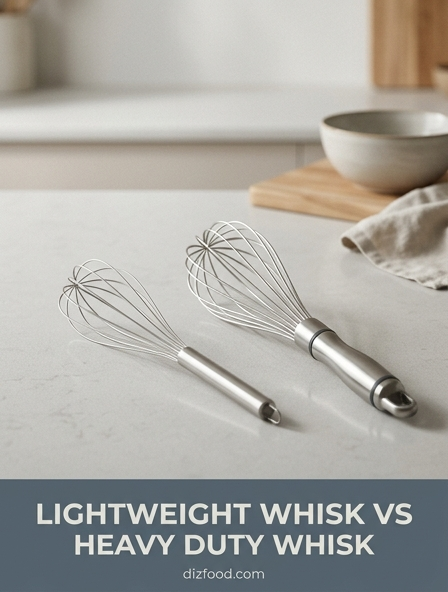
Ever wondered why your pancakes sometimes turn out dense despite following the recipe to a tee? The secret often lies in the mechanical tension of your tools: the debate between a lightweight whisk and a heavy-duty whisk isn't just about hand comfort, but about the science of aeration and resistance. Lightweight whisks, characterized by thin, flexible wires, are the masters of incorporating air, making them indispensable for achieving cloud-like textures in meringues and delicate sponges. On the other hand, heavy-duty whisks feature thick, rigid tines designed to power through high-viscosity batters-like brownies or thick ganache-where a flimsy wire would simply fail to move the mass. Choosing the right weight ensures you either preserve those precious air bubbles or achieve a perfectly homogenous, lump-free emulsion without straining your wrist.
| Feature | Lightweight Whisk | Heavy Duty Whisk |
|---|---|---|
| Wire Gauge | Thin, flexible stainless steel | Thick, rigid reinforced steel |
| Primary Goal | Maximum aeration & loft | Structural mixing & shearing |
| Best Textures | Fluffy, airy, and delicate | Dense, smooth, and uniform |
| Ideal Ingredients | Egg whites, cream, thin crepes | Bread dough, thick batters, roux |
| Agitation Power | High frequency, low resistance | Low frequency, high torque |
| Durability | Prone to bending under weight | Industrial strength; warp-resistant |
Lightweight vs Heavy Duty Whisk Comparison
Understanding the fundamental differences between a lightweight whisk and its heavy-duty counterpart is essential for any well-equipped kitchen. At first glance, both tools share the iconic balloon or French shape, but their mechanical properties differ significantly. A lightweight whisk typically features thinner gauge stainless steel wires that offer high flexibility, allowing them to vibrate and move independently with minimal force. These are designed for tasks where aeration is the primary goal, such as whipping egg whites or creating a light foam.
In contrast, heavy-duty whisks are constructed with thick, rigid wires that resist bending under pressure. These tools are built for high-viscosity ingredients that would otherwise trap or deform a lighter tool. While a lightweight whisk might feel more agile in the hand, it lacks the structural integrity required for dense culinary tasks. The following table highlights the primary distinctions between these two essential kitchen implements:
| Feature | Lightweight Whisk | Heavy Duty Whisk |
|---|---|---|
| Wire Gauge | Thin and flexible | Thick and rigid | Primary Purpose | Aeration and emulsification | Mixing dense, heavy masses | Handle Grip | Often slim or hollow | Weighted or ergonomic resin | Resistance | Low resistance to movement | High resistance to bending |
Choosing between them involves assessing the physical resistance of the ingredients. Using a lightweight tool for heavy dough will likely result in permanent wire deformation, while using a heavy-duty tool for delicate meringues may result in over-beating or a lack of necessary air incorporation due to the lack of wire vibration.
Performance Benefits of Lightweight Cooking Whisks
The primary advantage of a lightweight cooking whisk lies in its ability to facilitate rapid movement without requiring significant physical exertion from the cook. Because the wires are thinner, they can slice through liquids with very little drag. This efficiency is critical when the goal is to introduce air into a mixture. The "springiness" of the wires allows them to bounce off the sides of a bowl, creating a chaotic motion that is far more effective for creating stable emulsions in vinaigrettes or hollandaise sauces than a rigid tool would be.
Lightweight whisks are often the preferred choice for home cooks and pastry chefs alike when dealing with fluid ingredients. The performance benefits are particularly noticeable in the following scenarios:
- Aerating Proteins: Achieving stiff peaks in egg whites requires a tool that can move fast enough to trap microscopic air bubbles.
- Emulsifying Dressings: The high wire count and flexibility ensure that oil and vinegar are broken down into the smallest possible droplets for a smooth texture.
- Light Batters: Preparing crepe or pancake batter where the goal is a smooth consistency without overworking the gluten.
- Quick Scrambling: Incorporating air into eggs for a fluffy breakfast texture.
Furthermore, these whisks allow for greater tactile feedback. Because the tool is light, the chef can feel the changing viscosity of a sauce as it thickens over heat, providing a level of sensory control that a heavy, cumbersome tool cannot offer. This makes the lightweight whisk an indispensable instrument for precision-based cooking tasks.
Why Professionals Use Heavy Duty Whisks
In a professional kitchen environment, tools are subjected to rigorous use that would quickly destroy standard consumer-grade equipment. Professional chefs often reach for heavy-duty whisks because they provide the necessary leverage to move large volumes of food. When preparing a five-gallon batch of thick béchamel or a dense chocolate ganache, the resistance provided by the ingredients is immense. A heavy-duty whisk features wires that are often reinforced at the base with epoxy or specialized welds, ensuring they do not pull out of the handle when submerged in thick mixtures.
Reliability is the cornerstone of professional kitchen gear. A heavy-duty whisk is less likely to suffer from "wire splay," a common issue where the loops of the whisk become permanently bent or entangled. In high-pressure environments, the extra weight of the tool actually assists the chef by using gravity and momentum to help push through the resistance of a heavy batter. This reduces the need for the chef to apply downward pressure manually, allowing the tool to do the majority of the work.
Moreover, these whisks are built to withstand extreme temperatures. Whether they are being used to stir a boiling sugar syrup or a cold, stiff buttercream, the thicker steel retains its shape and structural integrity. For the professional, the heavy-duty whisk is not just a mixing tool; it is a durable piece of machinery designed to perform consistently shift after shift without failure.
Choosing the Right Whisk for Thick Batters
When working with thick batters, such as those for muffins, brownies, or certain types of bread, the choice of whisk can be the difference between a successful bake and a broken tool. Thick batters possess high surface tension and internal friction. A lightweight whisk will often "collapse" into itself under these conditions, as the thin wires are forced together by the weight of the batter. This significantly reduces the tool's surface area and its ability to incorporate ingredients evenly.
To choose the right whisk for these demanding tasks, one must look for specific mechanical characteristics. A heavy-duty whisk with a wider wire spacing is often ideal for thick batters because it allows the mixture to flow through the tool rather than getting stuck inside the wire cage. Consider these factors when selecting a tool for high-density mixing:
- Wire Diameter: Look for a diameter of at least 2.0mm to ensure the wires do not bend during the mixing process.
- Handle Attachment: Ensure the handle is sealed and the wires are deeply embedded to prevent the tool from snapping at the neck.
- Material Stiffness: High-carbon stainless steel offers the best balance of strength and rust resistance for heavy mixtures.
Using a heavy-duty whisk for thick batters also ensures that dry pockets of flour are properly integrated. The rigid wires act like multiple small spatulas, cutting through the clumps and ensuring a homogenous mixture. This prevents the over-mixing that often occurs when a cook struggles with an inadequate, flimsy whisk, which can lead to tough, gummy textures in the finished baked good.
Precision Baking with Lightweight Wire Whisks
Precision in baking is often synonymous with temperature control and aeration. Lightweight wire whisks are the scalpels of the pastry world. When a recipe calls for "folding" or "gentle whisking," it is usually because the structural integrity of the mixture relies on air bubbles that have already been established. A heavy-duty whisk is too aggressive for these tasks and can easily deflate a delicate mousse or a sponge cake batter. The fine wires of a lightweight whisk allow for a gentle touch that maintains the volume of the mixture.
The design of a lightweight whisk, specifically one with a high number of thin loops, creates more "cutting" surfaces. This is vital when incorporating dry ingredients like sifted cocoa powder or flour into whipped egg whites. The thin wires break up the dry particles without requiring the heavy, sweeping motions that would knock the air out of the proteins. This level of precision is what allows bakers to achieve the ethereal lightness found in soufflés and angel food cakes.
Beyond aeration, these whisks are excellent for precision tempering. When adding hot milk to egg yolks for a custard, a lightweight whisk allows for rapid, continuous movement to ensure the eggs do not scramble. The low mass of the tool means it can be moved with lightning speed using only the wrist, providing the agility necessary to prevent localized overheating. For any task where the texture of the final product depends on the delicate balance of air and liquid, the lightweight whisk is the superior choice.
Structural Differences in Professional Grade Whisks
The structural integrity of a whisk is determined by the quality of its components and the method of its assembly. Professional-grade whisks, particularly heavy-duty models, utilize advanced engineering to ensure longevity. One of the most significant differences is the "tang," or the portion of the wires that extends into the handle. In cheap, lightweight versions, the wires may only be glued or lightly crimped. Professional models often feature a full-length tang that is encased in a high-temperature epoxy or silicone, creating a waterproof seal that prevents bacteria from growing inside the handle.
Another key structural difference is the gauge of the stainless steel. Standard whisks might use 18/8 stainless steel, which is fine for occasional home use. However, professional-grade heavy-duty whisks often employ 18/10 stainless steel or specialized alloys that provide a higher "yield strength." This means the wires can be bent significantly during a heavy mix and still return to their original shape without permanent deformation.
- Encapsulated Handles: Prevents liquid and food particles from entering the handle, ensuring hygiene and durability.
- Knurled Grips: Professional handles often have a textured surface to provide a secure grip even when hands are wet or oily.
- Reinforced Loops: Some heavy-duty whisks feature a central wire or a smaller internal coil to provide additional structural support.
Furthermore, the spacing of the wires is mathematically determined in professional tools to maximize efficiency. In a heavy-duty whisk, the loops are usually spaced further apart to prevent thick substances from clogging the head. In a precision lightweight whisk, the wires are more numerous and closer together to maximize the surface area for air entrapment. These structural nuances are what define the tool's functionality and its lifespan in a high-volume kitchen.
Hand Fatigue and Kitchen Whisk Weight
Hand fatigue is a serious consideration for anyone spending significant time in the kitchen. The weight of a whisk, combined with the resistance of the food being mixed, can lead to repetitive strain injuries or simple muscle exhaustion. Lightweight whisks are specifically designed to mitigate this risk. By keeping the center of gravity closer to the handle and reducing the overall mass, these tools allow the user to whisk for longer periods with less strain on the wrist and forearm. This is particularly important for tasks like making handmade mayonnaise, which requires several minutes of constant, rapid motion.
However, weight is not always a negative factor. In certain contexts, a heavy-duty whisk's weight can be an asset. When mixing a large pot of thick oatmeal or polenta, a heavier whisk provides momentum. Once the tool is in motion, its own mass helps it continue through the thick liquid, meaning the cook doesn't have to exert as much force for every single rotation. It is about matching the weight of the tool to the duration and intensity of the task.
To minimize hand fatigue, users should look for ergonomic handle designs. Many heavy-duty whisks now feature "soft-touch" or contoured handles made of nylon or silicone. These materials absorb some of the vibration and pressure that would otherwise be transferred directly to the user's joints. When selecting a whisk, it is important to consider the balance: a tool that is too top-heavy will cause the wrist to wobble, while one that is too bottom-heavy will feel sluggish. A well-balanced whisk, regardless of its weight class, should feel like a natural extension of the arm.
When to Upgrade to a Heavy Duty Whisk
Many home cooks begin their culinary journey with a single, standard lightweight whisk. While this is sufficient for basic tasks, there are specific signs that indicate it is time to upgrade to a heavy-duty model. The most obvious sign is tool failure. If the wires of your current whisk are starting to pull out of the handle, or if they have become permanently warped into an asymmetrical shape, the tool is no longer performing at its peak. This usually happens when the whisk is pushed beyond its intended capacity by thick doughs or heavy sauces.
Another reason to upgrade is an increase in cooking volume or frequency. If you find yourself doubling or tripling recipes, the resistance of the ingredients grows exponentially. A heavy-duty whisk will handle these larger batches with ease, saving you time and physical effort. Consider an upgrade if you regularly perform the following tasks:
- Preparing large quantities of thick pudding or custard.
- Mixing heavy batters for artisan breads or dense cakes.
- Stirring large pots of soups or stews that contain heavy solids.
- Using the whisk in high-heat applications where plastic-handled light whisks might melt.
Upgrading to a professional-grade heavy-duty whisk is an investment in both your kitchen's efficiency and your own comfort. While they may cost more initially, their longevity often means they outlast three or four cheaper lightweight models. For the serious cook, having both options available ensures that the right level of force is always applied to the recipe at hand.
The Versatility of Standard Lightweight Whisks
While heavy-duty whisks get all the credit for strength, the standard lightweight whisk remains the workhorse of the modern kitchen due to its sheer versatility. It is the "everyday" tool that handles 80% of common kitchen tasks. Because it is light and easy to maneuver, it is often the first tool grabbed for a quick task like mixing a few eggs for an omelet or whisking a spoonful of cornstarch into a slurry. Its small footprint and flexibility make it easy to store and easy to clean, often being dishwasher safe without the risk of water getting trapped in a heavy, sealed handle.
The versatility of the lightweight whisk also extends to the types of vessels it can be used in. Because the wires are flexible, they can easily reach into the corners of a flat-bottomed pan or a narrow measuring cup. A rigid heavy-duty whisk is often too wide and stiff for these confined spaces. This makes the lightweight whisk better suited for making quick pan sauces or deglazing a roasting tin.
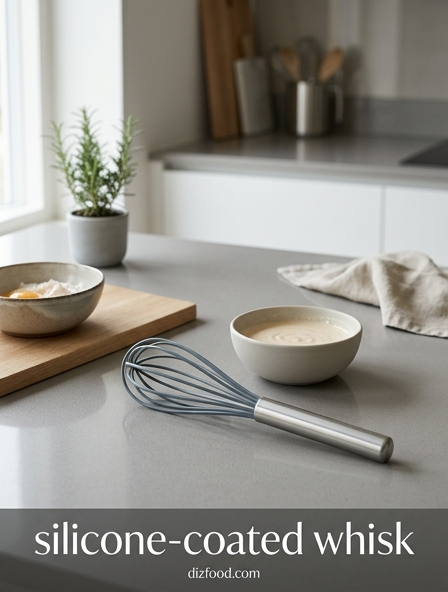
Furthermore, many lightweight whisks are now available with silicone coatings. This allows them to be used on non-stick cookware without scratching the delicate surface. This adaptability-being able to move from a stainless steel mixing bowl to a non-stick skillet-reinforces its position as a necessary tool. For the average cook, a high-quality lightweight whisk provides the perfect balance of agility, ease of use, and multi-functional performance across a wide variety of cooking styles.
Durability Factors for Kitchen Whisk Selection
Durability in a whisk is not just about the thickness of the wires; it is about how the tool reacts to the environment of a kitchen. Heat, moisture, and acidic ingredients can all take a toll on kitchen equipment. When selecting a whisk, the material composition is the first factor to evaluate. 300-series stainless steel is the gold standard for durability because it is highly resistant to rust and corrosion, even when exposed to acidic foods like lemon juice or vinegar. A whisk that rusts at the joints is not only a durability failure but also a food safety hazard.
The method of wire attachment is the second critical factor. In high-durability models, the wires are often fused to the handle using a technique that eliminates gaps. This prevents the "rattle" that develops in cheaper whisks over time as the wires loosen. The following table summarizes the key durability indicators to look for during selection:
| Durability Indicator | What to Look For | Why It Matters |
|---|---|---|
| Material Grade | 18/10 Stainless Steel | Prevents rust and maintains wire tension. |
| Handle Seal | Epoxy or Heat-Shrink | Prevents water ingress and bacteria growth. |
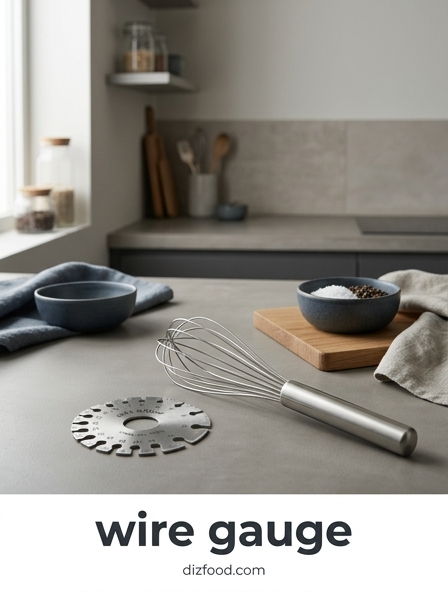
| Wire Thickness | 1.5mm to 2.5mm | Ensures the wires won't snap under pressure. |
| Coating | High-temp Silicone | Protects non-stick pans and resists melting. |
Finally, consider the tool's maintenance requirements. A truly durable whisk should be able to withstand the high temperatures and harsh detergents of a commercial dishwasher without losing its finish or structural bond. By focusing on these durability factors, you ensure that the whisk you select today will remain a reliable part of your kitchen arsenal for years to come, regardless of whether it is a lightweight or heavy-duty model.


Comments