
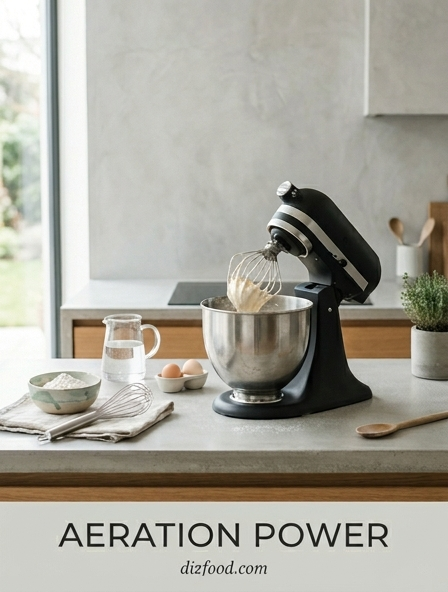
The Science of Aeration in Baking
Aeration is the mechanical process of incorporating gas into a liquid or semi-solid matrix to create volume and lightness. In the context of baking, this typically involves trapping atmospheric air within the structure of egg proteins or fat molecules. When heat is applied in the oven, these microscopic air pockets expand, while the surrounding proteins coagulate or starches gelatinize to set the structure. This transformation is what turns a dense, liquid batter into a porous and delicate sponge cake.
The success of mechanical aeration depends largely on the surface tension of the ingredients. For instance, when whisking egg whites, the physical agitation partially denatures the proteins, allowing them to uncurl and bond together around the air bubbles. This creates a stable foam. However, if any fat is present, it interferes with these protein bonds, preventing the formation of a stable network. Understanding these chemical interactions is essential for any baker looking to master the art of leavening without relying solely on chemical agents like baking powder or yeast.
Selecting the Best Whisk for Maximum Volume
Choosing the right tool for aeration is a balance between physics and ergonomics. The goal is to maximize the amount of air introduced with every stroke while minimizing the physical effort required by the baker. A whisk that is too heavy will cause premature fatigue, leading to an under-aerated mixture, while one that is too flimsy will not provide the necessary resistance to break up the surface tension of the ingredients.
- Number of Wires: Look for whisks with at least 8 to 12 wires to ensure multiple points of contact with the mixture.
- Wire Flexibility: Springy wires move more independently, creating more turbulence and trapping more air.
- Handle Length: A longer handle provides better leverage, which is useful when working with high-viscosity batters.
- Weight Distribution: A balanced whisk ensures that the center of gravity remains near the hand, allowing for faster wrist movement.
Ultimately, the best whisk is one that feels like an extension of your arm, allowing for the rapid, consistent motion required to build a stable foam or emulsion.
How Tine Density Affects Batter Texture
The density of the tines, or wires, on a whisk directly influences the "shear" applied to the batter. High-density whisks, which feature a large number of closely spaced wires, are exceptionally efficient at breaking down lumps and creating a smooth, homogenous mixture. This is particularly important for thin batters, such as those used for crepes or popovers, where a silk-like consistency is paramount. The increased surface area of many wires allows for more simultaneous air-trapping events during a single rotation.
Conversely, a whisk with low tine density is often better suited for thicker mixtures where over-mixing is a concern. Fewer wires mean less agitation, which helps prevent the over-development of gluten in wheat-based batters. If you use a high-density whisk on a heavy muffin batter, you risk creating a tough, rubbery texture. Therefore, matching the tine density to the viscosity and desired final texture of the product is a critical step in the aeration process. By controlling the frequency of the wires, the baker controls the structural integrity of the crumb.
Stainless Steel vs Silicone for Air Incorporation
The material of your whisk affects more than just the longevity of your pans; it plays a subtle role in how air is integrated. Stainless steel is the industry standard for high-performance aeration. The wires can be manufactured to be very thin and sharp, which allows them to cut through liquids with minimal resistance, creating smaller and more numerous air bubbles. This leads to a finer, more stable foam structure.
| Feature | Stainless Steel | Silicone Coated |
|---|---|---|
| Wire Thinness | Very thin; high aeration | Thicker; lower aeration |
| Vibration | High resonance; helps foam | Dampened; less turbulence |
| Surface Grip | Low; slides through liquid | High; better for emulsions |
| Pan Safety | May scratch non-stick | Safe for all coatings |
Silicone whisks, while excellent for protecting non-stick coatings, often have thicker wires due to the coating layer. This thickness increases drag and can result in larger, less stable air bubbles. For maximum volume in meringues or whipped cream, stainless steel remains the superior choice.
The Impact of Whisk Shape on Meringue Stability
Meringue stability is a testament to the relationship between shape and fluid dynamics. The classic balloon whisk, with its wide, rounded head, is specifically designed to maximize the volume of air pulled into egg whites. The bulbous shape allows the wires to reach the bottom and sides of a rounded bowl, ensuring that no un-aerated liquid is left behind. This comprehensive coverage is vital for creating a uniform protein lattice that can support the weight of added sugar.
If a flat or narrow whisk is used, the air is incorporated unevenly, leading to large, unstable bubbles that are prone to popping. A stable meringue requires a high density of small, uniform bubbles. The balloon whisk's geometry promotes this by creating a chaotic flow pattern within the bowl, forcing air into the mixture from multiple angles simultaneously. This mechanical efficiency ensures that the protein strands are evenly stretched and reinforced, resulting in a stiff, glossy peak that holds its shape during the folding and baking processes.
Optimizing Whipping Speed with Ergonomic Handles
Aeration is a time-sensitive process. If whipping is interrupted or slowed down due to hand fatigue, the air bubbles already incorporated may begin to coalesce and escape, leading to a loss of volume. This is why the ergonomics of a whisk handle are not just about comfort, but about the quality of the final product. A well-designed handle allows for a higher "beats per minute" (BPM) without putting undue strain on the wrist and forearm.
Handles with a non-slip, slightly cushioned grip, such as those made from Santoprene or weighted stainless steel, provide better control. The diameter of the handle should also be proportional to the user's hand size; a handle that is too thin requires more grip strength to stabilize, which leads to faster fatigue. By optimizing the interface between the baker and the tool, the speed of aeration can be kept high and consistent. This steady application of kinetic energy is the secret to achieving the maximum theoretical volume in whipped cream and sponges, ensuring the air is trapped before gravity or heat can settle the mixture.
Comparing Balloon and French Whisks for Aeration
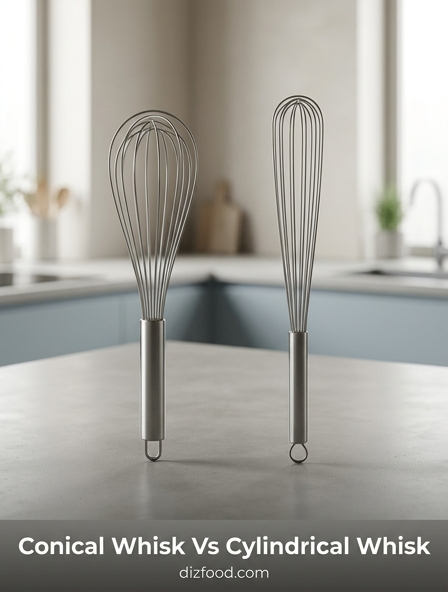
While both are staples in the kitchen, the balloon whisk and the French whisk serve different aeration purposes based on their silhouettes. The balloon whisk features a large, spherical end with flexible wires. It is the primary tool for aeration because its wide diameter allows it to move through a large volume of liquid, incorporating a massive amount of air quickly. It is the gold standard for egg whites and heavy cream.
- Balloon Whisk: Best for high-volume air incorporation and reaching the curves of mixing bowls.
- French Whisk: Narrower and stiffer; best for emulsifying sauces and eliminating lumps in dense liquids.
The French whisk, with its elongated, teardrop shape and stiffer wires, is less about volume and more about precision. It is designed to reach into the corners of straight-sided pans and heavy pots. While it can aerate, it does so more slowly, making it better for tasks where you want to incorporate air controlledly, such as in a thick sabayon or a roux-based sauce where stability is prioritized over sheer loft.
Why Wire Gauge Matters for Fluffy Results
The gauge, or thickness, of the wire used in a whisk determines its "cut" through the ingredients. In the world of aeration, thinner is generally better. A thin-gauge wire has less surface area to push against the liquid, which means it can travel faster with the same amount of force. This high velocity is what shears the air into smaller, more resilient bubbles. If you use a thick-gauge whisk for something delicate like a genoise sponge, the wires act more like paddles, knocking air out rather than folding it in.
However, the wire must also have enough "spring." A wire that is too thin may bend permanently under the weight of the batter, losing its effectiveness. High-quality whisks use high-tensile stainless steel that allows for a thin gauge while maintaining a rigid, springy form. This ensures that the whisk returns to its original shape after every stroke, maintaining a consistent aeration pattern. When shopping for tools, feeling the resistance and snap of the wires will tell you more about the potential fluffiness of your cakes than the brand name will.
The Role of Bowl Geometry in Efficient Mixing
The efficiency of a whisk is halved if it is paired with the wrong bowl. For effective aeration, bowl geometry should complement the whisk's shape. A round-bottomed bowl (cul-de-poule) is ideal for aeration because it allows the whisk to maintain constant contact with the ingredients. There are no "dead zones" where liquid can pool and remain un-whisked. The curvature of the bowl guides the ingredients back toward the center, ensuring that every drop is subjected to the wires.
Flat-bottomed bowls, while stable on the counter, often have a "corner" where the bottom meets the sides. Traditional whisks cannot effectively reach this area, leading to uneven aeration and pockets of unmixed ingredients that can ruin the texture of a cake. Furthermore, the height of the bowl walls matters; high, sloping walls prevent splatter while allowing the user to tilt the bowl and use a vigorous side-to-side motion, which is often more effective for air incorporation than a simple circular motion. Matching the radius of your whisk to the radius of your bowl maximizes every movement.
Essential Maintenance for High Performance Tools
To maintain peak aeration power, a whisk must be kept in pristine condition. Over time, the tension in the wires can slacken, or the points where the wires enter the handle can become loose. This not only poses a hygiene risk but also reduces the tool's efficiency, as loose wires do not vibrate or cut through liquid with the necessary precision. Regular inspection is required to ensure the tool remains a high-performance instrument.
- Cleaning: Always clean the "crown" (the area where wires meet) immediately after use to prevent dried batter from weakening the structure.
- Storage: Avoid cramming whisks into a tight drawer; this can bend the wires and ruin the symmetry of the balloon. Hanging them is preferred.
- Drying: Ensure the handle interior is dry. Water trapped inside can lead to internal corrosion, eventually causing wires to snap during heavy use.
By treating a whisk with the same care as a chef's knife, you ensure that the wires retain their spring and alignment. A well-maintained whisk provides consistent resistance, allowing the baker to feel the exact moment a foam reaches its maximum stable volume.

Comments