
Ever wondered why your meringues aren't peaking or your ganache feels lumpy despite your best efforts? Choosing between a professional pastry whisk and a standard home utility whisk can be the secret ingredient that transforms your baking from hobbyist to haute couture. While the trusty utility whisk is a versatile jack-of-all-trades for everyday batters, a professional-grade pastry whisk is precision-engineered with high-gauge stainless steel and specific tine counts to maximize aeration and structural integrity. Whether you're a weekend enthusiast looking for comfort or a budding patissier requiring high-tension wires for stiff peaks, understanding the nuanced differences in wire flexibility and handle ergonomics will help you master everything from delicate sponge cakes to dense, velvety emulsions.
| Feature | Professional Pastry Whisk | Home Utility Whisk |
|---|---|---|
| Wire Gauge | Thick, high-tension 18/8 stainless steel. | Thin, flexible chrome or light steel. |
| Tine Density | High (12+ wires) for rapid aeration. | Standard (6-10 wires) for basic mixing. |
| Handle Design | Weighted, sealed (NSF), ergonomic grip. | Hollow, lightweight, or plastic/silicone. |
| Sanitation | Sealed at the base to prevent bacteria. | Open sockets; prone to water trapping. |
| Best For | Meringues, heavy creams, emulsions. | Scrambled eggs, thin pancake batters. |
| Durability | Industrial-grade; resists bending/warping. | Consumer-grade; wires may pull out. |
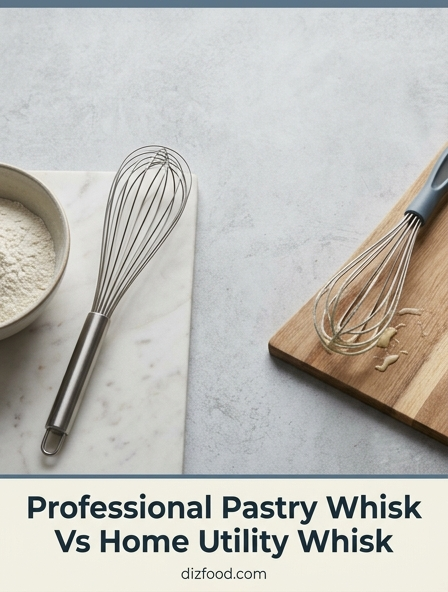
Defining the Professional Pastry Whisk Versus Utility Whisk
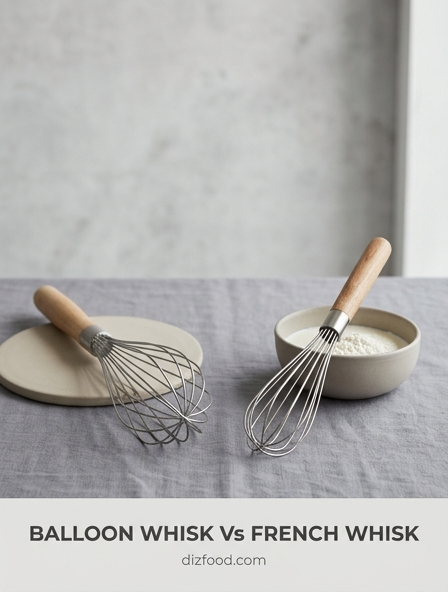
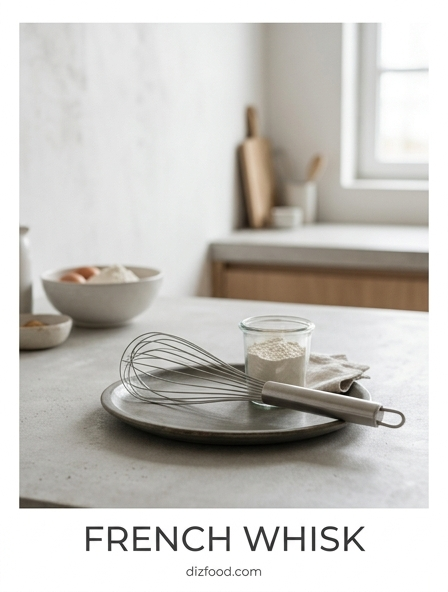
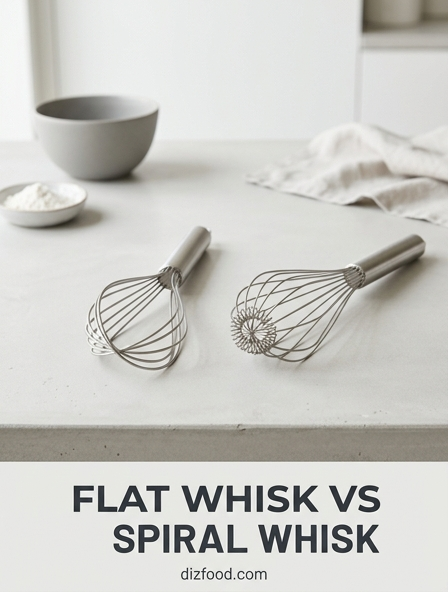
The distinction between a professional pastry whisk and a standard home utility whisk lies primarily in their structural intent and specialized functionality. While both tools are designed to incorporate air or blend ingredients, a professional pastry whisk is engineered for high-precision tasks such as tempering chocolate, emulsifying delicate sauces, or creating stiff peaks in large-volume egg whites. These tools are often categorized by specific shapes, such as the balloon whisk, the French whisk, or the flat roux whisk, each serving a niche purpose in a commercial bakery setting. They are characterized by rigid construction and specific weight distributions that favor the repetitive motions of a professional chef.
In contrast, the home utility whisk is designed for versatility and general-purpose ease. It is the "jack-of-all-trades" in a residential kitchen, often used for simple tasks like scrambling eggs, mixing pancake batter, or whisking a small bowl of vinaigrette. Because utility whisks are intended for a wider variety of lighter tasks, they usually feature more flexible wires and a lighter handle. Understanding the fundamental differences involves looking at several key factors:
- Structural Rigidity: Professional whisks resist bending under the weight of thick custards.
- Wire Configuration: Professional models offer specific loop counts for targeted aeration levels.
- Handle Construction: Commercial tools often feature sealed handles to prevent bacterial growth.
- Weight Balance: Professional tools are balanced to reduce wrist strain during prolonged use.
While a home cook can certainly use a professional tool, the utility whisk remains the standard for those who require a lightweight, easy-to-clean instrument for occasional culinary tasks that do not involve heavy resistance or high-volume output.
Wire Gauge and Tine Count Differences Explained
The mechanical efficiency of a whisk is largely determined by the thickness of the wires, known as the gauge, and the total number of loops, or tines, present in the head. Professional pastry whisks typically utilize a heavier gauge of stainless steel. This ensures that the wires do not deform when pushed through dense mixtures like ganache or heavy cream. A thicker wire provides the necessary resistance to cut through fat and sugar crystals effectively, which is essential for achieving specific textures in high-end pastry work.
Utility whisks, on the other hand, favor a thinner gauge. This makes the tool much more flexible and springy, which is ideal for incorporating air into thin liquids or for light mixing. The tine count also varies significantly between the two styles. Professional whisks often feature a higher tine count to maximize the surface area contacting the ingredient, leading to faster emulsification and finer air bubble distribution. The following table illustrates the typical differences found in standard manufacturing:
| Feature | Professional Pastry Whisk | Home Utility Whisk |
|---|---|---|
| Typical Wire Gauge | 16 to 18 gauge (Thicker) | 20 to 22 gauge (Thinner) |
| Average Tine Count | 10 to 14 loops | 6 to 8 loops |
| Flexibility | Low to Moderate | High |
| Aeration Speed | Rapid and Dense | Moderate and Airy |
When selecting a whisk, the user must consider whether they need the "snap" of a thin wire for light fluffiness or the "shove" of a thick wire for structural integrity in heavy batters. A higher tine count generally yields a smoother texture but requires more physical force to move through the medium.
Durability Standards for High Volume Commercial Baking
In a commercial environment, kitchen tools are subjected to rigorous use that would quickly degrade a standard consumer-grade product. Professional pastry whisks are built to meet industrial durability standards, often requiring NSF (National Sanitation Foundation) certification. This certification ensures that the tool is constructed from materials that are safe for food contact and designed in a way that is easy to sanitize. One of the most critical durability features is the handle-to-wire interface. In professional models, this area is typically filled with a high-strength epoxy or welded to prevent liquids and food particles from entering the handle, which could lead to internal corrosion or bacterial buildup.
Commercial whisks must also withstand the high heat of industrial dishwashers and the abrasive nature of heavy-duty cleaning chemicals without losing their finish. The wires are usually made from high-tensile stainless steel that maintains its shape even after being crushed in a crowded equipment bin or used to stir a boiling pot of thick pastry cream. The durability requirements can be summarized through the following engineering priorities:
- Impact Resistance: The ability to survive drops and heavy pressure without wire misalignment.
- Hermetic Sealing: Preventing moisture ingress at the handle base.
- Tension Retention: Ensuring wires do not become loose or "rattle" over years of service.
While a utility whisk might last several years in a home setting, it would likely fail within weeks in a professional bakery due to wire snapping or handle detachment. The investment in professional-grade tools is a necessity for preventing mid-service equipment failure and ensuring long-term food safety compliance.
The Role of Ergonomics in Professional Whisk Design
Ergonomics is a primary concern for pastry chefs who may spend hours each day whisking meringues, sabayons, or heavy batters. A professional whisk is designed with weight distribution and grip comfort as a priority to minimize the risk of Repetitive Strain Injury (RSI) or carpal tunnel syndrome. The handles are often contoured to fit the natural shape of the palm and are weighted to provide a counter-balance to the head of the whisk. This allows the tool to do a portion of the work through centrifugal force and momentum, rather than relying solely on the chef's muscular effort.
Furthermore, professional handles often incorporate materials like non-slip silicone, textured nylon, or brushed steel to ensure a secure grip even when hands are wet or covered in flour. The length of the handle is also carefully calculated; a longer handle provides more leverage for deep mixing bowls, while a shorter, thicker handle offers better control for precision tasks. In the home utility whisk market, ergonomics are often secondary to aesthetics or cost-savings. These handles are frequently thin, cylindrical, and lack the anatomical considerations found in professional lines. A well-designed professional whisk will feel like an extension of the arm, allowing for a fluid, rhythmic motion that maximizes output while minimizing fatigue. This focus on the human-tool interface is what separates a high-performance instrument from a basic kitchen utensil.
Best Applications for a Home Utility Whisk
Despite the technical superiority of professional tools in specific contexts, the home utility whisk is perfectly suited for the vast majority of residential cooking tasks. Its lighter weight and higher flexibility make it more maneuverable in small bowls and crowded pans. Because it does not require significant physical strength to operate, it is the ideal choice for quick, daily chores where a heavy professional whisk would be overkill. The utility whisk shines in applications where the goal is simply to combine ingredients rather than to achieve a specific technical aeration or structural change.
Key applications for a utility whisk include:
- Morning Breakfasts: Rapidly beating two or three eggs for an omelet.
- Salad Dressings: Emulsifying oil and vinegar in a small prep bowl.
- Dry Ingredient Sifting: Quickly breaking up clumps in flour or cocoa powder.
- Simple Gravies: Stirring flour into drippings for a smooth pan sauce.
- Instant Puddings: Mixing small batches of desserts that do not require intense aeration.
For the home cook, the utility whisk is also easier to store. Its thinner wires allow it to fit into shallow drawers or crowded utensil crocks more easily than the bulky, rigid loops of a professional pastry whisk. While it may not be the tool used to create a 50-layer puff pastry, it is the reliable workhorse that handles 90% of the mixing tasks in a standard kitchen with efficiency and ease of cleaning.
Aeration Efficiency in Meringues and Delicate Batters
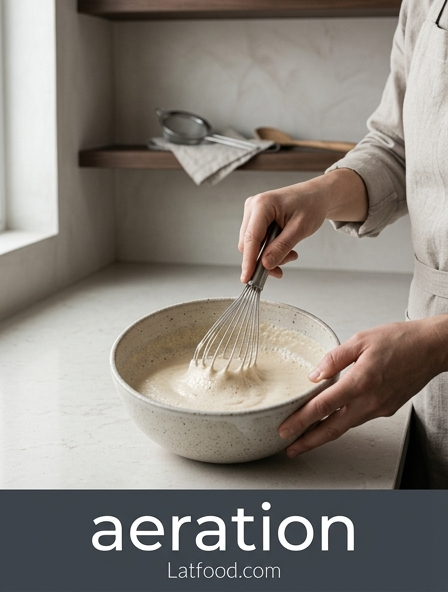
Aeration is the process of incorporating air into a liquid or semi-solid to create volume and lightness. In the world of pastry, this is most evident in the creation of meringues, soufflés, and mousses. Professional pastry whisks are specifically engineered to maximize aeration efficiency. The specific spacing between the tines is designed to "cut" the air into the egg whites or cream, creating millions of tiny, stable bubbles. Because professional whisks usually have more wires, they can create more air pockets per rotation than a utility whisk. This results in a faster "set" and a more stable foam that is less likely to collapse during folding.
The rigidity of the professional whisk also plays a role here. When whisking a large volume of egg whites, a flexible utility whisk may "drag" through the liquid, whereas a stiff professional whisk maintains its shape, ensuring that every stroke is productive. This efficiency is measured not just by how fast the volume increases, but by the uniformity of the air bubbles. Finer bubbles create a silkier texture and a more resilient structure in the final baked product. For delicate batters like sponge cakes or angel food cakes, the professional whisk allows the baker to achieve the necessary lift without overworking the flour, which could otherwise lead to a tough, rubbery crumb. Thus, the professional tool is not just about power, but about the sophisticated management of air and protein structures.
Material Composition and Rust Resistance Comparison
The material composition of a whisk dictates its longevity and its reaction to acidic ingredients. Professional pastry whisks are almost exclusively manufactured from high-grade stainless steel, typically 18/10 or 18/8 (representing the percentages of chromium and nickel). These alloys are highly resistant to rust and corrosion, even when exposed to acidic juices, fermented batters, or salty environments. The presence of nickel provides a high-luster finish that is non-reactive, ensuring that the whisk does not impart a metallic taste to delicate creams or change the color of egg-based sauces like hollandaise.
Utility whisks, especially budget-friendly versions, may use lower-grade stainless steel or even chrome-plated wire. Over time, chrome plating can chip or flake off, posing a food safety risk and leaving the underlying steel vulnerable to rust. Furthermore, the handles of cheaper whisks are often made of plastic or wood that may degrade, crack, or harbor moisture. Professional tools prioritize a seamless material transition to ensure there are no weak points. The following list highlights the material advantages of professional grade tools:
- Non-Reactive Properties: Safe for use with lemon curd and other acidic recipes.
- Dishwasher Safety: Will not dull or pit during high-temperature sterilization.
- Structural Memory: High-tensile steel returns to its original shape after use.
- Oxidation Resistance: Prevents the "grey streak" effect sometimes seen when using cheap metal in light batters.
Investing in a high-material-grade tool ensures that the whisk remains a sanitary and effective part of the kitchen arsenal for decades, rather than becoming a disposable item that requires frequent replacement.
Handling Heavy Doughs with Professional Grade Tools
When a recipe transitions from a liquid batter to a heavy, viscous dough, a standard utility whisk will often fail. The wires may splay outward, become permanently deformed, or even pull out of the handle entirely. Professional pastry whisks, particularly those designed with a "stiff" wire configuration, are built to handle the torque required for dense mixtures. These tools are often used for the initial stages of bread dough, thick muffin batters, or heavy cookie doughs where a spoon might not provide enough aeration but a standard whisk is too flimsy.
The strength of a professional whisk comes from the reinforced base where the wires are anchored. This allows the baker to apply significant downward and lateral pressure. In some professional environments, specialized "dough whisks" (sometimes called Danish dough whisks) are used, which feature a unique looped design specifically meant to cut through heavy flour mixtures without clogging. Even a standard professional balloon whisk, however, offers enough resistance to incorporate cold butter into flour or to mix a heavy bran muffin batter. The ability to handle heavy loads without the tool bending or breaking is a hallmark of professional design, providing the baker with the confidence to tackle more demanding recipes that require physical force and mechanical advantage.
Price Point Versus Long Term Kitchen Performance
The cost of a professional pastry whisk can be three to five times higher than that of a standard home utility whisk. For a casual cook, this price gap may seem unjustified; however, when analyzed through the lens of long-term performance and replacement frequency, the professional tool often proves to be more economical. A utility whisk is prone to "wire fatigue," where the loops eventually lose their tension or snap at the base. In a busy kitchen, a cheap whisk might last only six months to a year before it needs to be discarded. A professional whisk, built with superior materials and construction methods, is essentially a lifetime purchase for a home cook.
Beyond the cost of the tool itself, there is the factor of performance efficiency. Professional tools save time and physical energy. The faster aeration and superior blending capabilities translate to better results in the oven. For a professional bakery, the higher price point is also an insurance policy against labor costs. If a chef can whip a quart of cream thirty seconds faster with a professional tool than with a utility whisk, those seconds accumulate over months of production. The "Return on Investment" (ROI) for a professional whisk is found in:
- Durability: Eliminating the need for frequent replacements.
- Consistency: Ensuring the same texture and volume in every batch.
- Labor Efficiency: Reducing the time and effort required for manual tasks.
- Safety: Preventing material failure and contamination in the kitchen.
Choosing the Right Whisk for Your Baking Style
Selecting the appropriate whisk requires an honest assessment of your baking habits and the specific recipes you prepare most frequently. If your time in the kitchen is limited to occasional weekend pancakes or scrambled eggs, a high-quality utility whisk is likely sufficient. It offers the flexibility and lightweight feel that makes casual cooking enjoyable. However, if you find yourself regularly attempting temperamental desserts, large batches of bread, or complex pastries, the upgrade to a professional pastry whisk is highly recommended. The added weight and rigidity will provide the control needed for technical excellence.
Consider the following criteria when making your final selection:
- Batch Size: Larger batches require the structural strength of a professional tool.
- Frequency of Use: Daily users should prioritize professional ergonomics and durability.
- Storage Space: If you have limited drawer space, a smaller utility whisk may be more practical.
- Cleaning Preferences: Those who rely on dishwashers should ensure they choose a professional model with a sealed handle to avoid internal rusting.
Ultimately, the "best" whisk is the one that feels comfortable in your hand and matches the resistance of the ingredients you work with. Many serious home bakers choose to own both: a professional-grade balloon whisk for serious aeration tasks and a smaller utility whisk for quick, everyday mixing. This dual approach ensures you have the right tool for every culinary challenge, from the simplest syrup to the most demanding soufflé.

Comments