
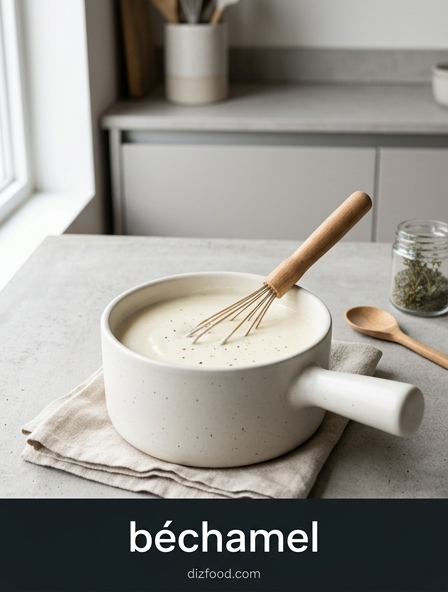
Mastering the French Whisk for Smooth Roux
The foundation of a perfect béchamel lies in the initial marriage of butter and flour, a process where the choice of tool dictates the final texture. Unlike the bulbous balloon whisk, the French whisk features a narrower, elongated profile that provides superior control when navigating the shallow depths of a saucepan. Its stiff wires are specifically designed to break down flour granules into the melting fat, ensuring every particle is coated without clumping. Mastering this tool requires a wrist-dominant motion that allows the wires to glide across the pan's surface, maintaining constant contact with the roux to prevent premature browning.
- Increased maneuverability in straight-sided saucepans.
- Denser wire spacing for better shearing of flour clusters.
- Ergonomic design suited for prolonged stirring during the thickening phase.
- Enhanced ability to incorporate milk gradually into the thick paste.
As the milk is introduced, the French whisk acts as a precision instrument, cutting through the viscosity of the developing sauce. This ensures that the starch granules swell evenly, creating a cohesive base that remains stable under heat. By utilizing the specific geometry of this whisk, the cook can achieve a silky roux that serves as the essential starting point for any high-quality mother sauce.
Benefits of Flat Whisks in Béchamel Preparation
When preparing a béchamel in a low-profile skillet or a shallow sauté pan, the flat whisk, also known as a roux whisk, offers distinct mechanical advantages. Its unique two-dimensional shape allows it to lay flush against the bottom of the cookware, effectively acting as a hybrid between a traditional whisk and a spatula. This design is particularly beneficial for lifting the roux from the pan surface, ensuring that no portion of the flour-fat mixture remains stagnant and scorches. The flat whisk's ability to scrape the entire surface area of the pan simultaneously reduces the effort required to maintain a uniform temperature throughout the sauce.
- Position the whisk at a 45-degree angle to the pan base.
- Use a broad sweeping motion to clear the floor of the pan.
- Flip the whisk occasionally to ensure both sides of the wires engage with the liquid.
- Apply gentle downward pressure to break up any stubborn flour pockets.
By maximizing surface contact, the flat whisk excels at preventing the "hot spots" that often lead to a burnt aftertaste in delicate white sauces. Its streamlined profile also makes it easier to clean compared to complex multi-wire designs, providing a practical solution for busy kitchen environments where efficiency and precision are equally valued.
Eliminating Lumps with Precision Whisking Techniques
Lumps in a béchamel are typically the result of uneven hydration, where the exterior of a flour clump gelatinizes before the interior can be moistened. To eliminate this risk, precision whisking must be paired with controlled liquid addition. The most effective technique involves adding a very small amount of cold milk to the hot roux and whisking vigorously until a thick, smooth paste forms. Once this initial emulsion is established, the remaining liquid can be added in stages. The whisking action should be fast and repetitive, focusing on the interface where the liquid meets the roux to ensure immediate integration.
- Always add cold liquid to hot roux to slow down the starch swelling.
- Maintain a constant "figure-eight" motion to cover the maximum area.
- Check the tines of the whisk frequently for trapped flour particles.
- Use a high-speed whisking motion during the first 30 seconds of each milk addition.
Consistency is achieved by never allowing the sauce to sit idle during the thickening process. If a lump does appear, targeted whisking directly over the spot, combined with a slight increase in pressure, can usually disperse the starch before it sets. This level of attention ensures the final sauce is perfectly homogenous and reflects the standards of classic French cuisine.
Choosing the Right Wire Gauge for Creamy Sauces
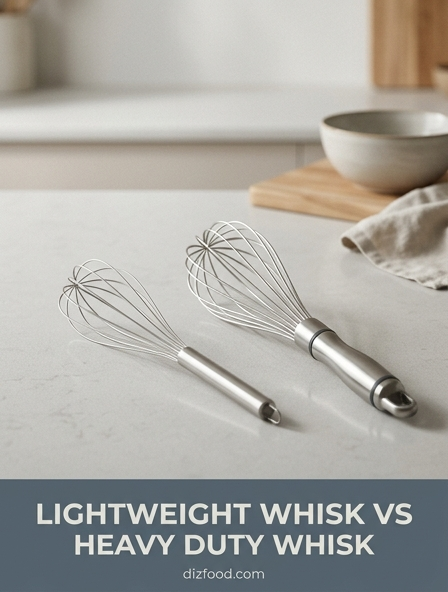
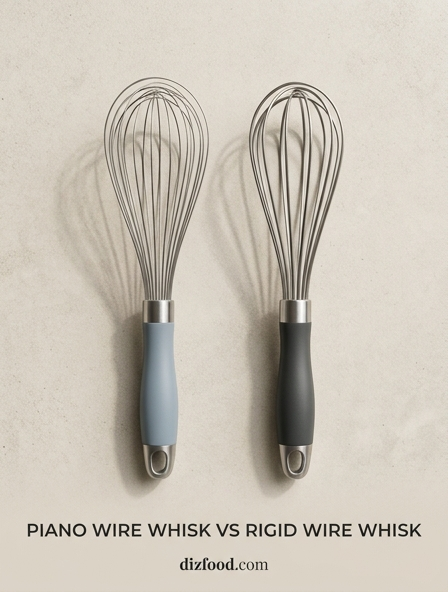
The thickness of the wires on a whisk, known as the gauge, significantly impacts the amount of force transferred to the sauce. For a béchamel, which transforms from a thick paste to a pourable liquid, the gauge must be carefully selected to balance agility with structural integrity. Thick-gauge wires provide the necessary resistance to cut through a dense roux in the early stages, while thinner, more flexible wires are better at incorporating air and blending the thinning sauce as more milk is added. Selecting a whisk with medium-gauge wires often provides the most versatile performance for the entire cooking cycle.
| Wire Gauge Type | Best Use Case | Béchamel Benefit |
|---|---|---|
| Heavy Gauge | Initial Roux Mixing | Breaks down thick butter/flour paste easily. |
| Medium Gauge | General Incorporation | Balances flexibility with stirring power. |
| Fine Gauge | Finishing/Aeration | Creates a light, velvety texture in the final sauce. |
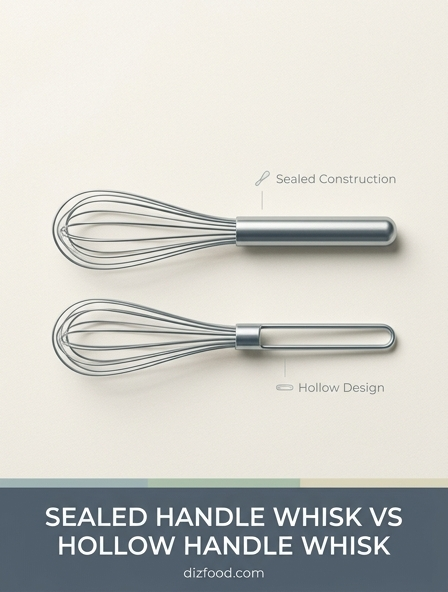
A whisk that is too flimsy will struggle to move the heavy roux, leading to uneven cooking. Conversely, a whisk that is too rigid may be difficult to maneuver quickly enough to prevent lumps. High-quality stainless steel whisks with reinforced handles provide the durability required to withstand the heat and mechanical stress of sauce production without losing their shape or tension.
The Science of Emulsification in Béchamel Bases
Béchamel is a complex system where starch, fat, and protein must be suspended in a stable emulsion. The whisk acts as the mechanical catalyst for this process, physically breaking down the fat droplets from the butter and dispersing them throughout the milk. As the mixture heats, the starch granules in the flour undergo gelatinization, absorbing liquid and expanding. Without constant whisking, these granules would settle and clump together. The mechanical energy of the whisk ensures that the starch molecules are evenly distributed, creating a network that traps the fat and water molecules in a creamy, semi-solid state.
- Butter melts, providing the continuous fat phase.
- Flour is added, coating the starch in fat to prevent premature hydration.
- Liquid is introduced, and whisking shears the fat into microscopic droplets.
- Heat triggers starch swelling, which increases the viscosity of the emulsion.
This scientific interaction is why the speed and pattern of whisking are so critical. If the whisking is too slow, the emulsion may break, resulting in a greasy sauce where the butter separates from the milk. Proper technique ensures that the proteins in the milk also help stabilize the mixture, leading to a resilient sauce that holds its texture even when integrated into complex dishes like lasagna or soufflés.
Reaching Pan Corners with Flat Bottom Whisks
A common failure point in béchamel preparation occurs at the junction where the pan's bottom meets its sides. Standard balloon whisks often fail to reach these tight corners, leaving a ring of unmixed roux that eventually burns or creates large lumps. The flat bottom whisk, characterized by its horizontal loops or coil-like structure, is specifically engineered to solve this problem. The flat contact surface allows the cook to apply even pressure across the entire radius of the pan, ensuring that every milliliter of sauce is agitated and heated uniformly. This is essential for maintaining the delicate ivory color of a traditional béchamel.
- Square-edge design fits perfectly into the base of high-sided pots.
- Coiled wires provide multiple contact points for aggressive scraping.
- Reduces the need for a secondary tool like a wooden spoon.
- Prevents the buildup of "scorched film" on the pan edges.
By effectively cleaning the corners of the pan with every rotation, the flat bottom whisk ensures a higher yield and a cleaner flavor profile. This tool is particularly indispensable when working with larger batches where the volume of the sauce makes it harder to monitor the bottom of the vessel. Consistent corner-to-corner agitation is the hallmark of a professional culinary technique.
Temperature Control and Whisk Speed Optimization
The relationship between the temperature of the ingredients and the speed of the whisking action is vital for a smooth result. When cold milk hits a hot roux, the temperature gradient can cause the starch to seize if not managed correctly. Rapid whisking during this transition phase is necessary to distribute the thermal energy and prevent localized overcooking. As the sauce approaches its boiling point, the whisking speed should be moderated to a steady, rhythmic pace. This allows the cook to monitor the thickening process and ensure the sauce reaches the desired "nappe" consistency-thick enough to coat the back of a spoon.
| Sauce Phase | Ideal Temperature | Whisking Speed |
|---|---|---|
| Roux Formation | Medium-Low Heat | Moderate/Steady |
| Initial Milk Addition | Rapid Temp Change | High Speed/Vigorous |
| Thickening/Simmer | 180°F - 200°F | Slow/Systematic |
| Final Smoothing | Low/Residual Heat | Moderate/Lifting |
Maintaining the sauce at a gentle simmer while whisking prevents the proteins from scorching on the bottom of the pan. If the heat is too high, even the fastest whisking will not prevent the sauce from sticking. Therefore, optimization involves a delicate balance between adjusting the flame and the physical intensity of the whisking motion to keep the mixture in constant, fluid motion.
Aeration Secrets for a Light and Silky Texture
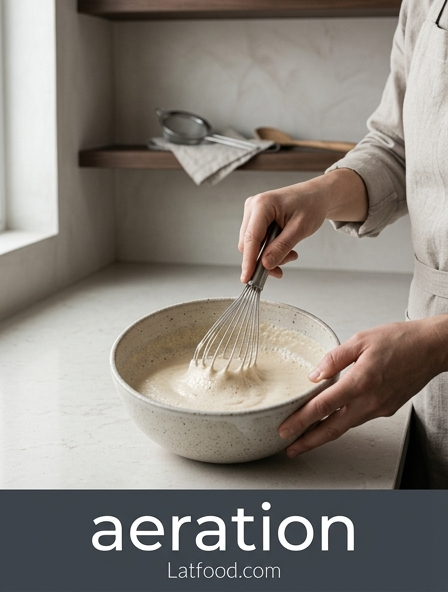
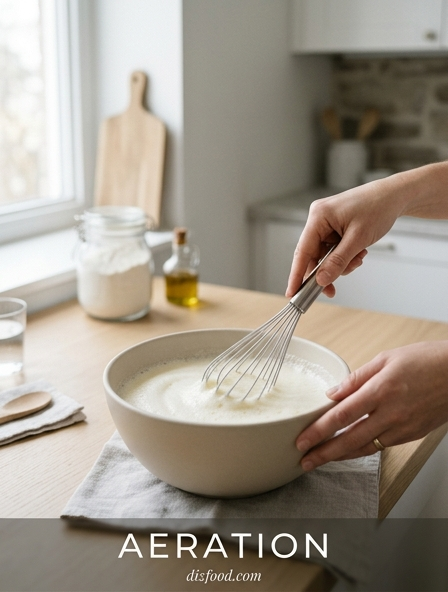
While the primary goal of whisking a béchamel is to ensure smoothness, the final stage of preparation offers an opportunity to enhance the mouthfeel through aeration. Once the sauce has thickened and the raw flour taste has been cooked out, a slightly more vertical whisking motion can be employed. By lifting the whisk partially out of the liquid during the stroke, the cook incorporates tiny air bubbles into the sauce. This doesn't make the sauce foamy like a meringue, but rather lightens the overall density, giving the béchamel a velvety, sophisticated character that feels less heavy on the palate.
- Use a balloon whisk for the final two minutes of cooking.
- Apply a circular, lifting motion to pull air into the mixture.
- Whisk at a moderate speed to avoid creating large, unstable bubbles.
- Finish with a few brisk horizontal strokes to settle the texture.
This technique is particularly useful when the béchamel is intended as a base for a cheese sauce or a soufflé, where lightness is a premium quality. The subtle introduction of air breaks up the structural rigidity of the starch, resulting in a sauce that flows elegantly and feels exceptionally smooth during consumption. Aeration transforms a standard white sauce into a professional-grade culinary component.
Silicon vs Stainless Steel Whisks for Nonstick Pans
The material of the whisk is not just a matter of durability but also of pan maintenance and heat conduction. Stainless steel whisks are the industry standard due to their thin, sharp wires that shear through roux with maximum efficiency. However, they can damage the coating of nonstick or seasoned pans. Silicone-coated whisks provide a protective alternative, offering a softer touch that preserves the integrity of the pan surface. While silicone whisks are gentler, they often have thicker wires which may not be as effective at breaking down the smallest lumps, requiring more effort from the cook to achieve the same level of smoothness.
| Feature | Stainless Steel Whisk | Silicone-Coated Whisk |
|---|---|---|
| Scraping Ability | Excellent/Sharp | Good/Flexible |
| Heat Resistance | Very High | High (up to 500°F) |
| Cookware Safety | Stainless/Cast Iron only | All surfaces (Nonstick safe) |
| Shearing Power | High | Moderate |
When choosing between the two, consider the vessel. A heavy-bottomed stainless steel saucier is best paired with a steel whisk for maximum precision. If using a nonstick pot, a high-quality silicone whisk with a rigid core is necessary to ensure the sauce is properly agitated without ruining the cookware. Both tools require proper technique to yield a lump-free béchamel.
Achieving Consistency Through Systematic Whisking Patterns
Randomly stirring a sauce often leaves pockets of unmixed ingredients, leading to an inconsistent final product. To achieve professional results, one should adopt systematic whisking patterns that cover the entire surface area of the pan. The "figure-eight" pattern is widely considered the most effective, as it forces the liquid to cross over itself, creating turbulence that efficiently breaks up solids. This can be combined with occasional circular motions around the perimeter to ensure the sides are kept clean. By rotating between these patterns, the cook ensures that no portion of the sauce remains in contact with the heat source for too long.
- Start with small concentric circles in the center of the pan.
- Expand to a large figure-eight pattern to incorporate the outer edges.
- Execute a "side-to-side" sweeping motion to clear the bottom.
- Finish with a few quick circular rotations to homogenize the temperature.
Consistency is also maintained by keeping the whisk upright rather than at a steep angle, which ensures that the full length of the wires is working through the sauce. This systematic approach reduces fatigue and guarantees that the béchamel will have the same thickness and smoothness from the first spoonful to the last, providing a reliable foundation for any recipe.

Comments