
Safe Whisking Materials and Food Purity
Maintaining food purity begins with the selection of inert materials that do not interact chemically with ingredients. When whisking, the mechanical energy applied to the food can facilitate the transfer of molecules from the tool to the mixture. High-quality materials like medical-grade silicone and professional-grade stainless steel are preferred because they maintain structural integrity under friction. Unlike lower-grade plastics, these materials do not shed micro-particles or leach stabilizers into emulsions and batters.
- Platinum-cured silicone: Highly stable and resistant to thermal degradation.
- 18/10 Stainless Steel: Contains nickel and chromium in ratios that prevent oxidation.
- Unfinished Hardwoods: Naturally antimicrobial and free from synthetic glues.
Using these materials ensures that the flavor profile of the food remains untainted by metallic or "plastic" aftertastes. Furthermore, food purity is essential for long-term health, as it reduces the cumulative ingestion of non-food-grade chemical additives. By prioritizing non-reactive surfaces, home cooks can ensure that the only things ending up in their recipes are the intended ingredients.
Preventing Chemical Migration in Mixing Bowls
Chemical migration occurs when substances from a container move into the food it holds, a process often accelerated by temperature, acidity, and contact time. In the kitchen, the mixing bowl is a primary site for this exchange. Cheap plastic bowls often contain plasticizers that become mobile when they come into contact with fats or warm liquids. To prevent this, it is vital to understand the porosity and chemical stability of the bowl's surface.
Non-porous materials such as tempered glass and high-fired ceramic provide a significant barrier against migration. These materials do not have the microscopic "pores" found in plastic where bacteria and chemical residues can hide. When mixing high-fat ingredients like cream or oil-based dressings, the lipophilic nature of many plastic additives makes them prone to leaching. Switching to metal or glass mitigates this risk entirely, keeping the chemical composition of the food stable from the start of preparation until the final serving.
Risks of Using Plastic Whisks with Heat
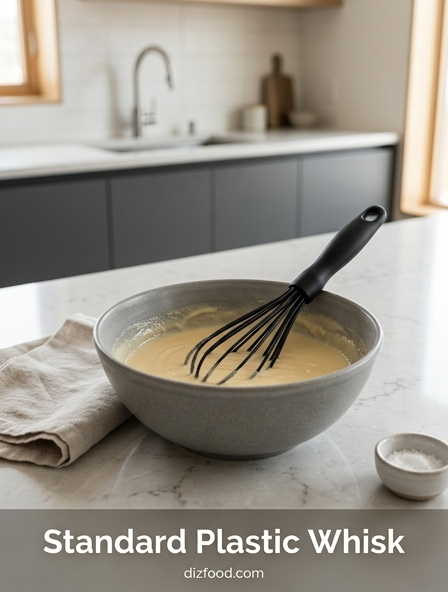
Using plastic whisks in high-heat applications, such as stirring a thick custard or a simmering roux, poses significant toxicological risks. Most plastic kitchen tools are made from nylon or polypropylene, which have specific melting points and "heat deflection temperatures." When these limits are approached, the polymer chains can begin to break down, releasing monomers and processing aids directly into the food.
- Thermal Degradation: The weakening of plastic bonds at temperatures above 200°F.
- Microplastic Shedding: Mechanical scraping against hot pans releases microscopic fragments.
- Chemical Off-gassing: Release of volatile organic compounds (VOCs) into the kitchen air and food.
Even "heat-resistant" plastics have a threshold where they begin to leach chemicals like primary aromatic amines (PAAs), which are suspected carcinogens. These substances are often used in the dyes and stabilizers of black nylon tools. For any task involving a stovetop or hot liquids, replacing plastic whisks with metal or high-heat silicone is a critical step in reducing chemical exposure.
Choosing Non-Reactive Stainless Steel Tools
Stainless steel is a preferred material for kitchen tools due to its durability and resistance to corrosion, but not all steel is created equal. The term "non-reactive" refers to the metal's ability to withstand chemical attack from salts and acids without leaching metallic ions into the food. When selecting whisks and spoons, the grade of the steel is the most important factor for safety and longevity.
| Steel Grade | Composition | Best Use Case |
|---|---|---|
| 304 (18/8) | 18% Chromium, 8% Nickel | General whisking and mixing. |
| 316 (18/10) | 18% Chromium, 10% Nickel | High-acid environments and salt. |
| 430 | 17% Chromium, 0% Nickel | Magnetic, budget-friendly tools. |
The addition of nickel in the 300-series grades creates a protective oxide layer that is self-healing. This prevents "pitting," where small holes form in the metal, potentially harboring bacteria or releasing iron and chromium into the food. Investing in high-grade stainless steel ensures a non-reactive surface for all culinary tasks.
Impact of Acidic Ingredients on Metal Leaching
Acidic ingredients such as lemon juice, vinegar, wine, and tomatoes act as catalysts for metal leaching. When these substances come into contact with low-quality or reactive metals, a chemical reaction occurs that pulls metal ions into the solution. This is particularly problematic with aluminum or low-grade carbon steel, which can impart a metallic taste and lead to excessive ingestion of aluminum, a neurotoxin.
During the whisking of a vinaigrette or a tomato-based sauce, the continuous agitation increases the surface area exposed to the acid. This accelerated reaction can darken the food and alter its nutritional profile. To protect the integrity of the dish, it is essential to use tools that are verified as acid-resistant.
- Avoid aluminum whisks when working with citrus or vinegar.
- Use silicone-coated wires for acidic emulsifications.
- Ensure stainless steel whisks are at least 304 grade to resist acid etching.
By understanding the pH of ingredients, cooks can choose the appropriate tools to prevent unwanted chemical reactions.
Eliminating BPA and Phthalates from Prep
Bisphenol A (BPA) and phthalates are synthetic chemicals used to harden plastics or make them more flexible. These substances are classified as endocrine disruptors because they mimic hormones in the human body. During food preparation, these chemicals can leach from plastic bowls, measuring cups, and whisk handles, especially when these tools are aged, scratched, or exposed to heat and detergents.
Eliminating these toxins requires a conscious shift toward BPA-free and phthalate-free alternatives. While many modern plastics claim to be "BPA-free," they often substitute it with Bisphenol S (BPS) or BPF, which may have similar biological effects. Therefore, the safest strategy is to reduce reliance on plastic prep tools altogether. Choosing whisks with solid stainless steel handles or wooden grips removes the risk of these specific plasticizers migrating into your hands and food. Furthermore, avoiding the dishwasher for any remaining plastic items can slow down the degradation process that leads to chemical shedding.
Benefits of Glass and Ceramic Kitchenware
Glass and ceramic represent the pinnacle of food-safe kitchenware due to their inert chemical nature. These materials are formed at extremely high temperatures, resulting in a stable, crystalline structure that does not react with acids, bases, or fats. For mixing and whisking, glass bowls allow for clear visibility of the emulsion process while ensuring that no synthetic chemicals are introduced to the ingredients.
- Non-Porous Surface: Prevents the absorption of odors, flavors, and bacteria.
- Thermal Stability: Can transition from cold to warm without releasing toxins.
- Longevity: Does not degrade or "flake" over time like non-stick or plastic coatings.
Ceramic kitchenware, provided it uses lead-free and cadmium-free glazes, offers a similarly safe environment. These materials are also environmentally friendly, as they are derived from natural earth minerals and are infinitely recyclable or biodegradable. By using glass and ceramic, the home chef creates a "clean" preparation environment that preserves the natural purity of the food being processed.
Avoiding PFAS in Non-Stick Whisk Coatings
Per- and polyfluoroalkyl substances (PFAS), often referred to as "forever chemicals," are frequently used in non-stick coatings for cookware and some kitchen utensils. Some whisks are coated in these materials to prevent ingredients from sticking to the wires and to make cleaning easier. However, these coatings can chip or wear down over time due to the high-friction nature of whisking against the sides of a bowl or pan.
When the coating fails, small flakes of PFAS-laden material can be incorporated into the food. Once ingested, these chemicals persist in the human body and the environment for years. To avoid this risk, it is better to choose "uncoated" stainless steel whisks or those coated in food-grade silicone. Silicone provides a similar non-stick benefit and protects delicate pan surfaces without the toxicological profile associated with traditional non-stick fluoropolymers. Checking labels for "PFAS-free" or "PFOA-free" is a necessary step for those seeking to minimize chemical leaching in their kitchen.
How High Speed Whisking Affects Material Integrity
High-speed whisking, whether by hand or using an electric mixer, subjects tools to significant mechanical stress and friction. This physical force can lead to "material fatigue," where the surface of the whisk begins to wear away at a microscopic level. If the whisk is made of a plated metal or a coated plastic, this friction can cause the outer layer to delaminate and enter the food mixture.
- Abrasion: The rubbing of wires against the bowl surface can grind off metal or plastic dust.
- Cavitation: In high-speed electric mixing, air bubbles can collapse with enough force to pit soft materials.
- Work Hardening: Repeated bending of thin wires can cause them to snap, potentially leaving metal fragments in thick batters.
To maintain material integrity, it is important to match the tool to the speed of the task. Professional-grade whisks with thick, well-anchored wires are designed to withstand these forces. Regularly inspecting tools for signs of wear, such as thinning wires or flaking handles, is essential for preventing physical and chemical contaminants from entering the food.
Simple Swaps for a Chemical Free Kitchen
Transitioning to a chemical-free kitchen does not require an immediate overhaul of every tool. Instead, making strategic, high-impact swaps can significantly reduce the toxic load in food preparation. Focusing on the tools that have the most contact with heat and acidic food-such as whisks, spatulas, and mixing bowls-is the most effective way to begin. These simple changes prioritize health without sacrificing culinary performance.
| Current Tool | Recommended Swap | Primary Benefit |
|---|---|---|
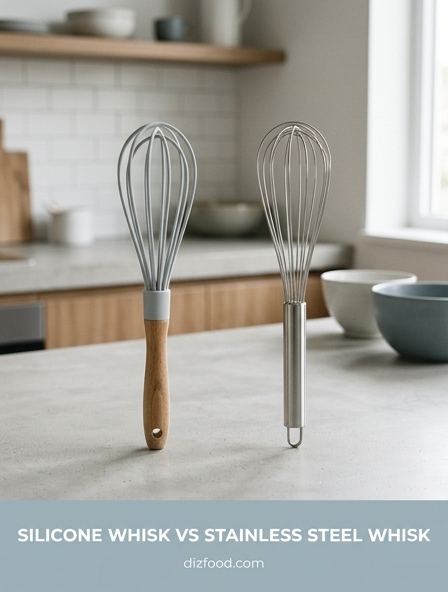
| Plastic Whisk | Stainless Steel or Silicone | Prevents heat-induced leaching. |
| Plastic Mixing Bowl | Glass or Stainless Steel | Eliminates phthalate migration. |
| Non-Stick Coated Tools | Uncoated Steel | Avoids PFAS "forever chemicals." |
| Aluminum Utensils | 18/10 Stainless Steel | Prevents reaction with acidic foods. |
By replacing degraded or low-quality items with durable, inert materials, you create a safer cooking environment. These swaps not only prevent chemical leaching but often result in tools that last a lifetime, reducing waste and ensuring consistent food quality for years to come.

Comments