
The Science of Aeration
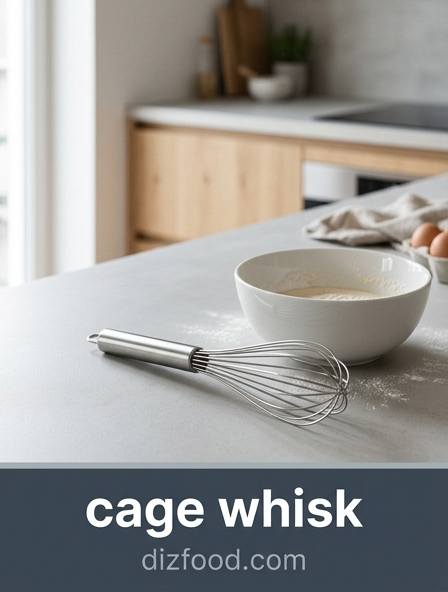
Aeration is the fundamental process of integrating air into a liquid or semi-solid medium to alter its density and texture. In the context of culinary arts, this physical transformation relies heavily on the disruption of surface tension. When a cage whisk moves through a substance like heavy cream or egg whites, the wires slice through the liquid, creating voids that are immediately filled by atmospheric air. The cage whisk is specifically designed to maximize this interaction by increasing the number of contact points per stroke compared to a standard balloon whisk.
As the whisking continues, the trapped air is broken down into smaller, more stable bubbles. This process is governed by the following physical factors:
- Surface Tension: The resistance of the liquid surface to being broken.
- Viscosity: The thickness of the liquid, which determines how well it can hold air.
- Agitation Force: The mechanical energy applied by the chef to overcome molecular cohesion.
By understanding these principles, a cook can manipulate the lightness of mousses and meringues. The cage whisk's unique geometry ensures that the turbulence created is chaotic enough to trap gas but controlled enough to maintain the delicate protein structures required for a stable foam.
Anatomy of the Cage Whisk
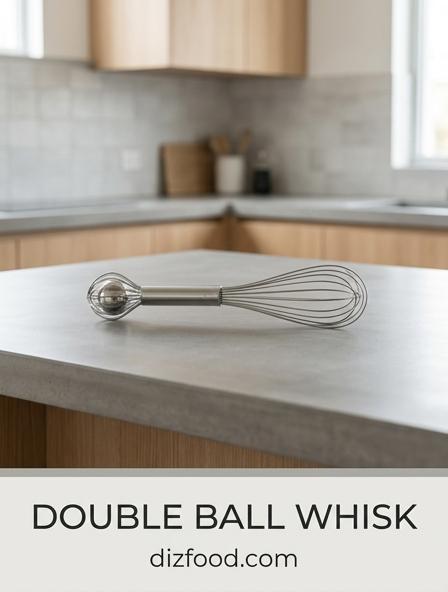
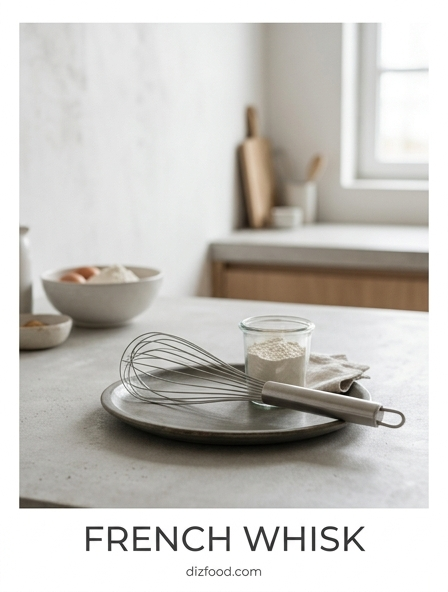
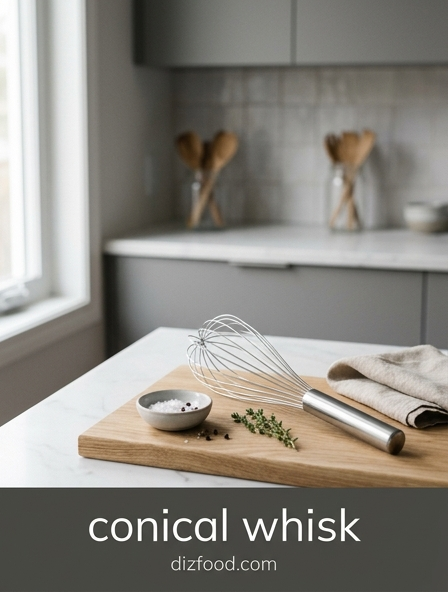
The cage whisk is a specialized tool distinguished by its multi-layered wire construction. Unlike the simple loops of a French whisk, the cage whisk features an outer set of flexible wires that surround an inner "cage" or a free-moving ball. This design serves to multiply the agitation occurring within the bowl. The handle is typically weighted to provide balance, allowing for high-speed movement without excessive wrist fatigue. The materials used are crucial for both hygiene and performance, with high-carbon stainless steel being the industry standard for its combination of rigidity and spring-back capability.
| Component | Primary Material | Functional Role |
|---|---|---|
| Outer Wires | Stainless Steel | Primary aeration and liquid displacement. |
| Inner Cage | Wire or Ball | Secondary turbulence and breaking of clumps. |
| Handle | Silicone or Steel | Ergonomic grip and leverage control. |
This anatomical complexity allows the whisk to function effectively in both shallow and deep vessels. The inner mechanism acts as a secondary agitator, ensuring that the center of the whisk is just as active as the periphery, preventing stagnant pockets of unmixed ingredients.
Maximizing Air Incorporation
To maximize air incorporation, one must move beyond simple circular stirring. The goal is to maximize the volume of gas trapped within the shortest timeframe to prevent the over-working of proteins. The cage whisk excels here because its internal structure forces the liquid to change direction multiple times within a single pass. This creates a high-shear environment where air is folded into the medium from multiple angles simultaneously.
- Position the whisk at a 45-degree angle to the base of the bowl.
- Use a side-to-side "beating" motion rather than a circular one.
- Increase speed gradually to build a foundation of small bubbles.
- Utilize the inner cage to break up any large pockets of air into finer microbubbles.
This systematic approach ensures that the density of the mixture decreases uniformly. By focusing on the trajectory of the whisk, the chef can ensure that the entire volume of the bowl is aerated, not just the surface. The cage whisk's design facilitates this by capturing more air per square inch of movement, significantly reducing the physical effort required to reach stiff peaks or high-volume foams.
Wire Flexibility and Volume
The flexibility of the wires in a cage whisk is a critical variable in achieving high-volume results. Wires that are too stiff will simply push the liquid aside without creating the necessary turbulence, while wires that are too limp will fail to provide the mechanical force needed to break surface tension. The "snap" of the wire as it moves through the medium creates a whip-like effect, which is the primary driver of air entrapment. This flexibility allows the whisk to contour to the shape of the bowl, ensuring no liquid remains unagitated.
As the whisk moves, the wires expand and contract slightly. This pulsing action creates a vacuum effect behind each wire, drawing air into the liquid path. The volume of the final product is directly proportional to the frequency and efficiency of these tiny vacuum events. When using a cage whisk, the interaction between the outer and inner wires creates a harmonic vibration that further aids in the suspension of gas. This results in a foam that is not only larger in volume but also lighter in mouthfeel, as the bubbles are evenly distributed throughout the matrix rather than concentrated in certain areas.
Achieving Structural Tension
Structural tension in a whisked mixture is the result of protein denaturation and subsequent cross-linking. When proteins in eggs or cream are subjected to the mechanical stress of a cage whisk, they uncoil and form a network that traps water and air. The cage whisk is particularly adept at creating this tension because it provides a high degree of "shear," which is the force that pulls the protein molecules apart. Without sufficient tension, the foam will collapse under its own weight or during the baking process.
Factors that influence the development of structural tension include:
- Acidity: Adding cream of tartar stabilizes the protein bonds.
- Temperature: Cold cream holds air better, while room-temperature egg whites expand more.
- Mechanical Intensity: The number of wire passes per second.
- Cleanliness: Any residual fat can prevent the proteins from bonding effectively.
By utilizing the inner cage to provide constant, fine-tuned agitation, the chef can ensure that the protein network is tight and resilient. This structural integrity is what allows a soufflé to rise and maintain its shape, or a whipped cream to hold a sharp decorative edge when piped.
Perfecting Egg White Stability
Egg whites are the most common application for the cage whisk, requiring a precise balance of aeration and stability. The process begins with the breaking of the globulin and albumin proteins. As the cage whisk moves through the whites, it introduces air while the inner ball or cage works to homogenize the mixture. This prevents the "weeping" of liquid at the bottom of the bowl. Stability is achieved when the bubbles are small enough that the surface tension of the liquid can support the weight of the air within them.
The cage whisk's advantage lies in its ability to reach the "stiff peak" stage faster than other whisk types. This speed is vital because over-whisking can lead to the proteins becoming too tightly bonded, eventually squeezing out the water and causing the foam to turn grainy and dry. A perfectly whisked egg white should appear glossy and smooth, with a structural firmness that holds its shape when the whisk is lifted. The multi-wire design of the cage whisk ensures that this state is reached uniformly, reducing the risk of having over-beaten sections mixed with under-beaten liquid.
Creating Microbubbles for Fluffiness
The secret to a truly fluffy texture lies in the size and distribution of air bubbles. Large bubbles are unstable and prone to popping, leading to a coarse texture and rapid deflation. Microbubbles, conversely, provide a velvet-like mouthfeel and a more robust structure. The cage whisk is engineered to produce these microbubbles by using the secondary inner wires to "slice" larger bubbles into smaller units as they circulate through the whisk's core. This creates a denser, more uniform foam that behaves predictably during cooking.
| Bubble Type | Diameter (Approx) | Effect on Texture |
|---|---|---|
| Macro-bubbles | > 2.0 mm | Coarse, airy, prone to collapse. |
| Mid-range | 0.5 - 2.0 mm | Standard foam, moderate stability. |
| Microbubbles | < 0.5 mm | Creamy, dense, highly stable. |
By maintaining a consistent whisking rhythm, the chef can control the population of these bubbles. The cage whisk acts as a refiner, ensuring that the gas is dispersed so finely that it becomes an integral part of the liquid's new physical state. This is particularly important in delicate sauces like hollandaise or sabayon.
Whisking Techniques for Speed
Efficiency in the kitchen is paramount, and the cage whisk is a tool built for speed. However, speed must be tempered with technique to avoid splashing and uneven aeration. The most effective technique involves a "looping" motion that combines horizontal and vertical paths. This ensures that air is drawn from the surface and driven deep into the bowl. The cage whisk's unique internal geometry means that even at lower manual speeds, the amount of work being done on the liquid is doubled compared to single-layer whisks.
- Start with a slow, sweeping motion to break the initial surface tension.
- Transition to a rapid back-and-forth wrist flick, keeping the arm relatively still.
- Vary the depth of the whisk to ensure all layers of the liquid are processed.
- Finish with a few large, slow rotations to "set" the foam and check for consistency.
Because the cage whisk offers more resistance due to the increased wire surface area, it provides better tactile feedback to the chef. This allows for immediate adjustments in power, ensuring that the desired consistency is reached without wasting energy or time.
Uniformity in Liquid Batters
While often associated with foams, the cage whisk is also an exceptional tool for homogenizing liquid batters, such as those for pancakes, crepes, or yorkshire puddings. The primary challenge in these mixtures is the elimination of dry flour pockets (lumps) without overdeveloping gluten. The inner cage acts as a sieve, physically crushing small lumps of flour against the outer wires as the liquid passes through. This mechanical action ensures a perfectly smooth batter in a fraction of the time it would take with a standard whisk.
Uniformity is also crucial for flavor distribution. Spices, leavening agents, and fats must be suspended evenly throughout the batter to ensure consistent rising and browning. The cage whisk creates a high-vorticity flow that draws ingredients from the bottom of the bowl upward, preventing heavier particles from settling. The result is a batter that pours evenly and cooks with a uniform crumb structure. For thin batters, the cage whisk is especially useful as it introduces just enough air to keep the final product light without making it overly "cakey" or tough.
Mechanical Action and Texture
The relationship between mechanical action and the final texture of a dish is profound. Every stroke of the cage whisk applies shear force, which alters the rheology of the food. In emulsions like mayonnaise or vinaigrettes, the whisk's job is to break oil droplets into the smallest possible size so they can be suspended in a water-based liquid. The cage whisk is superior for this task because the inner ball or cage provides additional strike points, shearing the oil more effectively than a standard whisk could.
Texture is also influenced by how the whisk interacts with starch and protein networks. In sauces, the whisk ensures that starch granules are hydrated and dispersed before they swell, preventing a lumpy or "pasty" mouthfeel. The mechanical energy delivered by the cage whisk can be summarized by these effects:
- Emulsification: Merging immiscible liquids into a stable state.
- Homogenization: Ensuring a uniform phase throughout the mixture.
- Shear Thinning: Temporarily reducing viscosity to allow for better mixing.
Ultimately, the cage whisk is a precision instrument that allows the chef to control the physical properties of their ingredients, leading to superior culinary results.

Comments