
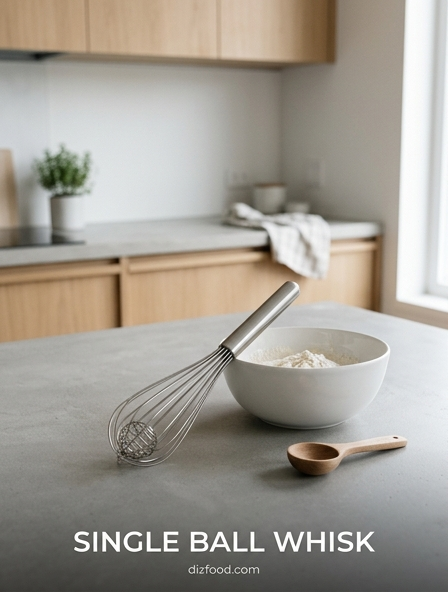
Understanding the Ball Whisk Design
The ball whisk represents a significant departure from traditional kitchen tool geometry. Unlike the looped wires of a standard balloon whisk, this tool features a series of straight, independent stainless steel wires, each tipped with a small weighted ball. This unique configuration is engineered to maximize surface contact and introduce a high-frequency vibration during use. As the cook moves the handle, the individual wires oscillate independently, allowing the balls to strike the bottom and sides of the vessel with precision. This independent movement prevents the tool from becoming clogged with thick ingredients, a common frustration with closed-loop designs.
The physics behind the design centers on kinetic energy. The weight of the balls adds momentum to every stroke, requiring less physical effort from the user to achieve a thorough mix. Whether the balls are made of solid stainless steel or coated in heat-resistant silicone, they are designed to glide across flat surfaces. This makes the tool exceptionally effective for tasks that require constant agitation across a broad area, bridging the gap between a traditional whisk and a spatula.
Eliminating Lumps in Pan Gravies
Creating a smooth pan gravy requires the immediate and thorough incorporation of liquid into a roux. The ball whisk is specifically adept at this task because its independent wires can penetrate the dense paste of flour and fat more effectively than a crowded wire cage. As liquid is added to the pan, the weighted balls break apart clumps of flour on contact, ensuring that every particle is hydrated before it has the chance to form a dry-centered lump. This creates a uniform suspension that thickens evenly as it reaches a simmer.
To achieve the best results when making gravy, follow these steps with your ball whisk:
- Deglaze the pan with a small amount of liquid, using the balls to scrape up browned bits.
- Slowly pour in the remaining stock while moving the whisk in a rapid figure-eight motion.
- Ensure the balls reach the "dead zones" where the pan bottom meets the vertical sides.
- Continue whisking until the sauce reaches a boil, allowing the vibration to maintain a silky consistency.
Superior Aeration for Emulsions
Aeration is the process of incorporating air into a liquid to create volume, lightness, or a stable emulsion. The ball whisk excels at this due to the turbulent wake created by the vibrating balls. When whisking egg whites or heavy cream, the individual wires move at slightly different speeds, cutting through the liquid and trapping air more efficiently than the rigid structure of a balloon whisk. This results in faster peaking and a more stable foam, as the air bubbles are distributed more uniformly throughout the mixture.
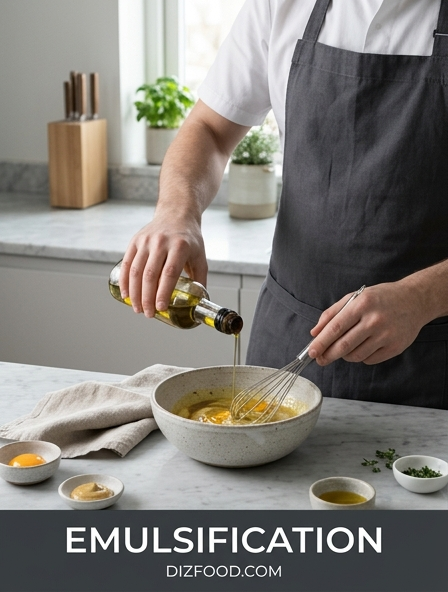
For emulsions like vinaigrettes or hollandaise, the ball whisk provides the necessary shear force to break oil droplets into microscopic sizes. This prevents the sauce from breaking or separating over time. The increased surface area of the multiple balls ensures that the fat and aqueous components are forced together repeatedly. Cooks often find that they can achieve a stable emulsion in roughly two-thirds of the time it takes with traditional methods, reducing the risk of overworking delicate ingredients or causing the eggs to scramble in heated sauces.
Reaching Every Corner of the Pan
One of the primary limitations of a traditional balloon whisk is its rounded tip, which creates a gap when used in flat-bottomed pans or straight-sided sauté pans. This gap often leads to "scorched corners," where ingredients remain stationary and overheat. The ball whisk solves this architectural problem through its flat-profile reach. The independent wires can spread out to cover the entire diameter of the pan, ensuring that the weighted balls make direct contact with every square centimeter of the cooking surface.
This capability is particularly vital when working with high-heat reductions or sugar-based syrups. Because the balls can reach into the sharp angle where the base of the pan meets the wall, there is no opportunity for sugar crystals to build up or for proteins to stick and burn. The agility of the design allows the cook to transition from a wide sweeping motion to a targeted agitation in a specific corner without changing tools. This level of coverage provides peace of mind when preparing sensitive recipes that require constant motion to prevent catastrophic scorching.
Achieving Perfectly Smooth Bechamel
A bechamel sauce is the foundation of many classic dishes, yet its simplicity hides the difficulty of maintaining a perfectly smooth texture. Using a ball whisk for this mother sauce ensures that the milk is integrated into the roux with professional precision. The constant vibration of the balls prevents the milk proteins from catching on the bottom of the pot, while the open-wire design allows the thickening sauce to flow freely through the tool. This prevents the "clogging" effect often seen with balloon whisks when the sauce reaches its peak viscosity.
Because the ball whisk is so effective at agitation, it allows for a faster addition of liquid without sacrificing texture. Cooks can maintain a higher heat setting while whisking, as the tool's efficiency in moving the liquid prevents localized overheating. The result is a glossy, heavy cream-like consistency that is free of the tiny flour granules that can ruin a lasagna or a mornay sauce. The weighted ends provide enough resistance to feel the thickness of the sauce, giving the cook tactile feedback on the progression of the cook.
Ball Whisks vs Traditional Balloon Whisks
Choosing between a ball whisk and a traditional balloon whisk depends largely on the vessel being used and the volume of the ingredients. While the balloon whisk is the classic choice for deep mixing bowls and heavy whipping, the ball whisk offers advantages in flat-bottomed cookware and for cleaning efficiency. The ball whisk's design avoids the common problem of ingredients getting trapped inside the "cage" of a traditional whisk, making it the superior choice for thick batters or sticky sauces.
| Feature | Ball Whisk | Balloon Whisk |
|---|---|---|
| Best Vessel | Flat-bottomed pans | Deep mixing bowls |
| Aeration Speed | Very Fast (Vibration) | Standard |
| Corner Reach | Excellent | Poor |
| Ease of Cleaning | High (Open design) | Low (Tangled wires) |
| Storage | Slim profile | Bulky |
Enhancing Texture in Creamy Sauces
The hallmark of a high-quality sauce is its mouthfeel. Achieving a silky, velvety texture in cream-based sauces or cheese fondues requires more than just mixing; it requires the thorough dispersion of fats and solids. The ball whisk's individual vibrating elements act as mini-homogenizers. As the balls move through the sauce, they create micro-currents that ensure flavor compounds and fats are evenly distributed. This is especially important when melting cheese into a base, as it prevents the oils from separating and forming a greasy film on the surface.
Furthermore, when finishing a sauce with cold butter-a technique known as monter au beurre-the ball whisk is the ideal instrument. It allows the cook to work the butter into the hot liquid rapidly, creating a stable emulsion that gives the sauce a professional sheen and a rich, rounded flavor. The lack of a central core in the whisk means that the sauce is not "beaten" too harshly, which can sometimes introduce unwanted large air bubbles that detract from the dense, creamy aesthetic of a finished reduction or a refined velouté.
Efficient Mixing for Delicate Reductions
Reductions require a careful balance of heat and motion. When reducing a wine-based sauce or a balsamic glaze, the liquid becomes increasingly viscous and prone to burning as the water evaporates. The ball whisk is the perfect tool for these delicate tasks because it provides constant, gentle agitation across the entire surface of the pan. This motion speeds up the evaporation process by constantly bringing the hotter liquid from the bottom to the surface, where steam can escape more easily.
The efficiency of the ball whisk also means that the cook can manage the reduction at a slightly lower temperature, preserving the volatile aromatic compounds that give the sauce its character. By ensuring that no part of the liquid stays in contact with the heat source for too long, the whisk prevents the bitter flavors associated with over-caramelization. Whether working with a delicate beurre blanc or a robust demi-glace, the tool provides the control necessary to reach the exact "nappe" consistency-where the sauce coats the back of a spoon-without any risk of degradation.
Ergonomic Benefits for Home Cooks
Cooking can be physically demanding, particularly during tasks that require prolonged whisking, such as making meringue or thick custards. The ball whisk is designed with ergonomics in mind, focusing on reducing the strain on the user's wrist and forearm. Because the weighted balls do much of the work through their own momentum and vibration, the user does not need to apply as much downward pressure or use such aggressive circular motions to achieve a thorough mix. This makes it an excellent choice for home cooks who prepare large meals or those with limited grip strength.
The handle of a ball whisk is typically balanced to compensate for the weight of the wires and balls, providing a neutral center of gravity. This balance allows for a more relaxed grip, which reduces the likelihood of repetitive strain injuries during holiday cooking marathons. Additionally, the straight-wire design means there is less resistance when moving the tool through thick batters compared to the broad surface area of a traditional balloon whisk's wires. This efficiency translates to less fatigue and a more enjoyable experience in the kitchen, even when tackling complex recipes.
Simplified Cleanup for Daily Cooking
One of the most significant advantages of the ball whisk is the ease with which it can be cleaned. Traditional whisks often suffer from "clumping" at the point where the wires meet the handle, and food particles frequently become trapped in the overlapping loops at the tip. These areas can be difficult to reach with a sponge and often require soaking or high-pressure water to clean thoroughly. In contrast, the ball whisk features an entirely open design. There are no overlapping wires or tight crevices where bacteria or food residue can hide.
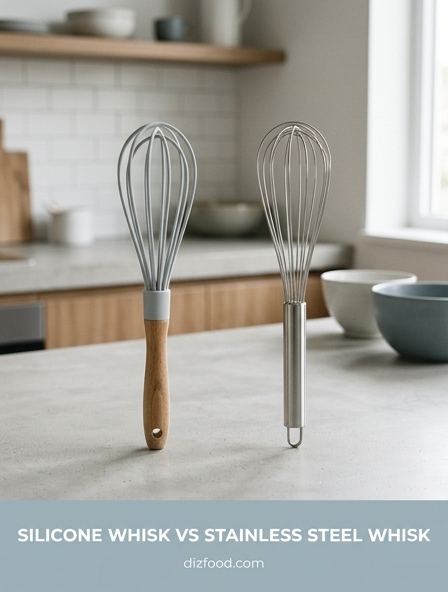
This hygienic design is complemented by the materials used in modern ball whisks, which are almost universally dishwasher safe. To maintain your whisk, consider these tips:
- Rinse the whisk immediately after use to prevent sauces from drying on the balls.
- If using a silicone-tipped version, check for tears to ensure no moisture enters the ball core.
- Store the whisk hanging or in a utensil crock; its slim profile prevents it from tangling with other tools.
- For stubborn residues, a quick swirl in warm soapy water is usually sufficient.

Comments