

Understanding Tine Density and Airflow
Tine density in kitchen whisks refers to the specific frequency and spatial arrangement of wires attached to the handle. This geometric configuration is the primary factor determining the volume of air introduced into a mixture. When a whisk moves through a liquid, the tines create a series of low-pressure wakes behind them. In a high-density whisk, these wakes overlap frequently, generating significant turbulence. This turbulence is essential for capturing ambient air and forcing it into the liquid medium. However, the spacing must be precise; if tines are too close together, the liquid may simply move as a solid mass around the tool, a phenomenon known as "clogging" or "dragging," which severely reduces the efficiency of aeration.
- Low Density: Allows for rapid movement through thick substances without excessive resistance.
- High Density: Maximizes the number of air-liquid interfaces created per stroke.
- Optimal Spacing: Varies based on the Reynolds number of the fluid being processed.
Understanding this relationship allows chefs to manipulate the texture of their preparations. By selecting a tool with the appropriate wire frequency, one can control whether a mixture becomes a dense, silky emulsion or a light, voluminous foam.
Impact of Wire Count on Bubble Formation
The process of bubble formation, or nucleation, is directly influenced by the number of wires passing through the medium. Each individual wire acts as a site for shear force, breaking down large air pockets into smaller, more stable micro-bubbles. A higher wire count increases the total surface area of the tool interacting with the liquid, which leads to a higher concentration of bubbles. As the tines slice through the mixture, the mechanical energy is dissipated more evenly across the volume, preventing the formation of irregular, large bubbles that tend to collapse quickly.
In applications like making a classic meringue, a high tine count is indispensable. The stability of the foam depends on the uniform distribution of air within the protein matrix. When more wires are present, the whisk can achieve a fine-textured foam in less time, reducing the risk of over-beating the proteins. Conversely, a lower wire count results in larger, more fragile bubbles that are better suited for rustic textures or preliminary mixing where air incorporation is a secondary goal to ingredient homogenization.
Comparing High and Low Density Whisks
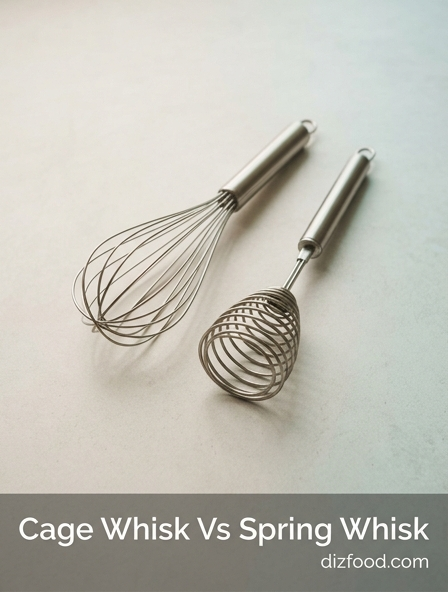
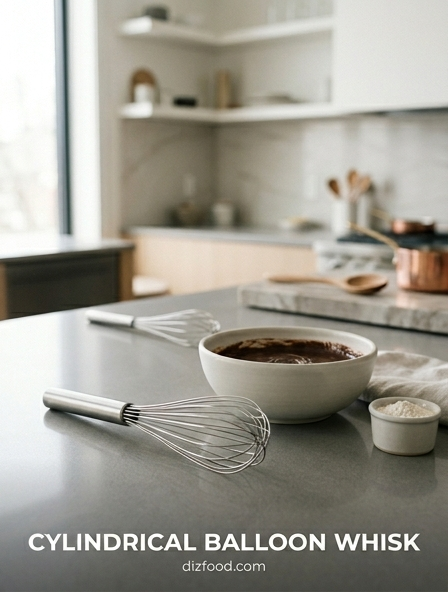
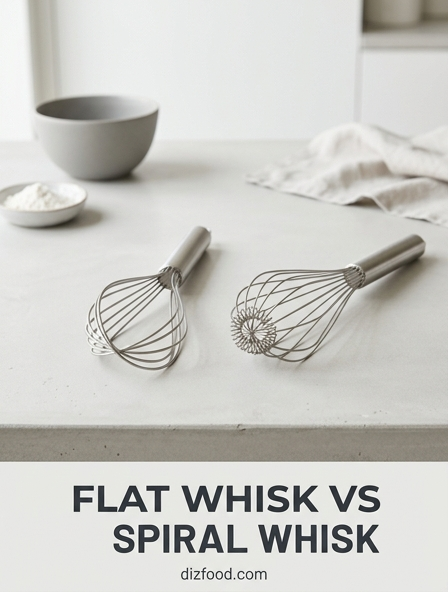
The choice between high and low tine density is often dictated by the specific culinary task at hand. Different whisk designs prioritize either air incorporation or mechanical leverage. High-density whisks, such as the traditional balloon whisk, are engineered for fluids with low viscosity. In contrast, low-density whisks, such as the flat or coil whisk, are designed for shallow pans or viscous liquids where dragging a high number of wires would be physically taxing and inefficient.
| Whisk Type | Tine Density | Primary Application | Resulting Texture |
|---|---|---|---|
| Balloon Whisk | High | Egg whites, heavy cream | Aerated and voluminous |
| French Whisk | Medium-High | Sauces, emulsions | Smooth and silky |
| Flat Whisk | Low | Roux, pan gravies | Homogeneous and lump-free |
| Dough Whisk | Very Low | Bread dough, thick batters | Integrated without over-mixing |
Selecting the incorrect density can lead to sub-optimal results, such as heavy creams that fail to peak or sauces that remain broken due to insufficient shear force. Understanding these differences ensures the mechanical energy applied is converted into the desired physical change.
The Physics of Aerating Thin Batters
Aerating thin batters, such as those used for crepes or tempura, requires a delicate balance of speed and tine density. Because these liquids have low surface tension, air bubbles tend to escape to the surface and pop almost instantly. To combat this, a whisk with high tine density is required to create a rapid succession of shear events. This creates a temporary suspension of air that thickens the batter's perceived body through the introduction of a gas phase.
The physics involves the "drag coefficient" of the tines. As the whisk rotates, the thin batter flows between the wires. If the tines are too sparse, the batter flows in a laminar fashion, which introduces very little air. By increasing the density, the flow becomes turbulent. This turbulence is what traps air. In thin batters, the goal is often to achieve a light, "lacey" quality upon frying. This is only possible if the whisk can produce a high volume of microscopic bubbles that remain suspended long enough to be set by the heat of the cooking surface.
Structural Integrity and Tine Resistance
The structural integrity of a whisk is a direct function of its tine density and the gauge of the wire used. As the number of tines increases, the total resistance encountered when moving through a substance also increases. This is particularly noticeable in "stiff" whisks designed for heavy tasks. If a whisk has high tine density but uses thin, flexible wires, it will likely deform when used with a heavy batter, leading to inefficient mixing and potential tool failure.
Resistance is calculated by the sum of the surface area of all tines interacting with the fluid's viscosity. In professional kitchens, whisks are often categorized by their "stiffness," which is a combination of wire thickness and density. A high-density whisk with thick wires provides the necessary torque to break through cold fats or thick starches. However, this same tool would be far too heavy for delicate tasks like folding a chiffon. Therefore, the resistance of the tool must be matched to the physical strength of the user and the resistance of the food product to ensure both structural longevity of the tool and the quality of the final dish.
Optimizing Volume for Fluffy Textures
To achieve the fluffiest possible texture in baked goods or whipped toppings, one must maximize the volume of incorporated air. Tine density plays the most critical role in this optimization process. The more tines that pass through the medium per second, the more opportunities there are for air to be folded into the structure. This is especially vital for recipes that rely on mechanical leavening rather than chemical agents like baking soda or powder.
- Initial Phase: Use large, sweeping motions to bring in large volumes of air.
- Refinement Phase: Increase the speed to allow high-density tines to subdivide air pockets.
- Stabilization Phase: Maintain a steady rhythm to ensure the protein or fat matrix surrounds the bubbles evenly.
For items like soufflés, the fluffiness is determined by the size and distribution of these bubbles. High tine density ensures that the bubbles are small and uniform. Uniform bubbles expand at the same rate when heated, providing a consistent rise and preventing the structural collapse that often occurs when large, irregular bubbles burst during the baking process.
Wire Spacing and Gluten Development
In flour-based mixtures, the spacing between whisk tines significantly impacts gluten development. Gluten is formed when water mixes with wheat proteins, and mechanical agitation encourages these proteins to bond into long, elastic chains. For batters where tenderness is preferred over elasticity-such as pancakes, muffins, or cakes-it is often beneficial to use a whisk with lower tine density and wider spacing.
A high-density whisk can provide too much agitation, leading to over-working of the gluten. This results in a tough, rubbery texture. Wider spacing allows the ingredients to combine with fewer strokes, minimizing the mechanical shearing of the protein strands. When the wires are further apart, the whisk acts more like a fork or a spoon, gently incorporating the wet and dry ingredients without the intense friction that triggers rapid gluten cross-linking. Therefore, bakers often switch to a low-density "dough whisk" or a balloon whisk with fewer, thicker wires when transitioning from aerating eggs to incorporating flour, ensuring the final product remains tender and light.
How Tine Density Prevents Clumping
Clumping occurs when dry ingredients, such as flour or cocoa powder, are introduced to liquids and form a protective hydrated outer layer that prevents the center from getting wet. Tine density is the primary mechanical solution for breaking these "clumps" or "lumps." A whisk with high tine density acts as a multi-bladed sieve, forcing the clumps through narrow gaps where they are subjected to intense hydraulic pressure and mechanical friction.
As a clump passes between two closely spaced tines, the speed of the liquid increases, creating a "venturi effect" that pulls the clump apart. Furthermore, the sheer number of impact points in a high-density whisk increases the probability that a clump will be hit and shattered into smaller particles. This is why a French whisk, known for its high wire count and narrow profile, is the preferred tool for making smooth béchamel or pastry cream. By ensuring every milliliter of the liquid passes through the high-density wire "grid," the chef can guarantee a perfectly smooth, lump-free consistency without the need for straining the final sauce.
Selecting Tools Based on Batter Viscosity
Viscosity, or the thickness of a liquid, determines how much "drag" a whisk will generate. Matching tine density to viscosity is essential for efficiency and comfort. If the tines are too dense for a high-viscosity batter, the batter will simply stick to the whisk, creating a heavy mass that is difficult to move. If the tines are too sparse for a low-viscosity liquid, the tool will move through the liquid without creating enough disturbance to mix or aerate effectively.
- Low Viscosity (e.g., skim milk, egg whites): High tine density is required to create enough surface area for air entrapment.
- Medium Viscosity (e.g., pancake batter, heavy cream): Medium tine density balances air incorporation with the ability to move through the liquid.
- High Viscosity (e.g., bread dough, cookie batter): Very low tine density or specialized "Dough Whisks" are needed to prevent the tool from becoming a solid, clogged weight.
By observing how a batter clings to the wires, a cook can determine if their tool is appropriate. A clean release suggests the density is correct, while excessive clinging or "tunneling" suggests the need for wider spacing.
The Relationship Between Surface Area and Emulsification
Emulsification is the process of forced mixing of two immiscible liquids, such as oil and vinegar. This requires significant mechanical energy to break the oil into microscopic droplets. Tine density is directly proportional to the total surface area of the whisk, and higher surface area results in more efficient emulsification. Each wire creates a shear zone; the more wires there are, the more shear zones exist to slice through oil globules.
In the production of mayonnaise or hollandaise, a high-density whisk is vital because it creates a high frequency of "collisions" between the oil and the emulsifying agent (like egg yolk). As the chef whisks, the high tine count ensures that the oil is broken down into the smallest possible droplets. Smaller droplets lead to a more stable emulsion that is less likely to break or separate over time. Additionally, the increased surface area allows the chef to incorporate oil more quickly, as the high-density wire web can process a larger volume of liquid per rotation, ensuring that every drop of oil is immediately surrounded by the continuous phase of the emulsion.


Comments