
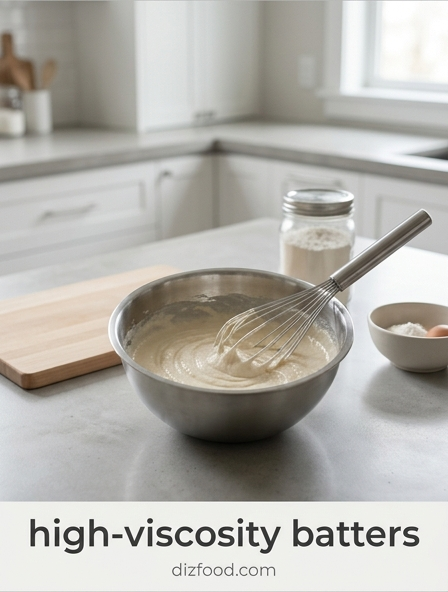
Understanding High Viscosity Batter Challenges
High viscosity batters, such as those used for pound cakes, brownies, or dense rye breads, present significant mechanical challenges in the professional kitchen. Unlike thin crepe or pancake batters, these mixtures exhibit high internal friction, requiring substantial force to move a tool through the medium. The primary difficulty lies in the resistance against manual or mechanical agitation, which can lead to uneven ingredient distribution. Common issues include the formation of dry flour pockets and the clumping of fats, which often hide within the dense structure of the batter. These challenges are amplified when scaling recipes for commercial production, where the sheer volume of material increases the energy required for a homogenous mix.
- Increased drag on mixing attachments.
- Difficulty in achieving total ingredient suspension.
- Rapid physical fatigue for manual labor.
- Risk of equipment overheating due to constant resistance.
- Inconsistent moisture distribution across the batch.
To overcome these hurdles, chefs must prioritize tools that offer both mechanical advantage and durability. Failure to address viscosity challenges often results in a final product with poor crumb structure or inconsistent baking times, as dense pockets retain moisture differently than well-aerated sections.
The Physics of Resistance in Thick Mixtures
When dealing with thick culinary mixtures, one must consider the physics of fluid dynamics, specifically the concept of shear stress and torque. High-viscosity batters often behave as non-Newtonian fluids, meaning their resistance to flow changes based on the speed and force applied. In a kitchen environment, understanding the relationship between viscosity and velocity is crucial for maintaining control over the mixing process. As a whisk or paddle moves through a dense dough, it creates a "dead zone" where the mixture remains stationary if the tool design is inefficient. This requires the chef to apply greater torque to overcome the static inertia of the ingredients.
The resistance encountered is proportional to the surface area of the tool and the speed of rotation. In heavy batters, high speeds can actually be counterproductive, causing the motor to strain against the fluid's refusal to displace. Instead, a slow, high-torque approach is often more effective for folding and incorporating dense materials. This physical reality dictates the necessity for specialized gear ratios in electric mixers and thicker cross-sections in manual tools to prevent bending under the immense pressure of the batter's weight.
Durability and Structural Integrity of Heavy Duty Whisks
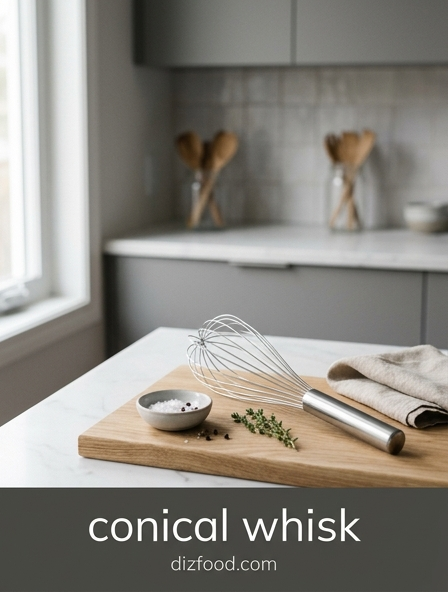
The structural integrity of a whisk is tested most severely when submerged in thick, high-viscosity bases. Standard balloon whisks, designed for aerating egg whites, often fail when introduced to heavy batters; the thin wires may bend or snap at the handle junction. Heavy-duty whisks are distinguished by their reinforced wires, often made from high-gauge stainless steel, and a sealed handle that prevents the entry of food particles. The thickness of the wires provides the necessary rigidity to cut through dense doughs without losing their shape or spring.
| Feature | Standard Whisk | Heavy Duty Whisk |
|---|---|---|
| Wire Gauge | Light/Flexible | Thick/Rigid |
| Handle Connection | Crimped | Epoxy-Sealed/Welded |
| Primary Use | Liquids/Foams | Batters/Sauces |
| Durability | Low (Bends easily) | High (Retains shape) |
Choosing the correct tool ensures that the mechanical energy is transferred directly into the mixture rather than being lost to tool deformation. A durable whisk not only lasts longer but also ensures a more consistent bake by allowing the chef to reach the bottom and sides of the bowl effectively.
Preventing Motor Burnout in Electric Mixers
Electric mixers are the workhorses of the modern bakery, but they are highly susceptible to motor burnout when forced to process high-viscosity batters. When the resistance of the dough exceeds the motor's power capacity, the internal components generate excessive heat, which can melt insulation or snap drive belts. To preserve the longevity of these machines, it is essential to follow specific operational protocols designed to manage heavy loads. Operators should be trained to recognize the signs of a struggling motor, such as a change in pitch, a burning smell, or a visible decrease in rotation speed.
- Always start at the lowest speed setting to build momentum.
- Use the correct attachment, such as a spiral hook or heavy paddle, rather than a wire whip.
- Monitor the temperature of the mixer housing during extended sessions.
- Divide large batches of dense dough into smaller, manageable portions.
- Allow the machine adequate "rest periods" to cool down between heavy cycles.
Investing in mixers with high wattage and metal gears is a prerequisite for kitchens frequently handling stiff mixtures. Higher-end models often include thermal overload protection, which automatically shuts the motor down before permanent damage occurs.
Achieving Uniform Texture in Dense Doughs
Uniformity is the hallmark of quality in baking, yet it is notoriously difficult to achieve in thick batters. The high viscosity inhibits the natural movement of ingredients, meaning that salt, leavening agents, and flavorings can remain localized rather than dispersing throughout the mixture. To achieve a smooth, homogenous texture, the mixing technique must be deliberate. Scraping the bowl frequently is non-negotiable; dense batters tend to stick to the walls, creating a layer of unmixed ingredients that can ruin the final product. Furthermore, the hydration of dry ingredients must be carefully managed. Adding liquids in stages can help break down the resistance of the dry mass before the full viscosity is reached.
In professional settings, the use of a "beater with a scraper blade" is often preferred for dense mixtures. This tool ensures that every millimeter of the bowl surface is integrated, eliminating the "dead spots" common with standard attachments. Without this level of precision, the baked goods may suffer from uneven rise or "hot spots" of concentrated flavorings, which detracts from the professional standard expected in culinary arts.
Ergonomic Benefits of Reinforced Mixing Tools
The repetitive motion of mixing heavy batters can lead to significant physical strain on the chef's wrists, elbows, and shoulders. Ergonomics, therefore, becomes a critical consideration when selecting tools for high-viscosity tasks. Reinforced tools are designed not just for the strength of the material, but for the comfort of the user. A well-designed heavy-duty tool will have a handle diameter that allows for a "power grip," reducing the amount of squeeze force required to maintain control. This is particularly important when the batter provides high resistance, as a narrow handle can cause localized pressure points and cramping.
- Contoured handles that fit the palm's natural shape.
- Non-slip materials like silicone or textured steel for better control.
- Balanced weight distribution to reduce wrist torque.
- Extended handle lengths for increased leverage in deep pots.
By using ergonomically optimized equipment, kitchen staff can maintain high productivity levels with a lower risk of repetitive strain injuries. This focus on human factors is essential in high-volume environments where manual mixing is a daily necessity for specialized pastry or bread production.
Material Strength Requirements for Stiff Batters
The selection of materials for kitchen tools used in stiff batters is dictated by tensile strength and fatigue resistance. When a tool is pushed through a thick medium, it undergoes stress that can cause inferior materials to fail. Food-grade stainless steel, particularly the 300-series (like 304 or 316), is the gold standard due to its balance of strength and corrosion resistance. These materials can withstand the high-torque environment of a heavy dough without leaching metallic tastes or breaking. In contrast, plastic or thin aluminum tools may flex excessively, making it impossible to apply the necessary force to move the batter.
For spatulas and scrapers used in high-viscosity contexts, reinforced nylon or high-durometer silicone is preferred. These materials provide enough rigidity to move several kilograms of dough while remaining flexible enough to conform to the bowl's shape. The internal core of such tools is often made of steel to ensure that the handle does not snap under the pressure of a particularly stubborn mixture. Understanding material science allows the culinary professional to choose tools that are safe, durable, and capable of performing under the most demanding conditions.
Efficiency Gains with Professional Grade Equipment
The transition from consumer-grade to professional-grade equipment yields immediate gains in kitchen efficiency, particularly when processing high-viscosity batters. Professional tools are designed for continuous duty and higher throughput, meaning they can process larger volumes in less time with better results. This efficiency is measured not just in speed, but in the reduction of waste and the consistency of the output. In a professional bakery, time saved during the mixing phase translates directly to increased production capacity and lower labor costs per unit.
| Metric | Consumer Grade | Professional Grade |
|---|---|---|
| Mixing Time | 15-20 Minutes | 5-8 Minutes |
| Max Batch Size | 2-4 Liters | 10-60+ Liters |
| Consistency | Variable | High Uniformity |
| Component Life | Short-term under load | Multi-year reliability |
While the initial investment in professional equipment is higher, the ROI is realized through the machine's ability to handle the "brute force" required for thick mixtures without frequent repairs or replacements. This allows the culinary team to focus on the art of baking rather than equipment maintenance.
Avoiding Tool Failure During Intensive Mixing
Tool failure during the mixing of heavy batters is not only an inconvenience but also a safety hazard and a source of food waste. Most failures occur at the stress points where different materials meet, such as where the whisk wires enter the handle or where the paddle attachment connects to the mixer's drive shaft. To avoid these failures, it is vital to inspect tools regularly for signs of fatigue. Hairline cracks in plastic, loose wires in a whisk, or chipped enamel on a beater are all precursors to total failure. Using the wrong tool for the job-such as using a light whisk for a heavy cookie dough-is the leading cause of broken equipment.
- Select tools specifically rated for the batter's density.
- Avoid "leveraging" the tool against the rim of the bowl.
- Clean joints thoroughly to prevent corrosion that weakens the structure.
- Replace tools showing any signs of bending or metal fatigue.
By implementing a rigorous tool maintenance and selection protocol, kitchens can eliminate the downtime associated with equipment breakage. Ensuring that every piece of gear is "fit for purpose" is the best defense against the destructive forces of high-viscosity culinary bases.
Optimizing Aeration in Heavy Culinary Bases
Aeration is a paradox in high-viscosity batters: the very thickness required for the recipe makes it difficult to incorporate and retain air. However, aeration is vital for the lightness and mouthfeel of products like sponge cakes or heavy muffins. To optimize air incorporation without overworking the gluten, specialized techniques and tools must be employed. For instance, using a wide-spaced, heavy-duty balloon whisk allows for the introduction of air bubbles into a thick base without the wires simply "cutting" through the batter without moving it. The goal is to lift and fold the mixture rather than just stirring it.
In mechanical mixing, a "creaming" stage is often used where fats and sugars are aerated before the heavy flour components are added. This creates a stable foam structure that can support the weight of the high-viscosity mixture. If the aeration is done correctly, the final product will have a fine, even crumb despite the initial density of the batter. Mastering this balance between the physical resistance of the mixture and the delicate nature of air bubbles is a sign of high-level culinary expertise, requiring both the right equipment and a refined technique.

Comments