
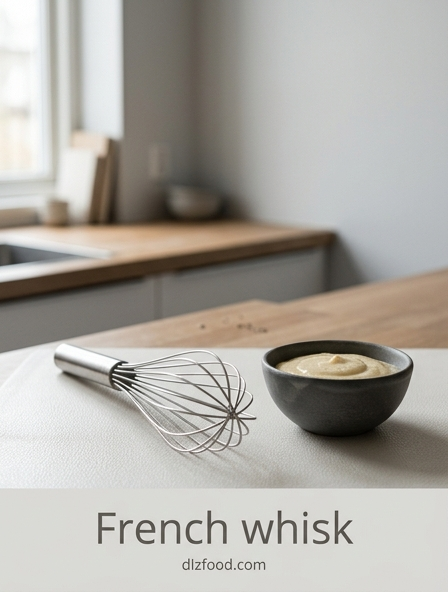
The Anatomy of a French Whisk
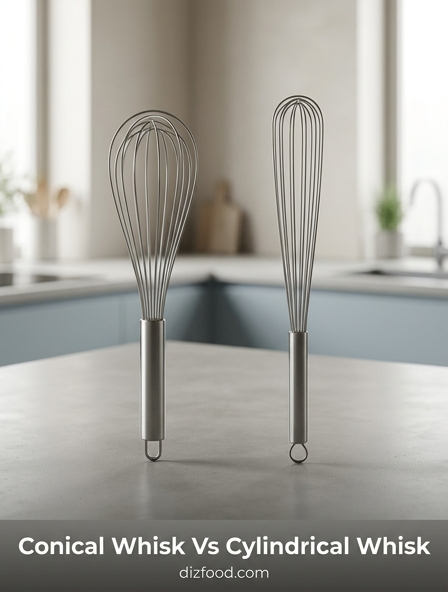
The French whisk is defined by its distinctively narrow, elongated profile, which sets it apart from other culinary mixing tools. Unlike the rounded silhouette of a standard balloon whisk, the French variant features wires that are bundled more tightly, creating a slender teardrop shape. These wires are typically made of high-gauge stainless steel to ensure they remain rigid under pressure. The structure is designed specifically for maneuverability within deep or narrow vessels where a wider whisk would simply be too cumbersome to operate effectively.
- Wire Density: Multiple loops of stiff wire provide maximum surface area for shearing liquids.
- Narrow Profile: The slim design allows for precision movement in tight spaces.
- Handle Weight: Often weighted to provide a counterbalanced feel during vigorous stirring.
- Length: Usually ranges from 8 to 20 inches to accommodate various pot depths.
The handle of a French whisk is often sealed at the base where the wires enter the grip. This construction prevents food particles and moisture from entering the handle, ensuring hygiene and structural integrity. The overall stiffness of the anatomy makes it the preferred choice for dense ingredients that would otherwise bend the flexible wires of a common whisk.
French Whisk vs Balloon Whisk Differences
Understanding the fundamental differences between a French whisk and a balloon whisk is essential for any serious cook. While they may appear similar at a glance, their applications in the kitchen are vastly different due to their geometry and wire flexibility. The balloon whisk is engineered for aeration, featuring wide, flexible loops that incorporate air into light mixtures like egg whites or heavy cream. In contrast, the French whisk is built for emulsification and blending, focusing on the integration of heavier liquids and solids.
| Feature | French Whisk | Balloon Whisk |
|---|---|---|
| Shape | Narrow and tapered | Wide and bulbous |
| Wire Tension | Stiff and rigid | Flexible and springy |
| Primary Use | Sauces, custards, roux | Meringues, whipped cream |
| Vessel Type | Narrow pots, sauciers | Large mixing bowls |
Because the French whisk has stiffer wires, it excels at moving through heavy batters and thick sauces without deforming. The balloon whisk, however, is far superior when the goal is to create maximum volume through air entrapment. Choosing the wrong tool can lead to over-aerated sauces or, conversely, heavy meringues that fail to rise.
Mastering Emulsification for Silky Sauces
Emulsification is the chemical process of forcing two liquids that typically do not mix, such as oil and vinegar, into a stable, homogenous state. The French whisk is the gold standard for this task because its dense wire arrangement creates significant shear force. When creating a classic vinaigrette or a mayonnaise, the narrow head allows the cook to apply rapid, targeted strokes that break down fat globules into microscopic droplets. This mechanical action ensures that the emulsifier can surround each droplet effectively, preventing the sauce from breaking or separating later.
As you pour oil in a slow, steady stream, the French whisk works to disperse the fat instantly. Unlike a balloon whisk, which might splash the liquid outward due to its width, the French whisk keeps the energy focused within the center of the bowl or saucepan. This precision is vital when making delicate emulsions like Hollandaise or Béarnaise, where temperature control and consistent agitation are required. The result is a sauce with a luxurious, velvety mouthfeel and a glossy appearance that holds its structure even after being plated.
Eliminating Lumps in Flour Based Roux
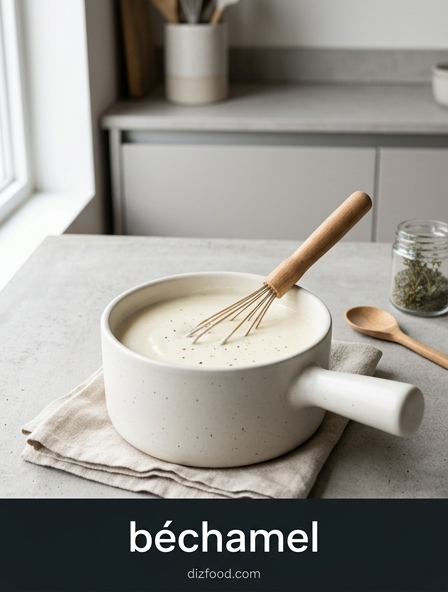
A smooth roux is the foundation of many classic French mother sauces, including Béchamel and Velouté. Achieving a lump-free consistency requires constant agitation as liquid is introduced to the cooked flour and fat mixture. The French whisk is specifically designed for this high-stakes task. Its rigid wires are capable of breaking through the viscous paste of a roux, ensuring that every particle of flour is hydrated simultaneously. This prevents the formation of dry flour pockets, which are the primary cause of unsightly lumps in finished gravies and soups.
- Combine equal parts fat and flour in a heavy-bottomed pan over medium heat.
- Cook the paste until it reaches the desired color, stirring constantly with the French whisk.
- Slowly whisk in cold liquid, using the whisk to scrape the bottom and sides.
- Continue whisking vigorously as the sauce thickens to maintain a uniform texture.
The narrow tip of the French whisk allows the cook to reach into the bottom edge of the pan where flour tends to settle and burn. By maintaining constant contact with the heating surface, the whisk ensures that the starch granules swell evenly, resulting in a thick, stable, and perfectly smooth sauce.
Reaching Every Corner of Narrow Pans
One of the most frustrating aspects of sauce-making is the "dead zone" at the bottom corner of a saucepan. In these areas, ingredients often sit undisturbed, leading to localized overheating and scorching. The French whisk addresses this problem through its specific geometry. The tapered, narrow end is perfectly angled to fit into the tight radius where the pan wall meets the base. This ensures that no portion of the sauce remains stationary, which is particularly important when working with dairy-based liquids or thick reductions that are prone to burning.
In addition to its corner-reaching capabilities, the slim profile makes it ideal for use in small sauciers or butter warmers. When a standard whisk would be too wide to even touch the bottom of a small vessel, the French whisk moves freely, allowing for complete coverage of the surface area. This efficiency translates to better heat distribution throughout the liquid. Professional chefs prefer this tool when reducing balsamic glazes or simmering delicate syrups, as it provides the granular control necessary to prevent the sugars from caramelizing unevenly or sticking to the sides of the pot.
Precision Aeration for Delicate Textures
While the balloon whisk is the champion of high-volume aeration, the French whisk provides what is known as "precision aeration." There are many culinary applications where too much air can actually ruin a dish. For example, when making a stirred custard or a lemon curd, you want a dense, creamy consistency rather than a foamy one. The French whisk incorporates just enough air to keep the mixture light without creating large bubbles that would disrupt the silky texture. This makes it the perfect tool for tempering eggs into hot liquids.
The controlled agitation provided by the stiff wires allows for a gentle lift. This is also beneficial when whisking together dry ingredients for baking, where you want to break up clumps and introduce a small amount of air without creating a dust cloud. By using a French whisk, you maintain total authority over the density of your preparation. Whether you are folding a small amount of foam into a base or simply smoothing out a pudding, the French whisk ensures that the final product remains refined, elegant, and structurally sound without the chaotic bubbles produced by more bulbous tools.
The Ideal Weight for Constant Stirring
Ergonomics play a vital role in professional kitchen tools, and the French whisk is often prized for its specific weight and balance. Because sauces like demi-glace or custard require extended periods of stirring, a whisk that is too light can feel flimsy, while one that is too heavy can cause rapid wrist fatigue. A high-quality French whisk typically features a hollow but sturdy stainless steel handle that balances the weight of the wire head. This allows the tool to pivot easily between the fingers, reducing the strain on the forearm during repetitive motions.
The heft of the wires themselves also serves a functional purpose. When moving through thick batters or heavy reductions, the weight of the whisk helps it "sink" into the mixture, requiring less downward pressure from the cook. This allows for a more fluid, rhythmic stirring motion. Many chefs find that the feedback provided by a well-weighted French whisk is superior, as it allows them to feel the changing viscosity of the sauce through the handle. This sensory connection is crucial for determining exactly when a sauce has reached the perfect nappé consistency or when a reduction is complete.
Best Materials for High Heat Saucing
When selecting a French whisk for high-heat applications, the material composition is the most critical factor. Stainless steel is the industry standard for a reason; it is non-reactive, durable, and capable of withstanding extreme temperatures without warping or degrading. In a professional setting, where a whisk might be used to deglaze a searing hot pan or stir a boiling sugar syrup, the integrity of the metal is paramount. However, the choice of material also depends on the cookware being used.
- Stainless Steel: The most durable option, ideal for copper, clad, or cast iron pans.
- Silicone-Coated: Necessary for protecting non-stick surfaces from scratches, though slightly less rigid.
- Nylon: A heat-resistant plastic option, though it lacks the shearing power of metal.
- Chrome-Plated: Generally avoided in professional kitchens as the plating can flake off over time.
For most tasks, an 18/10 stainless steel French whisk is the best investment. It resists rust and corrosion from acidic ingredients like lemon juice or wine. Furthermore, the heat-resistant handles-often filled with epoxy-ensure that the whisk remains comfortable to hold even when used over an open flame for several minutes at a time.
Professional Techniques for Pan Deglazing
Deglazing is the technique of adding liquid to a hot pan to loosen the "fond," which are the browned food bits stuck to the bottom after searing meat or vegetables. These bits contain concentrated flavor, and a French whisk is the ideal tool for incorporating them into a pan sauce. Because the wires are stiff and the head is narrow, you can apply direct pressure to the bottom of the pan to scrape up the fond as the liquid simmers. This ensures that every bit of flavor is recaptured and emulsified into the sauce.
To deglaze like a professional, first pour off any excess fat from the pan. While the pan is still hot, add your liquid-usually wine, stock, or verjus. Immediately use the French whisk in a circular or back-and-forth motion, targeting the areas where the browning is most intense. The narrow profile of the whisk allows you to reach the edges of the pan where the liquid might be evaporating quickly. As the fond dissolves, the whisk simultaneously begins the process of emulsifying any added butter or aromatics, leading to a complex, well-integrated sauce that serves as the perfect accompaniment to the main protein.
Maintaining Your French Whisk for Longevity
A high-quality French whisk can last a lifetime if maintained properly. The primary challenge with whisk maintenance is the cleaning of the tight spaces between the wires near the handle. If food particles are allowed to dry in these crevices, they can become a breeding ground for bacteria or cause the metal to pit over time. For this reason, it is best to rinse the whisk immediately after use, especially when working with starches or proteins that harden as they dry.
- Rinse under hot water immediately to remove bulk residue.
- Use a soft-bristled brush to scrub between the wires and near the base.
- Hand-wash with mild detergent to preserve the finish of the stainless steel.
- Dry the whisk thoroughly, hanging it by the handle loop to ensure no water remains trapped.
While many stainless steel whisks are labeled as dishwasher safe, hand-washing is often recommended to prevent the harsh chemicals in dishwasher tabs from dulling the metal. Additionally, periodically check the point where the wires meet the handle. If the seal becomes compromised, the whisk should be replaced to ensure food safety. Proper storage, such as hanging on a rack or placing in a dedicated utensil crock, prevents the wires from being bent by other heavy equipment.

Comments