
The Science of Whisk Wire Gauge
The gauge of a whisk wire refers to its diameter, a physical attribute that dictates the tool's interaction with various fluid viscosities. In culinary physics, the wire gauge determines the displacement of the medium being agitated. A thicker wire, representing a lower gauge number, possesses higher structural rigidity, allowing it to move through dense substances without significant deformation. Conversely, a thinner wire, or higher gauge, offers less resistance but increases the total surface area contact within the mixture when multiple wires are present.
The relationship between wire diameter and drag is a critical factor in kinetic energy transfer. When a chef whisks a liquid, the wires create a wake, and the size of this wake is proportional to the gauge. Higher gauge wires are engineered to minimize drag while maximizing the subdivision of particles. Understanding the science of these measurements allows for precise control over the texture and volume of the final product, ensuring that the mechanical force applied by the hand is translated efficiently into the desired culinary outcome.
Thick Wires for Heavy Batters
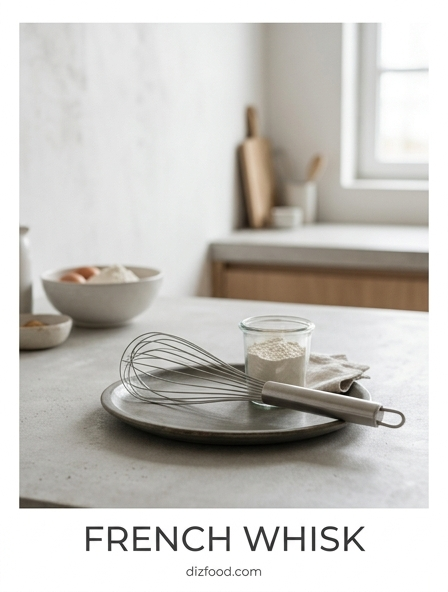
When dealing with heavy batters, such as those for muffins, brownies, or thick pancakes, the wire gauge must be substantial enough to overcome the internal friction of the mixture. Thicker wires, typically found in French whisks, provide the necessary torque to incorporate dry ingredients into wet bases without the wires bending or losing their shape. This structural integrity is vital for ensuring a homogenous blend in high-viscosity environments where a flimsy whisk would simply fail.
Using a low-gauge wire offers several mechanical advantages for dense preparations:
- Prevents permanent deformation of the whisk head under pressure.
- Allows for more aggressive scraping of the bottom and corners of the mixing bowl.
- Facilitates the breaking up of large clumps of flour or cocoa powder.
- Ensures consistent resistance, giving the baker better sensory feedback.
Without the stout nature of thick wires, heavy batters often remain lumpy, as the tool lacks the mass to shear through the thickest parts of the dough effectively. Professionals rely on these heavy-duty gauges to ensure a smooth consistency in bulk preparations.
Fine Wires and Aeration Efficiency
Aeration efficiency is the primary goal when whipping egg whites into stiff peaks or creating a voluminous whipped cream. This process requires fine, high-gauge wires that can slice through the liquid at high speeds, trapping microscopic air bubbles within the protein or fat structure. The more wires a whisk has, and the finer those wires are, the more air it can incorporate per stroke. This is the hallmark of a high-quality balloon whisk designed specifically for light, airy textures.
The mechanics of fine wires rely on the creation of high-frequency turbulence. Because thin wires have less mass, they can be manipulated rapidly with less effort, allowing for the quick formation of a stable foam. If the wires were too thick, they would displace too much liquid at once, potentially collapsing the delicate air bubbles they are meant to create. Consequently, the high-gauge wire is the standard for pastry chefs who demand precision in soufflés, meringues, and mousses, where the ratio of air to liquid is the defining characteristic of the dish.
Material Durability and Gauge Strength
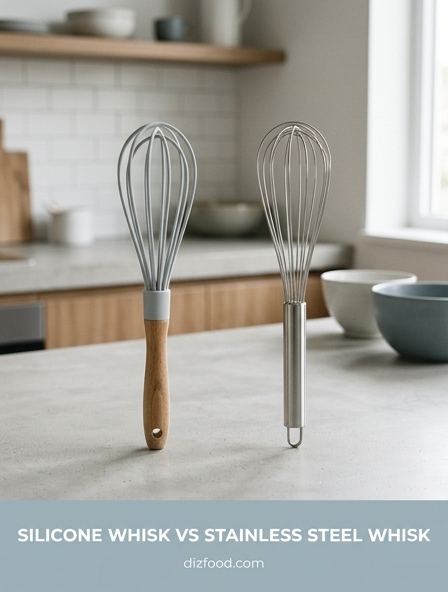
The durability of a kitchen whisk is not solely dependent on the thickness of the wire, but also on the metallurgical properties of the material used. Most professional whisks utilize stainless steel, often 18/10 or 18/8, to balance corrosion resistance with tensile strength. A higher gauge wire must be made of high-tensile steel to ensure it does not snap or become permanently misshapen after repeated use. The strength of the gauge determines how well the whisk retains its "spring" over years of service in a commercial environment.
| Wire Gauge | Typical Diameter | Primary Use Case |
|---|---|---|
| Heavy (Low) | 2.0mm - 2.5mm | Thick batters, pan sauces, roux. |
| Medium | 1.4mm - 1.8mm | General purpose, vinaigrettes. |
| Fine (High) | 1.0mm - 1.2mm | Aeration, egg whites, cream. |
Choosing a gauge that matches the material's strength ensures that the whisk can withstand the rigors of thermal shock and acidic ingredients without compromising its structural form.
Balancing Flexibility and Resistance
The hallmark of a well-engineered whisk is the balance between flexibility and resistance. If the wire gauge is too heavy, the whisk becomes a rigid paddle, losing the "bounce" required for efficient mixing. If the gauge is too light, the whisk lacks the resistance needed to move through anything denser than water. Achieving this balance allows the wires to vibrate and move independently, which increases the number of shearing actions taking place within the bowl.
Flexibility is particularly important when navigating the contours of different vessels. A whisk with the correct gauge will slightly compress when it hits the side of a bowl and then spring back, effectively covering more surface area than a static tool. This dynamic movement is what prevents ingredients from settling and burning in the corners of a pan. Manufacturers often test various gauges to find the "sweet spot" where the wire provides enough resistance to feel substantial in the hand while remaining flexible enough to facilitate rapid, rhythmic whisking motions required for emulsification and blending.
Impact of Gauge on Hand Fatigue
Hand fatigue is a significant concern for professional chefs who may spend hours whisking sauces or emulsions. The gauge of the wire directly impacts the weight of the tool and the amount of force required to move it through a medium. A heavier gauge whisk requires more grip strength and forearm exertion to overcome the initial inertia of a thick liquid. Over time, this can lead to repetitive strain or exhaustion, particularly if the whisk is not properly balanced with its handle.
Conversely, a whisk with optimized fine-gauge wires reduces the overall weight of the tool. This allows for higher velocity with less physical output. However, if the gauge is too thin for the task at hand, the chef may over-compensate by gripping the handle tighter to force the tool through the mixture, which also leads to fatigue. Selecting the appropriate gauge for the specific task ensures that the tool does the work, minimizing the biological tax on the user. Ergonomic designs often pair specific wire gauges with weighted handles to create a center of gravity that promotes a natural, oscillating wrist motion.
Optimal Thickness for Emulsification
Emulsification is the process of forced blending between two immiscible liquids, such as oil and vinegar. To achieve a stable emulsion, the droplets of one liquid must be broken down into microscopic sizes and dispersed evenly throughout the other. The thickness of the whisk wire plays a vital role in this shearing process. A medium-gauge wire is often considered optimal for emulsions like hollandaise or mayonnaise. These wires are thick enough to create significant turbulence but thin enough to move at the high speeds necessary for shearing fat globules.
- Initiate the mix with slow strokes to combine base ingredients.
- Increase speed as the oil is introduced to maximize shearing force.
- Utilize the wire's resistance to maintain a consistent vortex.
If the gauge is too fine, it may not provide enough impact force to break the surface tension of the oil droplets effectively. If it is too thick, it may move the entire mass of the liquid without creating the necessary localized friction. Therefore, a medium-gauge wire provides the perfect compromise for building a thick, velvety emulsion.
How Gauge Affects Whisk Longevity
Whisk longevity is a direct byproduct of wire gauge and its attachment method. Thinner wires are more susceptible to "metal fatigue," a condition where repeated bending causes the crystal structure of the steel to break down, eventually leading to snapping. This is most common at the point where the wires enter the handle. Thicker gauge wires are less prone to this type of failure because they undergo less relative deformation during use. However, they can put more stress on the handle's internal sealant if they are used to prying heavy substances.
In a commercial kitchen, the longevity of a whisk is also threatened by hygiene issues related to the gauge. Finer wires, when packed closely together, can trap food particles in the tight gaps where they meet. Over time, this can lead to corrosion or bacterial growth if not cleaned meticulously. Thicker gauge whisks usually have fewer wires with wider spacing, making them easier to sanitize and generally more durable over hundreds of dishwashing cycles. Choosing a heavy-duty gauge often results in a longer-lasting tool that survives the high-impact environment of a professional line.
Choosing Wire Tension for Sauces
Sauce preparation, particularly when working with a roux or a reduction, requires a whisk with specific tension. The wire gauge must be stiff enough to scrape the bottom of the pan to prevent scorching, yet resilient enough to incorporate liquids smoothly. This is why many "sauce whisks" or "flat whisks" use a medium-to-heavy gauge wire. The tension allows the chef to apply downward pressure, ensuring that every inch of the pan's surface is agitated, which is crucial for heat distribution and preventing lumps.
Tension is a function of both the wire gauge and the length of the loops. Shorter loops with a thicker gauge create a very stiff whisk, ideal for deglazing or working with heavy béchamel. Longer loops with a medium gauge provide more "give," which is better for lighter jus or gravies. When selecting a whisk for sauce work, one should look for a gauge that feels "springy" but firm. If the wires move too easily when pressed against a flat surface, they will likely fail to incorporate the heavy starches found at the beginning of the sauce-making process.
Selecting the Best Professional Gauge
Selecting the best professional gauge requires an assessment of the most frequent tasks performed in the kitchen. A versatile kitchen usually requires a tiered approach, stocking whisks of various gauges to handle the full spectrum of culinary needs. For general prep work, a medium-gauge French whisk is the industry standard, offering enough strength for emulsions and light batters while remaining light enough for extended use. For the pastry station, a high-gauge balloon whisk is an absolute necessity for delicate aeration tasks.
When purchasing, professionals should look for the following gauge-related features:
- High-tensile stainless steel that returns to its original shape.
- Wires that are individually anchored into a sealed handle.
- A gauge-to-weight ratio that feels balanced in the palm.
- NSF certification, ensuring the gauge and spacing allow for proper cleaning.
Ultimately, the "best" gauge is one that matches the viscosity of the ingredients. A kitchen equipped with a 1.2mm whisk for eggs and a 2.2mm whisk for heavy sauces is prepared for any challenge. Investing in specific gauges not only improves the quality of the food but also extends the life of the tools and the comfort of the chef.




Comments