
If you have ever pulled a warped, half-melted tool out of a simmering sauce, you know that not all kitchen gadgets are created equal. When comparing a heat-resistant whisk to a standard plastic alternative, the stakes go beyond simple durability; it is a matter of kitchen safety and food integrity. Standard plastic whisks, often made from basic polypropylene, are perfectly fine for cold vinaigrettes or pancake batter, but they frequently fail when temperatures climb, leading to structural softening or even chemical leaching. In contrast, true heat-resistant whisks-usually crafted from high-grade silicone or reinforced nylon-are engineered to withstand extreme culinary environments without breaking a sweat. Choosing the right tool ensures you won't ruin your expensive non-stick pans or, worse, end up with melted plastic shards in your evening gravy.
| Feature | Heat-Resistant Whisk | Standard Plastic Whisk |
|---|---|---|
| Primary Material | Food-grade Silicone / High-Temp Nylon | Polypropylene / Basic Plastic |
| Max Temperature | Up to 450°F - 600°F (230°C+) | Typically < 210°F (approx. 100°C) |
| Structural Integrity | Maintains stiffness under high heat | Prone to warping, bending, or melting |
| Chemical Safety | BPA-free; stable at boiling points | Risk of leaching phthalates or chemicals |
| Best Application | Custards, hot sauces, candy making | Cold batters, dressings, light mixing |
| Average Lifespan | Multi-year durability; heavy use | Short-term; disposal after heat damage |
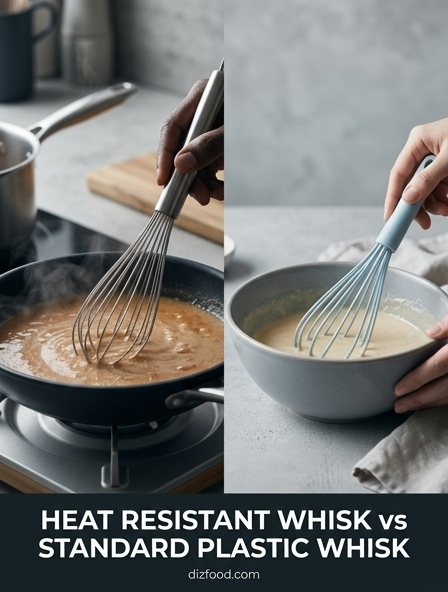
Heat Resistant vs Standard Plastic Whisk Durability
When evaluating the durability of kitchen tools, the distinction between heat-resistant materials and standard plastics is profound. A heat-resistant whisk, typically constructed from high-grade silicone or specialized glass-reinforced nylon, is engineered to maintain its structural integrity under thermal stress. In contrast, standard plastic whisks are often manufactured from low-density polymers that prioritize cost-efficiency over long-term resilience. Over time, exposure to even moderate heat causes standard plastic to undergo a process called thermal degradation, where the polymer chains begin to break down, leading to brittleness and eventual snapping of the tines.
Durability in a heat-resistant whisk is characterized by its ability to withstand rapid temperature fluctuations. Whether moving from a cold batter to a simmering custard on the stovetop, these tools do not warp or lose their ergonomic shape. Standard plastic whisks frequently suffer from "memory loss," where the tines become permanently deformed after being held against the side of a warm pot. This deformation significantly reduces the tool's efficiency in aeration and blending, eventually rendering it useless for precise culinary tasks. Furthermore, heat-resistant models often feature reinforced internal cores, such as stainless steel, which provide a backbone that standard plastic counterparts simply lack, ensuring that the whisk remains a functional staple in the kitchen for years rather than months.
Understanding Whisk Material Melting Points
The performance of a whisk is fundamentally limited by the melting point of its primary material. For home cooks and professionals alike, knowing these thresholds is essential for preventing equipment failure and food contamination. Standard plastic whisks, often made from polypropylene or basic nylon, have relatively low thresholds that can be easily exceeded during routine cooking tasks like deglazing or making caramel.
| Material Type | Common Use Case | Approximate Melting Point |
|---|---|---|
| Standard Polypropylene | Cold Mixing / Baking | 320°F (160°C) |
| Standard Nylon | General Purpose | 400°F (204°C) |
| Heat-Resistant Nylon | Light Stovetop Use | 450°F (232°C) |
| Food-Grade Silicone | High-Heat Sautéing | 500°F - 600°F (260°C - 315°C) |
| Stainless Steel | Professional Stovetop | 2500°F+ (1370°C+) |
While a pan's surface temperature can quickly exceed 400°F, a standard plastic whisk may begin to soften or "slump" well before it reaches its official melting point. Heat-resistant silicone is the gold standard for non-stick cookware because it offers a massive safety buffer, remaining chemically stable and physically rigid at temperatures that would liquefy standard domestic plastics. Understanding these limits allows cooks to select the right tool for the specific thermal demands of their recipe.
Why Heat Resistance Matters for Stovetop Cooking
Stovetop cooking introduces direct conductive heat that can be devastating to inferior kitchen tools. When whisking a roux or a thick gravy, the tines of the whisk spend significant time in direct contact with the bottom of the pan, which is the hottest part of the cooking vessel. Heat resistance is not merely a luxury in this context; it is a functional requirement. A whisk that cannot handle high temperatures will begin to fuse to the pan or shed microscopic particles into the sauce, altering both the flavor and the safety of the meal.
Furthermore, heat resistance ensures consistent performance during long cooking processes. For example, when tempering eggs for a custard or whisking a delicate hollandaise over a double boiler, the cook requires a tool that provides consistent tension and spring. Standard plastic whisks often become soft and "rubbery" when exposed to steam and rising heat, losing the tension necessary to emulsify fats or incorporate air. Heat-resistant whisks maintain their stiffness, allowing for the high-velocity movement required to achieve perfect textures. By using materials that shrug off thermal energy, chefs can focus on the technique of the dish rather than worrying about the physical breakdown of their equipment mid-process.
Safety Risks of Melting Plastic Whisks
The use of standard plastic whisks in high-heat environments poses significant safety risks that extend beyond simple tool failure. The primary concern is chemical leaching. When standard polymers are heated past their stability point, they can release harmful substances such as Bisphenol A (BPA) or phthalates into the food. These chemicals are known endocrine disruptors and can have long-term health implications. Additionally, as the plastic softens, it can shed microplastics-tiny fragments that are invisible to the naked eye but become a permanent contaminant in the cooked dish.
In addition to chemical risks, there are immediate physical hazards. A melting whisk can produce acrid smoke and toxic fumes, which are dangerous to inhale in an enclosed kitchen space. If the plastic reaches a liquid state, it can stick to the cookware, creating a permanent bond that ruins expensive non-stick surfaces. Furthermore, should a plastic tine snap off due to heat-induced brittleness, it creates a choking hazard or a sharp foreign object within the food. Choosing heat-resistant silicone or high-grade nylon mitigates these risks, as these materials are specifically formulated to remain inert and intact, ensuring that the only ingredients in the finished dish are the ones the cook intentionally added.
Silicone vs Nylon Performance in High Heat
While both silicone and nylon are marketed as heat-resistant, they exhibit distinct performance characteristics when subjected to high temperatures. Choosing between them depends largely on the specific culinary application and the type of cookware being used. Silicone is generally the superior choice for extreme temperatures, whereas nylon offers a middle ground of rigidity and heat tolerance.
- Flexibility and Texture: Silicone is naturally more flexible, making it ideal for reaching the corners of pans, whereas nylon is stiffer and better for heavy batters.
- Heat Threshold: Silicone can typically withstand up to 600°F, while even high-grade nylon usually caps out around 400°F to 450°F.
- Surface Safety: Both are safe for non-stick coatings, but silicone is softer and less likely to leave "ghost" scratches over years of heavy use.
- Stain and Odor Resistance: Silicone is non-porous and highly resistant to picking up smells or colors from pungent sauces like curry or tomato-based gravies.
- Mechanical Strength: Nylon whisks maintain their shape better under heavy loads, whereas silicone whisks require a reinforced internal frame to prevent them from being too floppy.
In professional settings, silicone-coated stainless steel whisks are often preferred because they combine the structural strength of metal with the heat-safe and non-scratch properties of silicone. Nylon remains a popular budget-friendly alternative for tasks that involve moderate heat, but it cannot match the extreme thermal endurance of high-quality silicone.
Choosing the Best Whisk for Hot Sauces
Crafting a perfect hot sauce, whether it is a delicate bechamel or a vigorous reduction, requires a whisk that can handle both the temperature and the chemistry of the ingredients. The best whisk for hot sauces is one that provides high thermal stability while ensuring maximum surface area contact with the pan. For most home cooks using non-stick or ceramic-coated pans, a silicone-wrapped balloon whisk is the optimal choice. The silicone protects the pan's coating while the balloon shape ensures that every drop of liquid is incorporated, preventing the localized burning that often occurs in the "corners" of the pan.
When working with acidic sauces, such as those containing lemon juice or vinegar, the material choice becomes even more critical. Standard plastic whisks can sometimes react with acidic components when heated, leading to off-flavors. Heat-resistant silicone is chemically inert, meaning it will not react with acids or bases, ensuring the flavor profile of the sauce remains pure. For heavy, thick sauces like fudge or thick gravies, a heat-resistant nylon whisk may be preferred for its added stiffness, which allows the cook to push through the viscosity of the liquid. Ultimately, the "best" whisk is one that matches the pan material and the heat intensity, ensuring a smooth, lump-free result without compromising the safety of the tool or the integrity of the dish.
Longevity Benefits of Heat Resistant Materials
Investing in heat-resistant kitchen tools is a strategy for long-term economy. While a standard plastic whisk may cost significantly less at the point of purchase, its lifespan is remarkably short when used for stovetop cooking. The cumulative effect of heat cycles causes standard plastic to undergo "thermal fatigue," where the material develops microscopic cracks. These cracks eventually lead to total structural failure. Heat-resistant materials, specifically silicone and advanced polymers, are designed to endure thousands of heating and cooling cycles without any change in their molecular structure.
Beyond resisting breakage, heat-resistant whisks maintain their aesthetic and hygienic qualities longer. Standard plastics tend to become "pitted" after exposure to high heat, creating tiny craters where bacteria can thrive and food particles can become trapped. Silicone is naturally hydrophobic and non-porous, meaning it sheds water and food debris easily, making it much more dishwasher-safe over the long term. Because these materials do not warp, the whisk maintains its original balance and ergonomic feel, preventing hand fatigue during long whisking sessions. In the lifecycle of a busy kitchen, one high-quality heat-resistant whisk will typically outlast five to ten cheap plastic alternatives, making it the more sustainable and cost-effective choice.
Comparing Heat Tolerance and Food Safety
The intersection of heat tolerance and food safety is where the difference between professional-grade tools and budget plastics becomes most apparent. Food safety is not just about cleanliness; it is about the stability of the materials that come into contact with what we eat. Heat tolerance is the primary guardian of this stability. When a whisk is rated for 500°F, it means the material has been tested to ensure it does not off-gas or degrade at that temperature. This provides a "margin of safety" that is essential for home cooking, where pan temperatures can fluctuate rapidly.
Standard plastic whisks lack this margin. If a recipe calls for whisking a syrup to the hard-crack stage (approx. 300°F), a standard plastic whisk is already at its physical limit. At this point, the risk of "migration"-the movement of plastic molecules into the food-increases exponentially. Food-grade silicone is rigorously tested by bodies such as the FDA and LFGB to ensure that even at peak temperatures, no harmful substances are transferred. By choosing a tool with high heat tolerance, the cook is effectively ensuring that the physical properties of the tool remain separate from the chemical properties of the food, upholding the highest standards of kitchen hygiene and consumer health.
Professional Kitchen Standards for Whisk Materials
In a professional culinary environment, the standards for equipment are dictated by the National Sanitation Foundation (NSF) and the rigorous demands of high-volume service. Standard plastic whisks are almost never found in commercial kitchens because they fail to meet durability and sanitation requirements. Professionals overwhelmingly opt for stainless steel or silicone-coated stainless steel. The "heat resistant" label in a professional context means the tool can survive being forgotten in a hot pot or run through a high-temperature commercial dishwasher dozens of times a day without degradation.
Professional standards also emphasize the construction of the handle-to-tine seal. On cheaper plastic whisks, this joint is often a point of failure where heat can cause the plastic to expand and loosen, creating a gap where old food and bacteria can collect. Professional-grade heat-resistant whisks often feature "epoxy-sealed" or "fully encapsulated" designs. This prevents any liquid from entering the handle, regardless of the temperature. These tools are built to be tools of precision; they must be rigid enough to move heavy sauces but resilient enough to handle the thermal shock of a professional range. For the home cook, adopting these professional standards means moving away from disposable plastic and toward materials that offer industrial-level reliability.
How Heat Affects Standard Plastic Whisk Integrity
To understand why standard plastic whisks fail, one must look at the physical changes that occur during heating. Plastic is a polymer, a long chain of molecules. In standard kitchen plastics, these chains are held together by relatively weak bonds. As heat is applied, the molecules vibrate more vigorously, causing the bonds to stretch. This manifests as "warping." Once the plastic cools, these chains do not always return to their original configuration, resulting in a whisk that is permanently bent or has tines that are stuck together.
Furthermore, heat causes "plasticizer migration." Many plastics contain additives to make them flexible; heat causes these additives to move to the surface and eventually evaporate or leach out. This leaves the remaining plastic brittle and prone to "stress cracking." This is why an old plastic whisk might feel "chalky" or snap suddenly while mixing a simple batter. Heat-resistant whisks utilize materials like silicone which have a backbone of silicon and oxygen rather than carbon. These bonds are significantly stronger and require much more energy to disrupt. Consequently, while a standard plastic whisk is slowly disintegrating at a molecular level with every use, a heat-resistant whisk remains chemically and physically identical to the day it was manufactured.

Comments