
Material Heat Resistance and Melting Points
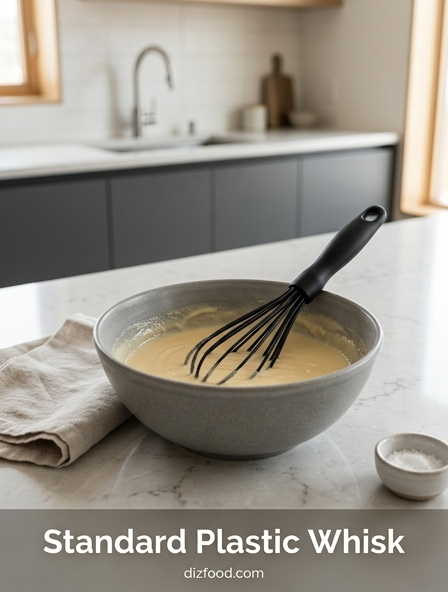
Standard plastic whisks are typically manufactured from nylon, polypropylene, or silicone-coated plastics. Each material exhibits a distinct thermal threshold that dictates its utility in the kitchen. Nylon whisks generally offer heat resistance up to approximately 400°F (204°C), whereas lower-grade polypropylene variants may begin to soften at significantly lower temperatures. When these tools are left resting against the edge of a hot pan, they often reach their glass transition temperature, leading to irreversible warping or the formation of "hot spots" where the tines become permanently deformed.
| Material Type | Average Heat Resistance | Common Use Case |
|---|---|---|
| Standard Nylon | 350°F - 400°F | General mixing |
| Polypropylene | 210°F - 250°F | Cold prep only |
| High-Temp Silicone | Up to 500°F | Sautéing and sauces |
Exceeding these limits does not just compromise the tool's shape; it can lead to catastrophic failure where the plastic tines fuse together or melt directly into the food. Users must distinguish between "heat-resistant" and "heat-proof," as most plastic whisks are only designed for brief contact with warm liquids rather than sustained high-heat cooking.
Structural Flexibility and Aeration Efficiency
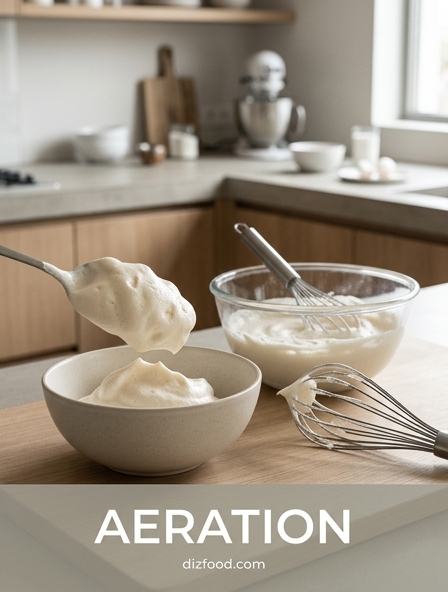
The primary mechanical drawback of a plastic whisk lies in its inherent structural flexibility. Unlike stainless steel, which maintains a rigid form under resistance, plastic tines tend to flex away from the force of the liquid. This lack of rigidity significantly impacts aeration efficiency, particularly when attempting to incorporate air into heavy creams or egg whites. The energy transferred from the cook's arm is partially absorbed by the bending plastic rather than being fully directed into the mixture, resulting in a longer preparation time and increased physical fatigue.
- Reduced shear force prevents the rapid breaking of protein bonds in egg whites.
- Flexibility causes the tines to "clump" together when moved quickly through thick liquids.
- Lighter weight leads to less momentum during the whipping stroke.
Furthermore, the thickness of plastic tines-necessary to prevent them from snapping-limits the number of wires that can be fit into the handle. Fewer wires mean fewer contact points with the ingredients, which directly correlates to a less efficient emulsification process. While the flexibility is gentle on non-stick surfaces, it creates a performance ceiling that prevents the user from achieving professional-grade results in high-volume tasks.
Chemical Leaching and Food Safety Risks
Food safety concerns regarding plastic kitchenware often center on the potential for chemical migration. When a plastic whisk is exposed to acidic ingredients or high temperatures, the polymer structure can break down, releasing additives into the food. Substances such as Bisphenol A (BPA) and various phthalates used to increase flexibility are the primary subjects of concern. Even "BPA-free" plastics may contain alternative chemicals like BPS that exhibit similar endocrine-disrupting properties under stress.
- Thermal Stress: Heat accelerates the migration of stabilizers from the plastic to the food.
- Acidic Reaction: High-acid foods like lemon juice or vinegar can degrade the surface of low-grade plastics.
- Fat Solubility: Many plastic additives are lipophilic, meaning they migrate more easily into fatty substances like butter or oil.
Long-term exposure to these leached chemicals is a point of contention in food science. While regulatory bodies set "safe" migration limits, the cumulative effect of using degraded plastic tools for daily cooking remains a concern. Once a plastic whisk begins to show signs of clouding, pitting, or discoloration, the rate of chemical leaching increases exponentially, signaling that the tool is no longer food-safe and should be discarded immediately.
Microplastic Shedding from Surface Wear
The physical degradation of a plastic whisk occurs through mechanical friction against mixing bowls and pans. Over time, the repeated scraping action against stainless steel or ceramic surfaces causes the plastic tines to abrade. This process releases microscopic polymer fragments, commonly known as microplastics, directly into the food preparation. Unlike metal whisks, which may lose microscopic amounts of inert iron or chromium, plastic sheds synthetic fibers and particles that do not break down in the human digestive system.
- Abrasive Wear: Coarse ingredients like sugar crystals act as sandpaper against the plastic tines.
- Edge Fraying: The tips of the whisk often develop small burrs or "feathers" that eventually break off.
- Cleaning Degradation: Harsh detergents and high-heat dishwasher cycles embrittle the plastic, making it more prone to shedding.
Studies have indicated that kitchen utensils are a significant source of household microplastic ingestion. A plastic whisk that appears "dull" at the tips has already lost material to previous meals. This shedding is exacerbated when the whisk is used in high-friction environments, such as whisking flour-based roux in a textured cast-iron skillet, where the mechanical resistance is highest.
Inability to Handle Heavy Batters
Plastic whisks are specialized tools best suited for thin liquids; however, they frequently fail when tasked with heavy batters. The low modulus of elasticity in plastic means that when the whisk encounters a viscous substance-such as bread dough, thick cookie batter, or chilled brownie mix-the tines deform rather than cut through the material. This results in the batter becoming trapped inside the "cage" of the whisk, as the tines lack the strength to push the mixture back out.
| Batter Type | Plastic Whisk Performance | Risk Factor |
|---|---|---|
| Vinaigrettes | Excellent | Minimal |
| Pancake Batter | Fair | Minor bending |
| Muffin Mix | Poor | Handle strain |
| Cookie Dough | Not Recommended | Structural snap |
As the user applies more force to compensate for the resistance, the stress is concentrated at the junction where the tines meet the handle. Because plastic does not have the tensile strength of steel, this often leads to the handle cracking or the tines pulling out of the base. For dense ingredients, the lack of torque provided by a plastic tool makes it an ineffective and potentially fragile choice for the home cook.
Durability Concerns and Snap Risks
The lifespan of a plastic whisk is generally significantly shorter than that of its metal counterparts due to material fatigue. Plastic is subject to "creep," a phenomenon where the material permanently deforms under long-term stress. Additionally, many plastics become brittle over time as they lose plasticizers through evaporation or washing. This brittleness leads to "snap risks," where a tine may suddenly break off during use, potentially ending up as a sharp, hazardous object in the finished dish.
Stress fractures often develop at the base of the whisk wires where the most leverage is applied. These fractures are frequently invisible to the naked eye until the point of total failure. Unlike a metal whisk, which will usually bend before it breaks, plastic fails catastrophically. The risk is particularly high with injection-molded whisks that have thin "living hinges" or complex geometries that create natural stress concentrators. Regular inspection for white stress marks or hairline cracks is necessary to prevent the tool from shattering during a vigorous whisking session, which could cause injury or food contamination.
Bacterial Growth in Material Scratches
One of the most significant hygiene issues with plastic whisks is their susceptibility to surface damage. While stainless steel is non-porous and resistant to scratching, plastic is relatively soft. Even standard use can result in microscopic scratches and gouges. These recesses provide an ideal environment for biofilms and bacterial colonies to flourish, as they are often too deep for standard sponge fibers or dishwasher jets to reach effectively.
- Biofilm Formation: Residual fats and sugars lodge in scratches, feeding bacteria like E. coli or Salmonella.
- Cross-Contamination: Pathogens from raw eggs can hide in cracks and transfer to "no-heat" foods like whipped cream.
- Odor Retention: The porous nature of degraded plastic allows it to absorb smells from pungent ingredients like garlic or onion.
Sanitizing a scratched plastic whisk is difficult because high-heat sterilization may further degrade the plastic, creating more surface area for bacterial growth. In professional environments, utensils with visible surface degradation are often flagged for replacement to maintain health code standards. For home users, the shift from a smooth surface to a matte or scratched texture should be viewed as a signal that the whisk's antimicrobial integrity has been compromised.
Performance Comparison with Metal Alternatives
When comparing plastic whisks to stainless steel alternatives, the differences in performance and longevity are stark. Metal whisks are favored for their ability to be manufactured with very thin, high-tension wires. These thin wires cut through liquids with minimal drag, allowing for superior aeration and much faster results when whipping. Plastic whisks, by necessity, have thicker tines to provide enough strength to function, which creates more "drag" and less "cut."
| Feature | Plastic Whisk | Stainless Steel Whisk |
|---|---|---|
| Cookware Safety | Safe for Non-stick | May scratch coatings |
| Sanitation | Porosity increases over time | Non-porous, high-heat safe |
| Weight | Very light | Moderate / Balanced |
| Longevity | 1-3 Years | 10+ Years |
While the plastic whisk excels in protecting the delicate PTFE coating of non-stick pans, it loses in almost every other category. Metal whisks can withstand open flames, boiling sugar, and heavy-duty scrubbing without losing their structural integrity or leaching chemicals. For the serious cook, the plastic whisk is often relegated to a secondary role, used only when the preservation of a pan's coating is the absolute priority over the speed and quality of the whisking itself.
Thermal Degradation in High Heat Cooking
Thermal degradation is a chemical change that occurs when the long-chain molecules of the plastic begin to break apart due to heat. In the context of a kitchen, this usually happens when a whisk is used to stir a thick sauce, custard, or roux over a hot burner. Unlike melting, which is a physical state change, thermal degradation permanently alters the chemical makeup of the whisk, often making it more brittle and releasing volatile organic compounds (VOCs).
- Color Fading: Pigments in the plastic break down, leading to a bleached or yellowed appearance.
- Softening: The whisk may lose its "spring," becoming limp and ineffective even after cooling.
- Surface Tacking: The plastic may become "sticky" to the touch as internal oils migrate to the surface.
This process is cumulative. Every time a plastic whisk is exposed to temperatures near its limit, the material's molecular bonds weaken. Eventually, the whisk reaches a state where it is prone to "brittle failure," snapping under the slightest pressure. This makes them particularly poorly suited for tasks involving candy making or deep-frying, where temperatures frequently exceed the safety margins of standard kitchen polymers.
Limitations in Achieving Peak Volume
Achieving "stiff peaks" in egg whites or heavy cream requires a high frequency of air bubbles to be trapped within a protein or fat matrix. A plastic whisk is fundamentally disadvantaged in this task due to its mass and tine geometry. Because plastic tines are thicker, they create larger air bubbles which are less stable than the tiny, uniform bubbles created by the thin wires of a balloon whisk made of steel. This results in a foam that is more prone to collapsing.
- Static Electricity: Some plastics can generate a minor static charge that may interfere with the alignment of delicate protein strands.
- Surface Tension: The hydrophobic nature of many plastics can prevent the "clinging" action required to pull air into the mixture efficiently.
- Low Momentum: The light weight of plastic requires more physical effort from the user to maintain the high-velocity strokes needed for volume.
In culinary tests, plastic whisks often take up to 50% longer to reach the same volume as a metal whisk. For recipes like soufflés or meringues, where the timing of the aeration is critical to the structural integrity of the dish, the inefficiency of plastic can lead to inferior results. The "give" of the plastic tines simply cannot provide the sharp, shearing action necessary for professional-level pastry work.

Comments