
Understanding Flat Whisk Anatomy
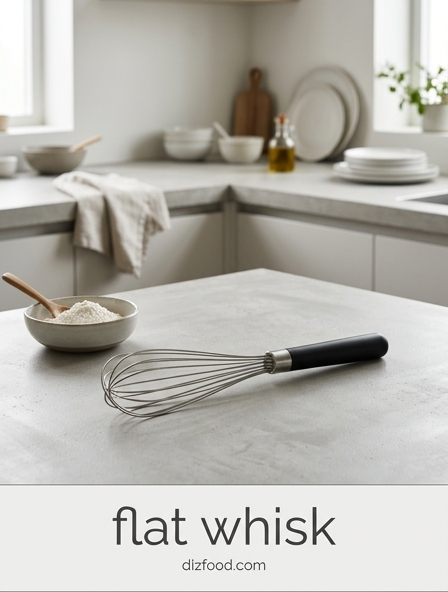
The flat whisk, often referred to as a roux whisk, is a specialized culinary tool designed with a specific geometric profile that distinguishes it from its more common bulbous counterparts. Its primary characteristic is the alignment of its stainless steel wires, which are bent into a flattened teardrop shape and arranged in a single, horizontal plane. This configuration allows the tool to lie flush against the bottom of cookware, ensuring maximum contact with the cooking surface. The handle is typically weighted to provide balance, allowing for precise control when navigating the shallow depths of a skillet or sauté pan.
- Wire Alignment: Four to five concentric loops nested within each other to create a flat, paddle-like surface.
- Material Composition: High-gauge stainless steel for durability and resistance to high-heat environments.
- Profile Height: Extremely low clearance, enabling it to slide under ingredients rather than moving through them.
By understanding this unique anatomy, a cook can leverage the tool's ability to scrape, stir, and lift simultaneously. Unlike the balloon whisk, which is designed for aeration, the flat whisk focuses on surface-level agitation, making it indispensable for specific saucier tasks where ingredient integration at the base of the pan is the priority.
The Roux Advantage in Shallow Pans
Creating a perfect roux requires constant movement and even heat distribution to prevent the flour from scorching. In shallow pans like cast iron skillets or wide sauté pans, the flat whisk excels because it mirrors the pan's topography. As the fat and flour combine, the whisk's flat wires sweep across the entire diameter of the pan, ensuring that no portion of the mixture remains stationary for too long. This is particularly vital when moving from a white roux to a darker chocolate roux, where the margin for error regarding temperature is slim.
The mechanical advantage of the flat whisk lies in its ability to push the paste across the hot surface, facilitating the Maillard reaction uniformly. Because the wires are positioned horizontally, they act as miniature spatulas that lift the roux from the heat, allowing for better visual monitoring of color changes. This prevents the "hot spots" that often occur when using a spoon or a round whisk, which can leave small pockets of flour unagitated in the corners or flat sections of the pan. Consequently, the result is a smoother, more flavorful base for gravies and mother sauces.
Flat Whisk versus Balloon Whisk Efficiency
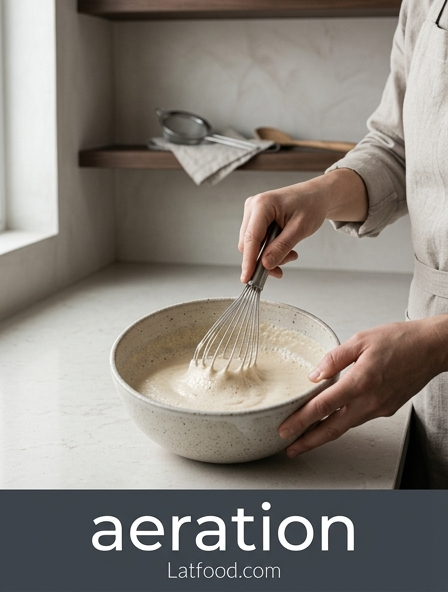
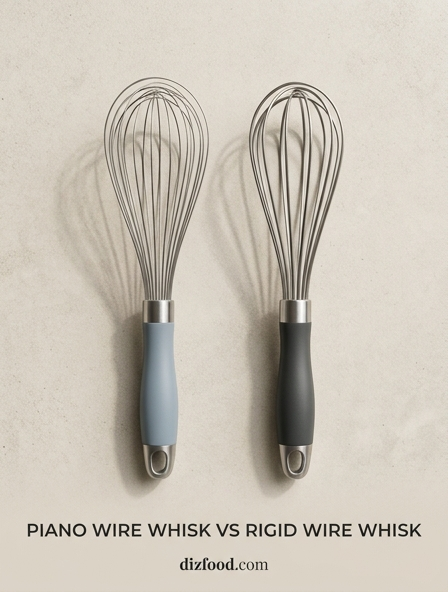
Choosing between a flat whisk and a balloon whisk depends entirely on the desired outcome of the culinary task. While both tools serve to incorporate ingredients, their efficiency varies significantly based on the depth of the vessel and the need for aeration. The balloon whisk is engineered to trap air, making it the superior choice for whipped cream or meringues. Conversely, the flat whisk is designed for immersion and surface contact, making it the more efficient choice for heavy liquid reductions and pan-based emulsions.
| Feature | Flat Whisk | Balloon Whisk |
|---|---|---|
| Primary Function | Deglazing & Roux | Aeration & Volumizing |
| Vessel Suitability | Shallow Pans/Skillets | Deep Mixing Bowls |
| Surface Contact | Maximum/Horizontal | Minimal/Pointed |
| Texture Result | Smooth & Dense | Light & Airy |
In a professional kitchen, the flat whisk is the workhorse for stovetop sauces. Its ability to maneuver in tight spaces and maintain contact with the pan floor reduces the physical effort required to keep a heavy sauce from sticking, whereas a balloon whisk would be clumsy and ineffective in such shallow environments.
Mastering the Deglazing Process
Deglazing is the critical step of releasing caramelized food particles, known as fond, from the bottom of a pan to create a flavorful sauce base. The flat whisk is the premier tool for this technique due to its scraping capabilities. When a liquid such as wine, stock, or vinegar is added to a hot pan, the flat whisk can be used to apply gentle pressure across the metal surface, effectively lifting the fond without scratching the cookware. This process ensures that every bit of flavor is integrated into the liquid.
- Sear protein and remove it from the pan, leaving the browned bits behind.
- Pour in the deglazing liquid while the pan is still over medium-high heat.
- Use the flat whisk in a broad, sweeping motion to loosen the fond.
- Continue whisking until the liquid reduces and the pan bottom is clean.
The efficiency of the flat whisk during deglazing prevents the liquid from evaporating too quickly before the flavor is captured. Its wide surface area allows the cook to cover more ground in fewer strokes, which is essential when working with high-heat reductions that can quickly turn bitter if overcooked.
Techniques for Lump Free Pan Sauces
Achieving a silky, lump-free consistency in pan sauces is a hallmark of skilled cooking, and the flat whisk is the primary instrument used to reach this goal. Lumps typically form when liquid is added too quickly to a starch base, causing the outer layer of the starch to gelatinize and trap dry powder inside. The flat whisk combats this through superior shear force. Because its wires are aligned in a single plane, they act as a sieve that breaks down clumps of flour or cornstarch against the bottom of the pan as the liquid is gradually incorporated.
To ensure a smooth result, one should use a rhythmic, "figure-eight" motion. This technique forces the liquid and roux to pass through the wires repeatedly, creating a homogenous emulsion. The flat whisk's ability to stay in constant contact with the pan prevents the starch from settling and burning, which is often the silent cause of grainy textures. By maintaining a steady pace and using the tool's flat edge to crush any visible beads of flour, the cook can produce a professional-grade sauce with a lustrous finish and perfect viscosity.
Reaching Pan Corners and Edges
One of the most frustrating aspects of sauce making is the tendency for ingredients to congregate and burn in the "crease" or corner of the pan. Standard round whisks are physically unable to reach these tight angles because their spherical shape prevents the wires from touching the intersection of the pan's wall and base. The flat whisk solves this design flaw. Its narrow, tapered front and flat profile allow it to slide directly into the corners, ensuring that no flour or aromatics are left behind to scorch.
- Edge Sweeping: Rotate the whisk to follow the circumference of the pan to clear the sidewalls.
- Corner Digging: Use the tip of the flat loops to agitate tucked-away ingredients.
- Angle Flexibility: Adjust the handle height to change the pressure applied to the pan's perimeter.
This level of access is particularly important when making delicate sauces like Hollandaise or Béchamel in a saucier. By consistently clearing the edges, you maintain the integrity of the entire batch, preventing charred flecks from ruining the visual appeal and taste of your final dish.
Temperature Control for Perfect Emulsions
Successful emulsions, such as a butter-rich pan sauce or a lemon-garlic reduction, rely heavily on precise temperature management. The flat whisk aids in this by facilitating rapid heat exchange between the liquid and the pan. Because the tool covers a large surface area, whisking effectively moves the cooler liquid across the hot pan surface, preventing localized boiling that can break an emulsion. This constant motion helps maintain a stable temperature throughout the sauce, allowing fats and liquids to bind more securely.
Furthermore, when mounting a sauce with cold butter (monter au beurre), the flat whisk allows for the gentle incorporation of fat without over-aerating the mixture. Over-whisking with a balloon whisk can introduce too much air, which may cool the sauce too rapidly or change the mouthfeel. The flat whisk provides the necessary agitation to disperse the fat molecules evenly while keeping the sauce dense and glossy. This controlled movement is the key to achieving that velvety restaurant-quality texture that clings perfectly to proteins and vegetables alike.
Building Flavor Profiles in Roux
The depth of flavor in many traditional dishes, from gumbo to gravy, starts with the roux. The flat whisk is the essential tool for building these flavor profiles because it allows the cook to push the boundaries of browning without crossing into burning. As the flour toasts in the fat, the flat whisk keeps the mixture in a state of constant flux, exposing different portions of the starch to the heat in a controlled manner. This is how a cook achieves the complex, nutty notes of a blond or brick-red roux.
- Heat the fat until shimmering before adding the flour.
- Use the flat whisk to create an even layer of roux across the pan.
- Stir in a consistent circular motion to ensure even browning.
- Watch for the distinct aromatic transition from "raw" to "toasted."
Because the flat whisk is so efficient at moving the mixture, it allows for higher cooking temperatures, which can speed up the roux-making process. However, its real value lies in the precision it offers during the final stages of browning, where seconds can make the difference between a rich, mahogany base and a bitter, ruined pan.
Surface Area Optimization for Searing
While the flat whisk is primarily a stirring tool, its design can also assist in the preparation stages of searing. When preparing a pan with oil and aromatics like minced garlic, shallots, or herbs, the flat whisk can be used to spread these ingredients into an incredibly thin, even layer. This maximizes the surface area of the aromatics in contact with the hot oil, ensuring a rapid and uniform release of essential oils before the main protein is added to the pan.
Moreover, during the searing process, if small bits of the ingredient begin to brown too quickly around the edges of the meat, the flat whisk can be used to quickly redistribute them to cooler parts of the pan. It acts as a bridge between a spoon and a spatula, offering more finesse than a heavy turner. By optimizing how ingredients occupy the pan's surface, the flat whisk ensures that the flavor foundation of the dish is developed evenly, preventing any single component from becoming over-extracted or burnt while others remain undercooked.
Cleaning and Maintaining Your Flat Whisk
To ensure the longevity and hygiene of a flat whisk, proper maintenance is required. Most high-quality flat whisks are made of stainless steel, making them resistant to rust and dishwasher safe. However, the tight spaces where the wires meet the handle can sometimes trap food particles or dried sauce. A quick rinse immediately after use is the most effective way to prevent debris from hardening. If sauce does dry on the wires, a short soak in warm, soapy water will typically loosen it enough for easy removal.
- Hand Washing: Use a soft brush to clean between the nested wires.
- Drying: Ensure the whisk is completely dry before storage to prevent water spots.
- Inspection: Periodically check that the wires remain flat and aligned.
Because of its flat profile, this whisk is exceptionally easy to store compared to bulkier balloon whisks. It can be tucked into a narrow drawer or hung on a magnetic strip without taking up significant space. Proper care ensures that the wires retain their tension and shape, allowing the tool to perform its scraping and stirring duties effectively for many years of kitchen service.

Comments