
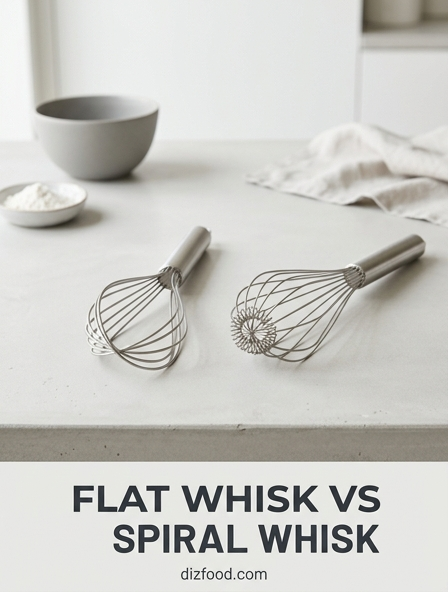
Navigating the world of sauces and roux requires more than just a steady hand; it demands the right tool to prevent those dreaded lumps and scorched bottoms. While both the flat whisk and the spiral whisk are designed for shallow tasks, they excel in different arenas. The flat whisk (or roux whisk) is your go-to for deglazing and sweeping across large, flat surfaces, ensuring every inch of your pan is scraped clean and every bit of fond is incorporated. In contrast, the spiral whisk features a flexible, spring-like coil that maneuvers into the tight corners of small pots and deep pans, making it the undisputed champion for emulsifying vinaigrettes or perfecting silky gravies in confined spaces. Choosing between them depends on your pan's geometry, but mastering both ensures a velvety, professional finish for every liquid creation in your kitchen.
| Feature | Flat Whisk (Roux Whisk) | Spiral Whisk (Coil Whisk) |
|---|---|---|
| Primary Design | Parallel loops on a flat plane | Angled head with a wire coil spring |
| Best Pan Type | Skillets, sauté pans, and wide griddles | Small saucepans, deep pots, and cups |
| Agitation Style | Horizontal sweeping and lifting | Vertical pumping and corner reaching |
| Surface Contact | Maximum contact with flat bottoms | Precision contact in 90° corners |
| Liquid Depth | Excels in very shallow liquids/fats | Versatile for shallow to medium depths |
| Top Application | Deglazing and heavy roux-making | Small-batch gravies and emulsifications |
Flat Whisk vs Spiral Whisk Key Differences
The primary distinction between a flat whisk and a spiral whisk lies in their geometric architecture and their intended movement within cookware. A flat whisk, often referred to as a roux whisk, features several loops of wire that are flattened into a single plane. This design allows the tool to sit flush against the bottom of a pan, making it ideal for horizontal sweeping motions. In contrast, a spiral whisk consists of a single heavy wire that forms a loop at the end, which is then tightly wrapped in a smaller, spring-like wire coil. This spiral head is typically set at an angle to the handle, allowing for efficient movement in deep vessels or tight corners.
Functionally, these tools serve different niches in the kitchen. The flat whisk is designed for shallow surfaces, where its broad surface area can contact the entire base of a skillet. The spiral whisk, however, excels at vertical agitation and reaching the bottom edges of narrow pots. While both are used for mixing, their structural differences dictate the type of aeration and agitation they provide:
- Geometry: Flat whisks are two-dimensional and planar; spiral whisks are three-dimensional with a coiled spring.
- Agitation Style: Flat whisks use a side-to-side sweeping motion; spiral whisks utilize a pumping or circular stirring motion.
- Vessel Compatibility: Flat whisks are best for skillets and sauté pans; spiral whisks are optimized for tall saucepans and measuring cups.
- Storage: The flat profile is easier to store in shallow drawers, whereas the angled head of the spiral whisk may require more space.
The Best Whisk for Gravy and Sauces
When it comes to preparing gravies and sauces, the choice between a flat and spiral whisk often depends on the specific stage of the cooking process and the vessel being used. For traditional pan gravies made directly in a roasting tin or a wide skillet, the flat whisk is the undisputed champion. Its ability to scrape up fond-the browned bits of meat and juice stuck to the bottom of the pan-ensures that every ounce of flavor is incorporated into the liquid. Because the wires stay in constant contact with the flat surface, it prevents the flour or starch from clumping and burning during the initial deglazing phase.
On the other hand, if you are preparing a delicate Hollandaise or a small batch of peppercorn sauce in a narrow butter warmer or small saucepan, the spiral whisk becomes the superior tool. Its compact head can navigate the tight radius of a small pot where a traditional balloon whisk or a flat whisk would be too cumbersome. The spring-like coil of the spiral whisk creates significant turbulence, which helps to emulsify fats and liquids quickly. This is particularly useful for sauces that require constant motion to prevent breaking. Ultimately, the flat whisk is better for volume and surface contact in wide pans, while the spiral whisk offers precision and intense agitation for smaller, more technical sauce preparations.
Flat Whisk Design and Cooking Benefits
The design of a flat whisk is a testament to functional minimalism in the culinary arts. By aligning the wire loops in a single plane, manufacturers have created a tool that bridges the gap between a spatula and a traditional whisk. One of the greatest benefits of this design is its efficiency in "folding" ingredients. Because it can slide under mixtures, it is often used by bakers to incorporate delicate foams or dry ingredients into wet batters without over-mixing or deflating the aeration.
In a savory context, the flat whisk provides unmatched control over heat distribution. When cooking a thick custard or a starch-heavy sauce, the most dangerous area for scorching is the interface between the liquid and the pan bottom. The flat whisk covers a wide swathe of this area with every stroke, ensuring that no portion of the sauce remains stationary for too long. Key benefits include:
- Low Profile: Easily slides under heavy ingredients to lift and turn them.
- Deglazing Power: Acts as a scraper to remove caramelized sugars from flat surfaces.
- Effortless Incorporation: Ideal for whisking small amounts of liquid into large amounts of flour without forming lumps.
- Space Saving: Its thin profile allows it to fit into crowded utensil crocks or flat drawers effortlessly.
For chefs who frequently work with cast iron or stainless steel skillets, the flat whisk acts as a protective tool, keeping the surface clean and the food moving rhythmically.
Spiral Whisk Features for Deep Pots
The spiral whisk is often an underrated hero in the kitchen, specifically designed to solve the problems presented by deep, narrow containers. Its most notable feature is the angled head, which allows the user's hand to remain at a comfortable height while the whisking surface remains parallel to the bottom of the pot. This ergonomics is vital when stirring thick soups or stews in a stockpot, as it reduces wrist strain during prolonged cooking sessions. The coil itself is flexible, meaning it can compress and expand as it hits the sides and bottom of the vessel, effectively "scrubbing" the corners where flour or aromatics might otherwise hide and burn.
Another unique feature is the "pumping" action allowed by the spring coil. By moving the whisk up and down, the coil vibrates and creates a high-velocity fluid movement that is excellent for frothing milk or blending protein powders into water. Unlike a balloon whisk, which requires a wide radius to be effective, the spiral whisk works in the center of the liquid, pulling surrounding ingredients into its high-agitation zone. This makes it perfect for emulsifying vinaigrettes directly in a jar or whisking a single egg in a coffee mug. Its versatility in deep vessels makes it a necessary addition for any cook who moves beyond the frying pan into more complex, pot-based preparations.
Shallow Pan Performance Comparison
When working in shallow environments, such as a crêpe pan or a 12-inch skillet, the performance gap between flat and spiral whisks becomes very apparent. The shallow pan demands a tool that can cover maximum surface area with minimal vertical clearance. The flat whisk is engineered precisely for this environment. It can be held at a low angle, almost parallel to the stovetop, allowing the cook to reach the very edges of the pan where the sidewalls meet the base.
| Feature | Flat Whisk Performance | Spiral Whisk Performance |
|---|---|---|
| Surface Coverage | Excellent; covers wide areas quickly. | Moderate; focused on a small point. |
| Corner Reach | Good for wide angles. | Superior for tight 90-degree corners. |
| Scraping Ability | High; acts like a broad scraper. | Low; scrapes with a smaller contact point. |
| Agitation Level | Gentle to Moderate. | High; creates more turbulence. |
In a shallow pan, the spiral whisk can sometimes feel "bouncy" or unstable because of its spring-like nature. While it can reach the corners effectively, it lacks the broad sweeping power of the flat whisk, requiring more strokes to cover the same amount of pan surface. For tasks like reducing a balsamic glaze or simmering a shallow layer of cream, the flat whisk provides a more uniform interaction with the heat source, preventing localized hot spots that could lead to burning.
Roux Preparation and Texture Control
Achieving the perfect roux is a milestone in culinary skill, requiring a balance of fat, flour, and heat. The texture of a roux must be perfectly smooth to serve as a proper thickening agent for veloutés or béchamels. The flat whisk is often touted as the "ultimate roux whisk" because of how it manages the paste-like consistency of early-stage roux. It allows the cook to push the flour-fat mixture across the pan, ensuring even browning and preventing the flour from clumping. As liquid is added, the flat wires break down the "beads" of flour, integrating them into the liquid for a silk-like finish.
Texture control is equally manageable with a spiral whisk, particularly when transitioning from a roux to a finished sauce in a saucepan. The spiral coil acts as a sieve, forcing the liquid through the small gaps between the wires, which physically shears apart any lumps of flour. For those who prefer to make roux in a deeper pot to avoid splattering, the spiral whisk provides better vertical control. By maintaining a constant, rhythmic stir, the spiral whisk ensures that the viscosity of the sauce remains consistent from the bottom of the pot to the top. Whether you choose flat for a dark Cajun roux or spiral for a delicate white sauce, both tools are designed to provide the mechanical force necessary to achieve a lump-free, professional-grade texture.
Durability and Material Selection Tips
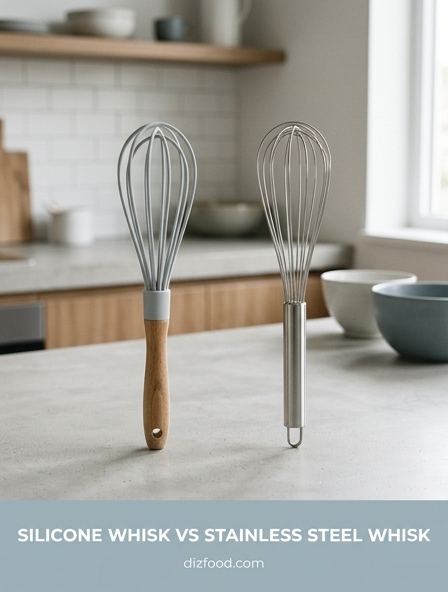
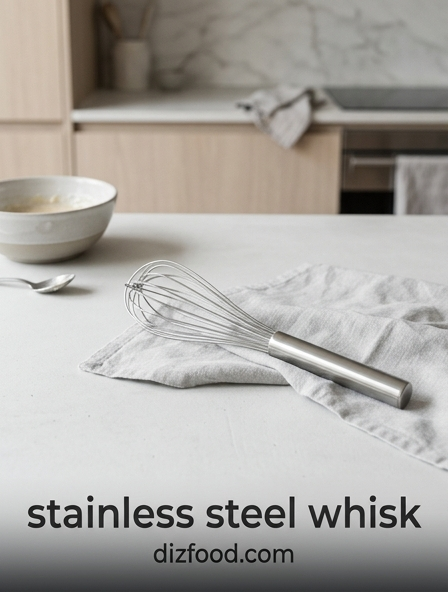
The longevity of your specialty whisks depends heavily on the materials used in their construction. Because both flat and spiral whisks are often used in high-heat applications like making candy or searing gravies, stainless steel is the gold standard. High-quality stainless steel (such as 18/10) offers the best resistance to rust and corrosion, which is essential given that these tools are frequently submerged in acidic sauces or salty liquids. When selecting a whisk, pay close attention to the gauge of the wire; it should be stiff enough to resist bending but flexible enough to provide some "give" against the pan.
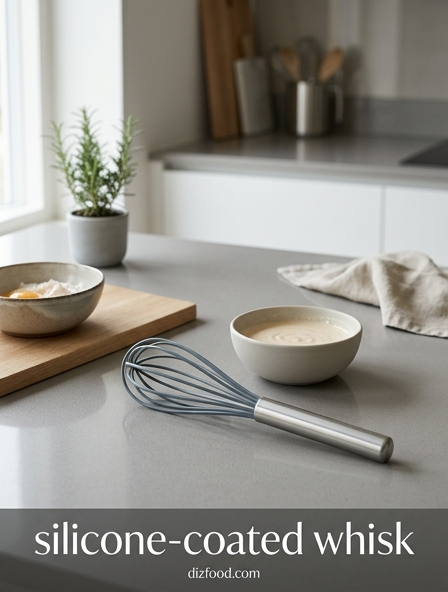
For those using non-stick or ceramic-coated cookware, material choice becomes even more critical. Metal whisks can easily scratch and ruin expensive non-stick surfaces. In these cases, look for whisks coated in food-grade silicone. When shopping, keep these tips in mind:
- Handle Construction: Look for sealed handles where the wires enter the base. This prevents water and food debris from getting trapped inside, ensuring better hygiene.
- Silicone Quality: Ensure the silicone is rated for at least 450°F (230°C) so it won't melt during high-heat deglazing.
- Weight Balance: A whisk should feel slightly "bottom-heavy" to help it stay in the pan without tipping over when you let go of the handle.
- Wire Tension: For spiral whisks, ensure the coil is tightly wound and securely attached to the main loop to prevent it from unraveling over time.
Cleaning Your Specialty Kitchen Whisks
Maintaining specialty whisks requires more attention than standard balloon whisks due to their unique shapes. The spiral whisk, in particular, can be challenging because the tight coils of the outer wire can trap thick sauces, egg proteins, or flour paste. If these substances dry inside the spring, they become incredibly difficult to remove. The best practice is to rinse the whisk immediately after use under high-pressure hot water. If a dishwasher is used, ensure the whisk is placed in a way that water can penetrate the coils, though hand-washing is often recommended to preserve the tension of the spring.
Flat whisks are generally easier to clean because their surfaces are more accessible. However, food can still get trapped at the junction where the wires meet the handle. To ensure a thorough clean, follow these steps:
- Soak: Place the whisk in a jar of warm, soapy water immediately after use to loosen residues.
- Agitate: Use the whisk to vigorously stir the soapy water; this uses the tool's own design to clean itself.
- Brush: Use a small kitchen brush to clear the tight spaces between the coils of a spiral whisk or the joints of a flat whisk.
- Dry: Always hang or stand the whisk to dry so that moisture doesn't pool in the handle base, which can lead to bacterial growth or internal rust.
Choosing Between Flat and Spiral Designs
Deciding between a flat whisk and a spiral whisk often comes down to your most frequent cooking habits. If your culinary repertoire consists mostly of pan-seared meats followed by a quick pan sauce or a morning of making pancakes and eggs in a skillet, the flat whisk is likely your most valuable asset. Its versatility as both a mixer and a spatula-like scraper makes it a workhorse for everyday flat-surface cooking. It is the tool of choice for those who value efficiency in shallow pans and want a tool that can easily transition from stovetop to storage.
Conversely, if you find yourself frequently making dressings in mason jars, frothing milk for coffee, or cooking elaborate sauces in tall saucepans, the spiral whisk is a better investment. It solves the specific problem of reaching the "dead zones" at the bottom corners of pots that other whisks simply cannot touch. Many professional kitchens keep both on hand, but if you must choose one, consider the depth of your most-used cookware. A flat whisk in a deep pot is awkward and ineffective, while a spiral whisk in a wide skillet is functional but less efficient than its flat counterpart. Assess your cabinet and your common recipes to determine which geometry will most often save you time and effort.
Essential Tools for Sauce Emulsification
Emulsification is the process of forcing two incompatible liquids-usually oil and water-into a stable mixture. In the kitchen, this is the secret to a perfect vinaigrette, a creamy mayonnaise, or a glossy pan sauce. Both flat and spiral whisks are essential tools for this process because they provide the mechanical energy needed to break oil droplets into microscopic sizes. The spiral whisk is particularly effective for small-batch emulsification. The high-frequency vibration of the outer coil acts almost like a manual blender, creating the intense turbulence required to keep fat particles suspended in liquid.
For larger batches of sauce in a wide pan, the flat whisk excels at "incorporation emulsification." This is where you slowly whisk butter or cream into a reduction. The wide loops of the flat whisk allow you to move the entire volume of the liquid at once, ensuring that the temperature remains consistent and the emulsion forms evenly across the pan. Without these specialized tools, sauces often remain "broken" or greasy, lacking the professional sheen and mouthfeel that defines high-quality cooking. By selecting the right whisk for the vessel size, you ensure that the mechanical force is applied where it is needed most, leading to superior culinary results and better flavor delivery in every dish.


Comments