
Choosing between a coated and an uncoated whisk often comes down to protecting your kitchen investment versus achieving peak culinary performance. If you frequently cook in non-stick or ceramic pans, a silicone-coated whisk is your best ally, providing a gentle touch that prevents surface scratches and preserves delicate coatings. Conversely, traditional uncoated stainless steel whisks remain the gold standard for professional results, offering superior durability, higher heat tolerance, and thinner wires that slice through liquids more efficiently for maximum aeration. Understanding the synergy between your whisk material and your cookware surface ensures you get the best texture in your sauces without compromising the lifespan of your favorite pots and pans.
| Feature | Coated (Silicone/Nylon) | Uncoated (Stainless Steel) |
|---|---|---|
| Best For | Non-stick, ceramic, and enameled pans | Stainless steel, cast iron, and copper |
| Scratch Prevention | High; won't mar delicate surfaces | Low; can leave metal marks or scratches |
| Aeration Speed | Moderate; thicker wires move less air | High; thin wires create maximum volume |
| Heat Resistance | High (up to 400°F-500°F) | Extreme; no risk of melting or warping |
| Durability | Coating may peel or crack over time | Lifetime durability; rust-resistant |
| Cleaning | Dishwasher safe; may retain odors | Dishwasher safe; odor and stain resistant |
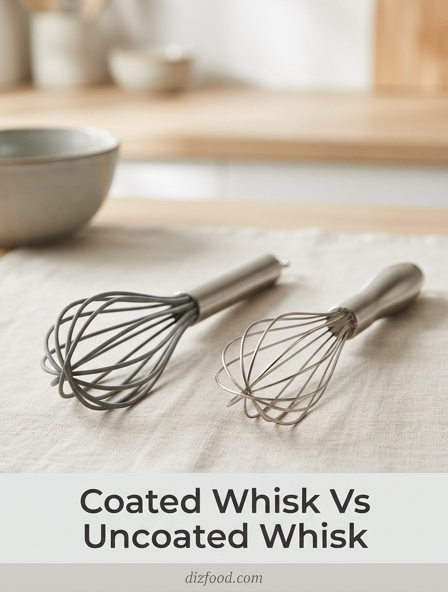
Coated vs Uncoated Whisk Key Differences
The primary distinction between coated and uncoated whisks lies in their material composition and intended surface compatibility. An uncoated whisk is typically constructed from high-grade stainless steel wires. These wires are rigid, thin, and designed for maximum agitation and durability. In contrast, a coated whisk features a core material-usually metal-that is encased in a protective layer of silicone, nylon, or sometimes ceramic. This layer changes the physical properties of the tool, making it softer and more flexible than its raw metal counterpart.
When evaluating these two tools, the choice often comes down to the specific cookware being used and the desired texture of the food. Uncoated whisks are favored for their precision and strength, particularly when dealing with thick batters or heavy creams. Coated whisks, however, prioritize the preservation of delicate cooking surfaces. The differences extend to heat tolerance and sensory feedback; metal whisks can be noisy and may leave gray streaks on light-colored ceramic, whereas coated versions are virtually silent and non-reactive.
| Feature | Uncoated Stainless Steel | Coated (Silicone/Nylon) |
|---|---|---|
| Cookware Safety | Best for stainless or cast iron | Safe for nonstick and ceramic |
| Wire Flexibility | Rigid and stiff | Highly flexible |
| Cleaning | Dishwasher safe, high durability | Dishwasher safe, potential for peeling |
| Sound Profile | Loud, metallic clinking | Muted and quiet |
Understanding Silicone and Nylon Coated Whisks
Coated whisks are generally divided into two main categories: silicone and nylon. Silicone is the most popular choice among modern home cooks because it offers exceptional flexibility and heat resistance. It is a non-porous material, which means it does not absorb odors or flavors from pungent ingredients like garlic or onions. Silicone coatings are often molded directly onto the metal wires, creating a seamless bond that prevents water from entering the inner core, thereby reducing the risk of internal corrosion. This material is also appreciated for its vibrant color options, allowing for easier kitchen organization and aesthetic appeal.
Nylon-coated whisks are a secondary option, often found in budget-friendly kitchen sets. While nylon is effective at protecting nonstick surfaces, it is generally stiffer than silicone and has a lower melting point. This makes it less ideal for high-heat applications like making a dark roux or thick caramel. One of the key benefits of using any coated whisk is the "soft touch" it provides. The coating adds a slight thickness to each wire, which can be beneficial for emulsifying sauces that require a gentler touch rather than aggressive aeration. Furthermore, the grippy nature of silicone can help "grab" ingredients at the bottom of a bowl more effectively than smooth steel, ensuring a more thorough mix in some scenarios.
The Durability of Uncoated Stainless Steel
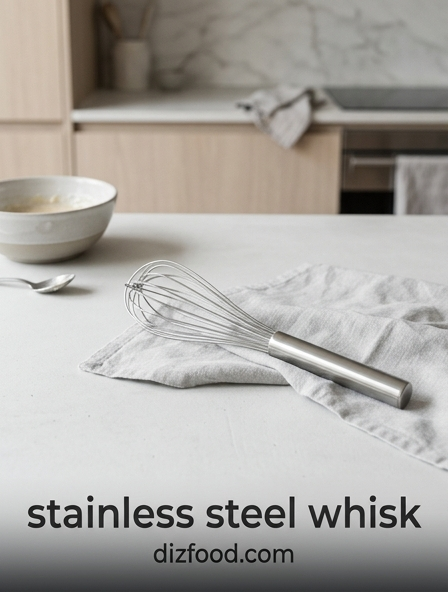
Uncoated stainless steel whisks are the workhorses of the professional culinary world. Their durability stems from the inherent strength of the alloys used, typically 18/10 or 18/8 stainless steel. These tools are designed to withstand significant torque and pressure without deforming. Unlike coated whisks, there is no outer layer that can chip, peel, or degrade over time due to chemical exposure or heat. This makes them a "buy it for life" item in many households. The thinness of the wires allows them to cut through cold fats and thick doughs with minimal resistance, a task that might cause a coated whisk to bend or snap.
The longevity of a steel whisk is also tied to its construction at the handle. Because there is no coating to account for, manufacturers can often achieve a more secure, epoxy-sealed bond between the wires and the handle. This prevents moisture and food particles from getting trapped in the crevices. While stainless steel can eventually develop minor scratches, these do not affect the tool's performance or safety. In high-volume environments, the ability of a steel whisk to maintain its shape after thousands of uses is its greatest asset.
- Resistance to physical abrasion from heavy mixing.
- Immunity to "pitting" or peeling that affects plastic coatings.
- Capability to handle extremely high temperatures without structural failure.
- Stronger wire tension for better cutting through thick ingredients.
Protecting Your Nonstick Cookware From Scratches
The primary reason for the existence of the coated whisk is the vulnerability of modern nonstick coatings. Materials like PTFE (Teflon) and ceramic are highly effective at preventing food from sticking, but they are incredibly susceptible to physical damage. When a stainless steel whisk is used in a nonstick pan, the hard metal wires act like tiny knives, creating microscopic scratches every time they contact the surface. Over time, these scratches cause the nonstick coating to flake off into food and eventually lead to the total failure of the pan's release properties. Once a nonstick surface is compromised, it can no longer perform its job, and the pan must be replaced.
Using a silicone or nylon coated whisk provides a protective buffer. The soft exterior of the whisk is significantly softer than the nonstick coating of the pan, ensuring that even aggressive whisking won't leave a mark. This is particularly important when making pan sauces, gravies, or custards that require constant agitation over a heat source. By choosing a coated tool, you are effectively extending the lifespan of your expensive cookware investments. Even in cast iron or carbon steel pans, which are more durable than Teflon, a coated whisk can be preferred if the user wishes to maintain a perfectly smooth seasoning layer without the risk of scraping it away during a vigorous cooking session.
Heat Resistance and Temperature Safety Limits
When working with high temperatures, understanding the thermal limits of your tools is essential for both food safety and equipment longevity. Uncoated stainless steel whisks have the highest heat resistance, capable of withstanding temperatures well beyond anything encountered in a standard kitchen. They will not melt, off-gas, or leach chemicals regardless of how hot the oil or sugar becomes. This makes them the only safe choice for deep-frying applications or high-temp candy making where temperatures can exceed 300°F and approach 400°F.
Coated whisks have varying degrees of heat tolerance. Silicone is remarkably resilient, with most high-quality models rated for temperatures up to 500°F (260°C). This is usually sufficient for standard stovetop cooking. However, nylon-coated whisks have much lower limits, often melting at around 400°F or even less. If a nylon whisk is left resting against the edge of a hot pan, it can develop flat spots or melt entirely. It is also important to note that while the silicone itself is heat-resistant, the inner core or the adhesive holding the wires may have different limits.
| Material Type | Max Temp (Approx.) | High-Heat Suitability |
|---|---|---|
| Stainless Steel | 1500°F+ | Excellent (All tasks) |
| Silicone Coated | 450°F - 500°F | Good (General cooking) |
| Nylon Coated | 350°F - 400°F | Moderate (Low-heat only) |
Aeration Efficiency in Metal vs Coated
Aeration is the process of incorporating air into a liquid to create volume and lightness. This is the primary function of a whisk when making whipped cream, meringues, or soufflés. In this category, the uncoated stainless steel whisk is the clear winner. The efficiency of aeration depends on the number of wires and their thickness. Metal wires can be made much thinner than coated wires while maintaining their structural integrity. Thinner wires "cut" through the liquid more cleanly, creating smaller, more stable air bubbles. The rigidity of the metal also ensures that the wires don't collapse toward each other under the weight of the liquid, maintaining maximum surface area contact.
Coated whisks, by nature of their design, have thicker "legs" because of the added layer of silicone or nylon. This extra thickness creates more drag and can actually be less efficient at trapping air. In some cases, the flexibility of a coated whisk works against the user; when whisking a heavy mixture quickly, the wires may bend outward or clump together, reducing the amount of air being introduced. While a coated whisk will eventually get the job done, it often requires more physical effort and more time to achieve the same peaks that a professional-grade steel whisk would produce in seconds. For tasks where volume is the goal, the sharp, thin profile of metal is vastly superior.
Maintenance and Dishwasher Safety Guidelines
Proper maintenance ensures that your whisks remain hygienic and functional for years. Most modern whisks, both coated and uncoated, are marketed as dishwasher safe. However, the cleaning process differs slightly in terms of long-term care. Stainless steel whisks are nearly indestructible in the dishwasher. They can handle high-temperature cycles and harsh detergents without losing their finish. The main concern with steel whisks is "hollow handle syndrome," where water gets trapped inside the handle. To prevent this, it is best to dry them with the wires facing down so any trapped moisture can drain out.
Coated whisks require a bit more scrutiny. Over hundreds of dishwasher cycles, the high heat and chemicals can cause some types of silicone to become "sticky" or cause nylon to become brittle and crack. If a coating cracks, it creates a hiding place for bacteria and food particles that is impossible to clean. To maximize the life of a coated whisk, many manufacturers recommend hand-washing or using the top rack of the dishwasher only.
- Inspect coated wires regularly for signs of peeling or splitting.
- Ensure whisks are completely dry before storing to prevent rust at the base of the wires.
- Avoid using abrasive scouring pads on coated whisks to prevent surface damage.
- For steel whisks, use a specialized brush to clean the "tight" area where wires converge.
When to Use a Silicone Coated Whisk
A silicone-coated whisk is not just a protective tool; it is the right tool for specific culinary techniques. One of the best times to reach for a coated whisk is when making a roux or a béchamel sauce in a nonstick saucepan. These sauces require constant stirring to prevent clumps and burning. The soft silicone allows you to scrape the corners and bottom of the pan vigorously without any worry of damaging the finish. Furthermore, the silicone coating provides a dampened sound, making the process of cooking a long-simmering sauce much more pleasant than the constant "clink-clink" of metal on metal.
Another ideal scenario is when working with delicate glass or ceramic mixing bowls. If you are whisking a vinaigrette or a light egg wash in a glass bowl, a metal whisk can sometimes leave gray "metal marks" that are difficult to scrub off. Silicone whisks eliminate this issue entirely. They are also excellent for folding ingredients. While a whisk isn't a spatula, the slight grip of the silicone can help incorporate dry ingredients into wet ones with a more controlled motion. Finally, for any task involving kids in the kitchen, coated whisks are safer. They are less likely to cause injury if a hand slips, and they are generally lighter and easier for smaller hands to maneuver during baking projects.
The Long Term Performance of Steel Whisks
The long-term performance of an uncoated stainless steel whisk is defined by its consistency. Because the material is uniform throughout, there is no risk of the tool changing its physical properties over a decade of use. Chefs prefer them because they offer a consistent "feel" and feedback. You can feel the resistance of the batter through the stiff wires, which helps in judging the consistency of a mix. This tactile feedback is often lost with coated whisks, which tend to dampen the vibrations and make it harder to tell if a sauce has reached the perfect thickness.
From a cost-effectiveness perspective, the steel whisk is often the better investment. While a high-quality silicone whisk might last five years before the coating begins to degrade or detach from the wire, a well-made steel whisk can easily last twenty-five years or more. They are also more hygienic in the long run because they lack the microscopic pores that can develop in aging plastics. In the world of professional baking, where whisks are used for hours every day, the reliability of steel is unmatched. It can be sanitized at extreme temperatures, it won't react with acidic ingredients like lemon juice or vinegar, and it remains a staple of the kitchen precisely because it does not fail.
Choosing the Best Whisk for Your Kitchen
Deciding between a coated and uncoated whisk depends entirely on your current kitchen setup and your cooking style. You do not necessarily have to choose just one; in fact, many well-equipped kitchens keep both on hand to handle different tasks. If your cabinet is full of high-end nonstick pans, a silicone-coated whisk is an absolute necessity to protect your investment. However, if you do a lot of heavy baking-such as making bread, thick cookies, or large batches of whipped cream-the power and efficiency of a stainless steel whisk cannot be beaten.
When shopping, look for the quality of the "tang"-the part of the whisk where the wires meet the handle. A good whisk should feel balanced in your hand, not too heavy at either end. For coated whisks, ensure the silicone is "BPA-free" and rated for at least 450°F. For steel whisks, check that the wires are tight and do not wiggle in the handle. Consider the following summary points to make your final decision:
- Cookware: Use coated for nonstick/ceramic; use steel for stainless/cast iron.
- Task: Use steel for aeration and heavy dough; use coated for sauces and custards.
- Frequency: If you cook daily, the durability of steel is a major plus.
- Storage: Coated whisks often come in more sizes and colors for easy identification.

Comments