
Navigating the choice between ceramic coating and stainless steel interiors is a pivotal decision for any home chef looking to elevate their culinary results. While ceramic interiors excel with their impressive natural non-stick properties and aesthetic appeal-ideal for health-conscious cooks who prefer minimal oil-stainless steel remains the gold standard for those seeking rugged durability and superior heat distribution. Stainless steel allows for high-temperature searing and deglazing that ceramic simply cannot match, yet ceramic offers a modern, PFOA-free alternative that simplifies the post-dinner cleanup. Ultimately, selecting the best surface involves weighing the effortless food release of ceramic against the multi-generational lifespan and professional versatility of classic stainless steel.
| Feature | Ceramic Coating | Stainless Steel |
|---|---|---|
| Durability | Moderate (1-3 years); prone to chipping | Exceptional; lasts a lifetime |
| Heat Tolerance | Medium-High (up to 450°F); loses non-stick over time | Very High (up to 600°F+); broiler safe |
| Non-Stick Ease | Excellent; requires minimal oil/butter | Low; requires fat and "Leidenfrost" technique |
| Cleaning | Hand wash only with soft sponges | Dishwasher safe; tolerates abrasive pads |
| Cooking Style | Delicate items (eggs, fish, pancakes) | High-heat searing, deglazing, and browning |
| Chemical Safety | PTFE/PFOA-free; inert mineral base | Non-reactive; no chemical coatings |
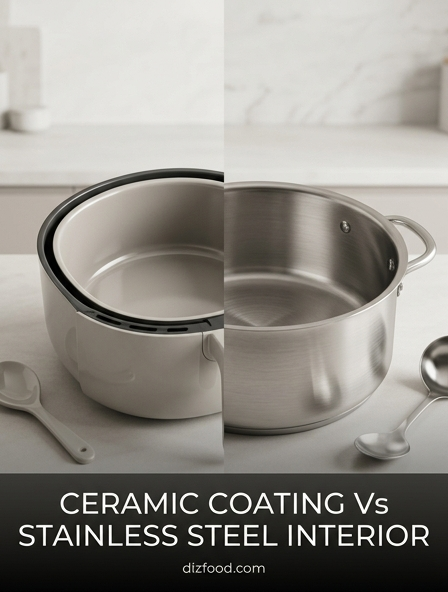
Ceramic Coating vs Stainless Steel Interior Durability
When evaluating the durability of kitchen appliance interiors, such as those found in microwave ovens, ranges, or dishwashers, the choice between ceramic coating and stainless steel often dictates the appliance's resilience against physical impact and thermal stress. Stainless steel is a robust metal alloy primarily composed of iron, chromium, and nickel. Its inherent structural integrity makes it nearly impervious to cracking or shattering under mechanical stress. In a high-traffic kitchen, a stainless steel interior can withstand the accidental bumping of heavy cast iron pots or metal trays without suffering structural failure, although it is prone to superficial denting and warping over many years of intense heat exposure.
Ceramic coating, often referred to as enamel or porcelain-on-steel, offers a different profile of durability. This material is essentially a glass-like layer fused to a metal base at high temperatures. While it provides an incredibly hard surface that resists bending, its primary weakness lies in its brittleness. Sharp impacts can cause the ceramic layer to chip or "spider-web," exposing the underlying metal to moisture and potential oxidation. However, modern ceramic coatings are engineered with advanced bonding agents that significantly reduce the risk of flaking. In terms of heat durability, ceramic is exceptionally stable and does not warp even when subjected to the extreme temperatures found in self-cleaning oven cycles, whereas thinner gauges of stainless steel might experience slight temporary deformation.
- Stainless Steel: High impact resistance, prone to minor denting, susceptible to long-term warping.
- Ceramic Coating: High hardness, resistant to warping, susceptible to chipping from heavy impacts.
- Environmental Stress: Stainless handles thermal expansion better; ceramic handles sustained high heat without discoloration.
Cleaning and Maintenance Differences for Appliance Interiors
The ease with which an appliance interior can be cleaned is often the deciding factor for many homeowners. Ceramic coatings are widely celebrated for their "easy-clean" properties. The surface is exceptionally smooth and non-porous, which prevents burnt-on food particles and grease from forming a strong mechanical bond with the walls. Most spills in a ceramic-coated oven or microwave can be removed with a simple damp cloth, often eliminating the need for caustic chemical cleaners or vigorous scrubbing. This makes ceramic a preferred choice for those who prioritize low-maintenance kitchen upkeep and wish to avoid the fumes associated with traditional oven cleaners.
Stainless steel, while highly hygienic, requires a more specific maintenance regimen to keep it looking pristine. It is a reactive surface in terms of aesthetics; grease and oil tend to smear across the metal, and fingerprints are notoriously visible. Over time, stainless steel can develop "heat tint," a rainbow-colored oxidation layer caused by high temperatures, which requires specialized stainless steel polishes to remove. Furthermore, using abrasive sponges on stainless steel can lead to permanent micro-scratching, which eventually creates a dull appearance. To maintain the luster of a stainless steel interior, users often need to follow the grain of the metal and use specific pH-neutral detergents.
| Feature | Ceramic Coating | Stainless Steel |
|---|---|---|
| Surface Porosity | Extremely Low | Low to Moderate |
| Cleaning Effort | Minimal (Wipe-away) | Moderate (Polishing required) |
| Chemical Resistance | High resistance to acids | Susceptible to bleach/chlorides |
| Visual Aging | Stays consistent | Develops patina or tint |
Heat Retention in Ceramic vs Stainless Steel Ovens
Thermal dynamics play a crucial role in cooking performance and energy consumption. Stainless steel is an excellent reflector of heat. In an oven environment, the shiny surfaces of a stainless steel interior reflect infrared radiation back toward the food, which can lead to faster preheating times. However, stainless steel has low thermal mass, meaning it does not store much heat energy. Every time the oven door is opened, the internal air temperature drops rapidly, and the stainless walls do little to stabilize the environment, forcing the heating elements to work harder to recover the lost temperature.
Ceramic-coated interiors behave more like traditional masonry. The ceramic layer absorbs heat and then radiates it back evenly throughout the cavity. This provides a more consistent "surround heat" that is ideal for baking delicate items like soufflés or breads that require a stable thermal environment. While a ceramic oven might take slightly longer to reach the desired temperature initially, it offers superior heat retention. This thermal stability ensures that temperature fluctuations are minimized during the cooking process. For long-roasting applications, the radiant heat from ceramic walls can result in more uniform browning and moisture retention in meats compared to the more aggressive reflective heat of stainless steel.
- Preheating: Stainless steel is generally faster due to high reflectivity.
- Stability: Ceramic provides better temperature recovery after opening the door.
- Heat Distribution: Ceramic offers more uniform radiant heat; stainless can have "hot spots."
- Cool Down: Stainless steel cools down faster once the appliance is turned off.
Scratch and Stain Resistance Comparison
The aesthetic longevity of a kitchen appliance is often compromised by scratches and permanent stains. Ceramic coatings are incredibly hard-often reaching 7 or 8 on the Mohs scale of mineral hardness. This makes them virtually immune to scratches from common kitchen tools, such as nylon brushes or even some metal scrapers. Additionally, because the ceramic surface is chemically inert, it does not react with acidic foods like tomato sauce or lemon juice, which are common culprits for staining in the kitchen. If a spill is left to bake onto a ceramic surface, it can usually be scraped off without leaving a permanent mark on the finish.
Stainless steel is significantly softer than ceramic. It is easily scratched by abrasive scouring pads, steel wool, or even the rough underside of a ceramic baking dish. Once a stainless steel surface is scratched, the marks are permanent and can become traps for grease and microscopic debris. Regarding stains, while "stainless" is in the name, the material is actually "stain-less" rather than "stain-proof." It is particularly vulnerable to "pitting" if salt or acidic liquids are left on the surface for extended periods. These pits are small depressions that can eventually lead to localized corrosion. To manage these risks, users must follow a specific set of care instructions:
- Avoid using steel wool or metal scouring pads on stainless steel surfaces.
- Wipe up acidic spills (lemon, vinegar, tomato) immediately from metal interiors.
- Use only soft microfiber cloths for daily wiping of ceramic surfaces.
- Periodically check ceramic coatings for deep chips that might reach the base metal.
Hygiene and Odor Control in Kitchen Appliances
Hygiene is a paramount concern in any food preparation area. Ceramic coatings are often marketed for their antimicrobial properties. Because the surface is so smooth and non-porous, there are no microscopic crevices where bacteria or mold can take root. Furthermore, ceramic is inorganic and does not absorb odors. This is a significant advantage in appliances like microwaves or refrigerators, where strong-smelling foods like fish or garlic can leave a lingering scent. A simple wipe-down is usually sufficient to return the appliance to a neutral state, ensuring that the smell of yesterday's dinner does not permeate today's meal.
Stainless steel is the industry standard for commercial kitchens and medical environments specifically because of its hygienic properties. It is non-porous and can withstand aggressive sanitization protocols, including high-heat steam and strong disinfectants. However, in a residential setting, stainless steel can sometimes develop a "metallic" scent or retain oil-based odors if not cleaned thoroughly with a degreaser. The primary hygienic advantage of stainless steel is its ability to be completely sterilized without the risk of the surface degrading or releasing toxic fumes. Unlike some low-quality non-stick coatings, neither high-grade stainless steel nor ceramic coatings contain PFOAs or PTFEs, making both options safe for high-temperature cooking without the risk of chemical off-gassing.
- Bacterial Growth: Both materials are highly resistant to harboring bacteria.
- Odor Retention: Ceramic is slightly superior at resisting pungent food odors.
- Sanitization: Stainless steel handles medical-grade chemical sanitizers better.
- Safety: Both are generally BPA-free and lead-free in modern high-end appliances.
The Lifespan of Ceramic Coating vs Stainless Steel
The lifespan of an appliance interior is a major factor in determining its overall value. Stainless steel is widely considered a "lifetime" material. In a residential setting, a high-quality 304-grade stainless steel interior can easily last 20 to 30 years without significant degradation. Its primary failure mode is purely aesthetic-dents and scratches-which do not affect the functionality of the appliance. Even if rust spots appear due to poor maintenance, they can often be polished out, restoring the surface to its original state. This makes stainless steel the preferred choice for high-end, "pro-style" kitchen ranges and built-in dishwashers intended to last decades.
Ceramic coatings have a variable lifespan that depends heavily on the quality of the application and the user's care. While a well-maintained ceramic interior can last 10 to 15 years, it is susceptible to "fatigue" over time. Repeated thermal expansion and contraction can eventually cause micro-cracks in the ceramic layer. If a significant chip occurs, the exposed steel underneath is no longer protected and can begin to rust, which may eventually cause the remaining ceramic to flake off. However, in appliances like microwaves, where mechanical impact is rare, ceramic coatings often outlast the electronic components of the device itself. For oven cavities, the lifespan of the ceramic is usually tied to the integrity of the bond between the enamel and the steel substrate.
| Aspect | Stainless Steel | Ceramic Coating |
|---|---|---|
| Expected Life | 20+ Years | 10-15 Years |
| Repairability | Moderate (Polishing) | Low (Hard to patch chips) |
| Rust Risk | Very Low | Moderate (if chipped) |
| Failure Mode | Pitting/Denting | Chipping/Flaking |
Energy Efficiency and Performance Analysis
Energy efficiency in kitchen appliances is influenced by how the interior surfaces manage thermal energy. Stainless steel's high reflectivity is a double-edged sword. In a microwave, stainless steel walls reflect microwaves efficiently, ensuring that the energy is directed toward the food. In a radiant oven, this reflectivity can lead to faster cooking times but may require more precise calibration of heating elements to prevent uneven cooking. Because stainless steel does not hold heat well, the appliance must cycle its heating elements on and off more frequently to maintain a steady temperature, which can lead to higher energy consumption over long cooking durations.
Ceramic interiors contribute to energy efficiency through thermal inertia. Once the ceramic walls are saturated with heat, they act as a secondary heat source, radiating steady energy into the food. This allows the oven to maintain a more consistent temperature with fewer "spikes" from the heating elements. While the initial energy draw to preheat a ceramic oven is higher, the efficiency gains are realized during long baking or roasting cycles. Additionally, the superior insulation properties of ceramic-coated steel help keep the exterior of the appliance cooler, reducing the load on kitchen air conditioning systems during the summer months. In modern "smart" appliances, sensors are often calibrated differently depending on the interior material to optimize these specific thermal characteristics.
- Reflectivity: Stainless steel is superior, leading to faster initial heating.
- Thermal Mass: Ceramic is superior, leading to better temperature stability.
- Energy Loss: Ceramic interiors generally lose less heat to the environment.
- Cooking Precision: Ceramic is better for slow-cooking; Stainless is better for quick tasks.
Pros and Cons of Ceramic Coated Interiors
Ceramic-coated interiors have become increasingly popular in mid-to-high-range appliances due to their user-friendly nature. One of the biggest advantages is the aesthetic variety; ceramic can be produced in various colors, such as deep blues or blacks, which hide grease and grime better than bright metal. The primary selling point remains the "non-stick" quality of the surface, which simplifies kitchen chores significantly. However, these benefits must be weighed against the potential for permanent damage if the coating is mistreated. If a user drops a heavy glass dish on a ceramic oven floor, the resulting chip is not just an eyesore; it is a point of future failure.
Pros:
- Superior ease of cleaning without the need for harsh chemicals.
- Excellent resistance to scratches from metal utensils and cleaning tools.
- Uniform heat radiation for consistent baking and roasting results.
- Neutral odor profile that does not absorb food smells.
- Attractive aesthetic options that complement modern kitchen designs.
Cons:
- Brittle nature makes it susceptible to chipping upon heavy impact.
- Repairing damaged ceramic is difficult and often looks patchy.
- Longer preheating times compared to highly reflective metal surfaces.
- Potential for rust if the underlying steel is exposed through a chip.
Stainless Steel vs Ceramic for Microwave Cavities
The microwave cavity is perhaps the most contested area for these two materials. Stainless steel has been the premium standard for decades. It is favored for its professional look and its ability to withstand the moisture and steam generated during the microwaving process. High-quality stainless steel will not rust, even with the high humidity levels found inside a microwave. However, because food often splatters in a microwave, the cleaning issue becomes paramount. Grease that is "nuked" onto a stainless steel wall can become extremely difficult to remove without scratching the metal.
Ceramic-coated microwave cavities have gained massive market share because they solve the "splatter problem." Many manufacturers now offer ceramic enamel interiors that are specifically marketed as being "99% antibacterial" and easy to wipe clean. Since microwaves don't typically involve heavy sliding of pots (most items sit on a glass turntable), the risk of chipping the ceramic is significantly lower than in a full-sized oven. This makes ceramic an arguably superior choice for microwave interiors, where the primary wear and tear is food buildup rather than physical impact. Furthermore, ceramic does not discolor over time the way stainless steel can when exposed to repeated localized heating from steam and oils.
- Steam Resistance: Both materials perform well, though cheap stainless may rust.
- Splatter Management: Ceramic is the clear winner for ease of wiping.
- Aesthetics: Stainless offers a "pro" look; Ceramic offers a clean, finished look.
- Maintenance: Ceramic requires less frequent deep cleaning to maintain hygiene.
Choosing the Right Interior for Long Term Value
Selecting between ceramic coating and stainless steel ultimately depends on the user's cooking habits and maintenance preferences. If the goal is to purchase an appliance that will remain functional for several decades and can withstand the rigors of a high-energy kitchen where heavy cookware is used frequently, stainless steel is the safer investment. Its durability is unmatched, and its ability to be refurbished through polishing provides a level of long-term value that ceramic cannot match. For professional-grade kitchens or those who appreciate an industrial aesthetic, stainless steel remains the gold standard.
Conversely, for the modern homeowner who values convenience, hygiene, and baking precision, ceramic coating offers better day-to-day value. The time saved on cleaning and the consistency of the cooking environment often outweigh the theoretical 30-year lifespan of stainless steel. When making a decision, consumers should consider the following steps:
- Assess your cleaning habits: Do you prefer a quick wipe-down or are you willing to polish metal?
- Evaluate your cookware: Do you use heavy cast iron that might chip a ceramic oven floor?
- Consider the appliance type: Ceramic is often better for microwaves, while stainless is excellent for dishwashers.
- Check the warranty: Look for manufacturers that offer specific coverage for interior coating defects.
- Think about resale: Stainless steel is often perceived as "higher end" by potential home buyers.

Comments