
Ever wonder why some pans sear a steak perfectly while others leave it dull and gray? The answer lies in thermal conduction, a fundamental process that dictates your daily kitchen performance and the quality of every meal you prepare. By understanding how heat transfers through different materials, you gain better control over cooking speeds and temperature consistency. This knowledge empowers home cooks to choose the right tools for even heat distribution, ultimately improving energy efficiency and flavor profiles. Mastering these thermal principles can truly transform your culinary results from unpredictable to professional. For a deeper dive into how different technologies transfer energy to your food, consider the benefits of Infrared Heating Vs Conventional Heating.
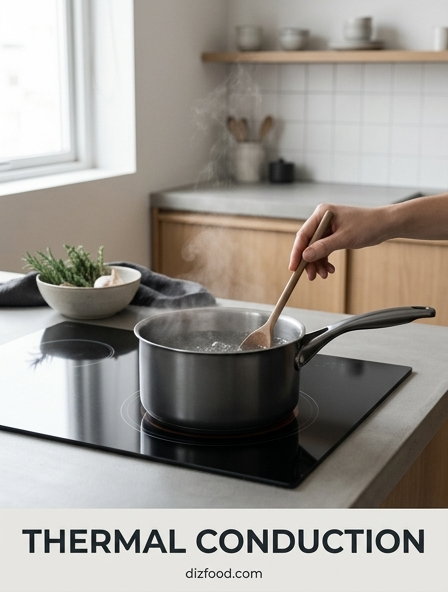
Science of Thermal Conduction
Thermal conduction is the fundamental process of heat transfer through direct microscopic collisions of particles and movement of electrons within a body. In the kitchen environment, this occurs when kinetic energy is transferred from a high-temperature source to a lower-temperature object, such as a slice of bread. At the atomic level, more energetic molecules vibrate vigorously, bumping into their neighbors and passing along energy. This process is most efficient in solids where particles are packed tightly together, allowing for a continuous flow of heat.
- Thermal Conductivity: A measure of a material's ability to conduct heat, denoted by the constant k.
- Temperature Gradient: The physical quantity that describes in which direction and at what rate the temperature changes the most rapidly.
- Steady State: When the temperature at each point in the medium remains constant over time.
- Thermal Resistance: The opposition a substance offers to the flow of heat.
Understanding these principles is vital for mastering culinary techniques, as it dictates how quickly heat penetrates the center of food items compared to their outer surfaces. In toasting, the conduction within the bread itself determines the final internal temperature and overall structural integrity of the slice.
Heat Transfer in Toasting
Toasting involves a complex interplay of radiation and conduction. While the heating elements primarily emit infrared radiation, the proximity of the bread to the heat source initiates localized conduction through the air and any contact points with the toaster's internal carriage. As the surface of the bread absorbs radiant energy, the internal moisture begins to heat up, creating a conductive path that moves energy toward the center of the crumb.
| Mode of Transfer | Role in Toasting | Primary Effect |
|---|---|---|
| Radiation | Infrared waves from coils | Rapid surface heating |
| Conduction | Particle-to-particle transfer | Internal warmth and structure |
| Convection | Movement of heated air | Moisture removal and drying |
The efficiency of this transfer is highly dependent on the bread's density and porosity. Dense loaves require a slower heat application to ensure the center reaches a palatable temperature before the exterior burns. Conversely, light, airy breads conduct heat more sporadically due to the insulating properties of the air pockets within the crumb, requiring careful calibration of the toaster's power settings.
Surface Browning Dynamics
The aesthetic and flavorful transformation of bread into toast is driven by surface browning dynamics, which are strictly controlled by the rate of thermal conduction at the exterior. When the surface temperature reaches approximately 154 degrees Celsius, the chemical profile of the bread shifts. This transformation requires the thermal energy to be concentrated on the outer layers faster than it can be conducted into the moist interior.
- Initial Dehydration: Heat conducts into the surface, forcing moisture to evaporate and creating a dry "crust."
- Induction Phase: Temperature rises rapidly once surface water is removed.
- Browning Initiation: High heat triggers chemical rearrangements between sugars and proteins.
- Pyrolysis: If heat conduction is too aggressive or prolonged, carbonization occurs, leading to burnt flavors.
By managing the temperature gradient, one can control the thickness of the browned layer. A high temperature gradient produces a thin, sharp crust with a soft interior, while a lower gradient allows heat to conduct more deeply, resulting in a crunchier, more thoroughly dried slice of toast. This balance is the essence of achieving specific textural goals in the kitchen.
Material Conductivity in Toasters
The performance of a toaster is largely determined by the materials used in its construction and their specific thermal properties. Engineers must select materials that provide high electrical resistance to generate heat, while also considering how the surrounding structure handles thermal conduction. Nichrome wire is the standard for heating elements because of its ability to withstand high temperatures without oxidizing, while also possessing a high resistance that converts electricity into thermal energy efficiently.
- Nichrome: High resistance alloy used for the primary heating coils.
- Mica: Used as an insulating sheet to support coils without conducting electricity.
- Stainless Steel: Often used for the outer shell to provide durability and moderate thermal retention.
- Aluminum: Sometimes used in reflectors to bounce infrared heat back toward the food.
The conductive efficiency of these materials dictates how quickly the toaster reaches operational temperature. A toaster with poor internal insulation will lose significant energy through conduction to its outer chassis, making it less efficient and potentially dangerous to touch. High-quality appliances use thermal breaks and insulating materials to ensure that heat is conducted only where it is needed, specifically toward the bread surface.
Uniform Heat Distribution Methods
Achieving a uniform golden-brown color across the entire surface of a slice of bread requires precise heat distribution. Without specific design interventions, toasters would create "hot spots" where the heating elements are closest to the bread, leading to uneven browning. Manufacturers utilize various methods to ensure that thermal conduction and radiation are applied evenly across the bread's geometry.
| Method | Description | Benefit |
|---|---|---|
| Parallel Ribboning | Densely wound nichrome wires | Reduces cold spots between coils |
| Reflector Plates | Polished metal surfaces | Directs stray heat back to the bread |
| Convection Slots | Vented openings at the base | Encourages even air movement |
The spacing between the bread and the heating element is critical. If the bread is too close, conductive heat transfer via the air becomes too intense, leading to localized burning. Conversely, if it is too far, the infrared intensity drops, and the bread dries out before it browns. Modern toasters often feature self-centering racks to ensure the bread remains at an equidistant point between the elements, maximizing the uniformity of energy absorption.
The Maillard Reaction Process
The Maillard reaction is the heart of toast's flavor profile. It is a chemical reaction between amino acids and reducing sugars that occurs when heat is applied. In the context of a toaster, this reaction is enabled by the rapid conduction of heat into the surface proteins and carbohydrates of the bread. Unlike caramelization, which involves only sugars, the Maillard reaction creates hundreds of different flavor compounds that contribute to the savory, nutty aroma of fresh toast.
- Carbonyl group of the sugar reacts with the amino group of the amino acid.
- N-substituted glycosylamine is formed, which then undergoes rearrangement.
- Ketosamines are produced through the Amadori rearrangement.
- Further reactions result in the formation of melanoidins, the brown pigments.
Thermal conduction must be carefully regulated to sustain this reaction without crossing the threshold into pyrolysis. Because the reaction accelerates exponentially as temperature increases, even a few seconds of excess heat can turn a perfectly browned Maillard surface into bitter, charred carbon. Precise control over the heating duration is therefore the most critical factor in kitchen chemistry.
Moisture Evaporation and Texture
Texture in toasted bread is a direct result of moisture migration driven by thermal conduction. As heat enters the bread, the water trapped within the starch granules begins to move toward the surface. This creates a dual-layer effect: the exterior becomes a dehydrated, crispy matrix of starch and protein, while the interior remains relatively hydrated and soft. The rate of this moisture evaporation determines the final "crunch" factor.
- Surface Dehydration: Occurs when the rate of evaporation exceeds the rate of moisture migration from the core.
- Gelatinization: Internal starch granules absorb heat and remaining moisture, becoming soft.
- Steam Release: Rapid conduction can cause internal water to turn to steam, adding volume.
- Retrogradation: The hardening of starch as the toast begins to cool after removal.
If the conduction is too slow, the bread dries out entirely, resulting in a hard, biscotti-like texture throughout. If it is too fast, the surface browns before the internal moisture has had time to heat, leading to a cold, clammy center. The ideal toaster settings balance these conductive forces to create a distinct contrast between the crisp shell and the tender crumb.
Optimizing Kitchen Energy Efficiency
Energy efficiency in toasting is defined by how much electrical energy is successfully conducted into the food versus how much is lost to the environment. Kitchen appliances are often significant energy consumers, and toasters are no exception despite their short operational cycles. Improving efficiency involves minimizing thermal losses through the toaster's walls and ensuring the heating elements are optimized for the volume of food being cooked.
| Efficiency Factor | Impact | Optimization Strategy |
|---|---|---|
| Insulation | Reduces heat leakage | Double-walled chassis design |
| Reflectivity | Focuses radiant energy | Regular cleaning of internal plates |
| Pre-heating | Speeds up conduction | Utilizing residual heat for second batches |
Using a toaster with a smaller footprint for single slices can significantly reduce energy waste. Furthermore, because thermal conduction is more efficient when there is direct line-of-sight between the element and the bread, keeping the interior free of crumbs and carbon buildup ensures that the maximum amount of infrared energy is converted into conductive heat at the bread's surface, lowering the total time required for the perfect toast.
Conductive Element Performance
The lifespan and consistency of a toaster depend on the conductive element's performance over thousands of heating cycles. Each time the toaster is activated, the heating elements undergo thermal expansion and contraction. This physical stress can lead to work hardening and eventual brittle failure of the wire. High-performance elements are designed to maintain their shape and resistive properties even after repeated exposure to high temperatures.
- Ohmic Heating: The process where the passage of an electric current through a conductor produces heat.
- Thermal Expansion: The tendency of the heating wire to change in volume in response to a change in temperature.
- Oxidation Resistance: The ability of the alloy to resist breaking down in an oxygen-rich environment.
- Consistent Wattage: Maintaining a steady flow of energy to ensure predictable toasting times.
Variation in element performance can lead to frustratingly inconsistent results. If one side of the conductive element degrades faster than the other, the bread will brown unevenly. Quality kitchen engineering focuses on ensuring that the heating elements provide a symmetrical thermal field, allowing for repeatable results regardless of how many times the appliance has been used throughout its lifecycle.
Achieving the Perfect Crisp
The "perfect crisp" is a sensory goal achieved by precisely manipulating the thermal conduction profile of a slice of bread. It requires a high surface temperature to develop the Maillard reaction products while simultaneously removing enough moisture to create a rigid, brittle structure. The thickness of the bread plays a vital role here; thicker slices require more time for heat to conduct inward, necessitating a lower power setting to prevent surface burning.
- Thermal Equilibrium: Balancing the heat input from the elements with the heat loss from the bread's surface.
- Surface Area to Volume Ratio: Thinner slices crisp faster due to a higher ratio.
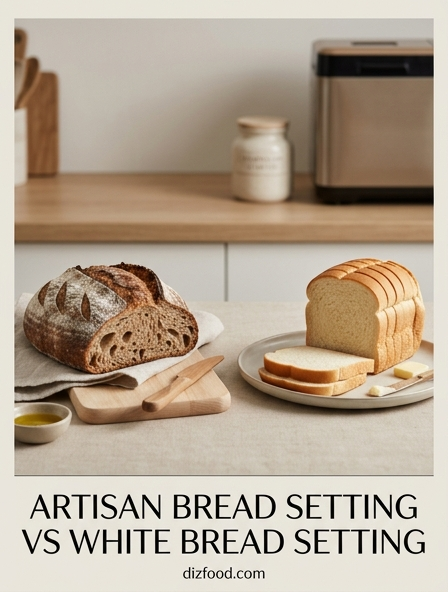
- Crust Geometry: The irregular surface of artisanal breads creates more points for conductive contact and browning.
- Resting Period: Allowing the toast to sit briefly allows internal steam to escape, preventing the crisp surface from turning soggy.
Ultimately, the culinary art of toasting is a practical application of thermodynamics. By understanding how heat moves through different materials and how it interacts with the biological structure of bread, one can master the variables of time and temperature. This ensures that every slice achieves the desired balance of color, aroma, and that quintessential toasted crunch.




Comments