
Ever wondered why your bagel often comes out rock-hard on the outside but doughy in the middle? That's where the "Bagel" button earns its keep. Unlike the standard toast setting-which fires up all heating elements to crisp both sides of your bread equally-Bagel Mode intelligently reallocates power to favor the inner heating coils. This specific calibration blasts the cut side with high heat to deliver that signature golden, one-sided crunch, while simultaneously reducing or turning off the outer elements to keep the crust soft and chewable. Mastering this setting isn't just a kitchen hack; it's the secret to achieving a professional deli-style texture that balances a satisfying snap with a tender, warm exterior in every bite.
| Feature | Regular Toast Mode | Bagel Mode Setting |
|---|---|---|
| Heat Source | 100% power to all heating coils | High heat (inner); Low/No heat (outer) |
| Texture Result | Uniformly crisp on both sides | Crunchy cut-side; Soft, chewy crust |
| Best Used For | Sliced bread, frozen waffles, thin pastries | Bagels, English muffins, burger buns |
| Placement | Orientation does not matter | Cut-side must face the center elements |
| Moisture Profile | Fully dehydrated for maximum snap | Retains exterior moisture/suppleness |
| Primary Goal | Even browning and structural rigidity | The "Perfect One-Sided Crunch" contrast |
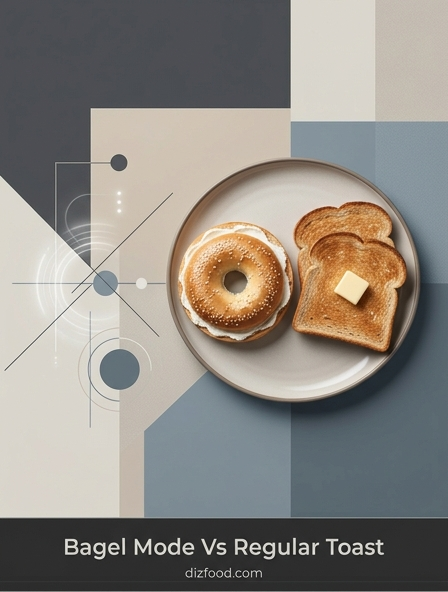
Understanding Bagel Mode vs Regular Toast
In the modern kitchen, the toaster is a staple appliance, but many users overlook the specific functionality of the "Bagel" button. To understand the primary difference, one must look at how heat is distributed within the appliance. Regular toast mode is designed for symmetrical heating. When this setting is active, all heating elements-those on the outer walls and those in the center-glow with equal intensity. This ensures that a standard slice of bread receives an even application of infrared radiation on both sides, resulting in a uniform golden-brown finish and a consistent crunch throughout the slice.
Bagel mode, however, alters the power distribution to the heating elements. Instead of heating both sides of the slot equally, the toaster focuses the majority of its energy on the inner heating elements while significantly reducing or completely deactivating the outer elements. This specialized configuration is designed to address the unique physical properties of a bagel. Because a bagel is typically sliced in half, it possesses a soft, bready interior and a tough, yeasty exterior crust. The goal of the bagel setting is to provide intense heat to the cut side while merely warming the crust side, preventing it from becoming overly hard or burnt. This distinction is crucial for achieving the specific gastronomic profile that bagel enthusiasts expect: a hot, crisp face paired with a soft, pliable back.
The Science of One Sided Heating
The engineering behind the bagel button relies on the principles of radiant heat transfer and thermal mass. When you select the bagel setting, the toaster's internal circuitry reroutes electrical current. In most high-end toasters, this results in the inner coils reaching temperatures exceeding 1,000 degrees Fahrenheit, while the outer coils stay at a much lower wattage. The science here is based on the fact that the "crumb" or the cut side of the bagel has more surface area and moisture than the "crust" or the outer skin. By focusing heat on the crumb, the toaster triggers the Maillard reaction-a chemical reaction between amino acids and reducing sugars that gives browned food its distinctive flavor.
The logic of one-sided heating serves several technical purposes in the kitchen:
- Moisture Retention: By not direct-heating the crust, the internal moisture of the bagel is trapped, preventing the bread from becoming a homogenous, dry cracker.
- Variable Browning: It allows for the caramelization of the interior sugars without carbonizing the exterior seeds or skins.
- Energy Efficiency: Concentrating power where it is most needed rather than wasting it on the already-baked exterior.
Without this specialized heating pattern, the bagel would often emerge from the toaster with a burnt exterior before the dense interior has had a chance to reach an appetizing level of crispness. The one-sided approach respects the structural integrity of the dough.
Why Your Bagel Needs a Special Setting
Bagels are not simply round bread; they are a high-density, boiled-then-baked product with a unique molecular structure. The boiling process pre-gelatinizes the starch on the exterior, creating a thick, protective barrier. If you were to use a standard toast setting, this barrier would act as a heat shield, requiring a longer toasting time to reach the center. By the time the interior is toasted, the exterior crust-which has already been baked once-would become painfully hard or charred. The bagel button solves this dilemma by acknowledging that the two sides of a halved bagel require entirely different thermal treatments.
To maximize the utility of this setting, users should consider these factors:
- Thickness: Bagels are significantly thicker than sandwich bread, requiring the wider slots and adjusted heat timing found in bagel-capable toasters.
- Density: The tight crumb of a bagel requires more intense heat to crisp up than the airy structure of a brioche or white loaf.
- Sugar Content: Many bagels, especially cinnamon raisin varieties, have high sugar content on the surface which burns quickly under direct heat.
Ultimately, the special setting preserves the "chew" that defines a high-quality bagel. A bagel that is toasted equally on both sides loses its soul, becoming brittle and losing the contrast between the toasted face and the soft, doughy heart that makes it the perfect vessel for cream cheese or butter.
Texture Differences in Toasting Methods
The sensory experience of eating a bagel varies wildly depending on the toaster setting used. When using the regular toast mode on a bagel, the result is often a "cardboard" effect. This occurs because the exterior crust is subjected to the same intense heat as the interior, leading to a loss of elasticity. When you bite into a bagel toasted this way, it tends to shatter or crumble, lacking the satisfying resistance that bagel lovers crave. The interior might get toasted, but the overall experience is dry and monolithic.
In contrast, using the bagel mode produces a multi-textured masterpiece. The interface between the heating element and the cut side creates a thin, glass-like layer of crunch. Immediately beneath that layer, the bread remains steaming and soft. Because the outer crust was only gently warmed, it retains its leather-like flexibility. This creates a structural "hinge" if the bagel is made into a sandwich, preventing the fillings from being squeezed out by an overly rigid crust. The table below illustrates the typical texture outcomes based on the chosen setting:
| Feature | Regular Toast Mode | Bagel Mode Setting |
|---|---|---|
| Interior Face | Crunchy / Dry | Crisp / Golden |
| Exterior Crust | Hard / Brittle | Warm / Chewy |
| Structural Integrity | Prone to snapping | Flexible and soft |
| Bite Feel | Uniformly firm | Contrast-rich |
How Regular Toast Mode Affects Bread
Regular toast mode is the "gold standard" for sliced sandwich bread, sourdough, and rye. These breads are sliced on both sides, meaning they have two exposed "crumb" surfaces and no protective crust faces. In this scenario, the symmetrical heating of the regular toast setting is essential. The goal for a standard slice of bread is to achieve an even dehydration and browning across both surfaces simultaneously. If you were to use the bagel mode on a standard slice of white bread, you would end up with a confusing result: one side would be perfectly toasted while the other would remain soft, white, and essentially raw.
The regular toast mode relies on a balanced environment where the heat reflected from the toaster walls and the direct radiation from the coils work in harmony. For thinner slices, this mode allows the heat to penetrate through to the center, creating a crispness that extends slightly into the middle of the bread rather than just staying on the surface. This is why toast feels "stiffer" than a toasted bagel. The regular mode is also optimized for the timing of lighter breads. Since sandwich bread has less mass than a bagel, the regular mode usually operates on a faster timer or a lower sustained heat level to prevent the rapid transition from golden brown to black carbon.
Internal Temperature and Crispness Comparison
Achieving the perfect toast is a matter of managing the internal temperature versus surface moisture. In regular toast mode, the goal is to raise the internal temperature of the bread slice to approximately 212 degrees Fahrenheit (the boiling point of water) to drive off surface moisture, followed by a rapid climb to roughly 300 degrees Fahrenheit to initiate browning. Because a slice of bread is thin, this happens quickly and uniformly. The internal temperature and the surface temperature stay relatively close to one another throughout the process.
However, when we look at the bagel mode, the thermal profile is intentionally skewed. The cut side of the bagel reaches those high browning temperatures, while the core and the back side stay significantly cooler, often not exceeding 150 to 160 degrees Fahrenheit. This temperature gradient is what preserves the "fresh-baked" feel of the bagel's interior. A bagel toasted on "Regular" often overshoots its internal temperature, leading to a "recrystallization" of starches that makes the bread feel stale even though it is hot. By keeping the back side cooler, the bagel mode ensures the starches remain in their gelatinized, soft state. This allows for a higher moisture content in the final product, which is why a bagel toasted on the correct setting feels heavier and more substantial than one that has been dried out by two-sided heating.
Common Mistakes Using the Bagel Button
The most frequent error in the kitchen regarding bagel mode is the orientation of the bagel slices. Because the setting only heats the inner elements, the bagel halves must be inserted with the cut sides facing inward (toward each other). If a user places the cut sides facing outward, the toaster will intensely heat the crusts while leaving the doughy centers barely warm. This results in a burnt exterior and a cold, gummy interior, which is the exact opposite of the intended effect. Many modern toasters have small icons near the slots to indicate the correct orientation, yet this remains a primary source of user frustration.
Another common mistake is using the bagel button for items that do not possess a "crust versus crumb" dichotomy. For instance, putting a standard slice of bread in on bagel mode is almost never the right choice, as it leads to uneven textures that make for poor sandwiches. Additionally, users often fail to adjust the "shade" or darkness dial when switching between modes. Since bagel mode concentrates heat on fewer elements, it often requires a longer duration to achieve the same level of browning as the regular mode. Users who leave their dial on a "3" for toast might find their bagel underdone on a "3," leading them to believe the bagel button is broken when, in reality, it simply requires a different timing calibration to manage the higher density of the bagel dough.
Best Practices for Perfectly Toasted Bagels
To achieve a deli-quality result at home, several best practices should be followed beyond simply pressing the correct button. First, the method of slicing is paramount. Using a serrated bread knife or a dedicated bagel guillotine ensures a flat, even surface. An unevenly sliced bagel will have "high spots" that press closer to the heating elements, leading to localized burning while the "valleys" remain untoasted. A perfectly flat cut allows for uniform radiant heat absorption across the entire face of the bagel.
Consider the following steps for the ultimate bagel experience:
- Freshness Check: If the bagel is slightly stale, a quick flick of water on the crust side before toasting can help steam the interior back to life during the heating process.
- Orientation: Always double-check that the cut sides are facing the center of the toaster where the primary heat is generated.
- Post-Toast Rest: Allow the bagel to sit for 30 seconds after it pops up. This allows the heat to redistribute slightly, firming up the toasted crust.
- Shade Selection: Generally, bagels require a higher shade setting than white bread due to their density and moisture content.
By following these protocols, you ensure that the toaster's bagel mode can perform its job optimally, providing that elusive combination of a hot, crunchy surface and a soft, chewy center that defines the perfect breakfast.
When to Avoid Using Bagel Mode
While the bagel button is a powerful tool, it is not a "one size fits all" solution for every thick piece of bread. There are several instances where you should revert to the regular toast mode even if the item seems "bagel-like." For example, English muffins are best toasted using the regular setting. Although they are sliced in half like bagels, their "nooks and crannies" benefit from being toasted on both sides to create a structural integrity that holds up against heavy butter or jam. Toasting only one side of an English muffin often leaves the back side too soft to support its own weight.
Other items to avoid with the bagel setting include:
- Artisan Sourdough: Thick slices of sourdough have a crust that is meant to be toasted further to enhance its nutty flavor.
- Frozen Bread: Most frozen slices require the even heat of regular mode (often combined with a 'defrost' setting) to ensure the center isn't icy.
- Texas Toast: Despite its thickness, Texas toast is crumb on both sides and needs symmetrical browning.
- Waffles: Both sides of a waffle are designed to be crisp to maintain their shape.
Essentially, if the item does not have a distinct, pre-baked "skin" or "crust" on one side that you wish to preserve in a soft state, you are better off using the regular toast mode. The bagel setting is a specialized tool for a specific anatomy, and using it elsewhere usually results in an unfinished, disappointing product.
Final Verdict on Toaster Setting Efficiency
The debate between bagel mode and regular toast mode is ultimately a matter of respecting the ingredients. The inclusion of a bagel button on modern toasters is not a marketing gimmick; it is a functional response to the unique culinary requirements of dense, crust-on breads. Regular toast mode remains the most efficient way to prepare standard sliced loaves, providing a quick, even, and reliable crispness that is ideal for sandwiches and simple buttered toast. Its symmetrical approach is the baseline of toaster technology and serves the widest variety of bakery products.
However, for the specific task of preparing a bagel, the specialized mode is vastly superior. It manages the heat in a way that regular mode cannot, protecting the integrity of the crust while maximizing the texture of the interior. In terms of efficiency, using the correct mode actually saves time and prevents food waste by ensuring the item is toasted correctly the first time. Understanding your appliance's settings allows you to customize the kitchen experience to the specific bread at hand. Whether you prefer the uniform crunch of a well-done slice of rye or the complex, multi-layered texture of a New York-style bagel, knowing when to push that bagel button is the key to a better breakfast. In the end, the "best" setting is simply the one that matches the physical properties of what you've placed in the slot.

Comments