
Understanding One Sided Toaster Elements
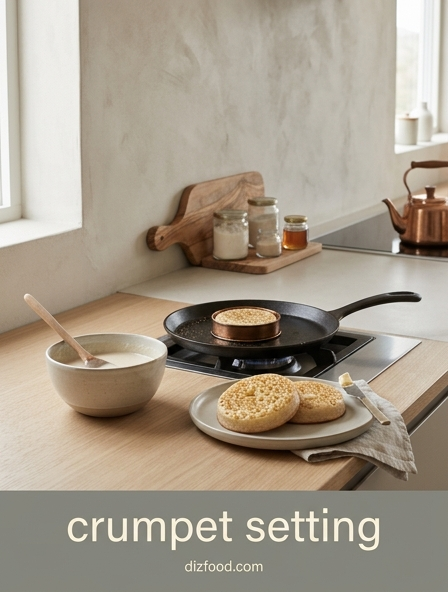
Modern toasters feature a specialized crumpet setting designed to address the unique structural requirements of certain baked goods. Unlike standard bread, which requires equal heat application on both sides, the crumpet setting modifies the electrical flow to the internal heating elements. When this mode is activated, the toaster focuses high-intensity infrared heat primarily on the inner heating coils while reducing or completely deactivating the outer elements. This specific thermal distribution is essential because crumpets possess an asymmetrical profile, consisting of a dense, pre-cooked base and a porous, doughy top that needs direct exposure to high heat to reach a crisp finish.
- Inner element activation for concentrated browning.
- Outer element reduction to prevent base scorching.
- Optimized thermal radiation for vertical air pockets.
- Energy efficiency by limiting unnecessary coil heating.
By isolating the heat source, the appliance ensures that the bottom of the crumpet remains soft and pliable while the top develops a rigid, golden structure. This technological adjustment transforms a standard kitchen appliance into a precision tool for artisanal breakfast preparation, allowing for a professional-grade result that cannot be achieved through standard bilateral toasting cycles.
The Anatomy of a Perfect Crumpet
To appreciate the necessity of specialized toaster settings, one must first understand the physical characteristics of the crumpet. Unlike muffins or sliced bread, crumpets are griddle-cooked in rings, resulting in a flat, dense bottom and a top surface defined by hundreds of small holes, often referred to as "chimneys." These holes are formed during the fermentation and cooking process as bubbles of carbon dioxide escape through the viscous batter. The goal of toasting is to crisp the peaks of these chimneys while allowing the interior to remain sponge-like and receptive to toppings.
| Feature | Description | Requirement |
|---|---|---|
| Base | Flat, dense, and smooth. | Minimal direct heat. |
| Top Surface | Highly porous with open holes. | High-intensity radiant heat. |
| Internal Crumb | Elastic and moist. | Gentle warming. |
A perfect crumpet must balance these three distinct zones. If the base receives too much heat, it becomes brittle and unpalatable. Conversely, if the top does not receive enough direct infrared energy, the holes remain soft and fail to provide the structural integrity required to hold melted butter or preserves without becoming a soggy mess.
How Crumpet Settings Prevent Burning
The primary challenge when toasting crumpets is the risk of carbonization on the smooth underside. Because the base is more compact and has already been cooked on a hot griddle during production, it is highly susceptible to burning if exposed to the same heat intensity as the top. The crumpet setting manages this risk through intelligent power modulation. By limiting the wattage sent to the outer coils, the toaster ensures the base is only subjected to ambient warmth rather than direct searing heat.
- Select the crumpet mode to re-route electrical current.
- Insert the crumpet with the porous side facing the inner coils.
- Allow the radiant heat to penetrate the open air pockets.
- Monitor the cycle as the top crisps without the base smoking.
This prevention of burning is not just about flavor; it is about safety and air quality in the kitchen. Over-toasted crumpet bases produce acrid smoke and bitter flavors that ruin the delicate taste of the dough. The directional heat control provides a safety buffer, ensuring the sugars on the bottom do not reach the point of combustion before the top has reached the desired level of golden-brown perfection.
Maximizing Texture with Directional Heat
Texture is the defining characteristic of a high-quality crumpet, and directional heat is the primary mechanism used to achieve it. When a toaster is set to the crumpet function, the focused heat targets the "peaks" of the porous surface. This creates a textural contrast known as the "shatter effect," where the very top layer is exceptionally crunchy while the layer immediately beneath it remains soft. This gradient of textures is what makes the eating experience unique compared to the uniform crunch of a standard piece of toast.
- Crisp exterior for structural bite.
- Tender middle for a chewy mouthfeel.
- Warm base to support toppings.
Without directional heat, the entire crumpet would dehydrate uniformly. This would result in a tough, rubbery disk that lacks the signature "lift" expected from a fresh crumpet. By concentrating the thermal energy, the moisture inside the dough is driven toward the center rather than being evaporated from both sides simultaneously. This preservation of internal hydration is essential for the crumpet to act as a sponge for butter, which is the traditional goal of the toasting process.
Technical Mechanics of Inner Heating Coils
From an engineering perspective, the crumpet setting is a marvel of simple yet effective circuitry. Most toasters utilize nichrome wire wrapped around mica sheets to generate heat. In standard mode, all sheets receive equal voltage. However, the crumpet button triggers a switch-often a relay or a secondary circuit path-that alters the resistance or cuts power to specific zones. The inner heating coils are typically designed to run at full capacity, reaching temperatures high enough to emit the bright orange glow associated with intense infrared radiation.
- Circuit redirection via microswitch or digital controller.
- Selective resistance adjustment for variable heat output.
- Thermal sensors to maintain consistent internal temperature.
The placement of these coils is strategic; they are positioned to maximize the "line of sight" between the wire and the food surface. Because infrared heat travels in a straight line, the alignment of the crumpet's holes with the active coils allows the heat to travel deeper into the chimneys. This technical precision ensures that the heat isn't just bouncing off the surface but is actually "toasting" the interior walls of the pores, creating a more complex and flavorful result.
Versatile Uses for Bagels and Buns
While labeled as the "crumpet" setting, this feature is incredibly versatile for other kitchen staples that share a similar one-sided requirement. Bagels are perhaps the most common alternative use. A bagel should be toasted on the cut side to caramelize the interior while the outer crust remains chewy and soft. Burger buns and brioche rolls also benefit from this treatment; toasting only the interior prevents the delicate outer glaze from burning or becoming overly hard.
| Food Item | Orientation | Desired Result |
|---|---|---|
| Bagel | Cut side facing inward. | Crispy face, chewy exterior. |
| Burger Bun | Inside surface facing inward. | Golden interior, soft dome. |
| English Muffin | Nooks and crannies facing inward. | Crunchy peaks, tender base. |
Using the crumpet setting for these items prevents the "stale" feeling that occurs when bread is toasted all the way through. By protecting the outer crust, the user maintains the fresh-baked integrity of the bread. This makes the toaster a more flexible tool for sandwich preparation, ensuring that the structural components of the meal are heated exactly where they need to be for the best culinary outcome.
Science Behind the Perfect Golden Crunch
The transformation of a pale, doughy crumpet into a golden-brown delight is governed by the Maillard reaction. This chemical reaction occurs between amino acids and reducing sugars when subjected to heat. On a crumpet, this reaction is intensified by the high surface area created by the holes. Because the crumpet setting provides concentrated heat to these specific areas, the Maillard reaction happens more rapidly and intensely on the top surface than it would during a standard toast cycle.
- Initial warming evaporates surface-level moisture.
- Temperatures rise above 140°C (285°F).
- Sugars and proteins react to create brown pigments.
- Complex flavor compounds (aromatics) are released.
The science of the "crunch" also involves the gelatinization of starches. As the top of the crumpet heats up, the starches undergo a structural change that makes them rigid once cooled slightly. Because the crumpet setting focuses the energy on one side, this "starch-glass" state is achieved on the top layer while the bottom remains below the critical temperature for total dehydration, preserving the elastic qualities of the dough.
Difference Between Toast and Crumpet Modes
The fundamental difference between toast and crumpet modes lies in the symmetry of heat application. Standard toast mode is a balanced operation. The appliance assumes the food is uniform in thickness and composition, applying equal energy to both the left and right sides of each slot. This is ideal for sliced loaves, sourdough, or rye, where a consistent crunch is desired across the entire surface area. In this mode, the moisture is pushed from the outside toward the center from both directions.
- Toast Mode: Symmetric heating, 50/50 power split.
- Crumpet Mode: Asymmetric heating, roughly 70/30 or 100/0 power split.
- Toast Mode: Evaporates moisture from both sides.
- Crumpet Mode: Traps moisture against the cooler outer wall.
Choosing the wrong mode can lead to disappointing results. Using toast mode for a crumpet often results in a base that is too hard to bite through or a top that is still pale and soft. Conversely, using crumpet mode for a standard slice of bread will result in one side being perfectly toasted while the other remains essentially raw. Understanding these electrical differences allows the user to manipulate the appliance for the specific geometry of their food.
Preserving Moisture While Toasting
One of the hidden benefits of the crumpet setting is its ability to preserve the internal moisture of the baked good. Crumpets are naturally high-hydration products; they are made from a batter rather than a stiff dough. This moisture is what gives them their signature springy texture. When you toast using the crumpet setting, the "cool" side of the toaster acts as a thermal shield. Since the outer element is not firing at full strength, it does not drive the water out of the base of the crumpet.
- Heat is applied to the top, creating a steam barrier.
- Internal water molecules migrate toward the cooler side.
- The moisture is retained in the dense base of the crumpet.
- The result is a hot, steamy interior upon the first bite.
This preservation of steam is crucial for the overall flavor profile. A dry crumpet tastes bland and floury, but a moist crumpet carries the fermented flavors of the yeast and the richness of the butter much more effectively. The crumpet setting essentially performs a "sear" on the top while gently "steaming" the interior, providing a gourmet result that mimics the quality of a professional kitchen.
Essential Tips for Heat Control Mastery
To achieve mastery over the crumpet setting, one must account for variables such as freshness and thickness. A fresh, moist crumpet will require a higher heat setting or a longer duration than one that has been sitting in the refrigerator and has already begun to dry out. Additionally, the orientation of the crumpet within the slot is the most common point of failure for users. Always ensure the "holey" side is facing the center of the toaster, as that is where the most powerful elements are located.
- Always orient the porous side toward the inner heating elements.
- Adjust the browning dial slightly higher than you would for bread.
- Avoid overcrowding if the toaster has multiple slots.
- Let the crumpet rest for thirty seconds after popping to let the crunch set.
Another tip for heat control is to recognize the "residual heat" factor. If you are toasting multiple batches, the second batch will cook faster because the elements and the toaster body are already pre-heated. Reducing the browning level slightly for subsequent rounds will ensure consistency across all servings. By combining these manual adjustments with the technical advantages of the crumpet setting, you can ensure a perfect result every time.

Comments