
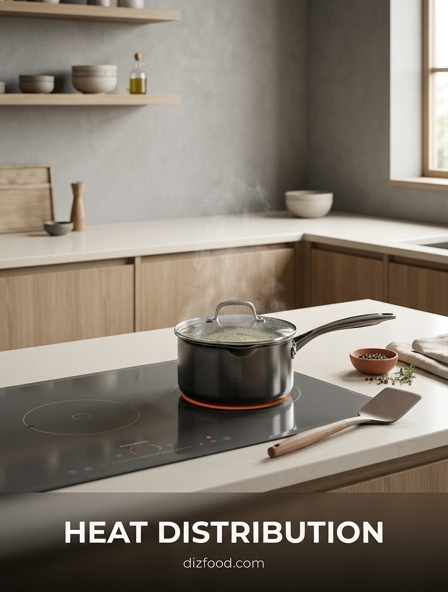
The Science of Even Heat Distribution
Even heat distribution is the cornerstone of effective culinary thermodynamics, involving the transfer of thermal energy from a source to the food via conduction, convection, and radiation. In a kitchen environment, the primary goal is to achieve molecular agitation throughout the substance without creating temperature variances that lead to uneven cooking. When energy is applied inconsistently, specific areas of the food item reach the desired internal temperature while others remain undercooked or over-processed. This imbalance disrupts the structural integrity of proteins and starches, leading to poor texture. To mitigate this, modern appliances utilize materials with high isotropic properties, ensuring that heat flux is multidirectional and steady. Understanding the physics of thermal diffusion allows for better control over the final product's quality. By managing the kinetic energy levels within the cooking vessel, chefs can ensure that every fiber of the ingredient experiences the same degree of thermal excitation, which is essential for repeatable results in high-volume environments.
- Conduction: Direct contact transfer through solids.
- Convection: Energy transfer through fluid or gas movement.
- Radiation: Electromagnetic wave energy absorption.
Precision Heating for Consistent Maillard Reaction
The Maillard reaction is a complex chemical interaction between amino acids and reducing sugars that occurs most effectively between 280°F and 330°F. Precision heating is critical because if the temperature exceeds this range too rapidly, pyrolysis occurs, resulting in bitterness and charring. Conversely, if heat distribution is uneven, the reaction fails to trigger across the entire surface of the food. Achieving a uniform golden-brown finish requires a stable thermal environment where heat is applied with surgical accuracy. High-end culinary tools utilize PID (Proportional-Integral-Derivative) controllers to maintain these narrow temperature bands, preventing the fluctuations that often plague domestic appliances. This sequence must happen simultaneously across the food's surface area to ensure visual and flavorful consistency.
- Denaturation of surface proteins to prepare for bonding.
- Carbonyl group reaction with nucleophilic amino groups.
- Formation of melanoidins for color and flavor.
- Development of complex aromatic heterocyclic compounds.
Infrared Technology and Surface Uniformity
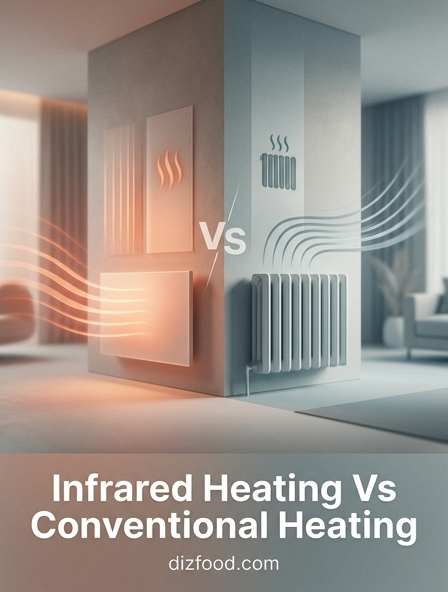
Infrared technology utilizes electromagnetic radiation to transfer heat directly to the surface of food without relying on the air as a medium. This allows for incredibly rapid heating cycles and superior surface uniformity compared to traditional resistive elements. By emitting specific wavelengths, infrared systems can penetrate the surface layers of bread or proteins more effectively, ensuring that the moisture inside is preserved while the exterior achieves a crisp texture. The uniformity is managed through the strategic placement of quartz or ceramic emitters, which provide a wide "throw" of energy. This reduces the risk of "hot spots" that typically occur when a heating element is too close to the product. The following table illustrates the efficiency of infrared versus standard heating methods.
| Feature | Standard Resistive | Infrared Emitters |
|---|---|---|
| Preheat Time | 5-10 Minutes | Instantaneous |
| Energy Focus | Omnidirectional | Directional/Targeted |
| Moisture Loss | High | Low |
Eliminating Cold Spots in Professional Toasting
In professional toasting environments, cold spots are the primary enemy of quality control. These areas occur where airflow is stagnant or where heating elements have reached the end of their lifecycle, leading to variegated browning patterns. Eliminating these requires an engineering approach that combines specialized element geometry with reflective interior surfaces. When a toaster can provide a truly uniform field of heat, the bread undergoes a synchronized moisture evaporation process. This ensures that the crunch is consistent from corner to corner. Professional-grade equipment often employs thicker gauge wire and tighter winding patterns at the edges of the heating cards to compensate for the natural heat loss that occurs near the device's openings. By reinforcing the perimeter heat, the system balances the internal temperature gradient, resulting in a toast that is functionally and aesthetically perfect across its entire surface area.
- High-density element winding for edge compensation.
- Parabolic reflectors to redirect stray thermal energy.
- Active air circulation to break up stagnant thermal pockets.
Thermal Mapping for Edge to Edge Results
Thermal mapping is an advanced diagnostic process used in the design of high-performance kitchen appliances to visualize heat intensity across a specific plane. By using infrared cameras and multi-point thermocouple arrays, engineers can identify exactly where energy concentrations fall off. This data allows for the recalibration of heating elements to ensure "edge to edge" results, a term indicating that there is no more than a 2% variance in temperature across the cooking surface. For tasks like searing or toasting, this level of precision prevents the center of the food from burning while the edges remain pale. The implementation of thermal mapping has led to the development of variable-wattage elements that provide more energy to cooler zones. This technological leap ensures that regardless of where the food is placed within the chamber, it receives an identical caloric load, which is vital for professional kitchens requiring standardized output.
- Baseline temperature data collection using IR sensors.
- Identification of thermal "valleys" and "peaks."
- Adjustment of element wattage distribution.
- Final validation through repetitive baking cycles.
High Conductivity Materials in Heating Elements
The choice of materials in heating elements directly dictates the speed and evenness of thermal transfer. High conductivity materials like copper, aluminum, and specific nickel-chromium alloys are favored for their ability to move energy rapidly and resist thermal inertia. When a material has high thermal conductivity, it can smooth out the "pulses" of energy provided by the power source, creating a more constant and reliable heat flow. This is particularly important in induction cooking and high-end toasters where rapid response times are required. Materials with low thermal mass but high conductivity allow the appliance to reach the desired temperature quickly and, more importantly, to cool down fast enough to prevent overcooking once the cycle is complete. The table below compares common materials used in kitchen heat distribution systems based on their thermal properties.
| Material | Thermal Conductivity | Durability |
|---|---|---|
| Copper | Very High | Moderate |
| Aluminum | High | Low | Medium | Very High |
Optimizing Convection for Textural Perfection
Convection optimization involves the mechanical manipulation of air to enhance heat transfer rates. By utilizing high-velocity fans and specialized baffling, a convection system can strip away the "boundary layer" of cool air and moisture that naturally surrounds food during the cooking process. This allows the heat to interact more directly with the surface, accelerating the crisping process while maintaining a soft interior. Textural perfection is achieved when the rate of surface dehydration perfectly matches the rate of internal heat penetration. In modern convection ovens, the fan speed is often variable, allowing for different stages of the cooking process-high speed for initial browning and lower speeds for delicate finishing. This control ensures that the air moves in a cyclonic pattern, reaching every crevice of the food item and eliminating the stagnant zones found in traditional still-air ovens.
- Boundary layer disruption for faster crisping.
- Cyclonic airflow patterns for 360-degree coverage.
- Variable fan speeds for customized moisture control.
Reflective Internal Chambers and Heat Efficiency
The internal geometry and surface finish of a cooking chamber play a pivotal role in heat efficiency and distribution. Reflective internal chambers, often lined with polished stainless steel or specialized ceramic coatings, act as mirrors for radiant heat. Instead of the walls absorbing the energy, they bounce it back toward the food from multiple angles. This creates a "cross-fire" effect of infrared waves, ensuring that even the sides and bottom of the food receive adequate thermal exposure. This efficiency not only reduces the amount of electricity required to reach cooking temperatures but also minimizes the external temperature of the appliance. Designers use computer-aided modeling to determine the optimal angles for these reflective surfaces to ensure that the reflected energy is concentrated on the cooking rack rather than being lost to the corners of the chamber.
- Selection of high-albedo material for liners.
- Angular geometry design for maximum reflection.
- Thermal insulation to prevent outward heat leakage.
- Surface polishing to maintain reflectivity over time.
Consistent Gradient Control for Artisanal Breads
Artisanal breads present a unique challenge for heat distribution due to their high moisture content and varied density. Achieving a thick, chewy crust alongside a light, airy crumb requires consistent gradient control. This means the exterior must be subjected to high radiant heat to gelatinize starches quickly, while the interior is brought up to temperature slowly via gentle conduction. If the heat distribution is too aggressive, the crust will harden and burn before the internal yeast activity has finished its final "oven spring." Conversely, if the heat is too low or uneven, the bread will collapse or develop a gummy texture. Advanced baking systems manage this by using staged heating profiles that adjust the ratio of radiant to convective heat throughout the bake. This ensures the thermal gradient remains stable, allowing for the precise development of the crumb structure and the characteristic deep color of artisanal loaves.
- Staged heating for optimal oven spring.
- Balance of radiant and conductive energy.
- Moisture-rich environments to delay crust formation.
Achieving Golden Brown Uniformity Through Innovation
Modern innovation in kitchen technology has turned the quest for golden brown uniformity into a precise science. Through the integration of artificial intelligence and advanced sensor arrays, appliances can now "see" the level of browning in real-time. These systems adjust the power output to individual heating segments based on visual feedback, ensuring that every square centimeter of a product reaches the exact same shade. This level of automation removes human error and accounts for variations in the food itself, such as different sugar levels in bread or thickness in proteins. As we look toward the future, the combination of solid-state RF heating and smart sensors promises even greater levels of control, making perfectly uniform heat distribution an accessible standard for both home cooks and professional chefs alike. The evolution of these technologies ensures that "perfectly toasted" is no longer a matter of luck.
| Innovation | Impact on Uniformity | Primary Benefit |
|---|---|---|
| AI Vision | Real-time adjustment | Perfect color match |
| Segmented Elements | Zone-based control | No more hot spots |
| Solid-State RF | Molecular precision | Volumetric heating |


Comments