
Ever wonder why your homemade loaves sometimes lack that signature crackle? Choosing between the Artisan Bread and White Bread settings on your machine is the ultimate game-changer for your crust's texture and flavor. While the White Bread cycle focuses on a fast, consistent rise for a soft, pillowy crumb, the Artisan setting mimics traditional European techniques by utilizing longer, cooler fermentation periods and higher baking temperatures. This extended process allows the yeast to develop complex organic acids for deeper flavor while creating the thick, blistered "bakery-style" crust that enthusiasts crave. Understanding these subtle mechanical shifts is your secret weapon for transforming basic dough into a gourmet masterpiece.
| Feature | White Bread Setting | Artisan Bread Setting |
|---|---|---|
| Fermentation | Short & warm (1-2 hours) | Long & cool (3-5+ hours) |
| Crust Texture | Soft, thin, and golden | Thick, crispy, and blistered |
| Crumb Structure | Tight, uniform, and "squishy" | Open, airy, and irregular holes |
| Baking Temp | Moderate (approx. 350°F) | High (approx. 400°F - 450°F) |
| Kneading Style | Vigorous for gluten strength | Gentle to preserve air pockets |
| Best Use Case | Sandwich loaves, brioche, rolls | Sourdough, ciabatta, rustic boules |
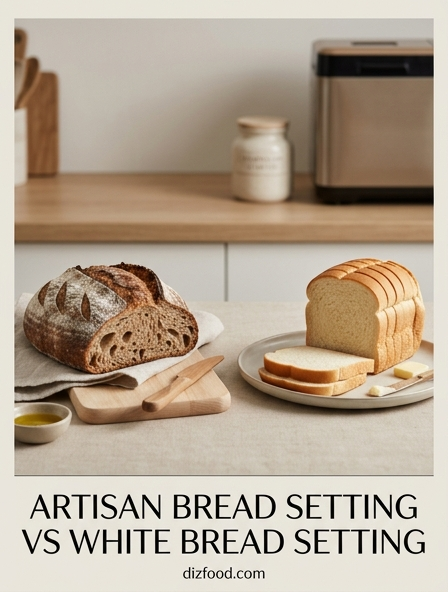
Understanding Crust and Crumb Texture Differences
The fundamental distinction between artisan and white bread settings lies in the sensory experience of the final loaf. An artisan setting is engineered to mimic traditional European bakery methods, resulting in a thick, crackly, and deeply browned crust. The crumb structure is typically "open," meaning it features large, irregular air pockets that provide a chewy and resilient mouthfeel. This texture is ideal for dipping into olive oil or supporting heavy toppings, as the structural integrity of the bread remains intact even when toasted or moistened.
In contrast, the white bread setting prioritizes a uniform, pillowy softness that is the hallmark of classic sandwich loaves. The crust produced on this setting is notably thin and flexible, often characterized by a light golden hue rather than a dark brown finish. The interior crumb is tight and consistent, with small, even cells that melt away easily during consumption. This difference is largely due to how the machine manages moisture and heat during the final stages of the baking process. While artisan loaves are exposed to higher heat to harden the exterior, white bread cycles use moderate temperatures to preserve tenderness.
- Artisan Crumb: Irregular, large holes, elastic, and chewy.
- White Bread Crumb: Fine, uniform, soft, and easy to compress.
- Artisan Crust: Thick, rustic, crunchy, and dark.
- White Bread Crust: Thin, pale, buttery, and soft to the touch.
The Role of Fermentation and Rise Times
Fermentation is the biological process where yeast consumes sugars to produce carbon dioxide and ethanol, and the duration of this process significantly alters the flavor profile of the bread. The artisan setting typically features an extended fermentation period, often incorporating multiple rise stages with gentle de-gassing in between. This slower pace allows for the development of complex organic acids, giving the bread a slightly tangy, sophisticated flavor profile that cannot be achieved in shorter cycles.
White bread settings are optimized for speed and convenience, focusing on a rapid rise to achieve maximum volume in a shorter timeframe. Because the fermentation is accelerated, the yeast produces gas quickly to lift the dough, but there is less time for enzyme activity to break down starches into flavorful sugars. Consequently, white bread relies more on the inherent flavors of its ingredients-such as butter or milk-rather than the fermentation process itself. Understanding these timing differences is crucial for bakers who want to control the "yeasty" or "sour" notes in their homemade loaves.
- Primary Fermentation: Artisan cycles allow longer for initial gluten relaxation.
- Secondary Rise: White bread cycles focus on a singular, vigorous rise for height.
- Proofing: Artisan settings often have a cooler proofing stage to prevent over-proofing during the long cycle.
- Total Time: Expect artisan cycles to last 1 to 2 hours longer than standard white cycles.
How Kneading Patterns Vary Between Settings
Kneading is the process of developing the gluten network, which provides the bread with its structure. The artisan setting employs a more nuanced kneading pattern, often featuring intermittent pulses and longer rest periods. These "autolyse" or rest phases allow the flour to fully hydrate and the gluten to bond naturally with less mechanical intervention. This prevents the dough from becoming too tough and helps maintain those large, irregular air pockets that characterize rustic breads.
The white bread setting, however, utilizes a vigorous and consistent kneading motion. The goal here is to create a very strong, fine-meshed gluten web that can trap gas in small, even bubbles. This mechanical intensity ensures the dough is smooth and elastic, leading to the uniform height and soft texture required for standard sandwich bread. The following table summarizes the mechanical differences found in many high-end bread machines.
| Feature | Artisan Setting | White Bread Setting |
|---|---|---|
| Kneading Intensity | Low to Medium; Pulsed | High; Constant |
| Rest Intervals | Frequent and Long | Short or None |
| Gluten Goal | Medium development; Rustic | Full development; Smooth |
Comparing Temperature Profiles for Artisan and White Bread
Temperature control is the secret ingredient in bread machine programming. The artisan cycle usually starts with a longer preheating phase to ensure all ingredients are at an optimal temperature for slow yeast activity. During the baking phase, the temperature spikes significantly higher than in other settings. This intense heat is necessary to achieve "oven spring"-the final burst of rising-and to caramelize the crust's sugars through the Maillard reaction, resulting in that iconic dark, crunchy exterior.
White bread cycles operate at a more moderate and stable temperature profile. Since white bread recipes often contain enrichments like sugar, dry milk, or fats, they are prone to burning if the heat is too high. The moderate temperature allows the bread to bake through thoroughly without the exterior becoming overly hard or dark. This ensures that the loaf remains soft enough to slice for sandwiches while still being fully cooked in the center. The cooling phase in a white bread cycle is also designed to retain some moisture, preventing the crust from drying out excessively.
- Preheat: Artisan cycles use extended preheating for ingredient stabilization.
- Bake Temp: Artisan settings reach higher peak temperatures for crust development.
- Consistency: White bread cycles maintain a steady, lower heat to protect delicate fats.
- Sugar Caramelization: Higher heat in artisan cycles darkens the loaf even without added sugar.
Flour Compatibility for Each Bread Machine Cycle
Choosing the right flour is imperative for success with specific machine settings. Artisan cycles are best suited for high-protein flours, such as bread flour or even partial whole wheat blends. These flours have the "strength" required to endure the long fermentation times without the gluten structure collapsing. Since artisan recipes usually contain only flour, water, salt, and yeast, the quality and protein content of the flour are the primary drivers of the bread's final structure and taste.
White bread settings are more forgiving and are designed to work perfectly with standard bread flour or even high-quality all-purpose flour. Because these recipes often include "conditioners" like fats or sweeteners, the flour doesn't have to do all the structural heavy lifting alone. The lower protein content in some white bread recipes actually contributes to the desired tenderness of the crumb. When using specialty flours like rye or spelt, the artisan setting is generally preferred due to its slower, more controlled rise phases.
| Flour Type | Best Setting | Reasoning |
|---|---|---|
| Bread Flour | Both | Versatile with high gluten content. |
| All-Purpose | White Bread | Lower protein results in softer crumb. |
| Whole Wheat (Partial) | Artisan | Needs longer hydration and rise time. |
Achieving the Perfect Golden Crust on Artisan Settings
The hallmark of a great artisan loaf is a crust that sings with color and texture. On the artisan setting, the bread machine optimizes the final 20 to 30 minutes of the cycle to maximize heat. This high-heat environment promotes the Maillard reaction, a chemical reaction between amino acids and reducing sugars that gives browned food its distinctive flavor. Because artisan doughs rarely contain added sugar, this browning comes entirely from the breakdown of starches in the flour, resulting in a more complex, nutty taste.
To further enhance the crust when using this setting, many bakers experiment with the "crust color" button if the machine allows. Choosing the "Dark" option on an artisan cycle will push the temperature to its safe limit, creating a thick, protective shell that preserves the moist interior. The contrast between the rugged, golden-brown exterior and the soft, airy interior is what defines the artisan experience. Maintaining this crust requires allowing the bread to cool completely on a wire rack to prevent steam from softening the exterior.
- Heat Spikes: The machine increases temperature at the end of the bake.
- Starch Conversion: Long cycles allow more starches to turn into browning sugars.
- Moisture Escape: Artisan cycles often vent more steam to harden the crust.
- Cooling: Proper cooling is essential to keep the "crunch" alive.
Why White Bread Cycles Produce Softer Loaves
Softness in bread is a result of both ingredient composition and the baking environment. White bread recipes almost always include fats-such as butter, oil, or shortening-and often incorporate milk (either liquid or powdered). These ingredients act as tenderizers, coating the gluten strands and preventing them from becoming too tough. The white bread setting is programmed to respect these ingredients, using a shorter bake time and lower temperatures to prevent the fats from smoking or the sugars from over-caramelizing.
Additionally, the white bread cycle is designed to retain more moisture within the loaf. While an artisan setting might encourage some evaporation to create a hard crust, the white bread setting keeps the environment slightly more humid. This humidity ensures that the crust remains thin and pliable. When the loaf is removed from the machine, the residual steam stays trapped within the soft crust, further tenderizing it as it cools. This makes the bread easy to slice into thin, uniform pieces for sandwiches or toast.
- Enrichment: Fats and sugars create a tender, soft texture.
- Lower Heat: Prevents the formation of a thick, hard shell.
- Faster Cycle: Limits the evaporation of moisture from the dough.
- Gluten Handling: Intense kneading creates a fine, soft network of air cells.
The Impact of Steam and Moisture Retention
Moisture management is a critical technical difference between these two settings. In professional artisan ovens, steam is injected during the first stage of baking to allow the dough to expand fully before the crust sets. While most home bread machines cannot inject steam, the artisan setting mimics this by carefully controlling the vent timing. By keeping the initial moisture locked in, the dough stays supple for a better "spring," and then the vents open later to dry out the crust for that essential crunch.
The white bread setting handles moisture differently by focusing on retention throughout the entire process. Because a soft crust is the goal, the machine does not prioritize the drying-out phase. This creates a bread that has a higher "water activity" in the crust, making it soft enough for children and ideal for those who dislike the "roof-of-the-mouth-scratching" texture of rustic loaves. The following steps highlight how moisture is managed in most cycles:
- Early Stage: Both settings retain moisture to help the dough rise.
- Mid Stage: Artisan settings begin to vent to prepare for crust hardening.
- Late Stage: White bread settings maintain moderate humidity to keep the crust thin.
- Post-Bake: Artisan bread must be removed immediately to avoid "sweating."
Navigating Program Durations for Better Bread
Time is the most significant investment when choosing between bread machine settings. A standard white bread cycle usually concludes in about 3 hours, making it the go-to choice for a quick weekday loaf. This duration includes a short preheat, one or two kneads, a rapid rise, and a 45-60 minute bake. It is a streamlined process designed for efficiency and consistent results with enriched doughs.
The artisan program is a "slow food" approach, often taking between 4 and 6 hours. This extra time is not wasted; it is divided into longer rest periods and extended rise times. These durations are essential for developing the structural strength of the dough without excessive chemical leaveners. If you are using a recipe with very little yeast, the artisan setting is mandatory, as the white bread setting will not provide enough time for the dough to lift. Below is a comparison of typical time allocations for a standard bread machine.
| Phase | White Bread (3h) | Artisan Bread (5h) |
|---|---|---|
| Preheat/Rest | 10 mins | 40 mins |
| Kneading | 25 mins | 40 mins (intermittent) |
| Rise Time | 1h 20m | 2h 40m |
| Bake Time | 50 mins | 60 mins (higher temp) |
Choosing the Right Setting for Your Specific Recipe
The decision of which setting to use ultimately depends on your ingredient list and the intended use of the bread. If your recipe includes "extras" like honey, eggs, milk, or a significant amount of butter, the white bread setting is the safest and most effective choice. These ingredients react better to the moderate temperatures and shorter fermentation times of the white cycle. This setting is also the best choice for everyday sandwich bread or dinner rolls where a soft, uniform texture is the priority.
If your recipe is a minimalist "lean dough" consisting only of flour, water, salt, and yeast, you should almost always choose the artisan setting. This setting provides the environmental conditions necessary to transform simple ingredients into a gourmet loaf with deep flavor and a professional-grade crust. Furthermore, if you are experimenting with "no-knead" style recipes or sourdough starters in your machine, the longer durations of the artisan setting are much more accommodating to these slower-acting agents.
- Use White Bread Setting for: Brioche, honey wheat, milk bread, and basic sandwiches.
- Use Artisan Setting for: French bread, Italian loaves, sourdough, and rustic boules.
- Check Your Yeast: Use "Instant Yeast" for white cycles; "Active Dry" can benefit from the longer artisan cycles.
- Consider the Topping: Artisan bread handles seeds and crusty toppings better due to the longer bake.


Comments