
If you have ever experienced the frustration of a delicate dumpling skin tearing open on a bamboo steamer, you know that choosing the right liner is essential for perfect results. Deciding between perforated steamer paper and a traditional cabbage leaf liner often comes down to a balance of convenience versus culinary heritage. While food-grade parchment liners are engineered with precision-cut holes to ensure rapid steam circulation and an effortless release, cabbage leaves offer a biodegradable, cost-effective alternative that imparts a subtle, savory aroma to your buns and dim sum. Whether you are looking for the clinical efficiency of disposable liners or the rustic, zero-waste charm of leafy greens, understanding how each affects heat distribution and moisture control will help you achieve professional, non-stick results every time you steam.
| Feature | Perforated Steamer Paper | Cabbage Leaf Liner |
|---|---|---|
| Material | Food-grade silicone-coated parchment | Natural cruciferous vegetable leaves |
| Non-Stick Rating | High; engineered for instant release | Moderate; requires slight moisture/oil |
| Airflow | High (consistent pre-punched holes) | Variable (depends on leaf placement) |
| Flavor Impact | Neutral; no taste transfer | Subtle earthy/vegetal notes imparted |
| Cleanup | Zero effort; disposable after use | Minimal; compostable and biodegradable |
| Best For | Bulk cooking and uniform aesthetics | Authentic flavor and eco-friendly steaming |
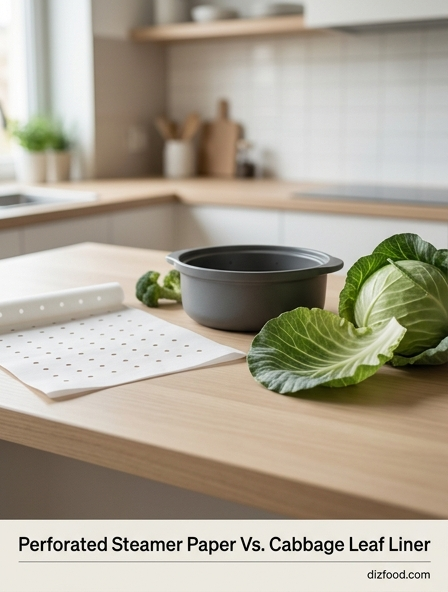
Perforated Steamer Paper vs Cabbage Leaf Efficiency
Efficiency in a busy kitchen is often measured by the speed of preparation versus the quality of the final output. Perforated steamer paper is engineered for high-volume environments where consistency is paramount. These pre-cut circles or squares feature precision-punched holes that ensure immediate readiness. A chef can simply grab a sheet and place it into the bamboo basket without any modification. This streamlines the assembly line for dim sum or dumplings, allowing for rapid turnover between steaming cycles.
In contrast, cabbage leaf liners require a higher degree of manual preparation. A cook must peel the leaves carefully to avoid tearing, wash them thoroughly to remove grit, and sometimes blanch them slightly or trim the thick central ribs to ensure they lie flat. While this adds minutes to the prep time, cabbage offers a multi-functional efficiency that paper cannot match. The cabbage leaf acts as both a non-stick barrier and an edible garnish, reducing the need for additional plating elements. When evaluating workflow, the choice often depends on the scale of production:
- Paper: Best for high-speed commercial service and uniform sizing.
- Cabbage: Ideal for boutique dining where the preparation time is factored into the artisanal value.
- Setup Time: Paper takes seconds; cabbage requires three to five minutes of preparation.
Ultimately, while paper wins on raw speed, cabbage efficiency is found in its dual-purpose nature as a liner and a side vegetable, potentially saving time on side dish preparation.
Natural Flavor Infusion with Cabbage Liners
One of the most significant culinary differences between synthetic and natural liners is the aromatic contribution to the food. Perforated steamer paper is specifically designed to be chemically inert and odorless. While this is beneficial for maintaining the "pure" taste of a delicate shrimp har gow, it misses an opportunity to layer flavors during the cooking process. Paper serves as a silent facilitator, whereas a cabbage leaf acts as an active ingredient.
When subjected to high-heat steam, the cellular structure of a cabbage leaf breaks down, releasing subtle sugars and sulfurous compounds that characterize brassica vegetables. This creates a gentle, earthy sweetness that permeates the bottom of buns or dumplings. This flavor infusion is particularly prized in traditional Shanghainese soup dumplings (Xiao Long Bao), where the vegetal notes of the cabbage complement the rich, fatty pork broth inside the dumpling. The steam carries these aromatic molecules upward, enveloping the dough in a scent that paper simply cannot replicate.
The choice of cabbage variety also influences the flavor profile:
- Napa Cabbage: Offers a mild, almost buttery sweetness that pairs well with seafood.
- Savoy Cabbage: Provides a more robust, earthy flavor and a textured surface.
- Green Cabbage: Delivers a classic, slightly peppery finish that stands up to spiced meats.
By utilizing a natural liner, the chef introduces a complexity that elevates the dish from a simple steamed snack to a cohesive culinary experience.
The Convenience of Disposable Steamer Paper
The modern kitchen often prioritizes convenience and hygiene, areas where disposable perforated steamer paper excels. Made from food-grade parchment or silicone-coated paper, these liners are designed for single-use applications that eliminate the risks of cross-contamination. Because they are manufactured in standardized diameters, they fit perfectly into standard 10-inch or 12-inch bamboo steamers without the need for folding or trimming. This uniformity ensures that every batch of food is treated to the same cooking environment.
Furthermore, the storage of steamer paper is significantly more convenient than maintaining a fresh supply of vegetables. A pack of 500 paper liners can be stored in a dry pantry for years without degrading, taking up minimal shelf space. Fresh cabbage, on the other hand, requires refrigeration, has a limited shelf life, and is subject to price fluctuations based on the season. For home cooks who only steam food occasionally, paper is the more practical investment.
The disposability factor also addresses the issue of residual grease. High-fat fillings can sometimes leak during the steaming process. With paper, the mess is simply gathered and tossed into the bin. There is no need to worry about composting or the enzymatic breakdown of vegetable matter if the food is not consumed immediately. This "grab-and-go" nature of paper liners makes them the preferred choice for fast-casual restaurants and busy home kitchens alike.
Steam Circulation and Heat Distribution Differences
Effective steaming relies on the unobstructed movement of water vapor. The physics of steam circulation differ significantly between perforated paper and natural leaves. Perforated paper is designed with a grid of uniform holes, usually spaced about half an inch apart. This layout ensures that steam reaches the bottom of the food evenly and at a consistent pressure. Because the holes are precisely engineered, there are no "cold spots" in the steamer basket, resulting in dumplings that cook at exactly the same rate regardless of their position on the liner.
Natural cabbage leaves do not have built-in perforations. Instead, they rely on the irregular shapes of the leaves and the gaps between them to allow steam to rise. While this creates a more humid and "trapped" steaming environment, it can lead to uneven heat distribution if the leaves overlap too densely. However, many chefs argue that this trapped steam creates a gentler cook, which is beneficial for delicate items that might burst under high-pressure steam jets.
Consider the following comparison of heat dynamics:
- Vapor Flow: Paper provides direct, vertical flow; cabbage forces steam to move laterally around leaf edges.
- Moisture Retention: Cabbage leaves retain more moisture, creating a high-humidity microclimate.
- Condensation: Paper allows condensation to drain through holes, whereas cabbage may collect small pools of water in its natural curves.
Understanding these dynamics allows a cook to adjust their timing. Typically, cabbage-lined steamers may require an extra minute of cook time due to the slightly more insulated environment created by the thick vegetable barrier.
Eco Friendly Benefits of Using Vegetable Liners
In the context of environmental sustainability, the cabbage leaf is the undisputed winner. As a raw, unprocessed vegetable, a cabbage liner is 100% biodegradable and compostable. Once the meal is finished, the liner can be discarded into a compost bin where it will break down into nutrient-rich soil within weeks. This creates a closed-loop system that is hallmark of traditional, sustainable cooking practices. There is no industrial processing, no chemical bleaching, and no plastic packaging involved in the "manufacturing" of a cabbage leaf.
Conversely, while many steamer papers are marketed as parchment, they are often coated with a thin layer of silicone to ensure non-stick properties. This coating can make the paper difficult to compost in backyard systems, and many municipal recycling programs will not accept food-soiled paper. Even "eco-friendly" unbleached papers still require significant energy for pulping, transport, and packaging. The carbon footprint of a cabbage leaf, particularly if sourced locally, is substantially lower than that of paper products manufactured in a factory and shipped across the country.
Using vegetable liners also reduces household waste. Instead of adding to the landfill with every meal, the cook is utilizing a natural byproduct. In many cultures, the "liner" is even eaten as part of the meal, resulting in zero waste whatsoever. By choosing cabbage over paper, a kitchen moves closer to a plastic-free and low-impact operational model, aligning culinary traditions with modern ecological values.
Preventing Food Adhesion in Bamboo Steamers
The primary function of any liner is to prevent the delicate skin of a dumpling or the bottom of a bun from fusing to the bamboo slats. If food sticks, the skin will tear upon removal, causing the filling or soup to leak out and ruining the dish. Both perforated paper and cabbage leaves are effective anti-adhesion tools, but they work through different mechanisms. Paper relies on its silicone coating or the dense fibers of parchment to create a slick surface that repels protein and starch.
Cabbage leaves prevent sticking through their natural waxy cuticle and high water content. As the cabbage steams, it releases a thin film of moisture that acts as a lubricating barrier between the dough and the vegetable. This is often more effective for very sticky rice-based doughs, such as mochi or certain types of glutinous rice cakes, which can occasionally bond to paper fibers if the paper is not high-quality. The cabbage provides a "living" surface that moves slightly with the food as it expands.
To maximize the non-stick properties of both materials, cooks can follow these tips:
- For paper, ensure it is slightly damp before placing the food to prevent the dough from drying onto the surface.
- For cabbage, remove the thickest part of the stem so the leaf lies perfectly flat, preventing food from tilting and sliding.
- If using paper, ensure the perforations are not entirely covered by food, as trapped steam can cause the bottom of the dough to become overly gummy and sticky.
While paper is generally more reliable for "dry" doughs, cabbage is often superior for "wet" or high-starch items that require a more hydrated interface.
Cost Comparison of Liners vs Fresh Cabbage
When analyzing the financial impact of liner choices, the decision often hinges on whether the kitchen is a high-volume commercial operation or a home environment. Perforated paper liners are typically sold in bulk, and the cost per unit decreases significantly when purchased in quantities of 500 or 1,000. In contrast, the cost of cabbage is tied to the produce market, which can be volatile based on the time of year and geographical location.
| Feature | Perforated Paper (Bulk) | Fresh Napa Cabbage |
|---|---|---|
| Unit Cost | $0.02 - $0.05 per sheet | $0.10 - $0.25 per leaf |
| Storage Cost | Negligible (Dry shelf) | Moderate (Refrigerated) |
| Waste Factor | 100% (Disposable) | 0% (If eaten or composted) |
| Preparation Labor | Zero | Moderate (Washing/Cutting) |
For a home cook, a single head of cabbage costing $2.00 can provide enough liners for 15 to 20 steaming sessions, assuming the inner leaves are used for cooking and the outer leaves for lining. However, if the cabbage is not used quickly, it spoils, leading to a 100% loss of investment. Paper liners represent a fixed, predictable cost with no risk of spoilage. In a commercial setting, the labor cost required to wash and prep cabbage often exceeds the pennies saved by not using paper, making paper the more economical choice for professional chefs.
Textural Impacts on Dumplings and Buns
The texture of a steamed bun's base is a hallmark of quality. Perforated paper tends to produce a drier, firmer bottom. Because the paper is thin and the holes allow for rapid moisture escape, the dough sets quickly. This is ideal for Baozi (yeasted buns) where a fluffy, bread-like texture is desired. The paper ensures the bottom doesn't become waterlogged, maintaining the structural integrity of the bun so it can be picked up easily with fingers without feeling soggy.
Cabbage leaves, however, create a much softer and more succulent texture. Because the leaf holds onto moisture and lacks large drainage holes, the bottom of the dumpling is effectively "poached" in a combination of steam and vegetable juice. This results in a translucent, tender skin that melts in the mouth. For thin-skinned dumplings like Jiaozi, this extra hydration prevents the edges from becoming brittle or chewy. The cabbage also prevents the bottom from "skinning over" or becoming tough if the steamer is left on the heat for a few minutes too long.
The choice of liner can thus be used to manipulate the final mouthfeel of the dish. A chef wanting a crisp, clean release and a structured base will reach for paper. A chef seeking a soft, silky, and rustic finish will opt for the cabbage leaf. This subtle difference in moisture management is why traditionalists often insist on cabbage for home-style cooking where tenderness is prioritized over professional "clean" lines.
Traditional vs Modern Steaming Techniques
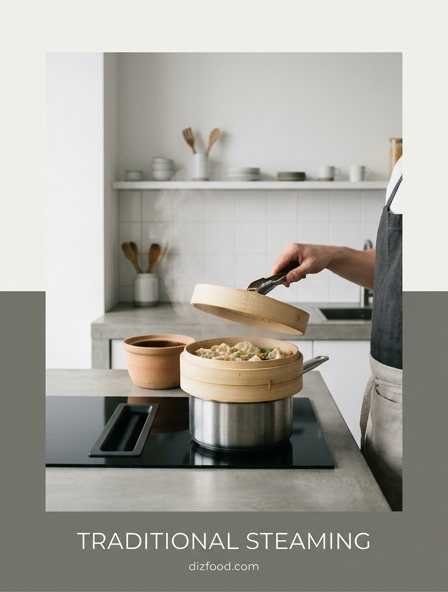
Steaming is one of the oldest cooking techniques in the world, with roots stretching back thousands of years in East Asian cuisine. Historically, the use of cabbage, lotus leaves, banana leaves, or even corn husks was born out of necessity. These were the materials available in the natural environment. They were functional, provided flavor, and were easily discarded. This traditional approach views the liner as an extension of the food itself, a philosophy where the boundary between the cooking vessel and the ingredients is blurred.
Modern steaming techniques, influenced by industrialization and the need for standardization, introduced the perforated paper liner. This represents a shift toward "neutral" cooking, where the goal is to remove variables. Modern professional kitchens often utilize combi-ovens or high-pressure metal steamers where paper is more durable than a vegetable leaf. The transition from cabbage to paper reflects a broader trend in culinary history: the movement from regional, seasonal ingredients to standardized, manufactured kitchen tools.
Despite the prevalence of modern paper, many high-end restaurants are returning to traditional liners as a way to signal authenticity. Using a cabbage leaf is now seen as a "premium" touch-a sign that the kitchen values craft over convenience. It bridges the gap between the ancient art of bamboo steaming and the modern diner's desire for natural, unprocessed experiences. While paper is a triumph of engineering, the vegetable liner remains a symbol of culinary heritage.
Optimal Cleanup Strategies for Steamer Baskets
Maintenance of bamboo steamer baskets is crucial for their longevity, as bamboo is a porous material that can absorb odors and grow mold if not cleaned correctly. The choice of liner dictates the difficulty of the cleanup process. Perforated paper is the superior option for minimizing cleanup. Since it covers most of the basket's surface and the holes are small, very little food residue or protein-laden water reaches the bamboo slats. Usually, a quick rinse with hot water and a soft brush is all that is needed after using paper.
Cabbage leaves, while effective at preventing sticking, can be messier during cleanup. As the leaves soften, they may occasionally leave behind small fragments or vegetal juices that can seep into the bamboo's grain. If a leaf tears, the filling of the dumpling may come into direct contact with the basket. To maintain a steamer used with cabbage, more thorough scrubbing is often required. However, cabbage has one hidden benefit: it does not leave behind the tiny paper fibers that cheap, low-quality steamer papers sometimes shed when they get too wet.
To optimize cleanup for both methods, follow these steps:
- Immediate Action: Always rinse the basket with hot water immediately after use before starches have a chance to harden.
- Air Drying: Never store bamboo steamers while damp; they must be completely air-dried to prevent warping and mold.
- Deep Cleaning: Occasionally steam the empty baskets with a splash of vinegar in the water to deodorize the wood, especially if cabbage or aromatic leaves were used.
By using a liner-whether paper or cabbage-you extend the life of your steamer by years, keeping the bamboo clean and free from deep-set stains.

Comments