
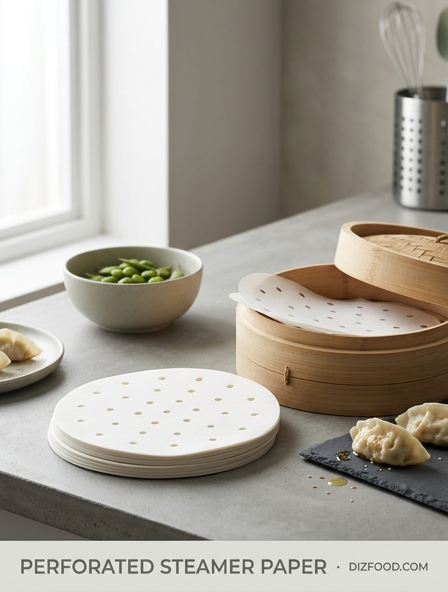
Benefits of Perforated Steamer Liners
Perforated steamer liners have become an indispensable tool for both home cooks and professional chefs. These specialized parchment sheets are designed to withstand high temperatures and moisture while providing a non-stick surface that facilitates healthy cooking. By using these liners, chefs can significantly reduce the need for oils and fats, as the silicone coating ensures that delicate doughs and proteins release effortlessly from the steamer basket. This promotes a cleaner, more heart-healthy approach to preparing traditional Asian cuisine and modern vegetable dishes alike.
- Prevents delicate food items from tearing during removal.
- Minimizes the residue left on steamer baskets, reducing scrubbing time.
- Ensures consistent results by providing a uniform cooking surface.
- Highly cost-effective compared to labor-intensive natural alternatives.
- Environmentally friendly options are often biodegradable or compostable.
Beyond the practical convenience, these liners help preserve the aesthetic integrity of the food. When serving items like har gow or crystal dumplings, the transparency and smoothness of the skin are paramount. Using perforated paper ensures that the base of the dumpling remains intact and visually appealing, which is essential for professional presentation in dim sum service.
Enhancing Steam Circulation for Even Cooking
The primary engineering feature of perforated steamer paper is the strategic placement of small holes throughout the sheet. These perforations allow steam to rise freely from the boiling water below, ensuring that heat is distributed evenly across the entire surface of the food. Without these holes, a solid sheet of parchment would act as a barrier, trapping moisture underneath and causing the bottom of the food to become soggy while the top remains undercooked.
- Place the liner flat at the bottom of the steamer basket.
- Arrange food items with space between them to allow steam to pass through the perforations.
- Ensure the liner does not cover the entire diameter if maximum peripheral airflow is required.
By optimizing the flow of hot vapor, these liners create a consistent internal temperature within the steamer tiers. This is particularly important when stacking multiple baskets, as the steam must penetrate through each level to cook the contents uniformly. The balance of steam pressure and circulation achieved through these perforations results in perfectly cooked textures, where vegetables retain their crunch and meats remain succulent without being waterlogged.
Preventing Dumpling Stickage with Perforated Paper
One of the most frustrating experiences in the kitchen is having a perfectly crafted dumpling tear open because it stuck to the bottom of the steamer. This usually happens because the starch in the dough becomes gelatinous and adhesive when exposed to heat and moisture. Perforated parchment paper acts as a high-performance barrier, preventing the dough from bonding with the bamboo or metal slats of the steamer basket. The silicone coating provides a slick surface that the stickiest rice flours cannot grip.
- Ideal for soup dumplings (Xiao Long Bao) where skin integrity is critical.
- Works effectively with sticky rice cakes and mochi-based desserts.
- Reduces the risk of cross-contamination between different food batches.
- Eliminates the need for greasing the steamer with messy vegetable oils.
When the steaming process is complete, the dumplings can be lifted away with minimal resistance. This is vital for maintaining the "soup" inside soup dumplings, as even a tiny pinhole tear caused by sticking will result in the flavorful broth leaking out. Using perforated liners guarantees that every dumpling arrives on the plate exactly as the chef intended, with its structural and culinary qualities fully preserved.
Choosing the Right Size for Steamer Baskets
Selecting the appropriate dimensions for your steamer liners is crucial for both safety and efficiency. A liner that is too large will curl up the sides, potentially blocking steam from reaching the upper tiers or causing water to pool around the edges of your food. Conversely, a liner that is too small may not provide enough coverage, leading to food sticking to the exposed areas of the basket. Most commercial liners are sized to match standard bamboo steamer diameters, typically ranging from six to twelve inches.
| Basket Diameter | Recommended Liner Size | Typical Use Case |
|---|---|---|
| 6 Inches | 5.5 - 6 Inches | Individual dim sum servings |
| 8 Inches | 7.5 - 8 Inches | Small family-sized batches |
| 10 Inches | 9 - 9.5 Inches | Standard restaurant service |
| 12 Inches | 11 - 11.5 Inches | Large buns and whole fish |
When in doubt, it is often better to choose a liner slightly smaller than the basket diameter. This leaves a small gap around the perimeter, which can actually help increase the velocity of steam rising through the basket, ensuring that the contents are surrounded by high-temperature vapor for faster, more effective cooking.
Maximizing Airflow for Faster Steaming Times
Efficiency in a busy kitchen often comes down to how quickly heat can be transferred to the food. Perforated steamer paper is specifically designed to facilitate rapid heat exchange. Because the holes are evenly spaced, they prevent "dead zones" where steam might otherwise be blocked. This constant movement of vapor means that the internal temperature of the steamer reaches its peak much faster than it would with improvised liners like solid foil or thick cabbage leaves.
The speed of cooking is not just about convenience; it also impacts food quality. Faster steaming times help vegetables retain their vibrant colors and essential vitamins, which can be lost during prolonged exposure to heat. For protein-based dishes, such as fish fillets or chicken breast, the rapid penetration of steam ensures the meat is cooked through before the exterior becomes over-toughened. By using these liners, you are essentially fine-tuning the physics of your steamer to work at its highest capacity. This results in a more energy-efficient kitchen, as less time is spent keeping water at a rolling boil to achieve the same culinary results.
Maintaining Bamboo Steamer Longevity and Hygiene
Bamboo steamers are prized for their ability to absorb excess moisture and add a subtle woody aroma to food, but they are notoriously difficult to clean. Without a liner, food particles and grease can seep into the porous grain of the bamboo. Over time, this leads to permanent staining, unpleasant odors, and the potential growth of mold or bacteria. Perforated steamer paper acts as a protective shield, keeping the bamboo surface clean and dry.
- Prevents oils and proteins from soaking into the bamboo fibers.
- Reduces the amount of water needed for cleaning the baskets.
- Slows down the physical degradation of the bamboo slats.
- Keeps the steamer looking professional for front-of-house presentation.
By using disposable or reusable silicone-coated liners, you extend the lifespan of your kitchen equipment significantly. Instead of harsh scrubbing with abrasive brushes, which can splinter the bamboo, a light rinse is often all that is required after the liner is removed. This hygiene benefit is particularly important in commercial settings where health regulations require strict cleanliness standards for all food-contact surfaces.
Food Safety Benefits of Silicone-Coated Liners
Modern perforated steamer liners are typically coated with food-grade silicone, a material known for its stability and safety at high temperatures. Unlike some cheap parchment papers that may contain bleach or other chemical residues, high-quality liners are designed to be non-toxic and BPA-free. This ensures that no unwanted substances migrate into the food during the intense heat of the steaming process. Furthermore, these liners are heat-resistant up to 450 degrees Fahrenheit, making them safe for various kitchen applications.
- Verify that the liners are FDA-approved or meet local food safety standards.
- Ensure the paper is unbleached if you prefer a more natural product.
- Check the heat rating to ensure it exceeds standard steaming temperatures (212°F).
Using these liners also enhances safety by preventing food from falling through the slats into the boiling water below. This prevents flare-ups or messy boil-overs that could occur if fatty foods or dough drop into the pot. By maintaining a clean cooking environment, these liners contribute to an overall safer and more controlled culinary process, allowing the chef to focus on flavor and technique rather than hazard management.
Streamlining Kitchen Cleanup with Disposable Sheets
In any high-volume kitchen, the speed of the cleanup process is just as important as the speed of cooking. Perforated steamer sheets are a major labor-saving device. When the meal is finished, the used liner can simply be lifted out and discarded, taking all the sticky residue, crumbs, and grease with it. This leaves the steamer basket virtually clean, requiring only a quick wipe-down rather than an intensive soaking and scrubbing session.
This efficiency translates to significant savings in water and detergent usage. It also reduces the physical strain on kitchen staff who would otherwise spend hours cleaning delicate bamboo or heavy metal steamers. For home cooks, it means more time enjoying the meal and less time standing at the sink. Because the liners prevent food from getting stuck in the intricate weaving of bamboo baskets, they also prevent the "old food" smell that can haunt poorly cleaned steamers. The convenience of disposability makes steaming a more attractive cooking method for those who usually avoid it due to the perceived mess, ultimately encouraging more frequent use of this healthy preparation technique.
Professional Techniques for Non-Stick Results
While perforated paper is designed to be non-stick, professional chefs use several techniques to ensure the best possible results. One common practice is to lightly mist the liner with water or a very small amount of oil before placing the food down. This can be especially helpful for exceptionally high-starch items like certain types of rice cakes. Another technique involves preheating the steamer with the liner already inside, which helps to immediately set the exterior of the dough when the food is added.
- Always place the smooth side of the paper facing up towards the food.
- Space items at least half an inch apart to prevent them from steaming into each other.
- Do not reuse disposable liners, as the silicone coating degrades after one heavy use.
- Remove food immediately after the timer goes off to prevent "sweating" on the paper.
Proper spacing is perhaps the most important factor. If the food covers too many of the perforations, the "venturi effect" of the steam is lost, and the non-stick properties may be compromised by a lack of upward pressure. By following these professional standards, even a novice can achieve restaurant-quality results with perfectly intact, beautifully steamed dishes every time.
Comparing Perforated Parchment to Natural Liners
Before the widespread availability of perforated parchment, cooks relied on natural liners such as cabbage leaves, lettuce, or corn husks. While these traditional methods offer a rustic charm and can impart a very subtle flavor, they lack the consistency and convenience of modern paper liners. Natural liners often vary in thickness and size, which can lead to uneven cooking times. Furthermore, they can sometimes tear or wilt too much, becoming difficult to remove from the basket once the steaming is complete.
| Feature | Perforated Parchment | Natural Liners (Cabbage/Husk) |
|---|---|---|
| Non-Stick Quality | Excellent (Silicone-coated) | Moderate (Can still stick) |
| Steam Flow | Consistent (Pre-cut holes) | Inconsistent (Blocks airflow) |
| Prep Time | Zero (Ready to use) | High (Washing/Cutting) |
| Flavor Impact | Neutral | Subtle vegetable flavor |
Ultimately, perforated parchment is the superior choice for precision cooking. It provides a standardized environment that allows the chef to control every variable. While natural liners are still used for specific dishes where the leaf itself is part of the presentation (like Zongzi or tamales), for general steaming needs, the engineered efficiency of perforated paper is unmatched in the modern kitchen.

Comments