
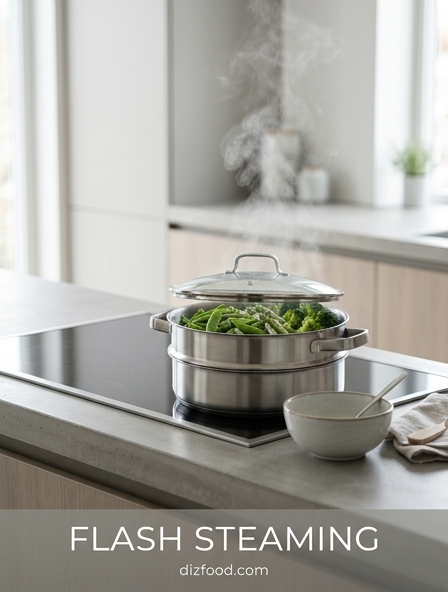
Ever wonder how professional chefs keep vegetables looking incredibly bright and snappy? The secret lies in flash steaming, a high-intensity culinary technique that uses rapid bursts of high-temperature steam to lock in moisture and flavor instantly. By minimizing exposure to heat, you effectively prevent delicate greens from turning dull or mushy, ensuring every bite delivers a satisfyingly crisp texture. This method isn't just about aesthetics; it also excels at nutrient retention, keeping your meals as healthy as they are beautiful. To better understand how this quick-fire approach compares to slower, phased methods, dive into our comprehensive breakdown of Flash Steaming Vs. Interval Steaming.
The Science of Flash Steaming
Flash steaming is a culinary technique grounded in the physics of rapid heat transfer. Unlike traditional steaming, which may involve gradual temperature increases, flash steaming relies on a high-velocity vapor state to cook food items almost instantaneously. When water reaches its boiling point, it undergoes a phase change into steam, carrying significantly more thermal energy than liquid water at the same temperature. This latent heat of vaporization is released upon contact with the cooler surface of the food, resulting in a rapid rise in internal temperature.
This method utilizes high-pressure environments or high-BTU heat sources to ensure the steam remains energetic. Because the cooking window is narrowed to mere seconds or a few minutes, the cellular structure of the food remains largely intact. The process minimizes the duration of heat exposure, preventing the breakdown of complex carbohydrates and proteins that typically leads to mushiness. By controlling the steam density and flow, chefs can achieve a precise level of doneness that preserves the fundamental integrity of the ingredient.
- Latent heat transfer for rapid cooking
- Preservation of cellular wall structure
- High-velocity vapor saturation
- Minimal thermal degradation of fibers
Retaining Peak Nutrient Density
One of the primary advantages of flash steaming is its ability to preserve the nutritional profile of vegetables and proteins. Many essential vitamins, particularly Vitamin C and various B vitamins, are water-soluble and highly sensitive to heat. Traditional boiling often causes these nutrients to leach out into the cooking water, which is then discarded. Flash steaming mitigates this loss by using minimal moisture and drastically reduced cooking times.
Research indicates that the shorter the exposure to heat, the higher the retention of antioxidants and phytochemicals. For instance, glucosinolates found in cruciferous vegetables are better preserved through quick steam exposure than through prolonged simmering. The following table illustrates the typical nutrient retention rates compared to other common cooking methods:
| Nutrient Type | Boiling Retention | Flash Steaming Retention |
|---|---|---|
| Vitamin C | 40-60% | 85-95% |
| Folate | 50% | 90% |
| Antioxidants | Low | Very High |
By prioritizing speed, flash steaming ensures that the biological value of the meal remains as high as possible, making it a preferred method for health-conscious cooking.
Essential Tools for Rapid Heat
To master flash steaming, one must utilize tools designed for maximum heat efficiency and steam containment. The goal is to create an environment where steam can build up quickly and circulate evenly around the ingredients. A standard pot with a loose lid is often insufficient; instead, specialized equipment is required to maintain the necessary thermal pressure. High-quality materials like heavy-gauge stainless steel or traditional bamboo are favored for their specific heat-retention properties.
The heat source is equally important. A high-output gas burner or a high-wattage induction cooktop allows the water to return to a boil almost instantly after the food is added. The following tools are essential for achieving professional results in a home or commercial kitchen:
- Tight-Fitting Lids: To prevent the escape of high-energy vapor.
- Perforated Steam Inserts: Allowing 360-degree steam circulation.
- Bamboo Steamers: Excellent for absorbing excess moisture and preventing condensation drip.
- High-BTU Burners: Ensuring rapid recovery of steam production.
- Digital Timers: Essential for the precision required in "flash" intervals.
Investing in the right hardware transforms the process from simple heating to precise culinary engineering.
Vibrant Greens and Natural Pigments
The visual appeal of a dish is often determined by the preservation of its natural pigments, particularly chlorophyll in green vegetables. When vegetables are overcooked or exposed to acidic environments for too long, the magnesium atom in the center of the chlorophyll molecule is replaced by hydrogen, turning the vibrant green into a dull, unappetizing olive brown. Flash steaming prevents this chemical reaction by neutralizing the cooking time.
Because the process is so rapid, the volatile acids released during heating are quickly dissipated or do not have enough time to react with the cell walls. This results in a "popping" of the color, where the greens become even more intense than their raw state. This phenomenon occurs because the heat removes air pockets between the cells, allowing the natural pigments to show through more clearly. Achieving this neon-bright aesthetic is a hallmark of professional flash steaming, signaling both freshness and technical skill. The result is a plate that looks as vital and energetic as the nutrients it contains.
Achieving the Perfect Al Dente Crunch
Texture is the defining characteristic of successfully flash-steamed produce. The term "al dente," often reserved for pasta, perfectly describes the ideal state of a flash-steamed vegetable: tender on the outside with a distinct, firm "snap" at the center. This is achieved by heating the ingredient just long enough to soften the hemicellulose in the cell walls without completely collapsing the internal structure of the plant.
- Uniform cutting: Ensure all pieces are of equal size for even steam penetration.
- Single layer arrangement: Avoid crowding the steamer basket to allow steam to hit all surfaces.
- Pre-heated chamber: Only add food once the steam is at maximum density.
- Immediate removal: Extract the food the moment the color shifts and the texture softens slightly.
Maintaining this crunch requires a departure from the "set it and forget it" mentality. It demands active participation and an understanding of the specific resistance of different fibers. When executed correctly, the contrast between the hot, moist exterior and the crisp, refreshing interior creates a superior mouthfeel that boiling simply cannot replicate.
Flash Steaming vs Traditional Boiling
The debate between flash steaming and traditional boiling centers on the interaction between water and food. Boiling involves total immersion, which subjects the food to osmotic pressure. This pressure draws out sugars, salts, and flavor compounds into the surrounding liquid, effectively diluting the natural essence of the ingredient. Furthermore, the agitation of boiling water can physically damage delicate items like broccoli florets or thin asparagus tips.
Flash steaming, by contrast, is a gentler yet more intense process. The food is suspended above the water, interacting only with the vapor. This environment concentrates flavors rather than washing them away. While boiling can be useful for root vegetables that require deep starch gelatinization, it is often too aggressive for garden-fresh produce. Flash steaming respects the ingredient's integrity, ensuring that the flavor profile remains concentrated and the physical form remains pristine. The lack of water contact also means that the food does not become waterlogged, allowing sauces and seasonings to adhere better to the surface of the steamed items.
Optimal Timing for Different Vegetables
Precision is the most critical variable in flash steaming. Because the cooking process happens so quickly, a difference of thirty seconds can mean the transition from perfectly crisp to overly soft. Different vegetables have varying densities, water contents, and fiber structures, requiring a tailored approach to timing. Understanding these intervals is the key to consistent kitchen success.
| Vegetable Type | Flash Steam Time | Preparation Style |
|---|---|---|
| Spinach / Leafy Greens | 30 - 60 Seconds | Whole leaf |
| Asparagus (Thin) | 2 - 3 Minutes | Trimmed ends |
| Broccoli Florets | 3 - 4 Minutes | Bite-sized pieces |
| Snap Peas / Snow Peas | 1 - 2 Minutes | Whole pod |
| Carrots (Julienned) | 2 - 3 Minutes | Thin strips |
These times assume that the steamer is already at full capacity with active, rolling steam. Always account for "carryover cooking," as the internal temperature will continue to rise for a short moment after the food is removed from the heat source.
The Importance of the Ice Bath Shock
The ice bath, or "shocking" process, is the essential second half of flash steaming. Even after being removed from the steamer, vegetables retain enough residual heat to continue cooking their own delicate fibers. This carryover cooking is the enemy of the al dente texture and the vibrant green color. To stop this process instantly, the steamed vegetables must be submerged in a mixture of water and ice.
This rapid temperature drop "shocks" the cells, locking in the chlorophyll and halting the enzymatic breakdown of the structure. It is a critical step for meal prep or for dishes served cold, such as salads. If serving hot, one might skip the ice bath but must then serve the dish immediately. For the best results, follow these steps:
- Prepare the ice bath before you start steaming.
- Use a slotted spoon for quick transfer.
- Submerge for only 30-60 seconds to avoid waterlogging.
- Pat dry thoroughly before seasoning or storage to ensure flavor adhesion.
Infusing Flavor with Aromatic Steam
Flash steaming provides a unique opportunity to layer flavors without adding fats or heavy sauces. By seasoning the steaming liquid itself, or placing aromatics directly in the path of the vapor, you can infuse the food with subtle, sophisticated notes. As the steam rises, it carries the volatile oils of the aromatics, depositing them onto the surface of the food as it cooks. This creates a multi-dimensional taste profile that is integrated into the ingredient rather than just sitting on top.
Common aromatics for steam infusion include:
- Ginger and Garlic: Sliced thinly and placed in the water or under the food.
- Citrus Peels: Lemon, lime, or orange zest added to the boiling water.
- Fresh Herbs: Sprigs of rosemary, thyme, or cilantro layered in the steamer basket.
- Whole Spices: Star anise, peppercorns, or cinnamon sticks for an earthy depth.
- Vinegars or Wines: A splash added to the water for an acidic aromatic lift.
This method allows for the creation of complex dishes that remain incredibly light and healthy, relying on aroma and essence rather than heavy additives.
Elevating Your Daily Meal Prep
Integrating flash steaming into a daily routine can revolutionize the efficiency and quality of meal preparation. Because the method is exceptionally fast, it reduces the time spent at the stove, making it ideal for busy schedules. Furthermore, flash-steamed vegetables are the ultimate "blank canvas" for various cuisines. They can be shocked and stored in the refrigerator for several days, maintaining their snap and color much better than boiled or roasted counterparts.
When it comes time to eat, these pre-steamed gems can be quickly tossed into a hot pan for a sear, added to a cold grain bowl, or simply brought to room temperature with a light vinaigrette. This versatility ensures that you always have high-quality, nutrient-dense components ready to assemble. By mastering the 3-minute steam, you eliminate the excuse of not having enough time for fresh produce. It transforms healthy eating from a chore into a rapid, high-reward kitchen habit that enhances every plate you serve.


Comments