
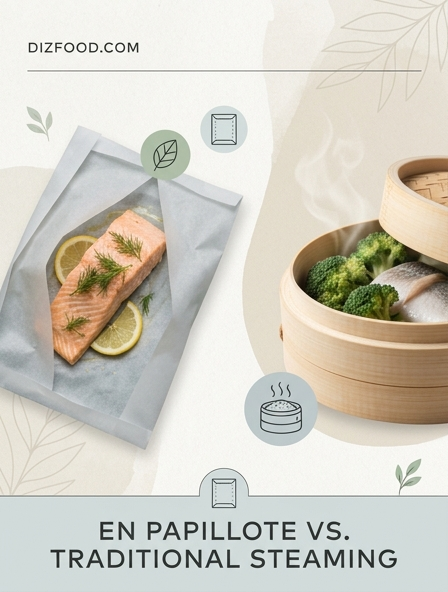
When it comes to locking in succulent flavors and vibrant colors, choosing between the elegant French en papillote technique and the classic efficiency of traditional steaming can transform your culinary results. While traditional steaming relies on circulating vapor to cook food quickly and cleanly, the en papillote method uses a sealed parchment or foil pouch to trap every drop of moisture and aromatic essence, essentially poaching the ingredients in their own juices. Whether you are looking for a quick weeknight vegetable fix or a sophisticated, herb-infused seafood dinner that "wows" guests upon opening, understanding how these moisture-based methods manipulate heat and aromatics is the secret to achieving chef-quality texture and depth of flavor every time.
| Feature | En Papillote (Pouch) | Traditional Steaming |
|---|---|---|
| Heat Transfer | Trapped conductive steam & juices | Convective circulating vapor |
| Flavor Profile | Intense, concentrated, self-basting | Clean, mild, and natural |
| Aromatic Retention | 100% (Infused in sealed pouch) | Partial (Escapes into water/air) |
| Cooking Speed | Slower (Pouch insulation) | Rapid (Direct steam contact) |
| Best Used For | Delicate fish, chicken, fruits | Root veggies, dumplings, greens |
| Presentation | High "Wow" factor (Table-side opening) | Functional and utilitarian |
Defining En Papillote and Traditional Steaming Techniques
At the heart of healthy, moisture-focused cooking lie two distinct yet related methods: traditional steaming and the French technique known as en papillote. Traditional steaming involves suspending food over boiling water, allowing the rising vapor to cook the ingredients through convection. This method relies on an external heat source and a constant supply of water to generate the necessary steam. It is a cornerstone of Asian cuisines, often utilizing bamboo or metal baskets to elevate the food above the liquid line, ensuring that the ingredients are cooked by the moist heat of the air rather than the liquid itself.
In contrast, "en papillote"-which translates literally from French as "in paper"-is a method where food is encased in a sealed pouch made of parchment paper or aluminum foil and then baked in an oven. While it is often described as a form of steaming, the mechanics differ. The moisture used to cook the food comes from the ingredients themselves or a small amount of added liquid, such as wine or citrus juice, trapped within the airtight parcel. This creates a pressurized environment where the food is cooked in its own concentrated essences.
- Traditional Steaming: Uses external water vapor to transfer heat.
- En Papillote: Uses internal moisture and radiant oven heat to create a self-contained steam environment.
- Key Similarity: Both methods avoid direct contact with high-temperature fats like oil or butter for the primary cooking process.
Understanding these definitions is the first step in mastering moist-heat cookery. While both prioritize the preservation of texture and color, the choice between them often depends on whether the cook desires the clean, neutral finish of water vapor or the aromatic intensity of a sealed environment.
The Physics of Steam Circulation Versus Sealed Aromatics
The underlying physics of these two methods dictate how heat is transferred to the protein. In traditional steaming, the system is semi-open. Steam rises from the boiling water, circulates around the food, and eventually escapes through the vents in a lid. This circulation ensures a very consistent temperature, usually hovering around 212°F (100°C). Because the steam is constantly being replenished, it carries away some of the surface proteins and minerals, which is why the steaming liquid often turns cloudy over time. The heat transfer is highly efficient due to the high latent heat of vaporization.
En papillote operates on a different thermodynamic principle. When the parchment pouch is placed in a hot oven, the air inside the pouch expands and the moisture in the food turns to steam. Because the pouch is sealed, the internal pressure rises slightly, which can actually speed up the cooking process. Unlike the circulating steam of a basket, the steam in a pouch is static. This means the volatile aromatic compounds released by the food have nowhere to go; they are forced back into the ingredients. This creates a feedback loop of flavor that is absent in traditional steaming.
| Feature | Traditional Steaming | En Papillote |
|---|---|---|
| Heat Medium | Circulating Water Vapor | Trapped Internal Steam |
| Atmosphere | Moist and Moving | Moist, Pressurized, and Static |
| Aromatic Loss | High (escapes with steam) | Negligible (trapped in pouch) |
The result of these physical differences is a change in the "cleanliness" of the flavor. Traditional steaming offers a purity of the main ingredient, whereas en papillote offers a complex, infused profile where the boundaries between the main protein and its seasonings become beautifully blurred.
Key Equipment Differences for Parchment and Steam Baskets
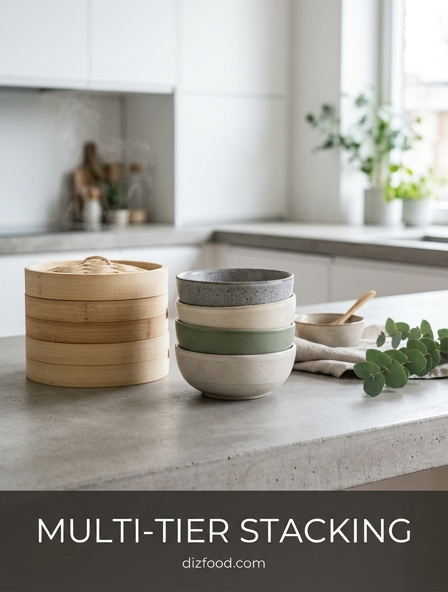
The equipment required for these techniques represents a divergence in culinary tradition and kitchen utility. Traditional steaming is heavily reliant on specialized vessels designed to facilitate the flow of vapor. The most iconic of these is the bamboo steamer, which is prized for its ability to absorb excess moisture, preventing condensation from dripping back onto the food. Alternatively, metal steamer inserts or multi-tiered electric steamers are common in modern kitchens. These tools require a base pot filled with water and a tight-fitting lid to maintain the necessary thermal environment.
En papillote is far more minimalist in terms of hardware but requires specific consumables. The primary "equipment" is a roll of high-quality parchment paper or, in some cases, heavy-duty aluminum foil. Parchment is preferred by chefs because it is porous enough to allow the pouch to breathe slightly while remaining strong enough to hold in the steam. To execute this method, a cook only needs a baking sheet to support the pouches and a pair of scissors to cut the paper into heart shapes, which facilitates a more effective seal when folded and crimped.
- Traditional Tools: Bamboo tiers, metal perforated inserts, deep pots, and snug lids.
- Papillote Tools: Parchment paper, kitchen shears, and standard rimmed baking sheets.
- Heat Sources: Stovetop burners for traditional steaming vs. conventional or convection ovens for en papillote.
While a steamer basket is a long-term investment, the en papillote method offers the convenience of "disposable" equipment, making it an attractive option for those who want to avoid bulky kitchen gadgets. However, the recurring cost of parchment paper and the environmental impact of single-use materials are factors that some cooks may weigh against the durability of a stainless steel steamer.
Flavor Concentration in Paper Pouches Versus Water Vapor
Flavor is perhaps the most significant area of divergence between these two techniques. In traditional steaming, the flavor is "extractive." As the steam passes over the food, it picks up water-soluble compounds and carries them away. This is why steamed vegetables and fish taste remarkably clean and light. The method is ideal for high-quality ingredients where the natural, unadulterated flavor is the star of the show. However, if the water is not seasoned, the steam itself remains neutral, meaning the seasoning must be applied heavily before or after the cooking process to ensure it sticks to the moist surface.
En papillote, conversely, is a "concentrative" method. Because the pouch is a closed system, any liquid added-be it a splash of vermouth, a squeeze of lemon, or the natural juices of a tomato-is reduced slightly and then reabsorbed by the protein. The flavor does not wash away; instead, it intensifies. The parchment acts as a mini-pressure cooker, forcing the essence of herbs and aromatics into the fibers of the fish or poultry. This results in a sauce that is created naturally within the bag, rich with the gelatin and juices of the primary ingredient.
This difference in flavor concentration means that en papillote is often more forgiving for ingredients that might otherwise be bland. A piece of cod cooked in a steamer will taste like cod; a piece of cod cooked en papillote with ginger, scallions, and soy will be infused with those flavors through to its center. For the home cook, this means that the choice of method should be dictated by the desired depth of the final flavor profile.
Comparing Texture and Moisture Retention in Delicate Fish
When dealing with delicate proteins like tilapia, sole, or sea bass, texture is the ultimate measure of success. Traditional steaming is excellent for achieving a "silky" texture. Because the temperature is capped at the boiling point of water, it is difficult to accidentally "sear" or dry out the exterior of the fish. The constant contact with fresh water vapor keeps the surface of the protein hydrated, leading to a flake that is moist and translucent. However, the risk with steaming is the potential for the fish to become waterlogged if the lid allows too much condensation to drip onto the plate.
En papillote produces a slightly different texture, often described as "supple." Because the heat source is the dry air of an oven (usually between 375°F and 400°F), the parchment paper protects the fish from the harsh dry heat while the internal steam cooks it. The result is a more structural firmness compared to the softness of traditional steaming. There is also no risk of the fish becoming soggy, as the amount of liquid is controlled by the cook. The parchment also helps to insulate the fish, providing a gentle buffer that makes the window of perfect doneness slightly wider than that of a high-heat steamer.
- Steaming Texture: Soft, delicate, and highly hydrated.
For oily fish like salmon, both methods work well, but the parchment method allows the rendered fat to stay in contact with the flesh, creating a richer mouthfeel. For lean white fish, traditional steaming may be superior if a very light, almost "melt-in-your-mouth" consistency is the goal.
Nutritional Benefits of Low Fat Cooking Methods
Both traditional steaming and en papillote are celebrated by nutritionists as superior methods for preserving the integrity of food. Unlike frying or sautéing, neither method requires the addition of fats or oils to prevent sticking or to facilitate heat transfer. This significantly reduces the caloric density of the meal. Furthermore, because these are relatively low-temperature cooking methods compared to grilling or roasting, they minimize the formation of advanced glycation end products (AGEs) and other potentially harmful compounds associated with high-heat charring.
In terms of vitamin retention, both methods outperform boiling. Water-soluble vitamins, such as Vitamin C and the B-complex group, are notorious for leaching into cooking water. By keeping the food out of the water (as in steaming) or trapped with its own juices (as in en papillote), these nutrients are largely preserved. However, en papillote has a slight nutritional edge; since the cooking juices are usually consumed as a sauce within the pouch, any nutrients that do leach out are still ingested rather than being poured down the drain with the steamer water.
- Caloric Control: No necessity for added oils or butter.
- Vitamin Preservation: Minimal leaching compared to boiling or poaching.
- Mineral Density: Ingredients retain their natural salt and mineral content.
This makes both techniques essential for heart-healthy and calorie-conscious diets. By utilizing aromatics like herbs, citrus, and spices instead of fat to provide flavor, these methods prove that nutritional density does not have to come at the expense of culinary enjoyment.
The Role of Aromatics and Infusion in En Papillote
The "en papillote" method is essentially a vehicle for infusion. Because the environment is so small and sealed, the aromatics placed inside the pouch have an outsized impact on the final dish. In traditional steaming, aromatics like ginger or lemongrass are often placed in the water or directly on the fish, but much of their scent is lost to the kitchen air. In a parchment pouch, those volatile oils are trapped, creating an intense "perfume" that permeates the protein. This makes the method ideal for "aromatic-forward" cuisines.
To maximize the infusion in a parchment pouch, cooks often use a specific layering strategy. The goal is to create a micro-environment where the aromatics can release their flavors into the steam quickly. The following order is commonly used:
- Bedding: A layer of thinly sliced vegetables (like fennel or leeks) that protects the protein from direct heat.
- The Protein: Placed centrally to absorb flavors from both above and below.
- Aromatics: Fresh herbs, citrus slices, or minced garlic placed directly on top.
- Liquid: A tablespoon of liquid (wine, broth, or soy sauce) to initiate the steaming process.
The result is a dish that smells as good as it tastes. When the parchment is eventually opened, the release of these trapped aromatics provides an immediate sensory experience that traditional steaming simply cannot match. This infusion process ensures that even the most delicate flavors, like chervil or tarragon, are not lost but are instead highlighted.
Efficiency and Cleanup Comparison for Home Cooks
For the busy home cook, the choice between these two methods often comes down to the logistics of the kitchen. Traditional steaming is generally faster in terms of active cooking time because steam is a more efficient heat conductor than the hot air of an oven. A piece of fish that takes 8 minutes in a steamer might take 12 to 15 minutes in a 400°F oven en papillote. However, the setup and cleanup for steaming can be more labor-intensive, involving the cleaning of greasy steamer tiers and the pot used to boil the water.
En papillote is the king of low-maintenance cleanup. The entire meal is prepared, cooked, and often served in the same piece of parchment paper. Once the meal is finished, the paper is simply discarded. There are no pots to scrub and no steamer baskets to de-clog. This makes it an ideal technique for weeknight dinners. However, the preparation time for en papillote is slightly higher, as it requires careful cutting, folding, and crimping of the parchment to ensure an airtight seal-a skill that takes a few tries to master.
| Aspect | Traditional Steaming | En Papillote |
|---|---|---|
| Prep Time | Low (just chop and place) | Moderate (folding pouches) |
| Cooking Speed | High | Moderate |
| Cleanup | Moderate (cleaning baskets) | Very Low (disposable) |
Ultimately, if speed is the priority, traditional steaming wins. If the goal is to minimize the time spent at the sink after dinner, en papillote is the clear victor.
Visual Presentation and Tableside Service Advantages
While steaming is often a utilitarian process hidden away in the kitchen, en papillote is inherently theatrical. The parchment pouch puffs up in the oven like a golden pillow, creating a visually striking object. Serving the pouch directly onto the guest's plate is a classic fine-dining move. The "reveal" occurs when the pouch is cut open at the table, releasing a sudden, concentrated cloud of aromatic steam directly toward the diner. This tableside service engages the senses of sight and smell before the first bite is even taken.
Traditional steaming, by contrast, relies on the visual appeal of the ingredients themselves. Steamed food often retains its vibrant colors-the bright green of broccoli or the pearly white of scallops-more effectively than almost any other method. In many Asian cultures, the bamboo steamer itself is used as a serving vessel, providing a rustic and communal aesthetic. While it lacks the "surprise" factor of the parchment pouch, it offers a sense of abundance and freshness that is equally appealing in a different context.
- Papillote Appeal: Suspense, aroma release, and individualized portions.
- Steaming Appeal: Color retention, communal feel, and "fresh-from-the-pot" aesthetic.
- Plating: Papillote requires no plating; Steaming requires careful transfer to avoid breaking delicate items.
The choice between them often depends on the formality of the meal. En papillote is perfect for an impressive dinner party where the "wow" factor is desired, while traditional steaming is perfect for a clean, colorful, and healthy family-style spread.
Choosing the Best Method for Different Protein Types
Selecting between en papillote and traditional steaming should ultimately be guided by the density and fat content of the protein. Thin, delicate fillets such as Dover sole or fluke are arguably better suited for traditional steaming. These proteins cook so quickly that the time it takes for an oven to heat a parchment pouch might actually lead to overcooking the edges before the center is done. The gentle, uniform heat of a steamer ensures these fragile fish stay intact and moist.
For slightly heartier proteins, en papillote is superior. Chicken breasts, which are notorious for drying out, benefit immensely from the sealed environment. The trapped moisture and added liquids (like a splash of chicken stock or white wine) ensure the meat stays succulent. Similarly, shellfish like shrimp and scallops thrive in the parchment pouch because they can be cooked alongside aromatics that create an instant butter sauce or broth. Even firm-fleshed fish like salmon or swordfish benefit from the "infusion" aspect of the pouch, which helps to temper their strong natural flavors.
- Best for Steaming: Delicate white fish, leafy greens, dumplings, and eggs.
- Best for Papillote: Chicken breast, salmon, shrimp, and hearty vegetables like asparagus or sliced potatoes.
In summary, use traditional steaming when you want to celebrate the ingredient's pure, natural state with maximum speed. Use en papillote when you want to build a complex, aromatic dish with a built-in sauce and a dramatic presentation. Both techniques are essential tools for any cook looking to master the art of moisture-rich, healthy cuisine.

Comments