
Navigating the choice between an automatic shut-off and a manual timer steamer often comes down to balancing modern convenience with tactile reliability. While automatic models offer a "set-it-and-forget-it" peace of mind by using internal sensors to cut power when water levels run low or the cycle completes, manual timers provide a mechanical simplicity that many purists prefer for its durability and direct control. Choosing the right precision tool is essential for protecting delicate fabrics or preventing overcooked meals; it's about matching the machine's safety features to your personal workflow, ensuring you get perfectly steamed results every time without the risk of dry-boiling or equipment damage.
| Feature | Automatic Shut-Off | Manual Timer |
|---|---|---|
| Operation | Electronic sensors/Auto-stop | Mechanical spring-loaded dial |
| Safety Profile | High; prevents dry-boil damage | Moderate; relies on user alerts |
| User Effort | Hands-off; ideal for multitasking | Active monitoring required |
| Durability | Complex circuitry; sensitive | High; fewer electronic failure points |
| Price Point | Premium / Mid-range | Budget-friendly / Entry-level |
| Best For | Busy households & safety-conscious | Precision control & heavy-duty use |
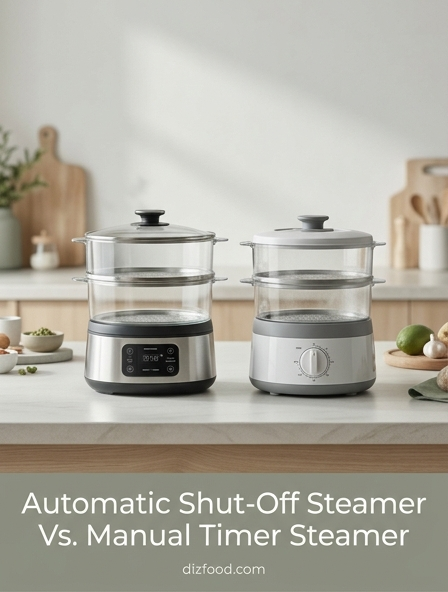
Comparing Automatic Shut-Off and Manual Timer Steamers
Choosing the right steamer for a modern kitchen involves understanding the fundamental differences between automatic shut-off models and those equipped with manual timers. At its core, the distinction lies in the level of autonomy the appliance possesses once the cooking process begins. Automatic shut-off steamers are designed with integrated sensors that detect water levels or internal temperatures, ensuring the device deactivates the heating element once the cycle completes or if the reservoir runs dry. This provides a "set it and forget it" convenience that appeals to busy households.
In contrast, manual timer steamers rely on mechanical dials that the user must physically rotate to a specific duration. While these devices provide a distinct audible "ding" when time expires, they do not always disconnect the power source immediately or handle low-water scenarios as gracefully as their digital counterparts. The choice between them often dictates the rhythm of meal preparation and the level of supervision required during the steaming process.
| Feature | Automatic Shut-Off | Manual Timer |
|---|---|---|
| Control Type | Digital/Sensor-based | Mechanical Dial |
| Low Water Safety | Active Disconnection | Usually Audible Alert Only |
| Learning Curve | Minimal | Intuitive but requires monitoring |
The Safety Advantages of Automatic Shut-Off Sensors
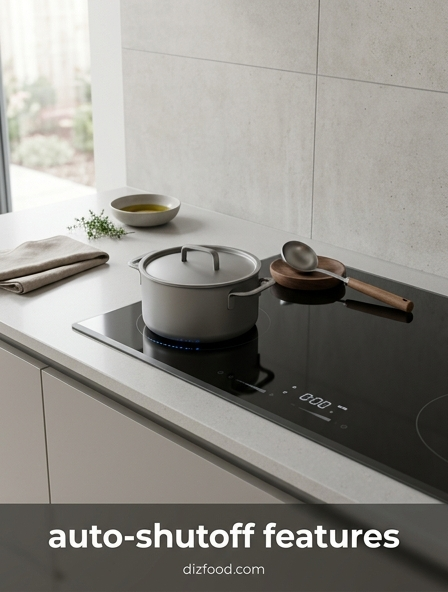
Safety is a paramount concern in any kitchen environment, and automatic shut-off technology represents a significant leap forward in fire prevention and appliance longevity. The primary hazard with steaming is the "boil-dry" condition, where all water evaporates, leaving the heating element exposed to air. Without a sensor to intervene, the internal temperature can skyrocket, potentially melting plastic housings or causing electrical fires. Automatic systems mitigate this risk by using thermistors or float switches that break the circuit the moment moisture levels drop below a critical threshold.
Beyond preventing catastrophic failure, these sensors protect the integrity of the heating element itself. Chronic overheating can lead to micro-fractures in metal components, shortening the lifespan of the machine. By ensuring the unit never runs without sufficient water, the automatic shut-off feature serves as a built-in insurance policy for the consumer. The peace of mind offered by this technology allows users to tend to other household tasks or step out of the kitchen without the constant anxiety of a potential kitchen mishap.
- Prevents overheating of internal circuitry.
- Reduces the risk of domestic fires caused by unattended appliances.
- Protects the non-stick or stainless steel surfaces from scorching.
- Automatically handles human error when users forget to refill the reservoir.
Mastering Precision with Manual Steamer Controls
While automation offers safety, manual timer steamers provide a tactile experience that many culinary enthusiasts prefer. The mechanical nature of a manual dial allows for quick adjustments without navigating digital menus or flickering LED screens. For a chef who knows exactly how many minutes a head of broccoli needs to reach a specific crunch, the manual dial offers a direct link to the heat source. There is no software to glitch and no complex sensor calibration to worry about; the timer operates on a simple spring-loaded mechanism that works consistently regardless of the steam density.
Precision in manual steaming is often a result of user experience. Over time, individuals develop a "feel" for the dial, learning how to offset the time based on the volume of food or the starting temperature of the water. This level of control is particularly useful for delicate items like soft-boiled eggs or specific types of shellfish, where even a thirty-second difference can impact the final texture. To master this tool, users often follow a standard workflow:
- Preheat the water until a steady flow of steam is visible.
- Load the steaming baskets quickly to retain internal heat.
- Rotate the dial past the 10-minute mark to engage the spring, then back to the exact desired time.
- Remain within earshot to respond immediately to the mechanical bell.
User Experience and Ease of Operation
The user experience of an appliance is defined by how seamlessly it integrates into a person's daily routine. Automatic shut-off steamers are often perceived as more user-friendly for beginners. They typically feature pre-programmed buttons for common foods like fish, poultry, or vegetables. A user simply selects the icon, and the machine handles the rest. This eliminates the guesswork associated with steaming times and ensures a consistent result every time. However, the interface can sometimes feel overly sensitive, and losing a power connection might reset the entire digital cycle, which can be frustrating.
Manual steamers, while lacking "smart" features, offer an ease of operation rooted in simplicity. There are no buttons to wear out and no confusing displays to decode. For older users or those who prefer "analog" kitchen tools, the manual timer is far less intimidating. The lack of electronic complexity also means these units are often easier to clean, as there are fewer crevices where steam can condense and interfere with sensitive circuit boards. The trade-off is the requirement for active monitoring; a manual steamer will not save your meal if you become distracted by a phone call or a child in another room.
Impact on Food Texture and Nutrient Retention
Steaming is celebrated for its ability to preserve the vitamins and minerals often lost during boiling or frying. However, the timing mechanism used can indirectly influence the nutritional quality of the meal. Automatic shut-off steamers excel at preventing overcooking, which is the primary cause of nutrient degradation. When a digital timer hits zero and kills the heat, the cooking process slows down immediately. This preserves the bright green chlorophyll in vegetables and the delicate proteins in fish, preventing the mushy texture associated with excessive heat exposure.
Manual steamers require a more disciplined approach to achieve the same results. Because the unit may continue to emit residual heat even after the bell rings, the user must be ready to remove the food promptly. If the food is left in a manual steamer that has "timed out" but hasn't fully disconnected, the latent steam can continue to cook the items, leading to a loss of texture. For those who prioritize vitamin retention, the automatic shut-off offers a more reliable safeguard against the high temperatures that break down heat-sensitive nutrients like Vitamin C and B-complex vitamins.
- Automatic: High consistency in texture; prevents thermal degradation.
- Manual: Allows for variable "carry-over" cooking if desired by the chef.
- Nutrient Retention: Both are superior to boiling, but automatic is more foolproof.
Durability Comparison of Steamer Timer Mechanisms
When evaluating durability, we must look at the failure points of both mechanical and electronic systems. Manual timers are generally built using a clockwork mechanism consisting of gears and springs. These are remarkably robust and can last for decades with minimal maintenance. Their biggest enemy is moisture ingress which can cause internal rust. However, because they do not rely on a motherboard, they are less susceptible to power surges or the "planned obsolescence" often associated with modern electronics. If a manual timer breaks, it is often a mechanical snap that is easy to diagnose.
Automatic shut-off steamers rely on PCB (Printed Circuit Board) controllers and digital sensors. While these components are sophisticated, they are more vulnerable to the high-humidity environment of a kitchen. Over several years, the constant exposure to hot vapor can lead to corrosion on the circuit traces or the failure of a capacitor. Additionally, if the water-level sensor becomes coated in lime-scale from hard water, the automatic shut-off might trigger prematurely or not at all. Consequently, while automatic models offer more features, they generally have a shorter functional lifespan than the rugged, simplistic manual models.
Energy Efficiency and Operational Costs
In an era of rising utility costs, the energy efficiency of kitchen appliances is a significant factor. Automatic shut-off steamers are inherently more efficient because they eliminate "idle time." The moment the food is done or the water is gone, the draw on the electrical grid drops to near zero. There is no wasted energy continuing to heat an empty or finished vessel. This precision ensures that every watt consumed is directly contributing to the cooking process, which can lead to noticeable savings over the life of the appliance for those who use it daily.
Manual steamers can be less efficient due to human error. If a user sets the timer for 20 minutes but the food only requires 15, the machine will continue to pull full power until the dial returns to zero, unless manually stopped. Furthermore, manual units often lack the sophisticated insulation found in higher-end digital models, leading to more heat loss through the walls of the steamer. When comparing operational costs, the automatic model is the clear winner for the eco-conscious consumer.
| Factor | Automatic Efficiency | Manual Efficiency |
|---|---|---|
| Power Waste | Negligible | Moderate (User dependent) |
| Standby Power | Low (Digital display) | Zero |
| Heat Retention | High | Variable |
Price Differences and Value for Money
The pricing architecture of the steamer market typically places manual units in the budget-friendly category and automatic shut-off models in the mid-to-premium range. A basic manual steamer can be purchased for a very low entry price, making it accessible for students or those testing the waters of healthy eating. The value for money in a manual unit comes from its longevity and simplicity; you are paying for a basic heating element and a plastic shell that will likely work for many years without issue.
Automatic steamers command a higher price point because of the added cost of sensors, microprocessors, and digital displays. However, many users find the "value" lies in the time saved and the food protected from burning. If an automatic shut-off saves just a few expensive salmon fillets from being ruined by overcooking, the price difference quickly pays for itself. When choosing, consumers should consider their frequency of use. For occasional steaming, a manual unit is a bargain. For daily meal prep, the investment in an automatic model provides a higher return in terms of convenience and consistent food quality.
Which Steamer Type Suits Your Cooking Style
The "best" steamer is ultimately the one that aligns with your lifestyle and cooking habits. If you are a "multi-tasking" cook who often balances professional work, childcare, and meal preparation simultaneously, an automatic shut-off steamer is almost a necessity. It provides the safety net required when your attention is pulled away from the stove. It is also the ideal choice for those who prefer precision and repeatable results without needing to hover over the appliance.
On the other hand, if you find joy in the process of cooking and prefer to be "hands-on" with your ingredients, a manual timer steamer might be more satisfying. It suits the cook who likes to check the food mid-cycle, adjust the time on the fly, and trust their own senses over a pre-programmed chip. Additionally, for those living in areas with unstable power grids or those who prioritize repairability and "low-tech" solutions, the manual steamer remains a steadfast kitchen companion. Consider the following when deciding:
- Are you prone to forgetting appliances are on? (Choose Automatic)
- Do you prefer simple, mechanical tools? (Choose Manual)
- Is your kitchen space prone to high humidity/steam? (Consider a high-quality Manual)
- Do you steam a wide variety of delicate foods? (Choose Automatic)
Final Recommendations for Choosing the Best Steamer
To conclude, both automatic shut-off and manual timer steamers have a rightful place in the modern kitchen, provided the buyer understands their limitations. For the majority of modern consumers, the safety and convenience of an automatic shut-off system outweigh the slightly higher cost. The ability to prevent boil-dry scenarios is a critical feature that protects both the home and the investment in the appliance. We recommend looking for models that offer a "keep warm" function alongside the shut-off for maximum versatility.
However, do not discount the manual steamer if you are on a strict budget or value long-term mechanical reliability. If you choose a manual model, ensure it has a very loud audible alert and make a habit of never leaving the kitchen while it is in operation. Regardless of the type you choose, prioritize models with BPA-free plastic or stainless steel baskets to ensure food safety. By matching the timer mechanism to your personal level of attentiveness and your kitchen safety requirements, you can enjoy the many health benefits of steamed cuisine with total confidence.


Comments