
Choosing between an electric steamer and a stovetop version often comes down to balancing modern convenience with classic culinary control. While electric steamers offer a "set it and forget it" experience with programmable timers and multiple tiers for cooking full meals simultaneously, stovetop steamers are the minimalist's favorite, relying on your existing cookware to deliver high-heat efficiency without occupying extra counter space. Whether you are a meal-prepper seeking automated precision or a home cook who prefers the durability of stainless steel, understanding how these tools handle heat distribution, storage, and cleanup will help you decide which powerhouse best supports your healthy lifestyle.
| Feature | Electric Steamer | Stovetop Steamer |
|---|---|---|
| Operation | Self-contained; requires power outlet. | Requires external heat source (Burner). |
| Precision | Digital timers and auto-shutoff features. | Manual monitoring; heat adjusted via stove. |
| Capacity | Multi-tiered; cooks 2-3 dishes at once. | Usually single-tier (Basket or Insert). |
| Storage | Bulky; requires dedicated cabinet/counter space. | Compact; often nests inside existing pots. |
| Maintenance | Requires descaling; complex electronic parts. | Dishwasher safe; virtually indestructible. |
| Average Price | $40 - $150+ | $15 - $60 |
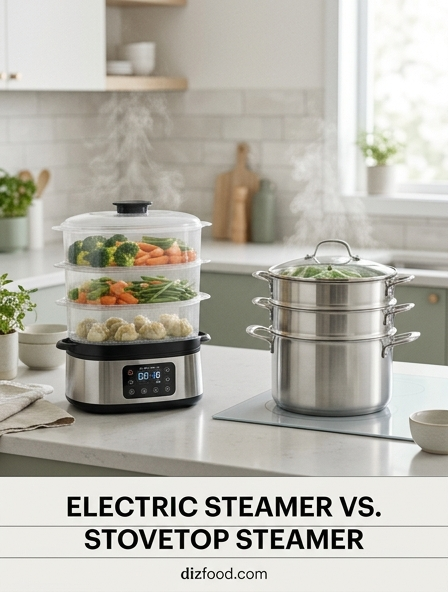
Electric Steamer vs Stovetop Steamer Key Differences
The fundamental distinction between electric and stovetop steamers lies in their power source and structural design. An electric steamer is a standalone appliance equipped with its own internal heating element, a reservoir for water, and usually several translucent plastic tiers that allow for multi-level cooking. It operates independently of the stove, requiring only a standard electrical outlet. In contrast, a stovetop steamer is a modular cooking tool-often a stainless steel or bamboo insert-that must be placed inside or on top of an existing pot filled with boiling water. This setup relies entirely on the external heat generated by a gas, electric, or induction range.
| Feature | Electric Steamer | Stovetop Steamer |
|---|---|---|
| Heat Source | Internal Heating Element | Kitchen Range (Gas/Induction) |
| Portability | High (needs outlet) | Low (tied to stove) |
| Capacity | Fixed multi-tier volume | Variable based on pot size |
| Control | Digital timers/Sensors | Manual heat adjustment |
Beyond the heating mechanism, the two differ in user interaction. Electric models offer a "set-and-forget" experience with automatic shut-off features, whereas stovetop versions require the user to monitor water levels and heat intensity to prevent the pot from boiling dry. While the electric version provides tiered compartments for simultaneous cooking of different food groups, the stovetop method is often more robust, handling higher temperatures and larger, heavier food items that might overwhelm a plastic electric tray.
Benefits of Using an Electric Food Steamer
Electric food steamers have become a staple in health-conscious kitchens due to their precision and autonomous operation. One of the primary advantages is the ability to cook an entire multi-course meal in a single footprint. By utilizing vertical space, these appliances allow users to steam fish on the bottom level, vegetables in the middle, and grains or potatoes on top. Because the steam rises through each perforated layer, flavors rarely mingle in a way that compromises the dish, provided the items with longer cook times are placed closest to the heat source.
- Automatic Shut-off: Prevents overcooking and ensures safety if the water reservoir runs dry.
- External Water Fill: Most models allow users to add water during the cooking cycle without opening the lid and losing steam.
- Consistent Temperature: The integrated thermostat maintains a steady flow of steam, eliminating the guesswork associated with fluctuating stove flames.
- Keep Warm Function: Once the timer expires, many units pivot to a low-heat mode to keep food at serving temperature.
For individuals with busy lifestyles, the electric steamer offers a degree of convenience that a stovetop setup cannot match. You can set a digital timer and walk away to perform other household tasks without worrying about a pot boiling over or the food turning to mush. Additionally, the use of BPA-free plastic tiers makes these units lightweight and easy to handle, which is particularly beneficial for those who may find heavy stainless steel cookware difficult to lift when filled with water.
Why Traditional Stovetop Steaming Still Wins
Despite the technological advancements of electric appliances, many professional chefs and traditional home cooks prefer the stovetop method. This preference is largely rooted in the intensity and quality of the steam produced. A stovetop steamer, especially when used on a high-output gas burner or a powerful induction cooktop, can generate a much higher volume of steam more quickly than a standard 800-watt electric unit. This rapid heat is essential for "flash-steaming" leafy greens or achieving the perfect texture in delicate seafood, where even a minute of sluggish heating can lead to a rubbery consistency.
- Intense Heat Output: Stovetop ranges can boil water faster and sustain a more vigorous steam flow for heavy items.
- Material Durability: Stainless steel or bamboo components are virtually indestructible compared to plastic electric housings.
- Modular Versatility: A stovetop insert can be used with various pots you already own, making it a more flexible tool.
- No Electronics: There are no circuit boards to fry or heating elements to burn out, ensuring a lifetime of use.
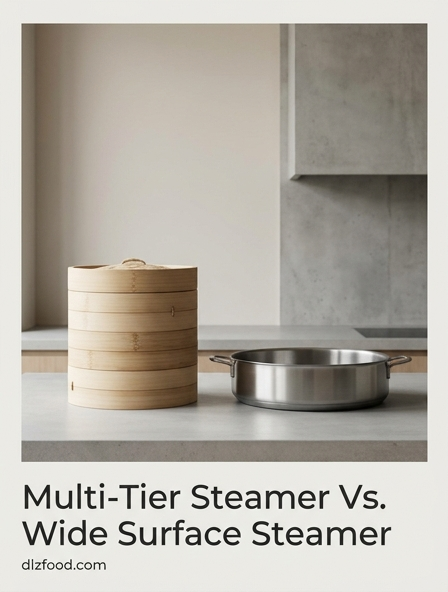
Another significant factor is the "sear" capability. Some stovetop steaming setups allow for a hybrid cooking approach where food is quickly steamed and then finished with a high-heat sauté in the same vessel. Furthermore, for those who enjoy authentic Asian cuisine, the traditional bamboo steamer used over a wok provides a unique moisture-wicking property. The bamboo lid absorbs excess condensation, preventing water from dripping back onto dumplings or buns-a common issue with the plastic lids of electric steamers that can result in soggy textures.
Nutrient Retention and Cooking Performance Compared
Steaming is widely regarded as one of the healthiest cooking methods because it prevents water-soluble vitamins, such as Vitamin C and B-complex vitamins, from leaching into boiling water. When comparing electric and stovetop performance in this regard, both excel at preserving the nutritional profile of ingredients. However, subtle differences in cooking performance can affect the final micronutrient count. The electric steamer provides a gentler, more controlled environment, which is ideal for delicate nutrients that might break down under the extreme, fluctuating heat of a stovetop.
Conversely, the stovetop steamer often finishes the cooking process faster. In the world of vegetable preparation, cooking time is the enemy of nutrition; the longer a broccoli floret is exposed to heat, the more its enzymes and antioxidants degrade. Because a stovetop steamer can reach peak temperature in a fraction of the time, it often preserves the vibrant chlorophyll and "crunch" of vegetables better than an electric unit that may take five to ten minutes just to begin producing significant steam. For dense root vegetables like carrots or beets, the electric steamer's consistent, long-cycle steaming ensures the center is cooked through without the exterior becoming overly soft.
Performance-wise, the electric steamer is superior for multi-tasking and uniformity. However, the stovetop method offers superior "recovery time." Every time a lid is lifted to check the food, the temperature drops. A stovetop burner can replenish that lost steam almost instantly, whereas an electric element may struggle to bring the internal cavity back to the optimal temperature, potentially leading to unevenly cooked proteins or "patchy" results in larger batches.
Convenience and Programmable Features
The hallmark of the modern electric steamer is its suite of programmable features designed to minimize user intervention. In a kitchen where multitasking is the norm, the ability to delay the start of a cooking cycle is invaluable. Many high-end electric models feature digital interfaces that allow you to program a specific start time, meaning you can prep your vegetables and fish in the morning and have the machine begin steaming thirty minutes before you arrive home from work. This level of automation is simply impossible with a stovetop setup, which requires active monitoring for safety reasons.
- Delay Start Timers: Synchronize your cooking with your schedule.
- Pre-set Programs: Specific buttons for "Fish," "Chicken," or "Rice" that adjust timing automatically.
- External Water Indicators: See at a glance if the unit needs a refill without interrupting the cook.
- Digital Countdowns: Provides an exact minute-by-minute update on when the meal will be ready.
Furthermore, the "Keep Warm" function is a convenience powerhouse. If one part of your meal is delayed, the electric steamer will drop its temperature to a safe holding level, preventing the food from overcooking while ensuring it stays hot for the table. Stovetop steaming offers no such luxury; once the heat is turned off, the residual steam quickly dissipates, and the food begins to cool immediately. For families who eat at staggered times or for those who find themselves distracted by other household duties, the programmable nature of the electric steamer provides a significant quality-of-life upgrade that justifies its place on the countertop.
Heating Speed and Energy Efficiency Analysis
When evaluating heating speed, the winner often depends on the type of stove being used. An induction cooktop will almost always boil water and generate steam faster than an electric steamer's internal element. This is because induction transfers energy directly to the cookware with nearly 90% efficiency. However, when comparing a standard electric coil stove to a dedicated electric steamer, the steamer is often more efficient. This is because the electric steamer uses a very small heating well to boil a small amount of water rapidly, rather than heating a large, heavy pot and several quarts of water on a stove.
| Metric | Electric Steamer (800W) | Stovetop (Gas/Electric) |
|---|---|---|
| Time to Steam | 4-7 Minutes | 3-10 Minutes (Range dependent) |
| Energy Waste | Minimal (Insulated) | High (Heat loss to ambient air) |
| Water Usage | Low (1-2 cups) | Moderate to High (2-4 cups) |
Energy efficiency is another area where the standalone electric steamer shines. Because the heating element is contained within a small, often insulated base, very little heat escapes into the kitchen. In the summer months, using a stovetop steamer can significantly raise the ambient temperature of the room, forcing air conditioning systems to work harder. The electric steamer's localized heat is much more economical in this regard. However, for those who already have the stove running for other dishes, adding a steamer basket on top of a boiling pot of pasta or potatoes (stacked steaming) is the ultimate energy-saving move, as it utilizes "waste" steam that is already being generated.
Kitchen Space and Storage Considerations
The decision between these two tools often comes down to the available "real estate" in your kitchen. An electric steamer is a "unitasker"-a dedicated appliance that takes up permanent or semi-permanent counter space. For those with small kitchens or limited cabinetry, adding another bulky appliance can be a burden. While many electric models feature nestable baskets to reduce their height during storage, they still possess a significant footprint that cannot be ignored. They are best suited for households where steaming is a daily or high-frequency occurrence, justifying the dedicated space.
Stovetop steamers are the champions of space-saving. A stainless steel steamer insert or a collapsible "daisy" basket can be tucked away inside an existing stockpot or stored flat in a drawer. Bamboo steamers, while somewhat bulky, are lightweight and can be stacked on high shelves. For the minimalist cook, the stovetop method is superior because it leverages existing cookware. You don't need a separate base, a power cord, or a dedicated storage spot for a motorized component. This versatility makes it the ideal choice for those who only steam food occasionally.
However, one must also consider the "vertical" versus "horizontal" space. An electric steamer allows you to cook three tiers of food on a footprint no larger than a dinner plate. To achieve the same variety on a stovetop without a specialized stacking insert, you might need three different pots occupying three different burners. In this specific scenario, the electric steamer actually saves "active" cooking space, freeing up the stove for other tasks like searing, boiling, or sautéing. The choice depends on whether you value empty countertops or an empty stove more during your meal preparation.
Durability and Long Term Maintenance Costs
Long-term value is significantly influenced by the materials used in construction. Stovetop steamers made of high-grade 18/10 stainless steel are essentially lifetime purchases. They have no moving parts, no electronic sensors, and no heating elements that can burn out. Maintenance is as simple as a scrub with soapy water or a trip through the dishwasher. Even bamboo steamers, which eventually wear out due to moisture exposure, are inexpensive to replace and contain no complex components that require troubleshooting.
- Mechanical Failure: Electric steamers are prone to circuit failures or thermostat malfunctions over time.
- Limescale Buildup: The internal heating elements in electric units require regular descaling with vinegar to maintain efficiency.
- Plastic Degradation: Over years of high-heat exposure, plastic tiers can become brittle or stained.
- Repairability: Most modern electric steamers are "sealed" units, meaning if the fuse blows, the entire machine is often destined for the landfill.
Electric steamers also incur a minor but cumulative cost in electricity. While they are efficient, the cost of replacing the unit every 5 to 7 years must be factored into the total cost of ownership. Stovetop inserts, by contrast, are "buy once, cry once" items. The only real maintenance required for a stovetop setup is ensuring the bottom of the pot doesn't scorch if the water level drops too low. In terms of sustainability and reducing e-waste, the traditional stovetop method is the clear winner, offering a lower environmental impact and zero maintenance costs beyond standard cleaning.
Versatility for Different Food Types
While both methods are excellent for vegetables, their versatility diverges when handling specialty foods. Electric steamers are often designed with specific features for common Western diets, such as integrated egg holders that allow you to perfectly soft-boil a dozen eggs at once. Some models also come with specialized "rice bowls" that sit inside the steamer baskets, effectively turning the appliance into a secondary rice cooker. Their gentle, diffused steam is also excellent for reheating leftovers without making them rubbery or dry, acting much like a countertop steam oven.
- Seafood: Stovetop is better for large shellfish (clams, mussels) that require high-intensity steam to open quickly.
- Dumplings: Bamboo stovetop steamers are superior for dim sum, as they manage moisture better than plastic.
- Grains: Electric steamers often include dedicated trays for quinoa, rice, and couscous.
- Large Poultry: Stovetop pots can accommodate a whole chicken, whereas electric tiers are usually too shallow.
The stovetop steamer's versatility is limited only by the size of the pot it sits in. If you are steaming a whole red snapper or a large batch of tamales, a stovetop setup with a wide base and high lid will always outperform the constrained, pre-molded tiers of an electric unit. However, for a user who primarily steams standard portions of salmon fillets, broccoli, and asparagus, the electric steamer provides a more consistent environment. It prevents the delicate skin of the fish from sticking to the surface and ensures that the asparagus doesn't overcook while the thicker protein finishes.
Choosing the Best Steamer for Your Kitchen
The decision to invest in an electric steamer or a stovetop insert should be based on your cooking frequency, your available space, and your desire for automation. If you are a "set-and-forget" cook who values convenience above all else, the electric steamer is a transformative tool. It frees you from the stove, provides consistent results via digital timers, and allows for complex multi-tier meals with zero monitoring. It is particularly well-suited for fitness enthusiasts who meal-prep in large batches and need a reliable, repeatable process for cooking lean proteins and vegetables.
On the other hand, if you value kitchen minimalism, durability, and high-heat performance, the stovetop steamer is the superior choice. It is a more robust tool that can handle everything from delicate greens to heavy shellfish, and it won't take up valuable counter space when not in use. Professional-leaning home cooks will appreciate the speed and intensity of stovetop steam, as well as the longevity of stainless steel components. Ultimately, if your kitchen is your laboratory and you enjoy being part of the process, go with the stovetop; if your kitchen is a high-efficiency fueling station, the electric steamer will be your best ally.
Consider your household size as well. Large families may find that the massive capacity of a triple-tiered electric steamer is more practical than using multiple pots on a crowded stove. Conversely, individuals or couples might find a simple collapsible stovetop basket more than sufficient for their daily needs. By weighing these factors-convenience vs. control, and space vs. capacity-you can select the steaming method that perfectly aligns with your culinary lifestyle.

Comments