
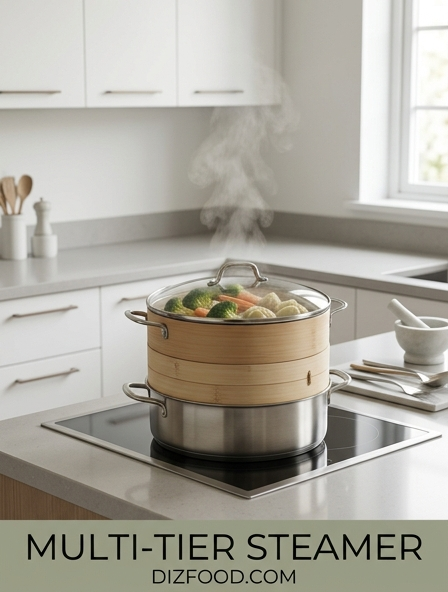
The Power of Vertical Cooking Space
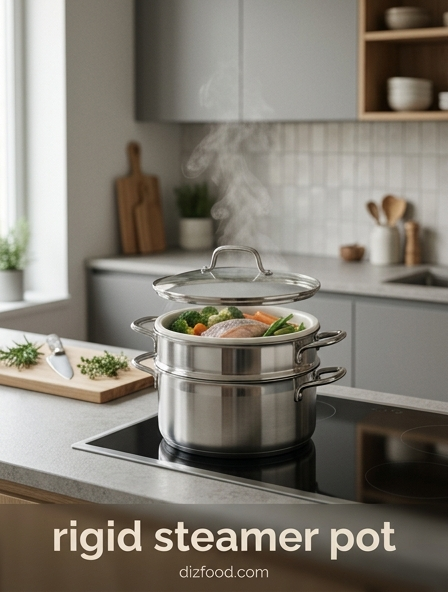
In the modern kitchen, where counter space is often at a premium, the multi-tier steamer represents a significant architectural advantage. By utilizing vertical space rather than horizontal surface area, these appliances allow home cooks to expand their culinary capabilities without requiring an industrial-sized stove. This upward expansion harness the natural physics of heat, as steam rises through perforated levels to cook food efficiently. The vertical design is particularly beneficial for urban dwellers and those with compact kitchenettes who still wish to prepare complex, multi-component meals.
- Minimal Footprint: Only occupies the space of a single medium-sized pot.
- High Capacity: Can accommodate several pounds of food across multiple levels.
- Visual Monitoring: Many tiers are transparent, allowing for easy progress checks.
- Modular Storage: Tiers often nest within one another when not in use.
Beyond simple space-saving, the vertical arrangement creates a thermal chimney effect. As the water boils at the base, the steam is pressurized slightly by the weight of the stacked tiers, ensuring that heat is forced through every layer. This architectural approach to cooking transforms a single burner into a high-output production zone, proving that height is just as valuable as width in the pursuit of culinary efficiency.
Simultaneous Preparation of Diverse Ingredients
The primary appeal of a multi-tier steamer lies in its ability to handle various food groups at the same time. Rather than staggering cooking times or using multiple pans that require constant supervision, a chef can orchestrate a symphony of ingredients within a single column. This method ensures that the entire meal is ready to serve at the exact same moment, eliminating the common problem of one side dish getting cold while the main course finishes cooking. It allows for a holistic approach to meal timing that is difficult to achieve with traditional boiling or sautéing.
- Place dense root vegetables like potatoes or carrots in the bottom tier.
- Position proteins such as fish fillets or chicken breasts in the middle section.
- Reserve the top tier for delicate greens, broccoli, or dumplings.
- Add or remove tiers during the process to accommodate different cooking durations.
This simultaneous preparation is not just about convenience; it is about synchronicity. By managing diverse textures and densities within one system, the cook gains better control over the final presentation. Whether you are steaming grains on one level and seafood on another, the multi-tier system acts as a multifaceted workstation that respects the unique requirements of each ingredient while bringing them together harmoniously.
Preserving Flavor Integrity Between Tiers
A common concern regarding stacked steaming is the potential for flavor transfer or "tainting" between levels. However, when used correctly, a multi-tier steamer actually excels at preserving the individual integrity of each ingredient. The constant upward flow of steam acts as a barrier, and since the steam is pure water vapor, it carries heat without necessarily carrying the heavy oils or juices that cause cross-contamination in a frying pan. To further ensure flavor purity, experienced cooks use the arrangement of tiers to their advantage, ensuring that juices from the top do not negatively impact the bottom.
- Use solid liners or parchment paper under marinated proteins to catch drips.
- Place aromatics like ginger, lemongrass, or herbs in the bottom water to scent the entire stack.
- Ensure the most flavorful or "drippy" items are on the lowest level possible.
- Keep delicate desserts on the very top to avoid savory steam influence.
The result is a clean, crisp taste profile for every component of the meal. Unlike a stew where everything eventually tastes the same, tiered steaming highlights the natural sugars in vegetables and the subtle oils in fish. This preservation of integrity makes the multi-tier steamer an essential tool for those who appreciate the nuanced, unadulterated flavors of fresh, high-quality produce and lean proteins.
Optimizing Kitchen Energy and Time
Efficiency in the kitchen is measured by both the time spent at the stove and the energy consumed by the appliance. Multi-tier steamers are exceptionally efficient because they utilize a single heat source to cook three or four times the volume of food. Compared to running three separate burners for three different pots, the vertical stack significantly reduces the total BTUs or wattage required. This makes it an environmentally conscious choice that also lowers utility costs over time. Furthermore, the concentrated environment of a steamer often cooks food faster than roasting or boiling.
| Cooking Method | Burners Used | Relative Energy Consumption |
|---|---|---|
| Traditional Boiling | 3 Pots | High |
| Oven Roasting | Full Oven | Medium-High |
| Multi-Tier Steamer | 1 Burner | Low |
Time optimization is equally impressive. Once the stack is assembled and the timer is set, the cook is free to perform other tasks. There is no need for stirring, flipping, or frequent basting. This "set it and forget it" nature, combined with the consolidated cleanup, makes it the ultimate tool for busy weeknight dinners where every minute saved is a victory for the household.
Strategic Layering for Uniform Heat Distribution
Mastering the multi-tier steamer requires an understanding of thermodynamic layering. Because steam is at its hottest and most pressurized at the base, the bottom tier receives the most intense heat. As the steam travels upward, it loses a fraction of its temperature and moisture content. Strategic layering accounts for these subtle differences, placing the most robust ingredients where the heat is strongest. This ensures that every level reaches its ideal doneness simultaneously, despite the varying requirements of the foods being prepared.
- Bottom Tier: Hard vegetables (potatoes, squash, beets) and frozen items.
- Middle Tier: Dense proteins (poultry, thick fish steaks, or grains in bowls).
- Top Tier: Leafy greens, soft fruits, or delicate appetizers like gyoza.
- Lid: Ensure a tight seal to maintain the internal pressure necessary for the top tier.
Failure to layer strategically can result in overcooked mush at the bottom and undercooked, crunchy centers at the top. However, by treating the steamer as a temperature gradient, you can achieve perfection across the board. Some advanced users even stagger the start times, adding the top tiers ten minutes after the base to fine-tune the texture of sensitive ingredients like asparagus or spinach.
Maximizing Nutrient Retention Across Courses
Steaming is widely recognized by nutritionists as one of the healthiest cooking methods available. Unlike boiling, which leaches water-soluble vitamins (such as B and C) into the cooking liquid, steaming keeps the food separate from the water. In a multi-tier system, this benefit is multiplied across the entire meal. Because the food is cooked by moist heat at a constant temperature, the cellular structure of vegetables remains intact, and the essential minerals are preserved within the fiber of the plant.
- Vitamin Retention: Minimal loss of heat-sensitive antioxidants.
- Color Preservation: Chlorophyll remains vibrant, indicating nutrient density.
- No Added Fats: High-quality results without the need for butter or oil.
- Texture Integrity: Prevents the breakdown of fibers that occurs in high-heat frying.
When you prepare a full course-ranging from a starch to a protein and a vegetable-all within the steamer, you are essentially creating a nutritionally optimized plate. The gentle nature of the steam prevents the formation of harmful compounds that can occur during high-heat charring or deep-frying. For health-conscious families, the multi-tier steamer serves as a primary tool for maintaining a diet rich in bioavailable nutrients while keeping caloric intake manageable.
Streamlining Cleanup with One-Pot Solutions
The aftermath of a large meal is often a kitchen filled with greasy pans, scorched pots, and various utensils. The multi-tier steamer simplifies this process by consolidating the entire cooking operation into a single footprint. Most modern steamers are constructed from stainless steel, heat-resistant plastics, or bamboo, many of which are designed for easy maintenance. Since the cooking process relies on water vapor rather than fats, there is rarely any burnt-on residue or stubborn grease to scrub away. This makes the cleanup phase as efficient as the cooking phase.
- Dishwasher Safety: Most tiers can be placed directly in the dishwasher.
- No Scouring: Lack of direct contact with the heat source prevents food from sticking.
- Single Pot Base: Only one water reservoir requires rinsing.
- Minimal Utensils: No need for multiple spatulas, whisks, or ladles.
By reducing the volume of dishes, the cook can transition from dining to relaxation much faster. The simplicity of cleaning a steamer also encourages more frequent use; when the barrier to cleanup is low, the likelihood of preparing a healthy, home-cooked meal increases. It is a practical solution for those who love to cook but loathe the traditional mess associated with complex recipes.
Enhancing Texture Control for Multi-Course Meals
Texture is the hallmark of professional-grade cooking, and the multi-tier steamer offers a level of control that is often overlooked. Because steaming is a gentle process, it allows for a wide window of "perfect" texture before overcooking occurs. This is particularly useful for multi-course meals where different textures-snappy, tender, flaky, and soft-must all be present on the same plate. The steam provides a consistent humidity that prevents the drying out common in oven-baked dishes, ensuring that proteins remain succulent and grains stay fluffy.
- Check the bottom tier for tenderness using a paring knife.
- Assess the middle tier for the internal temperature of proteins.
- Monitor the top tier for the vibrant color and "snap" of green vegetables.
- Adjust the lid slightly if you need to vent excess moisture for certain recipes.
This precision allows the home cook to experiment with delicate textures like custards or silken tofu on one level, while simultaneously steaming bao buns on another. The result is a sophisticated mouthfeel across all components of the meal, elevating the dining experience from a simple home dinner to a restaurant-quality event that emphasizes the tactile pleasure of food.
Scaling Capacity for Efficient Family Dining
Feeding a large family or hosting a dinner party usually requires massive pots and significant coordination. The multi-tier steamer scales effortlessly to meet these demands. By simply adding more levels to the stack, you can increase your output without requiring more burners or space. This scalability makes it an ideal tool for batch cooking or preparing large quantities of a single item, such as tamales, dumplings, or corn on the cob. It democratizes the ability to cook for groups, ensuring everyone eats at the same time.
| Tier Count | Ideal Group Size | Common Use Case |
|---|---|---|
| 1 Tier | 1-2 People | Quick side dish or solo meal |
| 2 Tiers | 3-4 People | Standard family dinner |
| 3+ Tiers | 5-8 People | Entertaining or meal prep |
For families with diverse dietary needs, the tiers can also act as separators. One level can be dedicated to gluten-free options, while another handles standard ingredients, preventing cross-contact while still using a single heat source. This versatility makes the multi-tier steamer a workhorse for the household, capable of adapting to the daily grind or the occasional celebration with equal ease.
Mastering the Art of Stacked Steaming
To truly master the multi-tier steamer, one must look beyond the basic mechanics and consider the nuances of timing and aromatics. The most successful users treat the water reservoir as a flavor foundation, often adding wine, broth, or spices to the steaming liquid to infuse the rising vapor with subtle scents. They also understand the importance of the seal; an ill-fitting lid or a misaligned tier can result in lost pressure and uneven cooking. Mastering this tool involves a blend of scientific observation and culinary intuition, leading to consistently superior results.
- Water Level: Always ensure there is enough water to last the entire duration to avoid burning the pot.
- Spacing: Do not overcrowd the tiers; steam needs to circulate around each piece of food.
- Preheating: Wait until the water is at a full boil before stacking the tiers for accurate timing.
- Resting: Allow the food to sit for a minute after removing from the heat to let the internal juices redistribute.
As you become more comfortable with the device, you will find it becomes an indispensable part of your kitchen rhythm. From the rapid preparation of a healthy breakfast to the elaborate staging of a festive feast, the multi-tier steamer offers a pathway to efficient, nutritious, and flavorful cooking that modern culinary enthusiasts find increasingly essential in their daily lives.

Comments