
Achieving the perfect balance of juiciness and flavor in your meat often comes down to the ultimate culinary debate: dry brining versus wet brining. While wet brining relies on a saltwater solution to hydrate lean proteins through osmosis-perfect for lean cuts like turkey or pork chops-dry brining (effectively "dry-curing") uses salt to draw out natural juices, creating a concentrated brine that is reabsorbed for deep seasoning. If you are chasing a shatteringly crispy skin and intense, beefy flavor, dry brining is your gold standard; however, if your goal is maximum moisture retention and a plump texture, the traditional wet soak remains a reliable heavy hitter. Choosing the right method depends entirely on your available prep time, fridge space, and whether you value a concentrated crust over a hydrated, succulent interior.
| Feature | Dry Brining | Wet Brining |
|---|---|---|
| Mechanism | Salt draws out moisture, then reabsorbs as a brine. | Osmosis forces saltwater/aromatics into cell walls. |
| Surface Texture | Dries the surface; ideal for crispy skin/searing. | Adds moisture; surface stays damp (needs drying). |
| Flavor Profile | Concentrated, enhances natural meat depth. | Subtle; excellent for infusing liquid aromatics. |
| Prep Time | 12-48 hours (longer is better). | 3-12 hours (faster salt penetration). |
| Best Used For | Steaks, thick roasts, and skin-on poultry. | Lean pork, chicken breasts, and large turkeys. |
| Convenience | Low mess; uses minimal fridge space. | High mess; requires large, chilled containers. |
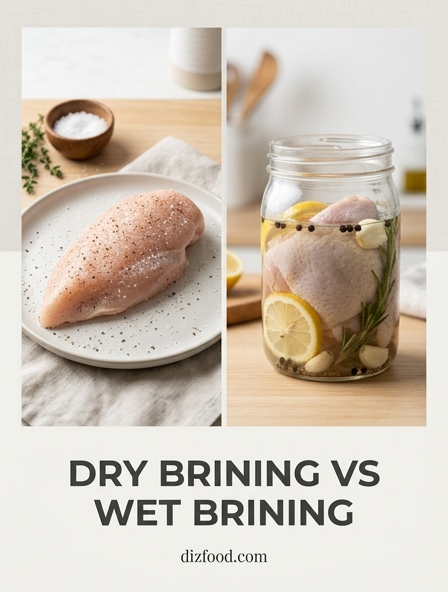
The Science Behind Brining for Better Flavor
The culinary magic of brining revolves around the transformative power of salt on muscle proteins. At its core, brining is a process designed to enhance the juiciness and seasoning of meat before it ever hits the heat. When salt is applied to meat, it begins a process of denaturing proteins, specifically a protein called myosin. By breaking down these tightly wound protein structures, the salt creates a more relaxed network of fibers. This relaxation is crucial because it prevents the muscle fibers from contracting too tightly during the cooking process, which is the primary cause of moisture being squeezed out and the meat becoming tough.
Furthermore, salt acts as a powerful flavor enhancer by penetrating deep into the cellular structure rather than simply sitting on the surface. Unlike aromatic compounds in rubs or marinades, which are often too large to move past the exterior layers of the meat, salt ions are small enough to migrate into the center of the cut. This ensures that every bite is seasoned from within. In addition to improving taste, the structural changes caused by brining allow the meat to hold onto more moisture-whether that moisture is added via a liquid solution or retained from the meat's own natural juices. This dual action of structural modification and deep seasoning is what makes brining an essential technique for any home cook looking to elevate their proteins.
How Wet Brining Works to Hydrate Meat
Wet brining involves submerging a piece of meat in a solution of water and salt, often accompanied by sugar and aromatics. The primary mechanism at play here is a combination of diffusion and osmosis. When the meat is placed in the saline bath, the high concentration of salt in the water moves into the lower-concentration environment of the meat cells. Simultaneously, the water from the brine is drawn into the muscle fibers. This process physically increases the weight of the meat, sometimes by as much as 10% to 15%, effectively pre-loading the protein with extra moisture before it enters the oven or grill.
The benefits of wet brining are particularly noticeable in lean cuts that are prone to drying out, such as chicken breasts or pork chops. Because the meat has absorbed an excess of water, it can afford to lose some during cooking without becoming parched. However, this hydration comes with a trade-off. While the meat stays exceptionally moist, that moisture is largely water, which can sometimes lead to a slightly diluted flavor profile. To combat this, many chefs include the following ingredients in their wet brines:
- Salt: The essential agent for protein denaturation and seasoning.
- Sugar: Aids in browning and balances the harshness of the salt.
- Aromatics: Peppercorns, bay leaves, or garlic to infuse subtle scent layers.
- Acid: Occasionally vinegar or citrus to further tenderize the surface.
The Dry Brining Method for Superior Crust and Texture
Dry brining, often referred to as "pre-salting," is a technique that achieves the benefits of a traditional brine without the use of added water. The process begins by generously coating the surface of the meat with salt. Within minutes, the salt draws moisture out of the meat through osmosis, creating a concentrated brine on the surface. As time passes, the salt dissolves into this liquid, and the meat eventually reabsorbs the salty concentrated brine. This pulls the seasoning deep into the muscle fibers, just as a wet brine would, but without the dilution that comes from a water bath.
One of the most significant advantages of dry brining is the effect it has on the meat's surface. Because there is no added liquid, the exterior of the meat has the opportunity to dry out in the refrigerator. This is a critical prerequisite for the Maillard reaction-the chemical reaction between amino acids and reducing sugars that gives browned food its distinctive flavor and color. A dry surface browns much faster and more efficiently than a wet one, resulting in a superior crust. For those seeking a deep, mahogany sear on a steak or a crisp snap on roast chicken, dry brining is the undisputed champion. It allows for a more intense "meaty" flavor because the moisture retained is the animal's own natural juices, rather than the tap water used in a wet brine.
Comparing Flavor Concentration in Dry and Wet Brines
The choice between wet and dry brining often comes down to the desired intensity of the final product. Wet brining is excellent for ensuring a very juicy result, but the sheer volume of water absorbed can sometimes mask the natural flavors of the beef, pork, or poultry. Dry brining, conversely, concentrates the flavor because it relies on the meat's own moisture to distribute the salt. This results in a "pure" taste that highlights the quality of the meat itself rather than the components of the liquid solution.
| Feature | Wet Brining | Dry Brining |
|---|---|---|
| Moisture Source | Added water/liquid | Natural meat juices |
| Flavor Intensity | Can be slightly diluted | Highly concentrated |
| Seasoning Depth | Deep penetration | Deep penetration |
| Aromatic Infusion | Efficient via liquid | Less efficient (surface only) |
In wet brining, the aromatics like thyme or garlic are carried by the water into the meat, but studies suggest these large flavor molecules rarely penetrate more than a few millimeters. Dry brining focuses almost exclusively on the salt's interaction with the meat. While you can add spices to a dry brine, they primarily season the crust. Therefore, if your goal is a punchy, savory, and beefy or pork-forward flavor, dry brining is generally the more effective route.
Texture Differences Between Salt Baths and Dry Rubs
The texture of meat can be dramatically altered by the choice of brining method. Wet brining, due to the high volume of water absorption, often results in a texture that some describe as "hammy" or slightly "spongy." This is particularly true if the meat is left in the brine for too long, as the muscle fibers can become overly saturated and lose their characteristic "tooth" or resistance. This soft, plump texture is often desired in deli meats or low-quality poultry, but it can be off-putting in a premium steak or a heritage turkey where the natural texture is a selling point.
Dry brining preserves the integrity of the muscle fibers much more effectively. Because the salt works with the meat's existing moisture, the protein retains its natural firmness while still becoming tender. The result is a bite that feels more substantial and traditional. Furthermore, the texture of the exterior is fundamentally different. A wet-brined piece of meat often requires extensive patting dry with paper towels to avoid steaming in the pan. Even then, the skin or fat cap may remain soft. Dry brining naturally tempers the surface, leading to a firmer, tighter texture that responds beautifully to high-heat cooking methods. For those who prioritize the "mouthfeel" of a perfectly cooked roast, the dry rub method offers a more sophisticated and less processed textural experience.
The Impact of Osmosis on Moisture Retention
Osmosis is the scientific engine that drives both brining methods, yet it functions differently in each context. In wet brining, osmosis is responsible for the initial movement of water. Because the concentration of solutes (salt and sugar) is higher in the brine than inside the meat cells, the salt moves in, but the water also follows to reach equilibrium. This creates a high-pressure environment within the cells, effectively "plumping" them. This added water acts as a buffer; as the heat of the oven evaporates moisture, the meat draws from the reservoir of brine rather than its own cellular fluids.
In dry brining, the osmotic process is more of a round trip. Initially, the high concentration of salt on the exterior draws moisture out of the meat. If you look at a dry-brined steak after fifteen minutes, it will be covered in beads of moisture. However, once the salt dissolves in that moisture, it creates a highly concentrated syrup. Through diffusion, this salty liquid then migrates back into the meat, moving from an area of high concentration (the surface) to an area of lower concentration (the interior). This process takes time-usually several hours-but once the liquid is reabsorbed, it carries the salt deep into the tissues. The result is a protein that is chemically altered to hold onto its inherent moisture more tightly, without the need for external water infusion.
Choosing the Best Brining Method for Poultry and Turkey
When it comes to large birds like turkey or whole chickens, the debate between wet and dry brining is most heated. Traditionally, wet brining was the gold standard for Thanksgiving turkeys because it provided a safety net against the notoriously dry breast meat. However, wet brining a 20-pound bird requires a massive container, significant refrigerator space, and gallons of saline solution, making it a logistical challenge for many home cooks. Additionally, the skin of a wet-brined turkey often remains pale and flaccid unless it is dried out meticulously for 24 hours after the soak.
Dry brining has become the preferred modern method for poultry for several reasons. It is much easier to manage; you simply salt the bird, place it on a rack over a sheet pan, and let it sit in the fridge. This method targets the two main goals of poultry cooking: juicy meat and crispy skin. The salt seasons the meat deeply, while the cold air of the refrigerator circulates around the bird, dehydrating the skin. This dehydration is the secret to that coveted glass-like, golden-brown finish. While wet brining might yield a slightly "juicier" breast in terms of sheer water content, dry brining provides a more flavorful and structurally superior bird that is far easier to handle from prep to table.
Preparation Time and Convenience Factors Compared
Convenience and timing are often the deciding factors in a busy kitchen. Wet brining is generally a faster process in terms of salt penetration because the liquid medium allows for quicker ion exchange. A small chicken can be wet-brined in just a few hours. However, the "active" work and cleanup associated with wet brining are considerably higher. You must boil water to dissolve the salt, wait for it to cool completely, find a vessel large enough to hold the liquid and the meat, and then deal with the "raw meat water" disposal afterward.
Dry brining requires more "passive" time but much less "active" effort. To get the best results, a dry brine usually needs at least 12 to 24 hours, and up to 48 hours for large roasts. This requires forward planning. However, the process is incredibly clean. There is no heavy bucket of sloshing water to manage, and the meat goes straight from the fridge to the heat. Consider the following convenience breakdown:
- Wet Brining: High equipment needs, messy cleanup, faster results (3-12 hours), requires cooling time for the brine.
- Dry Brining: Minimal equipment (just a tray), zero cleanup, requires 24+ hours for best results, saves refrigerator space.
- Emergency Brining: If you only have 2 hours, a concentrated wet brine is more effective than a dry rub.
Why Dry Brining Is Often Preferred for Crispy Skin
The pursuit of crispy skin is the primary reason many professional chefs have abandoned wet brining in favor of dry brining. Crispy skin is the result of two factors: the rendering of fat and the evaporation of moisture. Water is the enemy of crispiness. When you wet-brine meat, the skin becomes waterlogged. During cooking, this water must evaporate before the skin can begin to crisp. Often, by the time the skin has dried out enough to brown, the meat underneath is already overcooked.
Dry brining solves this problem by using the salt to break down the skin's structure while the refrigerator's low-humidity environment pulls moisture away. This process, known as "air-drying," leaves the skin thin, translucent, and parchment-like. When heat is applied, the remaining fat renders out quickly, and the skin fries in its own fat rather than steaming in the brine's water. This results in a much faster Maillard reaction and a more consistent crunch. For skin-on proteins like duck, chicken, or skin-on pork belly, the dry method is objectively superior for achieving a high-quality textural contrast between the succulent interior and the brittle, savory exterior.
The Final Verdict on Wet vs Dry Brining for Home Cooks
In the final analysis, both wet and dry brining have their place in the kitchen, but for the average home cook, dry brining is usually the superior choice. Dry brining offers a more concentrated flavor, a more natural texture, and significantly better results for skin browning, all while taking up less space in the refrigerator. It is the more modern, streamlined approach to flavor enhancement that prioritizes the quality of the meat over the sheer volume of moisture. It is particularly effective for thick steaks, roasts, and all types of poultry.
However, wet brining should not be entirely discarded. It remains a valuable tool for very lean or "forgiving" preparations. If you are working with exceptionally lean cuts like "extra lean" pork loin or if you are preparing smoked meats like pastrami or smoked fish, the hydrating power of a wet brine is unmatched. It is also the better choice when you have a very limited window of time, as a liquid solution can season meat faster than a dry rub. Ultimately, the "best" method depends on your priorities: choose wet brining for maximum plumpness and speed, or choose dry brining for the best possible flavor, crust, and convenience.




Comments