
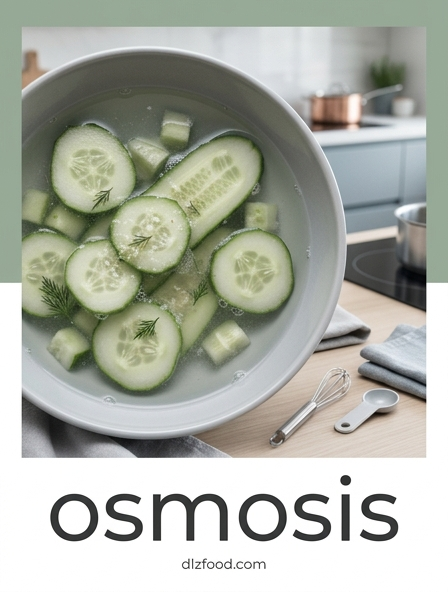
The Fundamentals of Brining Science
Brining is a fundamental culinary technique that utilizes the principles of chemistry and physics to improve the texture, moisture, and flavor of proteins. At its core, brining involves submerging meat in a solution of salt and water, or applying salt directly to the surface, to initiate a series of biochemical changes. This process is not merely about making food saltier; it is a sophisticated method of moisture management. When salt is introduced to the environment surrounding muscle fibers, it begins to alter the physical state of the proteins through the movement of ions. This initial interaction sets the stage for more complex processes like osmosis and diffusion, which work in tandem to ensure that meat retains its juices during the high-heat environment of roasting, grilling, or frying.
- Primary solutes: Sodium chloride is the most common, but sugars and nitrates can also be used.
- Solvent: Water acts as the carrier for ions in wet brining.
- Structural impact: Salt disrupts the tight bundles of muscle fibers, allowing for greater water absorption.
- Flavor enhancement: Beyond moisture, salt acts as a flavor multiplier by penetrating deep into the cellular structure.
Understanding these fundamentals allows cooks to manipulate the outcome of their dishes with precision, ensuring that even lean cuts of meat remain succulent and tender throughout the cooking process.
Defining Osmosis in the Kitchen
In the context of the kitchen, osmosis is specifically defined as the movement of water molecules through a semi-permeable membrane from an area of lower solute concentration to an area of higher solute concentration. Muscle cells in meat are surrounded by membranes that allow water to pass through while restricting larger molecules. When meat is placed in a brine, the initial concentration of salt outside the cells is significantly higher than the concentration inside. Initially, this can actually draw water out of the meat. However, as the salt begins to diffuse into the muscle fibers, it alters the internal solute concentration, eventually drawing water back into the cells through osmotic pressure.
| Term | Description |
|---|---|
| Solute | The substance being dissolved, typically salt or sugar. |
| Solvent | The liquid in which the solute is dissolved, usually water. |
| Semi-permeable Membrane | The cell walls of the meat that allow specific molecules to pass. |
| Isotonic State | The point of balance where solute concentration is equal on both sides. |
This biological mechanism is what prevents meat from drying out. By increasing the salt concentration within the cells, the cook forces the meat to hold onto more water than it naturally would, counteracting the moisture loss that occurs during the protein denaturation process of cooking.
How Salt Alters Protein Structure
The magic of brining lies in how salt ions interact with muscle proteins, specifically myosin and actin. When salt penetrates the meat, the sodium and chloride ions associate with the protein filaments. These ions carry electrical charges that cause the protein strands to repel one another. As the proteins move apart, the tightly packed structure of the muscle fiber begins to "relax" or unwind. This is a form of controlled denaturation that occurs before any heat is applied. Once these protein structures are loosened, they create more physical space within the cellular matrix, which can then be filled with water.
- Charge Repulsion: Like charges on the ions push protein strands apart, creating gaps for moisture.
- Solubilization: High salt concentrations can partially dissolve certain protein filaments, leading to a more tender "ham-like" texture.
- Matrix Expansion: The expanded protein network can hold nearly 10% to 15% more weight in water.
- Capillary Action: The physical gaps created allow water to be trapped more effectively during the cooking phase.
This structural alteration is what gives brined meat its characteristic "snap" and tenderness. By reorganizing the protein architecture at a molecular level, the cook ensures that the muscle fibers do not contract as tightly when heated, which would otherwise squeeze out the moisture.
The Role of Diffusion in Meat Hydration
While osmosis describes the movement of water, diffusion describes the movement of the salt itself. Diffusion is the process by which salt ions move from the high-concentration brine into the low-concentration meat. This is a much slower process than osmosis and is the reason why brining takes time. The salt must travel through the extracellular matrix and eventually into the cells. As the salt moves inward, it seasons the meat from the inside out, rather than just on the surface. This deep penetration of salt is essential because it is the salt inside the meat that facilitates the structural changes needed for moisture retention.
Diffusion is influenced by several factors, including the thickness of the meat, the temperature of the environment, and the concentration of the brine. In a cold refrigerator, molecules move slower, making diffusion a gradual process that can take anywhere from a few hours to several days. Without diffusion, osmosis would only affect the very surface of the meat, leaving the interior dry and unseasoned. Therefore, diffusion is the "workhorse" of the brining process, ensuring that the chemical benefits of the salt are distributed uniformly throughout the entire cut of protein.
Wet Brining vs Dry Brining Mechanics
The choice between wet and dry brining depends on the desired outcome and the type of protein being prepared. Wet brining involves a liquid solution, which provides an immediate reservoir of water for the meat to absorb via osmosis. Dry brining, also known as "salting," relies on the meat's own moisture to create a concentrated brine on the surface, which is then reabsorbed. Both methods rely on the same fundamental principles of diffusion and protein denaturation, but they interact with the meat's surface and moisture content differently.
| Feature | Wet Brining | Dry Brining |
|---|---|---|
| Medium | Water and salt solution | Salt applied directly to surface |
| Moisture Level | Increases total weight significantly | Redistributes internal moisture |
| Skin Texture | Often results in rubbery skin | Promotes crispy, dehydrated skin |
| Space Required | Large containers and fridge space | Minimal space; meat sits on a rack |
Wet brining is often preferred for lean proteins like turkey or chicken breasts that are prone to drying out. Dry brining is the gold standard for steaks and whole poultry where a crispy exterior is prioritized, as it allows the surface to dry out while the interior remains hydrated and seasoned.
Impact of Brine Concentration on Flavor
The concentration of salt in a brine dictates both the speed of the process and the final flavor profile of the meat. A standard brine usually ranges from 3% to 6% salt by weight. If the concentration is too low, the diffusion process is inefficient and the structural changes to the proteins will be minimal. Conversely, if the concentration is too high, such as in a 10% brine, the meat can become overly salty and the texture may become cured or "rubbery" due to excessive protein denaturation. Flavor aromatics like garlic, herbs, and spices can also be added to the brine.
- Gradient Strength: Higher concentrations move faster but risk over-salting the exterior.
- Flavor Carrying: Water-soluble flavor compounds move with the salt into the meat's interior.
- Sugar Balance: Adding sugar to a brine can counteract the harshness of salt and promote browning through the Maillard reaction.
- Aromatic Penetration: Large molecules like those in black pepper do not diffuse deeply, but smaller aromatic ions can enhance the meat's profile.
Finding the "sweet spot" of concentration ensures that the meat is perfectly seasoned throughout without the saltiness becoming the dominant flavor. This balance is critical for maintaining the natural integrity of the protein.
Moisture Retention and Denaturation Processes
Cooking is essentially a process of denaturation, where heat causes proteins to unfold and then coagulate into a solid mass. During this process, muscle fibers contract and squeeze out water, which is why overcooked meat is dry. Brining provides a two-fold defense against this moisture loss. First, because the meat has absorbed extra water via osmosis, it starts the cooking process with a higher total moisture content. Even if it loses the same percentage of water as unbrined meat, the final result will still be juicier. Second, the salt-altered proteins form a gel-like matrix that is better at physically trapping water.
- Pre-cooking: Salt breaks down the protein structure to create space.
- Heating: As temperatures rise, the "loosened" proteins do not contract as violently.
- Coagulation: The proteins set in a more open structure, holding water within the matrix.
- Resting: The gelled proteins help retain juices even after the meat is sliced.
This explains why a brined chicken breast can be cooked to the same internal temperature as an unbrined one, yet the brined version will feel significantly more tender and moist on the palate. It is the result of a chemically modified structure that resists the drying effects of heat.
Optimal Brining Times for Different Proteins
Timing is critical in the science of osmosis because the process of diffusion is slow and varies based on the density and thickness of the tissue. Leaving meat in a brine for too short a time results in uneven seasoning, where only the outer edges are hydrated. Conversely, over-brining can lead to a mushy texture as the proteins break down too much, effectively turning the meat into a cured product. The goal is to reach a state where the salt has penetrated to the center of the cut but has not yet compromised the structural integrity of the fibers.
| Protein Type | Recommended Brining Time | Method |
|---|---|---|
| Shrimp/Scallops | 15 to 30 minutes | Wet Brine |
| Fish Fillets | 30 to 60 minutes | Wet or Dry Brine |
| Chicken Pieces | 2 to 4 hours | Wet or Dry Brine |
| Pork Chops | 4 to 8 hours | Wet Brine |
| Whole Turkey | 12 to 24 hours | Wet or Dry Brine |
Factors such as bone-in versus boneless also play a role, as bones can slow down the path of diffusion. Generally, thinner cuts require much less time, while large, dense roasts require an overnight stay in the brine to achieve a consistent result from surface to core.
The Science of Equilibrium Brining
Equilibrium brining, or "EQ brining," is a more precise method used by modern chefs to avoid the risks of over-salting. In traditional brining, a high-concentration solution is used for a limited time, and the meat is pulled out before it gets too salty. In equilibrium brining, the cook calculates the exact amount of salt needed to season the meat to a perfect percentage (usually 1% to 2% of the total weight of the meat plus the water). The meat is left in this solution until the salt concentration in the meat and the water reaches a state of equilibrium. At this point, the meat can no longer get any saltier, regardless of how much longer it stays in the liquid.
- Weighing: The meat and water are weighed together on a digital scale.
- Calculation: A specific percentage of salt (e.g., 1.5%) is added based on that total weight.
- Submersion: The meat is sealed in a bag with the measured brine.
- Wait: The meat stays in the brine until the salt is distributed perfectly.
This method removes the guesswork and the danger of "salt-shocking" the protein. It is the most scientific way to ensure consistent results every time, particularly for long-duration projects like sous vide cooking.
Essential Equipment for Prepping Your Brine
To successfully execute the principles of osmosis and diffusion, specific tools are required to ensure safety and precision. Because salt is corrosive, the choice of containers is paramount. Reactive metals like aluminum or copper should be avoided, as the brine can leach metallic flavors into the food or damage the vessel. Food-grade plastics, glass, or high-quality stainless steel are the preferred choices. Additionally, because the concentration of the brine is so vital to the chemical outcome, a high-quality digital scale is more important than measuring spoons, as different types of salt have different densities.
- Digital Scale: Essential for measuring salt by weight rather than volume.
- Non-Reactive Containers: Heavy-duty plastic buckets or glass bowls are ideal.
- Instant-Read Thermometer: To ensure the brine is chilled before adding raw meat.
- Whisk: To ensure the salt and sugar are fully dissolved in the solvent.
- Weighting Plates: Used to keep the protein fully submerged in a wet brine.
Having the right equipment ensures that the environment is controlled, allowing the physical processes of osmosis to take place effectively without contamination or uneven results. Proper equipment turns a kitchen into a functional lab for culinary excellence.





Comments