
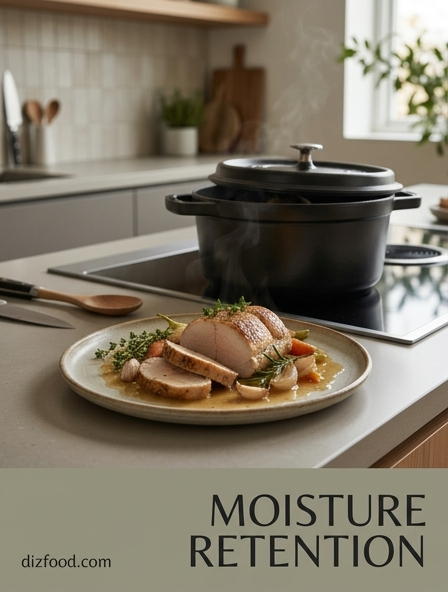
The Science of Osmosis and Moisture Retention
The culinary application of moisture retention relies heavily on the principles of osmosis and diffusion. When poultry is placed in a saline environment, a concentration gradient is created between the external solution and the internal cellular fluid. Initially, salt draws some water out of the meat; however, as the salt penetrates the muscle fibers, it begins to denature the tightly wound proteins. This structural change allows the protein filaments to relax and expand, creating more space within the cellular matrix to trap and hold water molecules.
This process is not merely about adding weight, but about altering the protein structure to resist the contraction that occurs during cooking. In unbrined meat, heat causes proteins to tighten and squeeze out juices. In contrast, brined proteins remain plump and resilient. The following table summarizes the key physiological changes during this process:
| Stage | Mechanical Action | Resulting Impact |
|---|---|---|
| Initial Contact | Osmotic Pressure | Salt enters the muscle tissue. |
| Denaturation | Protein Relaxation | Myofibrils expand and hold water. |
| Cooking | Moisture Retention | Reduced juice loss during heat exposure. |
Wet Brining versus Dry Brining Techniques
Choosing between wet and dry brining depends on the desired outcome for the specific cut of meat. Wet brining involves submerging the poultry in a solution of water and salt, which is highly effective for lean cuts that are prone to drying out quickly, such as chicken breasts or turkey. This method maximizes the total volume of moisture absorbed, though it can sometimes dilute the natural flavor of the meat if the brine is not properly seasoned.
Dry brining, or "salting," involves rubbing salt and seasonings directly onto the skin and flesh. Instead of adding external water, dry brining draws out the meat's own juices, dissolves the salt into a concentrated syrup, and then reabsorbs that seasoned liquid. This method is often preferred by chefs for its ability to produce a deeper flavor profile and superior skin texture. Key differences include:
- Wet Brining: Provides maximum hydration; requires large containers; can lead to a softer skin texture.
- Dry Brining: Enhances natural flavors; easier to store in the refrigerator; promotes exceptionally crispy skin.
- Time Factor: Wet brining is generally faster, while dry brining often requires 24 to 48 hours for optimal results.
Calculating Optimal Salt and Water Ratios
Precision is vital when calculating brine concentrations to avoid over-salting the meat. Most culinary experts recommend a salt concentration between 5% and 10% for standard wet brining. A 5% brine, often referred to as a "low-stress" brine, is achieved by dissolving approximately 50 grams of salt per liter of water. This allows for a longer soak without the risk of the meat becoming unpalatably salty. For faster results, a 10% brine can be used, but the immersion time must be strictly monitored.
When dry brining, the ratio is calculated based on the weight of the meat rather than a volume of water. A standard rule of thumb is to use 1/2 to 3/4 teaspoon of Kosher salt per pound of poultry. Using the correct type of salt is equally important due to varying grain sizes. Consider the following measurements for a standard gallon of water:
- Table Salt: Use approximately 1 cup (300g) for a standard brine.
- Kosher Salt (Morton): Use approximately 1.5 cups (250g) for a standard brine.
- Kosher Salt (Diamond Crystal): Use approximately 2 cups (270g) due to its lower density.
Infusing Flavor with Essential Brine Aromatics
While salt handles the moisture retention, aromatics are responsible for the depth of flavor. Since the brining process carries solutes deep into the muscle tissue, it is the perfect opportunity to introduce fat-soluble and water-soluble flavors. To maximize the efficacy of these aromatics, many chefs recommend "steeping" the spices in a small portion of boiling water before adding them to the cold brine. This releases essential oils that would otherwise remain trapped in the dried herbs.
Sugar is a common addition to brines, not necessarily for sweetness, but to promote browning through the Maillard reaction during roasting. Common aromatic components include:
- Alliums: Smashed garlic cloves, sliced shallots, or leeks provide a savory base.
- Whole Spices: Black peppercorns, mustard seeds, coriander, and star anise offer complexity.
- Fresh Herbs: Rosemary, thyme, and bay leaves provide traditional earthy notes.
- Sweeteners: Brown sugar, honey, or maple syrup aid in surface caramelization.
- Citrus: Lemon or orange peels add bright, acidic highlights to the finish.
Managing Brining Times for Different Poultry Cuts
Timing is the most critical variable in preventing meat from becoming mushy or overly saline. The duration of the brine is determined by the thickness of the meat and the concentration of the salt solution. Smaller cuts like Cornish hens or chicken thighs require significantly less time than a whole turkey. If meat is left in a wet brine for too long, the salt can begin to break down the protein structure too aggressively, resulting in a spongy texture.
For dry brining, the window is much more forgiving. Because the salt must draw out moisture before being reabsorbed, a minimum of 12 hours is usually required for the salt to penetrate beyond the surface. The following table provides general guidelines for wet brining at a 5-6% concentration:
| Poultry Cut | Wet Brine Duration | Dry Brine Duration |
|---|---|---|
| Chicken Parts | 1 - 2 Hours | 6 - 12 Hours |
| Whole Chicken | 4 - 8 Hours | 12 - 24 Hours |
| Whole Turkey | 12 - 24 Hours | 24 - 48 Hours |
Food Safety and Temperature Control During Prep
Maintaining food safety is paramount when handling raw poultry in a liquid environment. The "Danger Zone" for bacterial growth is between 40°F and 140°F. Therefore, the brine must be completely chilled before the poultry is submerged. Adding raw meat to a warm brine can quickly raise the internal temperature of the bird to unsafe levels, fostering the growth of pathogens like Salmonella or Campylobacter. It is best practice to dissolve salt in hot water, then add ice to rapidly bring the temperature down to 38°F.
Additionally, the container used for brining must be food-grade and non-reactive. Stainless steel, glass, or high-quality plastics are preferred. Avoid using aluminum or copper, as the salt and acid in the brine can react with the metal, imparting a metallic taste to the meat. Always ensure the following safety steps are taken:
- Clear a dedicated shelf in the refrigerator for the brining container to prevent drips.
- Never reuse brine solution for a second batch of meat.
- Wash and sanitize all surfaces that come into contact with the brine or raw poultry.
The Secret to Achieving Extra Crispy Skin
The primary challenge with wet brining is the excess moisture left on the skin, which acts as an enemy to crispiness. Steam is the byproduct of surface moisture, and if the skin is wet when it enters the oven, it will steam rather than fry in its own fat. To counteract this, the poultry must be thoroughly dried after it is removed from the brine. Many professionals use the "air-drying" method, where the bird sits uncovered in the refrigerator for several hours before cooking.
Another advanced technique involves adding a small amount of baking powder to the dry brine or rubbing it on the skin after wet brining. The alkaline nature of the baking powder raises the pH level of the skin, breaking down the proteins more efficiently and creating tiny bubbles that increase the surface area for browning. For the best results, follow these steps:
- Pat the bird extremely dry with paper towels inside and out.
- Allow the poultry to air-dry on a wire rack in the fridge for 4 to 12 hours.
- Apply a light coating of oil or melted butter just before roasting to conduct heat.
Advanced Brining Liquids and Acidic Components
While water is the standard base for brines, advanced cooks often substitute or supplement it with other liquids to introduce unique enzymes and flavors. Buttermilk is a classic example used in fried chicken preparation; its lactic acid content tenderizes the meat more gently than harsh vinegars, while its thickness helps coatings adhere. Apple cider, beer, and wine are also popular choices that contribute both acidity and sugar, enhancing the Maillard reaction.
Acidic components should be used with caution, however. High acidity can "cook" the outside of the meat-a process similar to ceviche-making it tough if left too long. The goal is to balance the pH to assist in protein breakdown without compromising the texture. Consider these alternative bases for your next brine:
- Buttermilk: Ideal for tenderizing and adding a slight tang.
- Apple Cider: Excellent for pork or turkey, providing a seasonal sweetness.
- Pickle Juice: A high-salt, high-vinegar shortcut that infuses dill and garlic notes.
- Soy Sauce: Provides salt while adding a deep umami character.
Essential Tools for Effective Poultry Preparation
Having the right equipment ensures that the brining process is both efficient and safe. A common struggle is keeping the poultry fully submerged in a wet brine, as birds tend to float. Specialized brining bags or heavy-duty containers with weighted plates are essential for consistent results. Furthermore, a reliable digital thermometer is the most important tool for any kitchen focusing on moisture retention, as even the best-brined bird will be dry if it is overcooked.
For those who prefer a faster method, meat injectors can be used to deliver the brine directly into the thickest parts of the muscle, such as the breast and thighs. This bypasses the wait time required for osmosis to occur naturally. Essential tools include:
- Non-Reactive Container: Large enough to fully submerge the bird.
- Instant-Read Thermometer: To monitor internal temperatures accurately.
- Wire Cooling Rack: For air-drying the skin in the refrigerator.
- Meat Injector: For deep-tissue seasoning in a fraction of the time.
- Kitchen Scales: For precise salt-to-water weight ratios.
Common Brining Mistakes and How to Avoid Them
One of the most frequent mistakes is using a "self-basting" or "pre-salted" turkey for brining. These birds are already injected with a sodium solution; brining them again will result in meat that is incredibly salty and has a ham-like texture. Always check the packaging for labels indicating that the bird has been "enhanced" or contains a percentage of salt solution. If the bird is pre-treated, skip the brine and focus on aromatics and temperature control.
Another error is failing to rinse or properly dry the meat after wet brining. While rinsing is debated due to cross-contamination risks, failing to wipe away excess salt or moisture leads to soggy skin and uneven seasoning. Avoid these pitfalls by following a structured workflow:
- Avoid Over-Brining: Stick to the recommended times to prevent mushy meat.
- Check Salt Type: Remember that table salt and Kosher salt are not interchangeable by volume.
- Control Heat: Do not rely on "pop-up" timers; they often trigger at temperatures far beyond the ideal 165°F.
- Keep it Cold: Never brine at room temperature.


Comments