
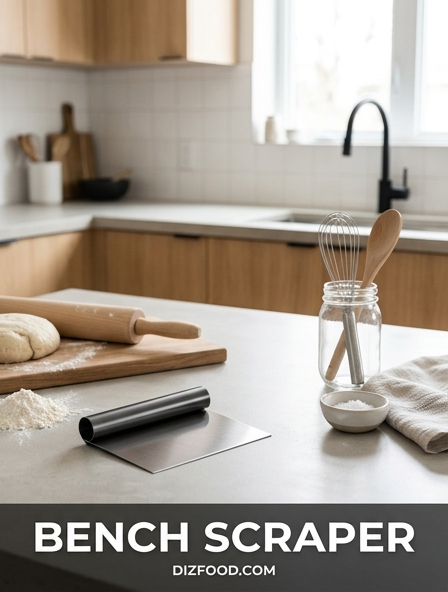
Mastering the Bench Scraper for Dough Division
The bench scraper is an indispensable tool for any baker, serving as the primary instrument for transitioning bulk-fermented dough into individual units. Mastering its use requires a combination of firm pressure and decisive movement. When dividing dough, the goal is to create a clean shear without tearing the delicate gluten network. A sharp stainless steel blade allows the baker to cut through the mass swiftly, ensuring that the internal structure remains intact. This process is not merely about separation but about respecting the aeration achieved during the fermentation phase.
- Hold the handle with a dominant grip, ensuring your thumb and forefingers provide stability.
- Position the blade perpendicular to the work surface for the most efficient cut.
- Apply a quick, downward motion rather than a sawing action to prevent sticking.
- Use the flat side of the scraper to move divided pieces without deflating them.
As you become more comfortable with the tool, the scraper becomes an extension of your hand. It allows for high-speed processing in a busy kitchen environment where time is as critical as temperature. Proper technique reduces the need for excessive flour, which can alter the hydration levels of your final product. By focusing on the mechanics of the cut, you ensure that every loaf or pastry begins its final shaping phase with the best possible structural foundation.
Achieving Precise Portioning with Every Cut
Precision in portioning is the hallmark of a professional bakery operation. While visual estimation comes with years of experience, the bench scraper acts as the primary tool for achieving exactness before the dough hits the digital scale. Consistent sizing ensures that every item in the oven bakes at the same rate, preventing a tray where some rolls are burnt while others remain doughy in the center. The scraper should be used to confidently "bite" into the dough, removing or adding small amounts until the target weight is reached.
| Dough Type | Target Weight (g) | Scraper Technique |
|---|---|---|
| Dinner Rolls | 50g - 70g | Single quick vertical snap |
| Standard Loaf | 450g - 500g | Broad slicing motion |
| Baguettes | 300g - 350g | Long, angled separation |
When the scraper is utilized correctly, it minimizes the "scrap" dough that often results from indecisive cutting. Every piece removed should be cleanly integrated back into the main mass or the specific portion. This level of accuracy not only improves the aesthetic uniformity of the finished goods but also directly impacts the profitability of the kitchen by reducing waste and ensuring customer satisfaction through product consistency.
Essential Techniques for Professional Dough Management
Professional dough management involves more than just cutting; it encompasses the organization and flow of the entire workspace. The bench scraper is the primary facilitator of this flow, used to organize the bench after bulk fermentation. Once the dough is turned out, the scraper helps in tucking the edges to create a manageable rectangle before division. This geometric approach makes it significantly easier to visualize the sections needed for the final products. It is a rhythmic process that balances speed with delicate handling.
- Degas the dough slightly by pressing with the flat of the scraper if the recipe requires.
- Divide the bulk mass into long strips of equal width to simplify secondary scaling.
- Slide the scraper under each piece to move it to the floured zone of the bench.
- Clear away sticky residue frequently to prevent dough drag during subsequent steps.
By employing these professional techniques, a baker can manage large volumes of dough without the material becoming unmanageable. The scraper acts as a barrier between the warmth of the baker's hands and the dough, which is particularly important for high-butter or sensitive pastry doughs. Maintaining this distance helps keep the fats from melting, ensuring a flaky and well-structured result after the baking process is complete.
Maintaining Surface Integrity During Shaping
The transition from division to shaping is a critical moment where the surface integrity of the dough must be preserved. A bench scraper is the ideal tool for creating tension on the outer skin of the dough. By placing the scraper at a slight angle against the dough and the work surface, you can pull the mass toward you, using the friction of the table to tighten the surface. This tension is what allows a loaf to expand upward in the oven rather than spreading outward into a flat disc.
- Avoid over-flouring the board; the scraper needs a small amount of "grip" to create tension.
- Use the curved edge of a plastic scraper for bowls or the straight edge of metal for flat surfaces.
- Keep the blade clean; any dried dough on the tool will snag and tear the fresh dough's skin.
- Work in a circular motion to round the dough into "boules" efficiently.
This technique, known as "rounding," relies on the scraper to provide a consistent force that hands alone often cannot replicate. The result is a smooth, taut surface that traps carbon dioxide produced by the yeast. Proper surface integrity ensures a beautiful "ear" when the bread is scored and a superior crumb structure that defines high-quality artisanal baking.
Efficient Workflow and Clean Workstations
A bench scraper is arguably the most effective cleaning tool in the kitchen, essential for maintaining an efficient workflow. As dough is processed, bits of flour and moisture inevitably create a sticky film on the work surface. If left unaddressed, this buildup interferes with the texture of the dough and prevents smooth shaping. Periodically using the scraper to "dry-scrape" the bench keeps the surface pristine and ready for the next batch. This practice is vital for sanitation and for the physical ease of the baker.
- Scrape away "dough skins" immediately after dividing to prevent them from drying and hardening.
- Gather excess flour into a corner to be reused or discarded, keeping the central area clear.
- Use the scraper to lift stubborn, stuck-on bits of dough before applying water for deep cleaning.
- Clean the scraper itself frequently with a damp cloth to ensure a smooth glide.
Efficiency in a professional kitchen is often measured by the ability to transition between tasks rapidly. By integrating the scraper into the cleaning routine, the baker ensures that the workstation remains a productive environment. A clean bench reduces frustration, prevents cross-contamination between different dough types, and allows for a more focused and methodical approach to the craft of baking.
The Science of Consistent Dough Scaling
Consistent dough scaling is rooted in the science of thermodynamics and fermentation. When dough pieces vary in size, they possess different thermal masses, meaning they will reach internal temperatures at different rates. Small pieces may over-proof and collapse while larger pieces are still under-developed. The bench scraper, when used in conjunction with a scale, ensures that every piece of dough enters the oven with the same potential for expansion. This uniformity is critical for the chemical reactions that govern crust browning and crumb setting.
| Factor | Impact of Inconsistency | Scraper Correction |
|---|---|---|
| Heat Transfer | Uneven browning and raw centers | Ensures identical volume for even heat flow |
| Yeast Activity | Variable rise times across the batch | Standardizes the environment for yeast growth |
| Oven Spring | Irregular shapes and burst seams | Provides uniform tension and mass |
Beyond the oven, consistent scaling affects the final texture and mouthfeel. A precisely scaled loaf has a predictable crumb density, which is essential for both artisanal quality and commercial standards. The bench scraper serves as the mechanical bridge between the raw, fluctuating mass of bulk dough and the standardized, scientific precision required for professional excellence in the culinary arts.
Handling High Hydration Doughs Successfully
High hydration doughs, such as ciabatta or sourdough, present a unique challenge due to their sticky, almost fluid nature. In these scenarios, the bench scraper is not just a luxury; it is a necessity. To handle these doughs successfully, the scraper must be used with speed and minimal contact time. The "wet-on-wet" or "flour-on-dry" techniques are often employed, where the scraper is dipped in water or flour to prevent the dough from adhering to the blade. This allows the baker to manipulate the dough without it sticking to their fingers.
- Lightly mist the scraper with water before diving into a high-hydration mass.
- Use a swift, scooping motion to lift the dough from the bench and fold it over itself.
- Minimize the number of touches; let the tool do the heavy lifting to avoid degassing.
- Keep the scraper at a low angle to slide under the dough's center of gravity.
The goal with wet dough is to build strength through folds rather than traditional kneading. The bench scraper facilitates these folds cleanly, maintaining the large air bubbles that characterize open-crumb breads. By mastering the scraper with wet doughs, you can produce loaves with a custardy interior and a thin, crisp crust that are otherwise impossible to handle by hand alone.
Optimizing Portion Control for Uniform Baking
Uniform baking is the ultimate goal of portion control, and the bench scraper is the tool that makes this possible. When every unit of dough is shaped and sized identically, the baker can optimize the oven's capacity. Uniformity allows for predictable air circulation patterns between the loaves, ensuring that the steam and heat are distributed evenly. Without the disciplined use of a scraper for portioning, some items may bake too quickly, leading to increased waste and inconsistent product quality that can damage a bakery's reputation.
- Standardize the "cut-and-tuck" motion to ensure every piece has similar surface tension.
- Use the markings on many professional scrapers to measure length for items like baguettes or breadsticks.
- Group portioned dough by weight on the bench to maintain an organized baking schedule.
- Avoid "patchwork" dough; try to cut the correct weight in as few pieces as possible.
Optimizing portion control also simplifies the packaging and sale process. Whether it is fitting rolls into a standard box or ensuring that a sliced loaf fits a specific toaster, the consistency provided by the bench scraper has far-reaching effects. It transforms a chaotic batch of fermented dough into a disciplined series of professional products that meet the high expectations of modern consumers.
Bench Scraper Basics for Bakery Efficiency
Efficiency in a bakery setting is often the difference between a profitable shift and a stressful one. The bench scraper contributes to this efficiency by being a multi-functional tool that reduces the need for various other utensils. It is used for measuring, cutting, lifting, turning, and cleaning. Selecting the right scraper-usually a stiff stainless steel blade for cutting and a flexible plastic one for scraping bowls-is the first step in optimizing your workflow. The ergonomics of the tool allow for hours of use without the hand fatigue associated with knives.
| Scraper Feature | Utility in Bakery | Benefit |
|---|---|---|
| Stainless Blade | Heavy dough division and bench cleaning | Durability and sharp, clean cuts |
| Plastic Blade | Curved bowl scraping and gentle folding | Flexibility and protection of containers |
| Integrated Ruler | Measuring length and width of dough strips | Instant precision without extra tools |
By keeping the bench scraper within reach at all times, a baker can maintain a constant rhythm. It eliminates the "dead time" spent looking for different tools or struggling with sticky dough. In the fast-paced environment of a professional kitchen, the scraper is the primary engine of productivity, ensuring that dough moves from the mixing bowl to the proofing basket with minimal friction and maximum speed.
Professional Methods for Dividing and Prepping Dough
The final preparation of dough requires a methodical approach that combines speed with a gentle touch. Professional methods involve "pre-shaping" immediately after division. Using the bench scraper, the baker divides the dough and then uses the tool to gently nudge the pieces into rough rounds or rectangles. This "bench rest" allows the gluten to relax, making the final shaping much easier and preventing the dough from snapping back. The scraper is essential here for moving these delicate pieces without distorting their shape.
- Divide the dough using a vertical cut, then immediately slide the scraper under to move it.
- Use the scraper to tuck the edges under the dough to create a smooth top surface.
- Keep the portions separated on the bench to prevent them from merging during the rest.
- Perform a final check of the weight, using the scraper to trim or add as necessary.
By treating the division and prep stage with this level of professional care, the baker sets the stage for a successful bake. The bench scraper ensures that the dough is handled with the respect it deserves, preserving the work of the yeast and the development of the gluten. Ultimately, these methods lead to a superior product that showcases the baker's skill and the versatility of this simple yet powerful kitchen tool.

Comments