
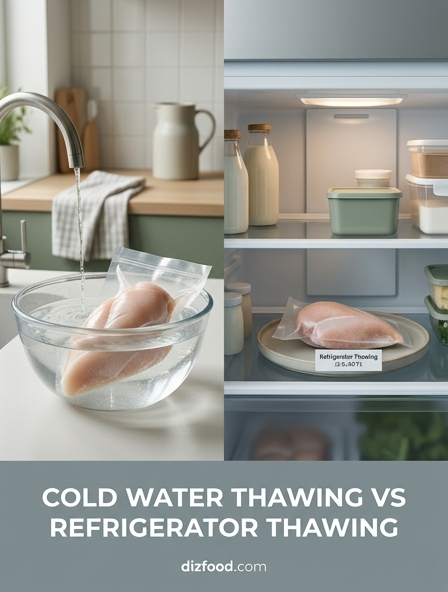
Choosing the right defrosting method is more than just a matter of convenience; it's a critical decision for maintaining both food safety and culinary integrity. While refrigerator thawing is widely considered the "gold standard" for preserving meat texture and preventing bacterial growth by keeping proteins at a consistent, food-safe temperature, cold water thawing serves as a reliable high-speed alternative for those tight, last-minute meal schedules. Both techniques are designed to bypass the "Danger Zone"-the temperature range where pathogens thrive-but they offer distinct trade-offs in terms of active effort, moisture retention, and prep time that every home cook should understand before starting their next recipe.
| Feature | Refrigerator Thawing | Cold Water Thawing |
|---|---|---|
| Average Speed | Slow (24+ hours per 5 lbs) | Fast (approx. 30 mins per lb) |
| Safety Level | Highest; stays below 40°F | High; requires leak-proof bags |
| Texture Quality | Optimal; minimal moisture loss | Good; slight risk of water ingress |
| Effort Required | Passive (Set and forget) | Active (Change water every 30 mins) |
| Best For | Large roasts, turkeys, meal prep | Small cuts, steaks, emergency meals |
| Post-Thaw Shelf Life | Cook within 1-5 days | Must cook immediately |
Safe Thawing Methods for Meat and Poultry
Maintaining food safety in the kitchen begins long before the heat is applied to the pan. When meat and poultry are frozen, bacteria such as Salmonella, Listeria, and E. coli become dormant but do not die. As the food begins to thaw, these microorganisms can wake up and multiply rapidly if the temperature enters the "Danger Zone." To mitigate this risk, the USDA recognizes three primary safe methods for defrosting: the refrigerator, cold water, and the microwave. Each method is designed to keep the food at a temperature that inhibits bacterial proliferation while allowing the ice crystals within the muscle fibers to melt.
Improper techniques, such as leaving meat on the counter at room temperature or using hot water, are dangerous because the outer layers of the food warm up significantly faster than the frozen core. This creates a window of time where the surface of the meat sits at room temperature for hours, providing a perfect breeding ground for pathogens. To ensure your kitchen remains a safe environment, adhere to the following safety principles:
- Always keep the food at or below 40 degrees Fahrenheit throughout the thawing process.
- Ensure that the thawing meat is contained to prevent juices from leaking and cross-contaminating other surfaces.
- Plan ahead to avoid the temptation of using unsafe, "quick" room-temperature methods.
- Cook food immediately if it has been thawed in the microwave or via cold water.
Speed Comparison Cold Water vs Refrigerator
The most significant difference between cold water thawing and refrigerator thawing is the time required to reach a ready-to-cook state. Refrigerator thawing is a slow, gradual process that relies on the consistent, cool air of the fridge. Because air is a poor conductor of heat compared to water, this method requires a high degree of patience and foresight. Conversely, cold water thawing utilizes the thermal conductivity of liquid to transfer heat into the frozen product much more efficiently, making it the preferred choice for same-day meal preparation.
While the refrigerator is the "set it and forget it" method, the cold water approach is an active process that requires monitoring and maintenance. The table below illustrates the general timeframes you can expect for various items using these two distinct methods:
| Food Item | Refrigerator Time | Cold Water Time |
|---|---|---|
| 1lb Ground Beef | 24 hours | 1 hour |
| Chicken Breast (Boneless) | 12-24 hours | 1-2 hours |
| Whole Turkey (12 lbs) | 3 days | 6 hours |
| Steak (Thick Cut) | 24 hours | 2 hours |
As shown, cold water thawing can reduce the waiting time from days to just a few hours. However, it requires the cook to be present to change the water frequently, whereas the refrigerator method allows for a stress-free experience over a weekend or a busy work week.
How Refrigerator Thawing Preserves Food Texture
Culinary professionals often prefer refrigerator thawing because it is the gentlest method for handling delicate protein fibers. When meat is frozen, the water inside the cells turns into ice crystals. If meat is thawed too rapidly, these crystals can rupture cell walls, leading to a phenomenon known as "purge"-the loss of moisture and natural juices that ends up in the bottom of the packaging. A slow defrost in the refrigerator allows the ice crystals to melt gradually, giving the muscle fibers a better chance to reabsorb some of that moisture, resulting in a juicier and more tender final product.
Furthermore, maintaining a constant, cold temperature prevents the fat in the meat from softening prematurely. In high-quality cuts of beef like ribeye or wagyu, the marbling is essential for flavor. If the meat is subjected to fluctuating temperatures or excessive heat during thawing, the texture of the fat can change, affecting the sear and the overall mouthfeel. By keeping the meat at a steady 37 to 40 degrees Fahrenheit, the refrigerator ensures that the structural integrity of the protein remains intact. This is particularly important for seafood, such as shrimp or scallops, which can become mushy or rubbery if thawed too quickly or if exposed to direct water contact. Choosing the slow route is an investment in the quality of the meal, ensuring that the texture of the meat is as close to fresh-never-frozen as possible.
Step by Step Guide to Cold Water Thawing
Cold water thawing is an excellent middle ground between the slow refrigerator method and the potentially texture-damaging microwave method. However, it must be executed with precision to remain safe. You cannot simply place a piece of meat in a bowl of water and walk away; it requires a systematic approach to ensure the water temperature remains low enough to prevent bacterial growth while high enough to continue the melting process.
- Check the Packaging: Ensure the meat is in a leak-proof, airtight plastic bag. If the original store packaging is compromised, transfer the meat to a heavy-duty zip-top bag and squeeze out as much air as possible.
- Submerge the Item: Fill a large bowl or your clean kitchen sink with cold tap water. Fully submerge the wrapped meat. If the package floats, use a heavy plate or a canned good to weight it down.
- Refresh the Water: This is the most critical step. Every 30 minutes, drain the water and refill the container with fresh, cold tap water. This ensures the water doesn't become too cold from the ice, which would stall the thawing, or too warm from the ambient room air.
- Monitor Progress: Check the flexibility of the meat. Small packages (about a pound) usually thaw in an hour or less, while larger 3-to-4-pound packages may take two to three hours.
- Cook Immediately: Unlike refrigerator-thawed food, meat thawed in cold water must be cooked immediately after the process is complete. Do not return it to the fridge or refreeze it in its raw state.
Temperature Control and Food Safety Standards
The science of food safety centers on the "Danger Zone," which is the temperature range between 40°F and 140°F. Within this range, the number of bacteria on a piece of meat can double every 20 minutes. Both cold water and refrigerator thawing are designed specifically to keep food below that 40°F threshold. Refrigerator thawing is naturally compliant because standard kitchen refrigerators are set to approximately 37°F. This keeps the food out of the Danger Zone indefinitely, allowing for a margin of error if you decide not to cook the meat until the following day.
Cold water thawing requires more vigilance because the water temperature can easily drift into the Danger Zone if left unattended in a warm kitchen. Even "cold" tap water can eventually reach room temperature, which is typically around 70°F. This is why the 30-minute water change rule is a non-negotiable safety standard. By refreshing the water, you maintain a consistent temperature gradient that pulls the cold out of the meat without letting the exterior surface get warm enough for bacteria to colonize. Additionally, using a kitchen thermometer to verify the water temperature can provide an extra layer of security for the home cook.
- Standard Fridge Temp: 35°F - 38°F (Ideal)
- Cold Water Temp: Below 40°F (Requires monitoring)
- Room Temp: 68°F - 72°F (Dangerous for thawing)
The Impact of Thawing on Bacterial Growth
When meat is frozen, bacteria enter a state of suspended animation. They are not killed by the sub-zero temperatures; rather, their metabolic processes are simply paused. As soon as the temperature rises above freezing, these bacteria "awaken." The method of thawing determines how much time these microorganisms have to multiply before the meat reaches the cooking stage. If you thaw meat on a kitchen counter, the exterior of the meat can reach 60 or 70 degrees while the center is still a solid block of ice. This allows hours of exponential bacterial growth on the surface, which can produce heat-stable toxins that are not destroyed by cooking.
In contrast, refrigerator thawing keeps the entire piece of meat at a consistent, safe temperature. While some bacterial growth still occurs, it happens at a significantly slower rate than at room temperature. Cold water thawing is also safe because the constant cooling effect of the water prevents the surface of the meat from warming up too quickly. It is essential to remember that once meat is thawed, it is just as perishable as fresh meat. The "clock" for spoilage begins as soon as the ice crystals disappear. Therefore, understanding the relationship between temperature and bacterial kinetics is vital for preventing foodborne illness in any household or professional kitchen setting.
Pros and Cons of Slow Refrigerator Defrosting
The refrigerator method is widely considered the "gold standard" by food safety experts and chefs alike, but it is not without its drawbacks. Understanding the trade-offs can help you plan your kitchen workflow more effectively. The primary advantage is safety and quality; it is the most foolproof way to ensure meat stays out of the Danger Zone while maintaining the best possible texture. Furthermore, it offers the greatest flexibility for the cook's schedule.
- Pro: Safety - Minimal risk of bacterial growth due to stable, low temperatures.
- Pro: Refreezing - Meat thawed in the fridge can be safely refrozen without cooking, although there may be some loss in quality.
- Pro: Convenience - Requires no active monitoring or effort once the meat is placed in the fridge.
- Con: Time - Requires significant planning; large items can take several days to thaw.
- Con: Space - A large turkey or roast can take up valuable shelf space in a crowded refrigerator.
- Con: Coordination - If you forget to take the meat out 24 hours in advance, your meal plans must change.
While the time investment is high, the benefits of moisture retention and safety usually outweigh the inconvenience, provided the cook has the foresight to begin the process early enough in the week.
Emergency Thawing When You Are Short on Time
We have all experienced the moment of realization that the main course is still sitting in the freezer just hours before dinner. When you are in a rush, the refrigerator method is off the table, and even cold water thawing might feel too slow. In these "kitchen emergencies," there are a few safe paths forward. The most common is microwave thawing. While effective for speed, the microwave often thaws unevenly, potentially starting to "cook" the edges of the meat while the center remains frozen. This can result in a gray, rubbery texture if not handled carefully.
Another option is to cook the food directly from its frozen state. According to the USDA, it is perfectly safe to cook frozen meat, poultry, or fish, but you must account for the increased cooking time. Generally, cooking from frozen takes about 50% longer than cooking thawed meat. For example, a frozen burger patty can be grilled directly, or a frozen chicken breast can be poached. However, this method is not recommended for very large roasts or whole turkeys, as the outside will likely burn or dry out before the center reaches a safe internal temperature. When using emergency methods, always use a meat thermometer to ensure the core reaches the required temperature: 165°F for poultry and 145°F for beef and pork.
Why Cold Water Thawing Requires Airtight Packaging
One of the most common mistakes in cold water thawing is allowing the meat to come into direct contact with the water. Using airtight, leak-proof packaging is a requirement for both hygiene and food quality. If a bag leaks, bacteria from the surrounding environment (or the sink itself) can be introduced to the meat. Furthermore, meat is like a sponge; if it is exposed to water, the muscle fibers will absorb the liquid, leading to a "waterlogged" product. This ruins the flavor and makes it impossible to achieve a proper sear or crust during cooking, as the excess water will turn to steam in the pan.
Additionally, the packaging acts as a protective barrier for the natural juices of the meat. If water seeps in, it washes away the myoglobin-the protein that gives meat its red color and much of its savory flavor. To ensure a successful thaw, follow these packaging tips:
- Double-bag the item if the original plastic feels thin or brittle.
- Use a vacuum sealer if available, as it removes all air and ensures maximum surface contact with the cold water.
- Check for small punctures that might have occurred from "freezer burn" or handling.
- Ensure the zip-lock seal is completely closed before submersion.
By maintaining a strict barrier between the protein and the water, you protect the culinary integrity of your ingredients.
Choosing the Best Defrosting Method for Your Meal
Selecting the right thawing method depends on three factors: the size of the cut, the time available, and the desired quality of the final dish. A large holiday ham or a whole turkey should almost always be thawed in the refrigerator to ensure even temperature distribution and safety. Smaller items, like a pound of shrimp or a couple of steaks, are perfect candidates for the cold water method if you need them ready for a Tuesday night dinner. The choice involves a balance between the "active time" you are willing to spend and the "waiting time" you can afford.
Below is a quick reference guide to help you choose the best approach for different kitchen scenarios:
| Scenario | Recommended Method | Why? |
|---|---|---|
| Large Roasts/Whole Birds | Refrigerator | Ensures the core thaws without the surface spoiling. |
| Last-Minute Dinner | Cold Water | Fastest safe method that preserves texture better than a microwave. |
| High-Quality Steaks | Refrigerator | Maximizes juice retention and provides a better sear. |
| Ground Meat for Tacos | Cold Water or Microwave | Texture is less critical; speed is prioritized. |
Ultimately, planning ahead with the refrigerator method is always the safest and most reliable option, but mastering the cold water technique provides a valuable "Plan B" for the busy home cook.

Comments