
Mastering Essential Knife Skills
Before integrating specialized tools like the mandoline slicer into a professional workflow, a foundational understanding of traditional knife skills is imperative. Mastering the basic cuts-such as the dicing of onions or the rough chopping of herbs-establishes the necessary hand-eye coordination and spatial awareness required for safe kitchen operations. While a mandoline offers unparalleled speed, the precision of a chef's knife remains the baseline for versatility in food preparation.
Developing these skills involves understanding how to stabilize the product against the cutting board. This manual dexterity translates directly to how one handles produce when transitioning to mechanical slicers. Key techniques include:
- The "Claw" grip to protect fingertips from the blade edge.
- Utilizing the rocking motion for consistent vegetable mincing.
- Maintaining a sharp edge to reduce the force required for each stroke.
- Standardizing the size of cuts to ensure predictable cooking results across various recipes.
Ultimately, a chef who understands the resistance of different fibers under a steel blade is better equipped to calibrate the thickness settings on more advanced slicing equipment.
Selecting High Quality Cutlery
The performance of any slicing operation is fundamentally tied to the quality of the steel. When selecting cutlery or the replacement blades for a mandoline, one must consider the carbon content and the Rockwell hardness scale of the metal. High-carbon stainless steel is often preferred for its ability to maintain a razor-sharp edge while resisting the corrosive acids found in citrus and nightshades. A high-quality blade reduces the physical effort required, which is critical during high-volume prep sessions.
| Blade Material | Edge Retention | Maintenance Level |
|---|---|---|
| Stainless Steel | Moderate | Low |
| High-Carbon Steel | Excellent | High |
| Ceramic | Superior | Low (Brittle) |
Ergonomics also play a vital role. A well-balanced tool reduces wrist fatigue and provides better control. Whether it is a forged bolster on a chef's knife or the reinforced frame of a Japanese mandoline, the structural integrity of the tool ensures safety and longevity in a demanding kitchen environment.
The Science of Uniformity
In the culinary arts, uniformity is not merely an aesthetic choice; it is a scientific necessity for heat transfer. When vegetables are sliced to varying thicknesses, the thinner pieces overcook and disintegrate before the thicker pieces reach the desired tenderness. This discrepancy leads to uneven flavors and textures. Using a mandoline ensures that every slice of a potato or a radish is identical down to the millimeter, allowing for a simultaneous Maillard reaction across the entire batch.
The mathematical precision of a mandoline allows chefs to manipulate the surface-area-to-volume ratio of ingredients. This control is essential for:
- Ensuring chips or crisps dehydrate at the exact same rate in a fryer.
- Allowing marinades to penetrate dense root vegetables evenly.
- Achieving perfect layering in complex dishes like Pommes Anna or vegetable terrines.
- Optimizing the release of aromatic compounds in raw garnishes.
By removing human error from the thickness equation, the cook can focus on the chemical transformations occurring in the pan rather than compensating for irregular knife work.
Mandolines and Precision Tools
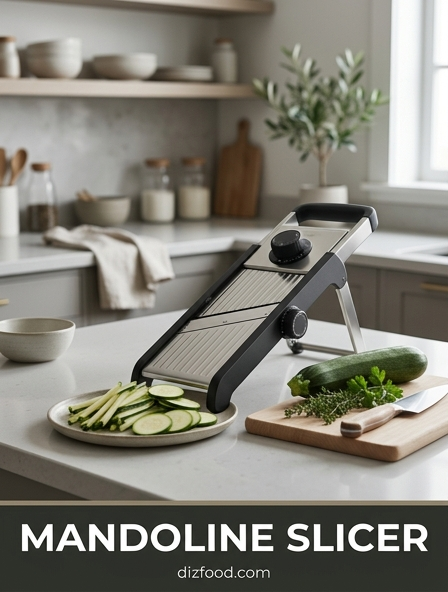
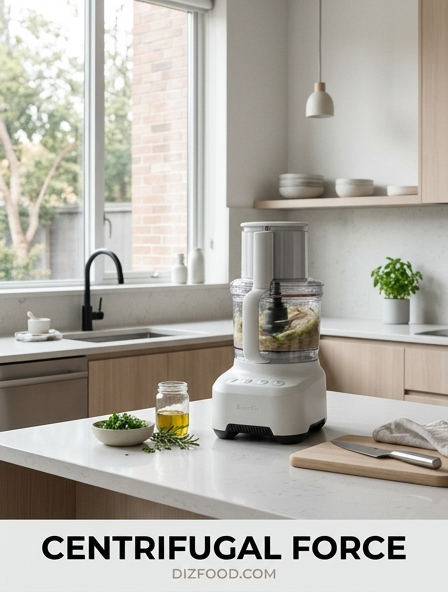
The mandoline slicer stands as the bridge between manual artistry and mechanical efficiency. Unlike a food processor, which can bruise delicate cell walls with high-speed centrifugal force, a mandoline utilizes a stationary, ultra-sharp blade that shears through produce with minimal resistance. This preserves the structural integrity of the vegetable, resulting in a cleaner snap and a more vibrant appearance. Precision tools like these are indispensable for tasks that require translucent thinness that is nearly impossible to replicate by hand.
Most professional mandolines feature modular components to expand their utility. These typically include:
- Straight blades for standard rounds and planks.
- Julienne teeth for creating uniform matchsticks or "allumette" cuts.
- Waffle or crinkle-cut blades for increased surface area and visual texture.
- Adjustable thickness knobs that allow for micro-adjustments between 0.5mm and 10mm.
Whether choosing a classic French stainless steel model or a lightweight Japanese plastic variant, the goal remains the same: achieving absolute precision with every downward stroke.
Importance of Blade Maintenance
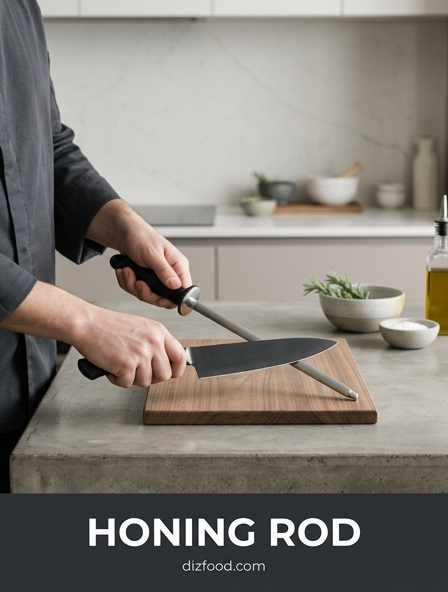
A dull blade is significantly more dangerous than a sharp one. When a mandoline blade loses its keenness, it requires the user to apply excessive downward pressure, which increases the likelihood of the hand slipping. Maintenance is a continuous process that involves both immediate cleaning and periodic honing. Residue from starchy vegetables can build up on the blade, creating friction and tearing the produce instead of slicing it cleanly.
To ensure the longevity and safety of your precision slicing tools, follow these maintenance steps:
- Hand-wash blades immediately after use to prevent acidic corrosion and dried-on starches.
- Use a soft brush to clean between julienne teeth, avoiding direct finger contact with the edge.
- Dry the components thoroughly to prevent rust spots, even on stainless steel models.
- Replace or professionally sharpen blades at the first sign of resistance or "crushing" of soft skins.
- Store blades in protective cases or dedicated slots to prevent nicking the fine edge.
Proper care ensures that the tool remains a reliable asset rather than a liability during a busy service.
Professional Hand Positioning Techniques
Safety is the primary concern when operating a mandoline, as the exposed blades can cause severe injury in a fraction of a second. Professional technique dictates that the hand should never be positioned directly over the blade without a safety guard. However, when a guard is not feasible for specific shapes, the "open palm" method is utilized by experienced chefs to keep fingers away from the cutting zone. The focus must always remain on the movement of the product, not the speed of the stroke.
Effective positioning involves several key safety habits:
- Always use the provided safety pusher or hand guard for at least the final two-thirds of the vegetable.
- Wear a cut-resistant Kevlar glove on the hand making contact with the food.
- Maintain a consistent, fluid motion rather than jerky, forceful shoves.
- Keep the guide hand flat and fingers tucked if the pusher is temporarily set aside.
By establishing a rhythm and respecting the tool's sharpness, a cook can achieve high-speed output without compromising personal safety or the quality of the cut.
Optimizing Your Prep Station
Efficiency in the kitchen is largely a result of "mise en place" and the physical organization of the workspace. When using a mandoline, the station must be set up to facilitate a logical flow from raw product to sliced ingredient. The mandoline should be placed on a stable, non-slip surface, often secured over a stainless steel bowl or a plastic container to catch the slices directly. This prevents the accumulation of moisture on the cutting board, which could cause the tool to slide.
| Station Element | Purpose |
|---|---|
| Non-slip Mat | Prevents the mandoline from shifting during use. |
| Catch Container | Collects uniform slices to minimize handling. |
| Waste Bin | Quick disposal of vegetable ends and peels. |
| Damp Cloth | Regularly wipes the ramp to maintain a smooth glide. |
An optimized station reduces unnecessary movement, allowing the chef to process large quantities of produce with minimal fatigue and maximum focus on the blade's path.
Achieving Consistency for Even Cooking
The primary culinary advantage of a mandoline is the guarantee of identical cooking times. In high-pressure environments, consistency is the hallmark of quality control. When preparing a vegetable gratin, for example, if the potato slices vary even slightly, the texture of the dish will be compromised-some slices will be mushy while others remain al dente. The mandoline eliminates this variable, ensuring that the structural integrity of the dish is sound from the bottom layer to the top.
Consistency is particularly vital for certain preparation methods:
- Pickling: Uniform slices ensure that the brine penetrates every piece at the same rate.
- Dehydration: Thinner, identical slices dry evenly, preventing spoilage in thicker areas.
- Deep Frying: Consistent thickness prevents smaller pieces from burning while larger pieces remain soggy.
- Raw Salads: Micro-thin shavings of tough vegetables like fennel or radish soften the bite while maintaining crunch.
By achieving this level of regularity, a chef can master complex recipes with predictable, high-quality results every time the dish is executed.
Advanced Vegetable Slicing Methods
Beyond simple rounds, the mandoline is capable of sophisticated cuts that elevate the texture of a dish. Advanced methods involve utilizing the various blade inserts to create complex shapes like "gaufrette" (waffle) cuts or extremely fine "paille" (straw) potatoes. Mastering these techniques requires an understanding of how to rotate the produce between strokes. For a waffle cut, the vegetable is rotated ninety degrees after every pass, allowing the blades to intersect and create a perforated pattern.
Other advanced applications include:
- Paper-thin carpaccio: Slicing dense vegetables like beets so thin they become translucent and flexible.
- Ribbon cuts: Long, continuous strips of zucchini or carrots for gluten-free pasta alternatives.
- Precision julienne: Creating perfectly square matchsticks for delicate garnishes or stir-fries.
- Shaved aromatics: Processing garlic or shallots into wafers that melt into sauces instantly.
These methods allow for a diversity of textures that can transform humble ingredients into the focal point of a sophisticated plate, showcasing the chef's technical proficiency and attention to detail.
Elevating Culinary Presentation Standards
Visual appeal is a critical component of the dining experience, and the mandoline is a vital tool for achieving modern plating standards. The ability to create delicate, overlapping scales of cucumber or perfectly symmetrical rings of red onion adds a level of geometric beauty that signifies professional craftsmanship. High-end culinary presentation often relies on the contrast between textures-the crunch of a shaved radish against a soft puree-which is best achieved through precision slicing.
To elevate your presentation, consider the following applications:
- Creating translucent garnishes that allow light to pass through the plate elements.
- Constructing intricate vegetable terrines with perfectly flat, even layers.
- Using the julienne setting to create nest-like foundations for proteins.
- Slicing fruit for tarts so that every piece overlaps with mathematical exactness.
- Preparing "vegetable scales" to cover fish or poultry for a visually stunning crust.
When every element on the plate is cut with the same exacting standards, the overall aesthetic becomes more intentional and refined. This attention to detail communicates a commitment to excellence that diners can see before they even take their first bite.

Comments