
Struggling to find extra room in your crowded cabinets? Maximizing your kitchen's vertical space is the secret to a clutter-free home, but choosing between shelf risers and hanging under-shelf baskets depends entirely on your specific needs. Shelf risers act as sturdy "mini-shelves" that are ideal for heavy stacks of dinnerware or canned goods, effectively doubling your surface area. Conversely, hanging under-shelf baskets slide onto existing shelves to reclaim "dead air" for lighter essentials like tea towels, wraps, or snacks. Whether you're looking to reinforce your pantry's weight capacity or utilize every inch of overhead clearance, understanding these two storage powerhouses will help you streamline your meal prep and organization.
| Feature | Shelf Risers | Under-Shelf Baskets |
|---|---|---|
| Primary Utility | Doubles vertical stacking for heavy items. | Utilizes unused "dead air" space below. |
| Installation | Freestanding; no assembly required. | Slide-on brackets; tool-free mounting. |
| Weight Limit | High (often 15-30 lbs+). | Moderate (best for lighter items). |
| Best For | Plates, bowls, mugs, and canned goods. | Foil rolls, napkins, and small snacks. |
| Accessibility | Open access to top and bottom tiers. | Easy-reach front opening for small items. |
| Flexibility | Often stackable or width-expandable. | Fixed height; depends on shelf clearance. |
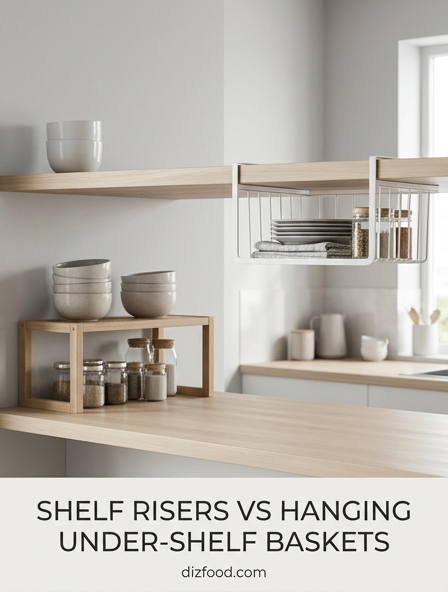
Maximizing Vertical Space Shelf Risers vs Hanging Baskets
In many kitchens, the most significant wasted resource is the vertical gap between shelves. Standard cabinets are often built with high clearances that accommodate tall cereal boxes or blenders, but when filled with smaller items like mugs or canned goods, the upper half of the shelf remains empty. Both shelf risers and hanging under-shelf baskets are designed to bridge this gap, though they approach the problem from opposite directions. Shelf risers sit directly on the existing shelf surface, creating a "second story" that allows you to stack items without placing them directly on top of one another. This is particularly useful for dinnerware, where stacking bowls on top of plates usually makes the plates inaccessible.
Hanging under-shelf baskets, conversely, utilize the space by sliding onto the shelf above and dangling downward. This method exploits the "ceiling" of the cabinet shelf rather than the "floor." When deciding between the two, it is essential to consider the total height of the items you intend to store. Risers are generally more flexible for taller items that need to sit on the bottom level, whereas baskets are ideal for shorter, flatter items that would otherwise get lost in a deep cabinet. To maximize efficiency, consider the following benefits of each:
- Risers: Excellent for creating visibility for items in the back of the cabinet.
- Baskets: Perfect for utilizing the thin sliver of space directly beneath a shelf.
- Risers: Can be used outside of cabinets on countertops for tiered spice displays.
- Baskets: Keep small items from shifting or falling over by providing a contained enclosure.
Weight Capacity Differences for Heavy and Light Items
The structural integrity of your organization system depends heavily on the mounting style. Shelf risers are inherently more robust because they transfer the weight of the stored items directly down onto the primary shelf. These organizers are typically supported by four or more legs, making them the superior choice for heavy ceramic plates, cast iron cookware, or full glass jars. If you overload a shelf riser, the risk is usually limited to the riser itself sagging or slipping, rather than damaging the cabinet structure.
Hanging baskets rely on the tension of their attachment arms and the thickness of the shelf they are hooked onto. Because they "hang," they are subject to gravity in a way that can pull them down or cause them to tilt forward if the weight is not perfectly balanced. Consequently, they are ill-suited for heavy items. Overloading a hanging basket can lead to bent wire arms or, worse, can put undue stress on the shelf above, potentially causing it to warp or pull away from its wall pegs. The following table highlights the typical weight capacities and recommended items for each:
| Organizer Type | Weight Capacity | Recommended Items |
|---|---|---|
| Steel Shelf Riser | 15-30 lbs | Dinner plates, stoneware, large canned goods. |
| Plastic Shelf Riser | 5-10 lbs | Plastic containers, spices, light mugs. |
| Wire Hanging Basket | 2-5 lbs | Napkins, bread, cling wrap, tea bags. |
Ease of Installation and Cabinet Compatibility
One of the most attractive features of both shelf risers and hanging baskets is that they generally require zero tools for installation. This makes them an ideal choice for renters or those who do not wish to drill holes into their cabinetry. However, compatibility issues often arise with hanging baskets that do not affect shelf risers. A hanging basket requires a specific shelf thickness to slide on securely; if the shelf is too thick, the arms will not fit, and if it is too thin, the basket will wobble and droop.
Shelf risers are almost universally compatible because they simply sit on top of the flat surface. The only measurement of concern for a riser is the depth of the cabinet to ensure the legs don't hang over the edge. When installing these items, users should follow a quick checklist to ensure a proper fit:
- Measure the internal height of the cabinet to ensure the combined height of the riser and your items won't hit the top.
- Check for "lip" clearance; some cabinets have a decorative trim that might prevent a hanging basket arm from sliding all the way back.
- Test the cabinet door closure; hanging baskets have arms that wrap around the shelf, which can sometimes prevent the cabinet door from closing flush if the door is inset.
Best Uses for Kitchen Pantry and Cabinet Organization
The pantry is where these two organizers truly shine, but they serve very different roles in food management. A pantry often contains a chaotic mix of heavy cans, glass bottles, and lightweight snack bags. Shelf risers are the "workhorses" of the pantry. By placing cans on a tiered riser, you can see the labels of the back row over the front row, preventing "pantry amnesia" where items are forgotten and expire. They are also excellent for dividing large bags of flour or sugar from smaller baking ingredients.
Hanging baskets, on the other hand, are the "specialists." They are perfect for those odd, light items that don't stack well. Think of bags of chips, loaves of bread, or loose fruit like oranges and lemons. These items are easily crushed under heavier weights, and placing them in a hanging basket keeps them safe and separated from the more rugged pantry staples. Using both in tandem allows for a zoned approach to organization:
- Upper Zones: Use hanging baskets for light linens or paper products.
- Middle Zones: Use risers for canned goods and coffee mugs.
- Lower Zones: Use heavy-duty risers for mixing bowls or small appliances like toasters.
Accessibility and Visibility of Stored Household Goods
The primary goal of any organization system is to make items easier to find and retrieve. Shelf risers improve visibility by creating a "stadium seating" effect for your goods. When you use a riser, you no longer have to move the items in the front to see what is behind them. This is particularly beneficial in deep cabinets where light doesn't reach the back corners. By elevating the rear items, you bring them into the line of sight, which speeds up meal preparation and simplifies grocery list making.
Hanging baskets offer a different kind of accessibility. They bring items down to eye level or within easier reach, which is helpful for high shelves that are difficult to access. However, visibility can be a drawback for baskets. Because many hanging baskets are made of tight wire mesh, it can be difficult to see exactly what is inside the basket if it is positioned above eye level. You may find yourself reaching blindly into the basket to feel for what you need. To mitigate this, hanging baskets are best used for frequently grabbed items that are recognizable by touch, such as a box of foil or a bag of tortillas, rather than small, miscellaneous items that could get buried.
Durability and Material Strength Comparison
When investing in kitchen organizers, the material dictates the lifespan of the product. Shelf risers are available in a wide array of materials, including perforated steel, solid wood, heavy-duty plastic, and tempered glass. Steel risers are the gold standard for durability; they do not warp under heat or humidity and can support significant weight for decades. Wood risers offer a more aesthetic appeal but can be prone to staining or water damage if used near the sink or for storing damp dishes. Plastic risers are affordable and easy to clean but can become brittle over time or bow in the center if overtaxed.
Hanging baskets are almost exclusively made of thin-gauge wire, often coated in plastic or chrome. While the wire itself is strong, the points of failure are the attachment arms. These arms are under constant tension, and if the metal is not high-quality, they can slowly spread apart, causing the basket to sag. Compare the materials in the following table to find the right fit for your environment:
| Material | Pros | Cons |
|---|---|---|
| Coated Wire | Lightweight, allows airflow, rust-resistant. | Can bend or sag over time. |
| Stainless Steel | Extremely strong, easy to sanitize. | More expensive, can be heavy. |
| Bamboo/Wood | Eco-friendly, visually attractive. | Requires more maintenance; not for heavy moisture. |
Impact on Cabinet Aesthetics and Visual Clutter
Visual clutter can make a kitchen feel small and stressful. The aesthetic impact of your choice depends on whether you prefer a "hidden" or "displayed" look. Shelf risers tend to be more discrete. Because they sit inside the cabinet and are often the same color as the shelving (usually white or wood-toned), they blend into the background. They organize the clutter by creating clean lines and levels, making even a packed cabinet look intentional and tidy.
Hanging baskets are much more visible because they hook over the shelf and often protrude slightly. The wire arms are visible on the top side of the shelf, which might be a distraction if you have open shelving or glass-front cabinets. Furthermore, because baskets often hold loose or bagged items, the contents can look more disorganized than the neat rows typically found on shelf risers. To maintain a clean aesthetic while using hanging baskets, it is helpful to use them for uniform items, like a set of matching dish towels, or to choose a color that matches your cabinetry exactly to minimize the visual break of the support arms. For those who prioritize a minimalist, "built-in" look, shelf risers are almost always the superior choice.
Ideal Storage for Plates Versus Lightweight Wraps
The specific items you need to store should be the ultimate factor in your decision. For plates, shelf risers are the only logical choice. A stack of dinner plates can weigh upwards of 15 pounds, which would easily collapse most hanging baskets. A riser allows you to place dinner plates on the bottom and salad plates on the top, ensuring you never have to lift a heavy stack just to get to the plate at the bottom. This prevents chipping and makes setting the table much faster.
Conversely, lightweight kitchen wraps-such as aluminum foil, parchment paper, and plastic wrap-are the perfect candidates for hanging baskets. These boxes are long, thin, and notoriously difficult to stack on a flat shelf. They often slide around or get buried under other items. A hanging basket creates a dedicated "holster" for these boxes, keeping them off the main shelf surface and making them easy to slide out when needed. Other items that thrive in the hanging basket environment include:
- Sponges and dishcloths (the airflow helps them stay dry).
- Plastic storage bag boxes (Quart, Gallon, Sandwich).
- Lightweight snack bars and tea boxes.
- Paper plates and napkins.
Space Optimization for Small Apartment Kitchens
In a small apartment, every square inch of the kitchen must be utilized. When you cannot expand horizontally, you must expand vertically. Shelf risers are excellent for "doubling" your storage in small cabinets. For example, in a small cabinet that usually only fits a set of bowls, a riser allows you to fit the bowls underneath and a set of mugs on top. This effectively doubles the capacity of that single cabinet without requiring a larger footprint.
Hanging baskets provide a unique advantage in small kitchens by utilizing the "dead space" that risers cannot reach. In many apartments, the shelves are fixed and cannot be moved. If you have a shelf with 12 inches of clearance but your items are only 4 inches tall, you have 8 inches of wasted space. A hanging basket can reclaim that top 4 inches of space for small goods, leaving the bottom 8 inches free for your standard items. To fully optimize a small kitchen, follow these steps:
- Use risers in lower cabinets for heavy pots and pans to avoid "nesting" them.
- Install hanging baskets in the pantry for bread and snacks to free up counter space.
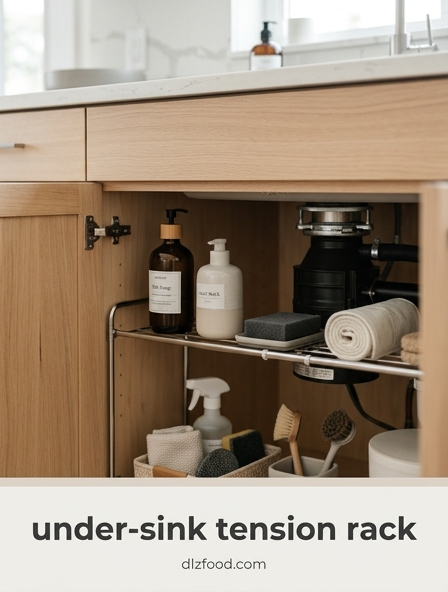
- Combine both in the "utility" cabinet under the sink for cleaning supplies and sponges.
Choosing the Best Organizer for Your Specific Needs
The choice between a shelf riser and a hanging basket ultimately comes down to the weight of your items and the dimensions of your cabinetry. If you are dealing with heavy ceramic, glass, or bulk canned goods, a shelf riser is the safer and more durable option. It provides a stable platform that can handle the rigors of daily use without risking damage to your shelves. Risers are also the better choice for those who value a clean, streamlined look where the organization tools remain largely invisible.
If you are looking to organize light, awkwardly shaped items like bread, wraps, or napkins, the hanging basket is a clever and efficient solution. It makes use of the often-ignored ceiling of your shelves and keeps your most-used lightweight items at your fingertips. Many professional organizers recommend a hybrid approach: use risers for your foundational kitchenware and baskets for your supplementary items. By analyzing the "air space" in your cabinets and matching it with the appropriate tool, you can create a highly functional kitchen that feels twice as large as its actual dimensions. Always remember to measure your shelf thickness and cabinet depth before purchasing to ensure a frustration-free installation.

Comments