
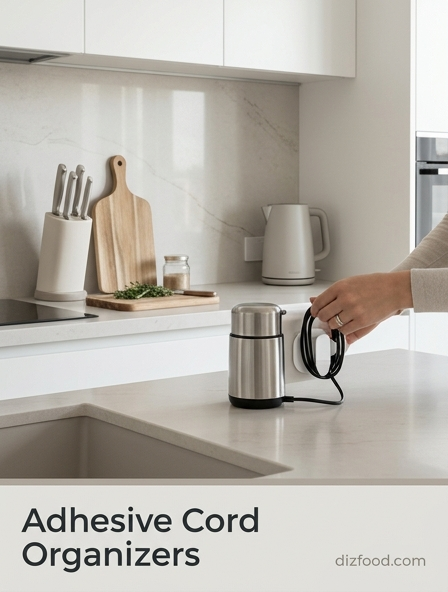
Core Philosophy of Low-Profile Management
The core philosophy of low-profile kitchen management centers on the belief that a functional workspace should be devoid of unnecessary visual interruptions. In a modern kitchen, the proliferation of small appliances often leads to a chaotic web of power cables that detract from the architectural lines of the room. By adopting a minimalist approach, homeowners can reclaim their environment. Adhesive cord organizers serve as the foundational tool for this transformation, allowing for the intentional placement of hardware without permanent damage to delicate surfaces.
- Intentionality: Every appliance cord should have a dedicated, hidden path.
- Subtraction: Removing excess length from sight reduces perceived clutter.
- Accessibility: Organization should never compromise the ease of appliance use.
- Durability: Utilizing high-quality adhesives ensures that management systems remain intact under heat.
This philosophy encourages a shift in perspective, viewing the back of a mixer or toaster not just as a mechanical necessity, but as a site for streamlined refinement. When cords are coiled and secured, the kitchen transitions from a utilitarian storage area into a curated sanctuary of efficiency and calm.
Eliminating Visual Noise on Countertops
Visual noise in a kitchen often manifests as dangling black or grey wires against light-colored backsplashes or stone countertops. This sensory overload can make even a clean kitchen feel disorganized. To eliminate this friction, adhesive cord organizers must be applied strategically to the unseen facets of every countertop device. By wrapping the excess cord length directly onto the appliance body, the wire is shortened to the exact distance between the unit and the outlet, creating a clean, professional aesthetic similar to a high-end showroom.
- Assess the natural "blind spots" of each appliance relative to the power source.
- Clean the surface with isopropyl alcohol to ensure a permanent adhesive bond.
- Affix the organizer at a height that prevents the cord from touching the counter surface.
- Wind the cable tightly but without straining the internal wiring of the plug.
The result is a significant reduction in peripheral distractions. This clarity allows the textures of marble, wood, and tile to take center stage, while the functional elements of the kitchen recede gracefully into the background of the overall design.
Integrated Storage for Permanent Order
Achieving permanent order requires moving beyond temporary fixes and integrating organization directly into the kitchen's hardware. Adhesive cord organizers provide a versatile solution for items that are frequently moved between storage and active use. When a blender or food processor is returned to a cabinet, a loose cord can snag on other items or uncoil, creating a messy interior. Integrated cord management ensures that each tool remains a self-contained unit, ready for deployment without the frustration of tangles.
| Appliance Type | Organizer Placement | Primary Benefit |
|---|---|---|
| Stand Mixers | Rear base panel | Prevents heavy cord drag |
| Toasters | Lower side casing | Keeps wires away from heat |
| Coffee Makers | Back recessed area | Maintains a flush wall profile |
By standardizing how cables are managed across all devices, the homeowner creates a system that is intuitive and easy to maintain. This level of integration transforms basic storage into a high-performance inventory system where everything has a defined place and a defined shape.
Strategic Zoning for Minimalist Efficiency
Efficiency in a minimalist kitchen is born from strategic zoning, where tools are grouped by function and their power requirements are managed discreetly. In a dedicated "prep zone," multiple appliances like choppers and scales may compete for limited outlet space. Adhesive organizers allow these tools to coexist without a hazardous tangle of wires. By designating specific anchor points on the underside of upper cabinets or the sides of shelving units, cords can be routed along the lines of the architecture rather than draping across the workspace.
- Zoning by Frequency: Daily-use items get low-profile, permanent cord paths.
- Zoning by Power: Grouping high-wattage items to avoid daisy-chaining cords.
- Directional Routing: Guiding wires toward hidden power strips or pop-up outlets.
This systematic approach ensures that the workflow is never interrupted by the need to move or untangle a power cable. The kitchen becomes a streamlined circuit where energy flows through hidden channels, supporting the cook's movements without imposing itself on the physical space or the visual landscape.
Hidden Hardware and Seamless Cabinetry
Modern kitchen design often emphasizes seamless cabinetry and handle-less facades. This aesthetic is easily compromised by the sight of power cables snaking around the edges of high-end millwork. Adhesive cord organizers can be utilized as hidden hardware, mounted on the interior of cabinet doors or underneath the lip of a countertop. This allows for the discreet management of cords for under-cabinet lighting, charging stations, or small appliances that live inside pull-out drawers. The goal is to keep the hardware invisible while maximizing its functional utility.
- Identify hidden channels along the frame of the cabinetry.
- Use transparent or color-matched organizers to blend with the wood or laminate.
- Route cables through the hinges or rear corners to maintain full cabinet mobility.
When hardware is hidden, the focus remains on the quality of the materials and the precision of the construction. This level of detail-oriented organization reflects a commitment to quality that extends beyond the surface, ensuring that even the most utilitarian aspects of the kitchen are handled with architectural elegance.
The Psychology of Sustainable Kitchen Minimalism
The psychological impact of a well-organized kitchen is profound, particularly regarding the reduction of decision fatigue and stress. Visible clutter, such as scattered cords, acts as a constant "to-do" list for the brain, signaling disorder and unfinished business. By using adhesive cord organizers to tuck away these reminders, the environment promotes a sense of mastery and calm. Sustainable minimalism is not about owning nothing; it is about managing what you own so that it does not manage you. When the kitchen is clear of visual "noise," the cook can focus entirely on the culinary process, leading to more mindful and enjoyable meal preparation. This mental clarity is the ultimate reward of a low-profile management system. It fosters a habit of tidiness that feels effortless rather than burdensome. Over time, the absence of cord clutter becomes the new standard, reinforcing a lifestyle centered on simplicity, precision, and the appreciation of open space.
Inventory Control for Low-Profile Pantries
A low-profile pantry relies on the ability to see and access every item without moving a mountain of obstacles. Small corded appliances often relegated to the pantry, such as vacuum sealers or hand mixers, can be the biggest culprits of shelf disorder. Implementing adhesive cord organizers on these items ensures they occupy a consistent footprint on the shelf. This practice prevents cords from catching on spice jars or knocking over stacked containers. It also allows for more vertical storage, as appliances can be placed closer together without the interference of stray wires.
- Standardization: Use the same type of organizer for all pantry electronics.
- Labeling: If organizers are placed on the cord itself, color-code for easy ID.
- Tension Management: Ensure the adhesive is strong enough to hold heavy-gauge cords.
Consistent inventory control transforms the pantry from a dark storage closet into a bright, organized extension of the kitchen. With cords secured, the pantry maintains its minimalist integrity, providing a clear view of supplies and facilitating faster meal planning and inventory checks.
Functional Decor and Hidden Utility
In a minimalist kitchen, the line between functional decor and utility often blurs. Every object in sight should ideally serve a purpose or contribute to the aesthetic harmony of the room. Adhesive cord organizers can be integrated so seamlessly that they become a part of the appliance's design language. When a cord is neatly wrapped around a matte black organizer on a matching appliance, it looks intentional rather than accidental. This turns a necessary evil-the power cord-into a controlled element of the kitchen's overall decor.
| Design Element | Integration Strategy |
|---|---|
| Color Matching | Using white organizers on white marble or tile. |
| Material Texture | Selecting silicone organizers for a soft-touch feel. |
| Symmetry | Placing organizers in identical spots on grouped items. |
By treating cord management as a design choice rather than an afterthought, the homeowner elevates the utility of the kitchen. The focus remains on clean lines and intentional living, where even the smallest details are curated to support a high-functioning and beautiful environment.
Daily Habits for Permanent Management
Maintaining a minimalist kitchen is a practice that requires the adoption of specific daily habits. The presence of adhesive cord organizers provides the infrastructure for these habits, but the user must engage with the system consistently. A "wrap-and-reset" protocol after every meal ensures that no appliance is left with a trailing cord. This habit takes only seconds but prevents the gradual accumulation of clutter that often occurs during busy weeks. It is the difference between a kitchen that looks organized for a photo and one that stays organized during the chaos of daily life.
- Unplug the appliance immediately after use to allow the cord to cool.
- Wipe down the appliance and the organizer to remove any oils or dust.
- Wrap the cord snugly around the adhesive mount, securing the plug end.
- Return the appliance to its designated zone or storage cabinet.
These repetitive actions reinforce the core philosophy of low-profile management. Over time, the act of securing a cord becomes as automatic as washing a knife, ensuring the kitchen remains a place of permanent order.
Optimizing Vertical Space Discreetly
Vertical space is often underutilized in kitchen organization, yet it offers the most potential for hiding cord clutter. Adhesive organizers can be mounted on the vertical sides of refrigerator panels, the backs of islands, or the interior walls of deep cabinets. By routing cords vertically, the cook keeps the horizontal work surfaces entirely clear for food preparation. This is particularly useful for appliances that stay plugged in but are rarely moved, such as microwave ovens or smart home displays. Discreet vertical routing creates the illusion of wireless technology.
- Edge Routing: Running cords along the vertical seams of cabinetry.
- Gravity Assist: Using the weight of the cord to keep it taut within the organizer.
- Hidden Hooks: Using adhesive clips to guide cords around corners.
By mastering the use of vertical planes, the homeowner can manage complex power needs without sacrificing the minimalist aesthetic. This optimization ensures that every square inch of the kitchen is used efficiently, keeping the focus on the open, airy feeling that defines a modern, low-profile living space.


Comments