
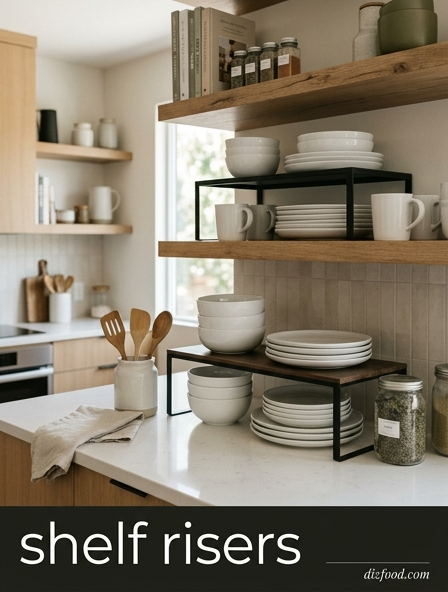
Maximizing Vertical Cabinet Space for Stoneware
Stoneware collections are often the most difficult items to store efficiently due to their significant weight and varying dimensions. Standard kitchen cabinets typically provide ample vertical height but lack the necessary divisions to prevent hazardous stacking. By introducing high-clearance shelf risers, you can effectively split a single tall cabinet shelf into two distinct levels. This prevents the need to lift five heavy dinner plates just to reach a single serving bowl at the bottom. To maximize this space, consider the following layout tips:
- Place larger, heavier platters on the cabinet base to maintain a low center of gravity.
- Use a riser with a wide platform for medium-sized pasta bowls.
- Reserve the top tier of the riser for smaller salad plates or frequently used mugs.
- Ensure the riser depth matches your cabinet to prevent wasted space behind the unit.
Utilizing the upper third of a cabinet, which usually remains empty, allows for a more organized display and reduces the physical strain of handling dense ceramic materials. This strategy is essential for anyone looking to maintain a large stoneware set within a limited footprint.
The Engineering of Heavy Duty Shelf Risers
When selecting a shelf riser for kitchen applications, understanding the underlying engineering is crucial for safety and longevity. A high-quality riser must withstand constant downward pressure without bowing or buckling. Most heavy-duty models utilize reinforced carbon steel or thickened bamboo to ensure structural integrity. The gauge of the metal and the weld points at the legs determine the maximum load capacity, which is a vital metric for dense kitchenware.
| Material Feature | Functional Benefit |
|---|---|
| Powder-Coated Steel | Resists rust and prevents scratching on delicate china. |
| Non-Slip Rubber Feet | Provides stability and protects the underlying cabinet finish. |
| Cross-Bar Reinforcement | Prevents the center of the shelf from sagging under weight. |
| Perforated Surface | Allows for airflow, reducing moisture buildup in humid kitchens. |
Engineered risers distribute weight across four or more contact points, ensuring that the pressure exerted by a stack of cast iron or ceramic does not damage the primary cabinet shelf. Choosing an item with a high weight rating ensures a one-time investment in kitchen organization.
Doubling Storage Capacity Without Remodeling
The cost of full kitchen renovations or adding custom cabinetry can be prohibitive. Shelf risers offer a modular, non-permanent solution that achieves similar results by doubling the usable surface area within existing units. This "internal remodeling" approach focuses on the efficiency of the volume rather than the square footage of the room. By inserting risers, you create a tiered environment that mimics custom-built shelving at a fraction of the price. To implement this effectively, follow these steps:
- Measure the interior height and depth of every cabinet shelf.
- Identify "dead zones" where more than six inches of vertical space is unused.
- Select expandable or stackable risers to fit the exact width of your cabinets.
- Group items by height to ensure they clear the riser's platform comfortably.
This method is particularly beneficial for renters or those living in older homes with oversized, inefficient cabinetry. It allows for a customized kitchen layout that can be adjusted as your collection of cookware and dinnerware evolves over time.
Weight Distribution Strategies for Large Plate Sets
Large plate sets pose a unique challenge because their cumulative weight can easily exceed twenty pounds. Placing such a load on a flimsy plastic riser will lead to failure and potential breakage of the dishes. Proper weight distribution involves spreading the load across the strongest points of the cabinet and the riser itself. Instead of one tall stack, dividing the set into two smaller stacks-one above and one below the riser-drastically reduces the pressure on individual plates and the shelf surface. Consider these distribution factors:
- Centering the load over the riser legs rather than the middle of the span.
- Using multiple small risers side-by-side instead of one long, unsupported unit.
- Placing the heaviest items, like chargers and dinner plates, on the bottom tier.
- Monitoring for shelf deflection in the primary cabinet wood.
Strategic placement ensures that the structural limits of your furniture are respected. By managing the physics of your storage, you prolong the life of both your cabinetry and your expensive dinnerware sets.
Improving Accessibility in Deep Kitchen Cabinets
Deep cabinets are notorious for becoming "graveyards" for kitchen gadgets and serving pieces that are rarely seen or used. Items pushed to the back are difficult to reach and often forgotten. Shelf risers solve this by creating a stadium-seating effect, where items in the rear are elevated above those in the front. This height differential makes it possible to see and grab back-row items without having to remove everything in the foreground. To improve accessibility, use these organizational techniques:
- Place shorter items like ramekins in the front row.
- Utilize a tall riser in the back for larger bowls or mixers.
- Maintain a clear path for your hand to reach the elevated items.
- Label the edges of the risers if storing opaque containers.
This elevation strategy turns a deep, dark cavern into a functional, layered storage system. It eliminates the frustration of digging through stacks, making the kitchen a more ergonomic and user-friendly environment for daily meal preparation and hosting.
Protecting Ceramics from Stacking Pressure and Chips
Directly stacking high volumes of ceramic or porcelain can lead to microscopic cracks and surface chips due to the friction and weight. The bottom-most item in a stack bears the brunt of the entire weight, which can cause structural failure over time. Shelf risers mitigate this risk by limiting the number of items in any single stack. By introducing a middle platform, you essentially cut the weight pressure in half for the bottom items. Additionally, many risers feature protective coatings to further safeguard your investment. Key protective benefits include:
- Vinyl or PE coatings that provide a soft landing for delicate bases.
- The elimination of "clattering" when retrieving a single plate.
- Better airflow which prevents moisture from being trapped between glazed surfaces.
- Reduced risk of "domino effect" accidents when reaching for items.
For those with fine china or hand-painted ceramics, the riser acts as a protective barrier as much as an organizational tool. It preserves the aesthetic and monetary value of the dinnerware by preventing unnecessary contact and pressure.
Choosing Between Steel and Solid Wood Inserts
The choice of material for shelf risers impacts both the durability and the aesthetic of the kitchen interior. While both steel and wood serve the same primary function, they offer different advantages depending on the environment and the items being stored. Steel is generally preferred for its thin profile and high weight capacity, whereas wood offers a warm, furniture-like quality that complements open shelving. Comparison of the two materials reveals specific use cases:
| Feature | Steel Risers | Solid Wood Risers |
|---|---|---|
| Strength | Extreme; best for heavy cast iron. | Moderate; best for plates and glass. |
| Profile | Thin legs maximize under-shelf space. | Thicker legs; takes up more room. |
| Moisture Resistance | High (if powder-coated). | Varies; requires sealant for wet areas. |
| Aesthetic | Modern, industrial, or minimalist. | Traditional, rustic, or organic. |
When deciding, consider the visibility of the riser. If it is hidden behind a cabinet door, steel's efficiency usually wins. For exposed pantries or coffee stations, solid wood adds a decorative element that enhances the overall kitchen design.
Optimizing Shelf Height for Specialized Dinnerware
Standard dinnerware usually fits well on basic risers, but specialized items like oversized pasta bowls, tall mugs, or stemless wine glasses require a more tailored approach. Optimizing height involves measuring the specific clearance needed for these "outlier" items to ensure they are neither cramped nor wasting space. Adjustable shelf risers are particularly useful here, as they allow the user to click the platform into different height increments. To optimize your specialized storage:
- Group items by their exact height to determine how many riser levels you need.
- Use "bridge" risers that can expand horizontally to fit odd-shaped platters underneath.
- Leave at least an inch of "finger clearance" above items for easy retrieval.
- Consider corner risers for specialized tea sets or spice carousels.
By customizing the vertical gaps to fit your specific inventory, you create a bespoke storage solution. This precision ensures that every cubic inch of the cabinet is working toward a more organized and efficient kitchen space.
Transforming Pantry Organization with Tiered Solutions
Pantries often suffer from a lack of visibility, where canned goods and jars are hidden behind one another. Implementing tiered shelf risers-often referred to as "stadium shelving"-transforms the pantry into a highly visible inventory system. This allows the cook to see every label at a glance, preventing the double-purchase of items already in stock. The transformation process follows a logical progression:
- Categorize pantry items by type (e.g., baking, soups, spices).
- Place the tallest jars or bottles on the highest tier in the back.
- Use lower tiers for smaller cans and spice tins.
- Rotate stock by placing newer items behind older ones on the same tier.
This system not only saves money by reducing food waste but also makes meal planning significantly easier. When every ingredient is visible and accessible, the pantry becomes a source of inspiration rather than a cluttered chore to navigate during a busy weeknight.
Streamlining Kitchen Workflow Through Better Visibility
A streamlined kitchen workflow relies on the ability to locate and retrieve tools and ingredients without hesitation. Clutter and stacked items create "friction" in the cooking process, slowing down preparation and increasing stress. Shelf risers contribute to a "visual map" of the kitchen, where every item has a designated, visible home. When you can see your tools through the gaps in a riser or elevated on a platform, your brain processes the environment faster. Benefits of this visibility include:
- Reduced time spent searching for specific lids or matching bowls.
- Immediate awareness of when supplies are running low.
- Faster cleanup, as items have clear, unobstructed return spots.
- Improved safety by reducing the need to balance or move heavy stacks.
Ultimately, the use of risers is about more than just storage; it is about creating a high-performance workspace. By removing the physical and visual barriers within your cabinets, you allow the culinary process to flow more smoothly and enjoyably.

Comments