
Strategic Use of Floating Shelves
Floating shelves are a cornerstone of modern kitchen design, offering a blend of aesthetic appeal and practical storage. By removing heavy upper cabinets and replacing them with open shelving, homeowners can make a small kitchen feel significantly more spacious. The key to successful implementation lies in the placement and the weight capacity of the brackets used. These shelves allow for quick access to frequently used items such as coffee mugs, everyday plates, and decorative canisters, ensuring that essential tools are always within arm's reach.
When planning your floating shelf layout, consider the following benefits:
- Increased visual depth by exposing more of the wall surface.
- Flexibility to store items of varying heights that might not fit in standard cabinets.
- Opportunity to showcase heirloom dishware or indoor herb gardens.
- Cost-effective alternative to custom cabinetry installations.
To maintain a clean look, it is vital to curate the items displayed. Grouping items by color or material creates a cohesive appearance that prevents the shelves from looking cluttered or disorganized.
Magnetic Knife Strips and Wall Rails
Utilizing the backsplash area is one of the most efficient ways to reclaim counter space. Magnetic knife strips provide a secure and hygienic way to store cutlery, keeping blades sharp by preventing them from knocking against other tools in a crowded drawer. Similarly, wall-mounted rails with S-hooks can transform a blank wall into a functional workstation for hanging utensils, measuring cups, and even small pots.
Consider the typical distribution of tools in a professional-grade kitchen setup:
| Storage Tool | Recommended Items | Primary Benefit |
|---|---|---|
| Magnetic Strip | Chef knives, shears, metal spatulas | Blade protection & safety |
| Wall Rail | Whisks, ladles, tongs, colanders | Instant accessibility |
| Hook Attachments | Oven mitts, aprons, drying towels | Air circulation & drying |
Installing these systems near the primary prep area or stove ensures that your most-needed tools are exactly where you need them. This setup reduces the time spent rummaging through drawers and keeps the workspace clear for active cooking tasks.
Tiered Shelf Risers for Cabinets
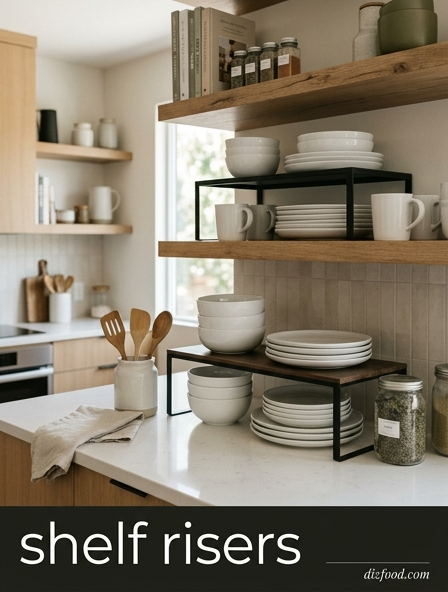
Standard kitchen cabinets often feature a significant amount of wasted "air space" between shelves. Tiered shelf risers, often made of wire or sturdy plastic, allow you to create mini-levels within a single cabinet shelf. This is particularly effective for storing items of uniform size, such as canned goods, spices, or small bowls, which otherwise end up stacked in unstable piles.
The implementation of risers follows a simple logic of vertical organization:
- Assess the height of the cabinet and the height of the items to be stored.
- Place heavier items on the bottom level to maintain stability.
- Use the top tier for lighter items or those used less frequently.
- Ensure the riser is deep enough to utilize the back of the cabinet without losing visibility.
By using risers, you effectively double the usable surface area of your cabinetry. This prevents the "buried item" syndrome, where products at the back are forgotten until they expire, thereby reducing food waste and making inventory management much simpler for the home cook.
Over the Door Pantry Organizers
The back of a pantry or closet door is often overlooked as a storage asset. Over-the-door organizers utilize this flat vertical surface to house hundreds of small items that would otherwise clutter the main shelves. These systems typically feature a series of wire baskets or clear pockets that can be adjusted to accommodate different container sizes, from narrow spice jars to bulky boxes of aluminum foil.
These organizers are ideal for the following categories:
- Spices and dried herbs in uniform jars.
- Boxed snacks, granola bars, and individual portion packs.
- Cleaning supplies like sponges, brushes, and spray bottles.
- Small kitchen gadgets such as peelers, graters, and thermometers.
By shifting these smaller, lighter items to the door, you free up the deep pantry shelves for heavy bulk items like flour sacks, small appliances, and large crates. This separation of scale makes the entire kitchen ecosystem more navigable and prevents the frustration of moving ten small items just to reach one large one.
Ceiling Mounted Pot and Pan Racks
In kitchens where cabinet space is at a premium, the ceiling offers a vast, unused landscape for storage. Ceiling-mounted racks are specifically designed to support the weight of heavy cookware, such as cast iron skillets and copper pots. Suspending these items from above not only clears out lower cabinets but also adds a professional, "chef-inspired" atmosphere to the room. This method is particularly effective over a kitchen island or a central prep table.
Before installation, consider these critical factors:
- Ceiling height to ensure there is enough clearance for walking underneath.
- Structural integrity, as racks must be anchored into ceiling joists.
- Frequency of use, as high-mounted items require more effort to reach.
- Aesthetic style, ranging from rustic wrought iron to sleek stainless steel.
Having your cookware visible and accessible encourages more frequent cooking and makes cleanup easier, as pots can be hung directly after drying. This vertical solution turns heavy utility items into a focal point of the kitchen's decor.
Stackable Containers for Vertical Pantries
Uniformity is the secret to maximizing vertical space in a pantry. Standard grocery packaging is rarely designed for efficient stacking; it is often oddly shaped and prone to toppling. Transferring dry goods into modular, stackable containers allows you to utilize every inch of height on your shelves. These containers are usually designed with recessed lids that lock the base of the container above it into place, creating a stable tower of ingredients.
To optimize your vertical pantry, follow these steps:
- Categorize dry goods into baking, grains, snacks, and pastas.
- Select clear containers to allow for immediate visual inventory checks.
- Label the front of each container for quick identification.
- Group containers of the same footprint together to maximize shelf depth.
Beyond space-saving, airtight stackable containers preserve the freshness of food significantly longer than opened boxes or bags. This systematic approach transforms a chaotic pantry into a streamlined, high-density storage zone that looks professionally organized.
Pegboard Walls for Customizable Storage
Inspired by industrial workshops and the legendary kitchen of Julia Child, pegboard walls offer the ultimate in storage flexibility. By mounting a large pegboard on an unused wall, you create a customizable grid where hooks, baskets, and shelves can be rearranged as your collection of kitchen tools evolves. This system is perfect for those who enjoy having their most-used items on display and within easy reach during complex cooking tasks.
The versatility of a pegboard allows for a wide range of configurations:
- Large hooks for colanders, frying pans, and cutting boards.
- Small clips for recipe cards or grocery lists.
- Wire baskets for produce like onions and garlic that require airflow.
- Integrated narrow shelves for small spice tins or timers.
Pegboards can be painted to match the kitchen's color scheme, making them a design feature as well as a utility. They are especially useful in narrow kitchens where there is no room for additional floor-standing furniture but plenty of available wall height.
Under Cabinet Hooks and Baskets
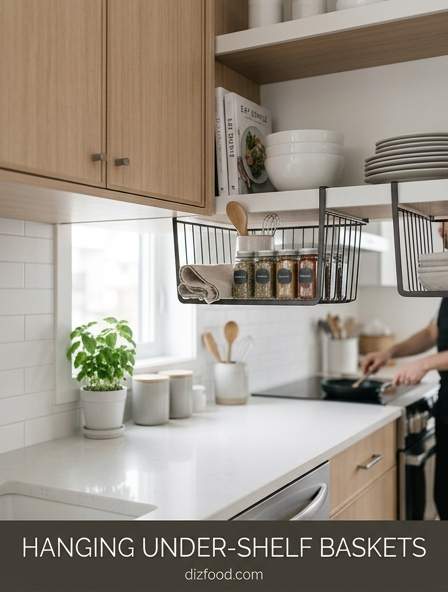
The gap between the bottom of upper cabinets and the countertop is prime real estate that often goes underutilized. Installing low-profile hooks or slide-on wire baskets can reclaim this space without interfering with the work area below. Hooks are perfect for hanging coffee mugs, while baskets can hold items that need to stay dry and accessible but don't belong in a drawer, such as rolls of paper towels or boxes of plastic wrap.
Consider the following storage ideas for under-cabinet space:
| Storage Type | Common Use Cases | Installation Method |
|---|---|---|
| Adhesive Hooks | Measuring spoons, light mugs | Non-invasive/Stick-on |
| Screw-in Hooks | Heavy mugs, banannas | Permanent/Drilled |
| Slide-on Baskets | Bread, napkins, snacks | Temporary/Over-shelf |
This approach is highly effective for creating a "beverage station" or a "prep zone" where tools are suspended right above the area where they are used. It keeps the countertop clear for actual food preparation while ensuring the most common items are never more than a few inches away.
Vertical Plate Racks and Dividers
Storing plates, baking sheets, and cutting boards in flat stacks is one of the most inefficient uses of kitchen space. To retrieve the item at the bottom, you must lift everything on top, which is both cumbersome and noisy. Vertical dividers or plate racks allow you to store these items "on edge." This not only saves horizontal space but also makes every single piece independently accessible without disturbing the others.
Vertical organization is best suited for:
- Heavy baking sheets and muffin tins.
- Large serving platters and cutting boards.
- Everyday dinner plates and saucers.
- Frying pan lids that usually clutter drawers.
By installing these dividers in a deep drawer or a lower cabinet, you maximize the vertical height of the unit. This method also protects delicate dishware from scratches that occur when plates are slid in and out of traditional stacks. It is a simple mechanical change that drastically improves the ergonomics of the kitchen.
Tall Pull Out Larder Units
Tall pull-out larder units are the pinnacle of vertical kitchen engineering. These slim, floor-to-ceiling cabinets slide out on heavy-duty runners to reveal several layers of shelving accessible from both sides. They are specifically designed to fit into narrow gaps-sometimes as small as 15 centimeters-allowing you to utilize vertical slivers of space that would otherwise be walled off or left as a gap between appliances.
The benefits of a full-height pull-out unit include:
- Complete visibility of all items, even those at the very back.
- High-density storage for cans, jars, and bottled goods.
- Ergonomic access, as the entire contents move toward the user.
- Seamless integration with modern cabinetry for a sleek look.
Because these units utilize the full height of the room, they can hold as much as a traditional pantry but with a much smaller footprint. They are an ideal solution for urban apartments or galley kitchens where floor space is limited but ceiling height is generous. This hardware turns a narrow void into one of the hardest-working storage areas in the home.

Comments