
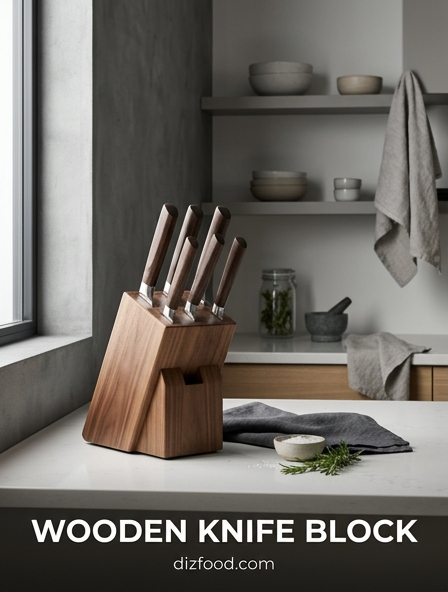
Why a Wooden Knife Block Needs Regular Care
A wooden knife block is a staple in many kitchens, providing a safe and convenient way to store sharp cutlery. However, because wood is a porous natural material, it requires consistent maintenance to remain a hygienic storage solution. Over time, the deep, narrow slots can become breeding grounds for bacteria, mold, and yeast if moisture or food particles are introduced. Unlike plastic or metal surfaces, wood absorbs liquids, which can lead to internal rot or structural warping that compromises the stability of the block.
Furthermore, regular care ensures that the block does not damage the knives it is meant to protect. Accumulated dust and grit inside the slots can act as an abrasive, dulling the edges of expensive blades every time they are inserted or removed. By prioritizing a cleaning routine, you extend the lifespan of both the wooden housing and your professional cutlery set. Neglecting this maintenance often results in unpleasant odors and potential cross-contamination during food preparation, making routine care an essential aspect of kitchen safety.
Daily Cleaning Habits for Knife Slots
Maintaining the cleanliness of your wooden knife block does not always require a deep scrub; daily habits play a significant role in preventing buildup. The most important rule is to ensure that no knife ever enters a slot while damp or soiled. Even a microscopic amount of food residue can lead to bacterial growth within the dark, unventilated environment of the block. You should develop a habit of wiping the exterior of the block with a dry or very slightly damp microfiber cloth to remove kitchen grease and dust.
- Always hand-wash and completely dry knives before storage.
- Wipe the exterior surface daily to prevent kitchen film buildup.
- Visually inspect the entry points of the slots for any visible debris.
- Avoid placing the block near high-moisture areas like the sink.
By incorporating these simple steps into your post-cooking cleanup, you significantly reduce the frequency with which you need to perform intensive sanitization. Consistency is the key to ensuring the wood remains dry and the internal slots stay free of organic material that fuels microbial activity.
Deep Sanitizing Techniques for Wood
Every few months, a wooden knife block requires a deep sanitization process to reach areas that daily wiping cannot. Because you cannot submerge wood in water without risking cracks or warping, you must use targeted application methods. A mild bleach solution or a concentrated vinegar mixture is effective for killing spores and bacteria trapped inside the slots. Use a ratio of approximately one tablespoon of unscented bleach to one gallon of water, or use straight white vinegar for a more natural approach.
To apply the sanitizer, use a small, thin brush-such as a pipe cleaner or a specialized straw brush-to reach deep into each cavity. Scour the interior walls gently, then wipe the exterior with the same solution. It is vital to ensure the wood does not become oversaturated. After cleaning, the block must be thoroughly rinsed by wiping it with a clean cloth dampened with plain water. This process removes chemical residues that could otherwise transfer back onto your knives and subsequently into your food products.
Removing Trapped Debris and Dust
Physical debris like crumbs, dust bunnies, and even small wood splinters can accumulate at the bottom of knife slots over time. Removing this buildup is a prerequisite for any liquid cleaning. The process should begin by removing all knives and turning the block upside down over a sink or trash bin. Briskly shaking the block will dislodge most loose particles that have settled at the base of the slots.
- Invert the block and shake vigorously to remove loose crumbs.
- Use a can of compressed air to blow out fine dust from the slots.
- Insert a long, thin wire or a pipe cleaner to scrape out stubborn debris.
- Use a vacuum cleaner with a crevice tool attachment to suction remaining particles.
If the block has a removable bottom, take advantage of this feature to perform a more thorough cleaning. Most traditional blocks are solid, however, making the "shake and blow" method the most effective way to clear the airways. Ensuring the slots are clear of physical obstructions allows for better airflow, which is critical for maintaining a dry internal environment.
Drying Protocols to Prevent Mold Growth
Moisture is the primary enemy of a wooden knife block. If the interior remains damp for extended periods, mold and mildew will inevitably develop. After any liquid cleaning or sanitizing, the block must be dried with extreme care. Never replace knives into a block that is still even slightly damp. The narrow slots restrict airflow, meaning a block that feels dry on the outside might still be holding significant moisture inside the cavities.
To dry the block effectively, place it in a well-ventilated area, preferably with the slots facing downward or sideways to allow gravity to assist in moisture removal. Using a mechanical fan can speed up this process significantly. Avoid using high-heat sources like hair dryers or placing the block in direct sunlight, as the rapid temperature change can cause the wood to shrink unevenly and crack. A minimum of 12 to 24 hours of air-drying time is usually recommended before returning the knives to their positions, ensuring the environment is completely inhospitable to mold spores.
Conditioning the Wood for Longevity
Just like a wooden cutting board, a knife block benefits from occasional conditioning with food-grade oils. Over time, wood can become "thirsty" and brittle, leading to surface cracks where bacteria can hide. Conditioning creates a protective barrier that repels moisture and prevents the wood from absorbing kitchen odors. It also restores the natural luster and color of the grain, keeping the block looking like a premium kitchen accessory.
| Oil Type | Suitability | Benefit |
|---|---|---|
| Food-Grade Mineral Oil | Excellent | Will not go rancid; deeply penetrates grain. |
| Beeswax Cream | Great | Provides a durable water-resistant seal. |
| Vegetable/Olive Oil | Poor | Will go rancid and create unpleasant odors. |
Apply the oil with a lint-free cloth, allowing it to soak into the wood for several hours before wiping away any excess. Focus on the end grain, as this is where the wood is most porous. This treatment should be performed whenever the wood begins to look dull or feels rough to the touch, usually every three to six months.
Preparing Knives Properly Before Storage
The longevity and hygiene of your knife block are directly tied to the condition of the knives you place inside it. Inserting a knife that has not been properly cleaned and dried is the most common cause of block contamination. Even "clean" knives from a dishwasher can be problematic; the high heat and humidity of a dishwasher can leave residual moisture or chemicals on the blade and handle. Knives should always be hand-washed with mild soap and immediately hand-dried with a clean towel.
When drying a knife, pay special attention to the bolster and the area where the blade meets the handle, as water often hides in these crevices. Before sliding the knife into the wooden slot, do a final check for any lint or moisture. If you live in a particularly humid climate, you may even consider letting the knives air-dry on a rack for a few minutes after towel-drying. This meticulous approach ensures that no liquid is ever transferred into the dark recesses of the wood, effectively neutralizing the risk of mold growth at the source.
Strategic Placement in Your Kitchen Layout
Where you place your wooden knife block can determine how often it requires maintenance. Many people instinctively place the block next to the stove or the sink for convenience, but these are often the worst locations for wood preservation. Proximity to the stove exposes the block to airborne grease, steam, and fluctuating temperatures, which can degrade the wood's finish and cause it to become sticky. Near the sink, the block is prone to accidental splashes, which increases the risk of water entering the slots.
Ideally, the block should be situated in a cool, dry area of the counter with sufficient clearance from overhead cabinets to allow for easy knife removal. Ensure it sits on a flat, stable surface where it won't be knocked over. If your kitchen layout is small, consider placing it on a "dry" prep station away from the primary cleaning and cooking zones. Proper placement not only protects the block from environmental damage but also ensures that the knives remain clean and sharp for longer periods between deep cleanings.
Identifying Signs of Wear and Bacteria
It is important to recognize when a wooden knife block has moved beyond the point of simple maintenance and requires professional attention or replacement. Bacteria and mold are not always visible on the surface, so you must use other senses to evaluate the block's condition. If you notice a persistent musty or sour smell emanating from the slots, it is a clear indication of microbial growth. Visual cues are also vital; look for dark staining or black spots around the slot openings.
- Fuzzy or colorful growths (mold) inside or around slots.
- Cracks or splitting in the wood that expose the interior.
- A "greasy" feel on the wood that does not come off with light wiping.
- Knives coming out with spots or unusual odors.
If deep cleaning and sanitizing do not resolve these issues, the block may be compromised internally. Once mold has deeply infused the porous grain of a wooden block, it is often safer to replace the unit entirely rather than risk transferring pathogens to your food-contact surfaces.
Essential Maintenance Schedule for Hygiene
To keep your kitchen running safely, a structured maintenance schedule is the most effective approach. Rather than waiting for a problem to arise, proactive care ensures the wooden block remains a sanitary environment for your cutlery. Dividing tasks into daily, monthly, and bi-annual intervals makes the workload manageable and consistent.
| Frequency | Task Description |
|---|---|
| Daily | Ensure knives are dry; wipe exterior with a dry cloth. |
| Monthly | Invert block to shake out debris; vacuum slots. |
| Every 3-6 Months | Deep sanitize with vinegar/bleach; air dry for 24 hours. |
| Bi-Annually | Apply food-grade mineral oil to condition the wood. |
Following this schedule prevents the accumulation of grease and prevents the wood from drying out. By treating the knife block as a tool that requires its own maintenance, rather than just a storage container, you ensure a higher standard of food safety and prolong the life of your entire kitchen toolkit. Regular attention is the best defense against the hidden dangers of a neglected wooden block.



Comments