
Elevating your kitchen organization from cluttered to curated often comes down to one final detail: the perfect label. Whether you're aiming for a cozy farmhouse vibe or a sleek, professional pantry, the choice between chalkboard labels and transparent stickers defines both your aesthetic and your workflow. Chalkboard labels offer a tactile, reusable charm that's perfect for the experimental cook who frequently rotates bulk ingredients, while transparent labels provide a modern, "floating text" look that ensures maximum visibility and a smudge-proof finish. Choosing the right one means balancing the need for creative flexibility with the desire for a permanent, high-contrast organization system that stands up to steam, spills, and daily handling.
| Feature | Chalkboard Labels | Transparent Label Stickers |
|---|---|---|
| Primary Aesthetic | Rustic, hand-crafted, matte black finish. | Minimalist, "invisible" background, clean lines. |
| Maintenance | Erasable and rewritable with liquid chalk pens. | Permanent; usually pre-printed or laser-etched. |
| Durability | Wipeable, but prone to smudging if touched. | Waterproof, oil-resistant, and smudge-proof. |
| Visibility | High contrast (white on black); masks contents. | Crystal clear; highlights the color/texture of food. |
| Versatility | Infinite; change labels as ingredients rotate. | Set; best for static staples like flour or sugar. |
| Ideal For | Mason jars, bulk bins, and evolving spice racks. | Uniform glass canisters and minimalist pantries. |
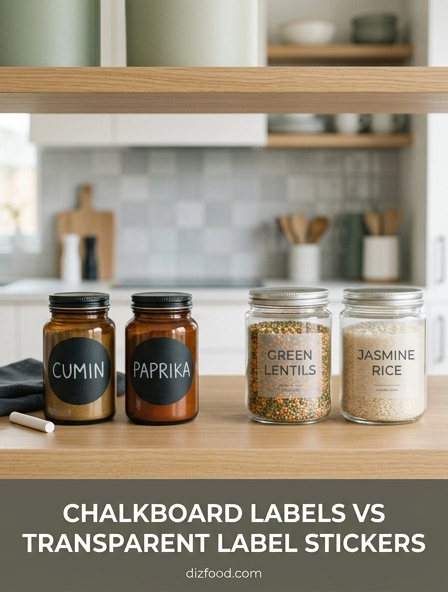
Chalkboard Labels versus Transparent Stickers Key Differences
In the realm of kitchen organization, the choice between chalkboard labels and transparent sticker labels often boils down to a fundamental difference in aesthetic philosophy and functional intent. Chalkboard labels are typically made from a thick, matte black vinyl that mimics the texture of a traditional slate. They are designed to be written on with chalk or liquid chalk markers, providing a high-contrast, rustic look that stands out prominently against glass or plastic containers. Because they are opaque, they hide any imperfections on the container surface and provide a solid backdrop for the text.
On the other hand, transparent label stickers are printed on clear BOPP (Biaxially Oriented Polypropylene) or polyester film. Their primary goal is to make the text appear as if it is printed directly onto the container, offering a "floating" effect that does not obstruct the view of the contents inside. This leads to a much cleaner, minimalist, and high-end professional appearance. While chalkboard labels are inherently customizable and reusable through rewriting, transparent stickers are usually pre-printed with specific fonts and cannot be changed once applied.
- Material: Chalkboard uses textured PVC/vinyl; Transparent uses clear film.
- Customization: Chalkboard is hand-written and erasable; Transparent is fixed and printed.
- Visual Impact: Chalkboard is bold and rustic; Transparent is subtle and modern.
- Versatility: Chalkboard hides container contents; Transparent showcases them.
Choosing the Best Pantry Labels for Organization
Selecting the right labeling system for your pantry requires an assessment of both your organizational habits and your interior design preferences. If you are someone who frequently rotates bulk goods-switching from quinoa to farro or lentils to chickpeas-the versatility of a chalkboard label is hard to beat. It allows for immediate updates without the need to peel off an old sticker and apply a new one. This flexibility is particularly useful in dynamic kitchens where storage needs shift seasonally or based on current grocery trends.
However, if your goal is to achieve a "Pinterest-perfect" pantry with a uniform, streamlined look, transparent labels are often the superior choice. They create a sense of visual calm by reducing the amount of "visual noise" in the cupboard. When every jar features the same sleek font without the bulky black border of a chalkboard decal, the pantry feels more spacious and curated. It is also important to consider the size of your containers; larger gallon jars can handle the bold presence of a chalkboard sticker, whereas small spice jars often look cluttered unless a clear, minimalist label is utilized. Ultimately, the best choice aligns with how much time you are willing to spend maintaining the system versus how much you value a specific high-fashion aesthetic.
Advantages of Erasable Chalkboard Label Surfaces
The most significant advantage of chalkboard labels lies in their sustainable and reusable nature. In a busy kitchen environment, contents change, and being able to wipe away a label with a damp cloth saves both money and time. This erasable surface is perfect for items with expiration dates or specific cooking instructions that need to be updated regularly. Furthermore, the use of liquid chalk markers allows for a level of creative expression that pre-printed labels simply cannot provide. You can use different colors, styles of calligraphy, or even draw small icons to denote the type of food stored within.
Beyond the functional reusability, these labels offer a tactile and warm feeling to the kitchen. They evoke the charm of a neighborhood deli or a farmhouse kitchen, making the space feel more lived-in and personalized. Because the vinyl used for quality chalkboard stickers is quite thick, it is also very forgiving during the application process, resisting tears and stretching better than thinner films. This durability ensures that the labels can withstand the friction of being moved in and out of tight shelves without losing their edge or clarity.
- Immediate reusability for changing inventory.
- Customizable handwriting adds a personal touch.
- High contrast makes labels easy to read from a distance.
- Thick material covers old markings or container scratches.
Why Transparent Label Stickers Suit Modern Decor
Modern kitchen design often emphasizes transparency, light, and the beauty of natural ingredients. Transparent label stickers align perfectly with this ethos by disappearing into the background and letting the textures of the food-like the rich orange of turmeric or the geometric shapes of pasta-take center stage. These labels are the hallmark of the minimalist movement, where "less is more." By removing the heavy black frames associated with chalkboard styles, transparent stickers prevent the pantry from looking segmented or "blocked off."
Furthermore, transparent stickers are almost always professionally printed, which ensures a level of legibility and consistency that is difficult to achieve with handwriting. For those who lack confidence in their penmanship, these stickers provide a "boutique" look that remains uniform across hundreds of different items. They are particularly effective when paired with high-quality glass canisters and bamboo lids, as they enhance the premium feel of the materials rather than covering them up. The clear film also resists staining from oils and spices better than some textured vinyls, ensuring that the sleek, modern aesthetic remains pristine over years of heavy kitchen use.
Durability Comparison for Kitchen Storage Labels
When evaluating labels for the kitchen, durability is a primary concern due to the presence of moisture, oils, and varying temperatures. Both chalkboard and transparent labels are generally made from synthetic materials, making them far more durable than standard paper stickers. However, their performance varies significantly when subjected to the rigors of a dishwasher or frequent handling with greasy fingers. Chalkboard labels are often thicker and more resilient to physical abrasions, but the writing on them is vulnerable to smudging unless a permanent marker is used. Transparent labels are thinner and more integrated with the surface, making them less likely to catch on a sponge during cleaning.
| Feature | Chalkboard Labels | Transparent Stickers |
|---|---|---|
| Water Resistance | High (Vinyl base) | Very High (BOPP/Film) |
| Dishwasher Safe | Usually (Hand wash preferred) | Yes (Top rack only) |
| Oil Resistance | Moderate (Texture can trap oil) | High (Smooth surface) |
| UV Resistance | High (Black pigment resists fading) | Moderate (Ink may fade over time) |
| Longevity | Reusable indefinitely | Permanent until removed |
Styling Mason Jars with Chalkboard versus Clear Stickers
Mason jars are a staple of kitchen storage, and the way you label them can completely change the "vibe" of your countertop. When you apply a chalkboard label to a Mason jar, you are leaning into the "Farmhouse Chic" or "Rustic" style. The round or ornate shapes common in chalkboard decals complement the classic raised lettering of the glass jar, creating a cozy, homemade feel. This is ideal for jars containing preserves, homemade granola, or sourdough starters where a "crafted" look is desired. The black background provides a sharp anchor point for the eye, making the jar a decorative piece as well as a functional one.
Conversely, using clear transparent stickers on Mason jars transforms them from rustic icons into modern, industrial-style storage vessels. This approach works exceptionally well in kitchens with stainless steel appliances, marble countertops, or open shelving. The clear label allows the classic silhouette of the jar to remain uninterrupted. If you are using Mason jars for dry goods like white flour or sugar, a clear label with black text creates a striking, clean contrast. If you are storing dark items like coffee beans or black beans, many people opt for transparent stickers with white ink to ensure the text remains visible against the dark background. This styling choice emphasizes organization and efficiency over the decorative warmth of the chalkboard alternative.
Application and Removal of Vinyl Labeling Options
The success of any labeling project depends on the application process. Both chalkboard and transparent labels are typically backed with a pressure-sensitive acrylic adhesive. To ensure a bubble-free application, the surface of the container must be meticulously cleaned. Even a small amount of oil from a fingerprint can prevent the adhesive from bonding correctly, leading to peeling corners later on. While chalkboard labels are thicker and easier to handle, transparent stickers require a "no-touch" approach on the adhesive side, as fingerprints will be visible through the clear film once applied to the glass.
- Clean the container surface with isopropyl alcohol to remove all grease.
- Peel the label halfway and align it with a horizontal guide (like a countertop).
- Apply the label from the center outward to push air bubbles to the edges.
- Use a credit card or squeegee to firm down the edges for a tight seal.
- For removal, use a hair dryer to soften the adhesive before peeling to prevent residue.
If you encounter stubborn adhesive residue after removing either type of label, a citrus-based cleaner or a small amount of cooking oil can usually lift the remaining tackiness without damaging the glass. Chalkboard labels are generally more forgiving during removal because of their thickness, whereas transparent stickers might tear into smaller pieces if they have been in place for several years.
Maintenance Tips for Reusable Chalkboard Decals
To keep chalkboard labels looking their best, a few maintenance steps are necessary. Over time, liquid chalk markers can leave "ghosting" behind-a faint silhouette of the previous text that remains after wiping. To prevent this, it is recommended to use a high-quality, non-porous label surface. If ghosting occurs, a magic eraser or a cloth dipped in a mixture of vinegar and water can usually restore the black surface to its original deep hue. It is also important to let the marker dry completely (usually about 30 seconds) before touching the label to avoid smearing the ink across the textured vinyl.
While these labels are durable, they should not be scrubbed with abrasive pads, which can scratch the matte finish and make future writing more difficult. If you find that the edges of the label are starting to lift due to frequent washing, you can occasionally trim the very tip of the corner with a pair of fine scissors to prevent further peeling. When storing unused labels, keep them flat and in a cool, dry place to ensure the adhesive does not degrade over time. By following these simple steps, a single set of chalkboard labels can last for several years, even through dozens of content changes.
Visibility and Readability of Transparent Sticker Text
One of the primary challenges with transparent labels is ensuring the text remains readable against the varying colors of pantry items. Unlike chalkboard labels, which provide a consistent black background, a transparent label relies on the color of the food behind it for contrast. For example, black text on a clear label is nearly impossible to read when placed on a jar filled with black peppercorns or dark balsamic vinegar. To solve this, many professional organization kits now offer "white ink" options for transparent labels, which provide excellent visibility on dark ingredients while maintaining the clear look on lighter items.
- Font Weight: Bold, sans-serif fonts are easier to read on clear backgrounds.
- Ink Color: Use black ink for light contents (flour, rice) and white ink for dark contents (spices, oils).
- Size: Larger text is necessary for transparent labels to compensate for the lack of a border.
- Finish: Matte clear stickers reduce glare from kitchen lighting compared to glossy clear stickers.
Readability is also affected by the curvature of the container. On very small circular jars, the text on a transparent label may "wrap" around the sides, making it difficult to read at a glance. In these cases, choosing a label with a smaller font or a vertical orientation can help maintain visibility. For the best results, always test the label against the filled container before final application to ensure the contrast is sufficient for quick identification during cooking.
Final Verdict on Chalkboard versus Clear Labels
Ultimately, the choice between chalkboard labels and transparent stickers depends on your priority: flexibility or uniformity. Chalkboard labels are the "workhorse" of the kitchen. They are ideal for the utilitarian cook who needs to change labels on the fly, prefers a rustic or artisanal look, and enjoys the hands-on nature of writing and organizing. They excel in environments where containers are frequently repurposed and where a bold, high-contrast look is desired. They are the best choice for those who want a "living" organization system that evolves with their cooking habits.
Transparent stickers, conversely, are the choice for the "design-forward" homeowner. They are best suited for those who want a permanent, polished, and sophisticated look that mimics professional packaging. While they lack the immediate reusability of chalkboard surfaces, they offer a level of neatness and "invisible" organization that makes a kitchen feel calm and high-end. For a hybrid approach, many people use transparent labels for their permanent "staples" (like flour, sugar, and salt) and chalkboard labels for their rotating "seasonal" items (like specialty grains or homemade snacks). Regardless of which you choose, the act of labeling is the single most effective step you can take toward a more efficient and enjoyable kitchen experience.

Comments