
Optimizing Your Culinary Workflow: Solo Efficiency vs. Family Scale
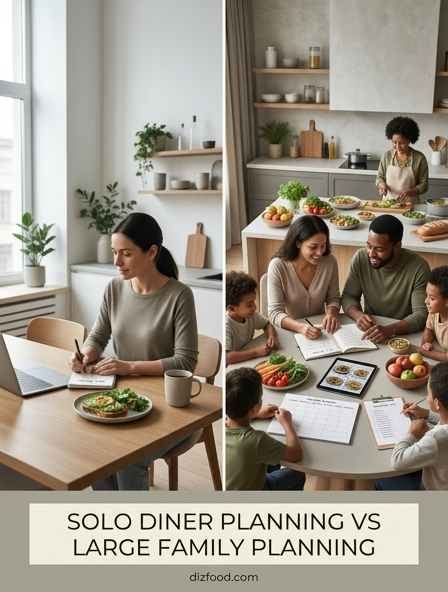
Deciding between a solo diner setup and a large family kitchen strategy is about more than just the number of chairs at the table; it's about aligning your spatial ergonomics with your daily consumption habits. For the solo diner, the goal is "modular minimalism"-focusing on high-speed prep, versatile ingredients that prevent food waste, and compact appliances that reclaim counter space. Conversely, large family planning leverages economies of scale, requiring a "command center" approach with industrial-capacity storage, multi-zone prep areas, and rigorous batch-cooking cycles. Whether you are streamlining for one or scaling for a crowd, choosing the right strategy ensures your kitchen remains a functional asset rather than a logistical bottleneck, ultimately saving you hours of labor and significant grocery costs each week.
| Feature | Solo Diner Strategy | Large Family Planning |
|---|---|---|
| Appliance Focus | Compact/Multi-use (Air fryer, 2-burner hob) | High-capacity (Double oven, 30+ cu. ft. fridge) |
| Grocery Logic | Frequent, low-volume "fresh" trips | Monthly bulk buys and wholesale sourcing |
| Prep Methodology | Component cooking (Modular ingredients) | Batch cooking (Mass production/Freezing) |
| Storage Ratio | 70% Open access / 30% Long-term | 30% Open access / 70% Deep pantry & chest freezer |
| Cleanup Volume | Immediate, manual, or drawer dishwasher | High-frequency, heavy-duty dishwasher cycles |
| Economic Edge | Zero food waste and lower utility draw | Lowest cost-per-serving via volume discounts |
Solo Portions Versus Bulk Buying Benefits
The decision between purchasing individual portions and buying in bulk is often dictated by household size, but both strategies offer unique advantages depending on the kitchen's goals. For the solo diner, purchasing smaller, specialized portions minimizes the risk of ingredient fatigue and physical waste. When buying for one, the focus shifts toward high-quality, perishable items that can be consumed within a narrow window. This approach allows for a diverse diet without the burden of storing excess dry goods or facing the monotony of eating the same large-batch ingredient for a week straight.
In contrast, large families find their greatest economic leverage in bulk purchasing. Warehouse clubs and wholesale suppliers offer significant discounts on unit prices for staples like grains, proteins, and canned goods. For a household of five or more, the rapid turnover of inventory justifies the initial high cost of bulk items. The table below illustrates the typical focus areas for each group:
| Feature | Solo Diner Priority | Large Family Priority |
|---|---|---|
| Primary Goal | Freshness and Variety | Lowest Unit Cost |
| Storage Needs | Minimal/Compact | High-Capacity/Pantry |
| Purchase Frequency | High (Fresh focus) | Low (Stockpile focus) |
Ultimately, the solo cook must weigh the convenience of pre-portioned meats and produce against the higher price per pound. Meanwhile, families must manage the logistics of storing and rotating large quantities to ensure that "bulk buying" does not transition into "bulk wasting" due to expiration or poor organization.
Strategic Meal Prep for Individual vs Family Needs
Meal preparation is not a one-size-fits-all endeavor; it requires a tactical shift based on how many mouths need feeding. For the individual, "component prepping" is often more effective than "full-meal prepping." Instead of cooking five identical containers of chicken and broccoli, the solo diner might roast a single tray of assorted vegetables, boil a pot of quinoa, and marinate three different proteins. This allows for spontaneous assembly throughout the week, preventing the "leftover blues" while still significantly cutting down on daily active cooking time.
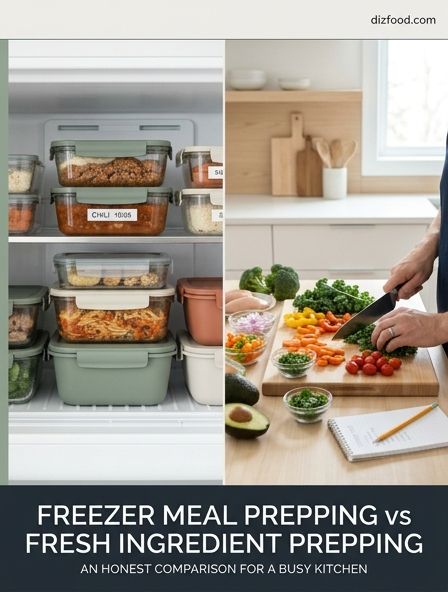
Large families, however, benefit most from the "assembly line" method. Strategic prep for a crowd involves preparing entire dishes that are freezer-friendly and easily scalable. Casseroles, large pots of chili, or pre-assembled lasagnas are the gold standard for high-volume households. For families, the goal is to minimize the number of times the stove is turned on during the hectic work week. A successful family prep session might include:
- Browning several pounds of ground meat for various uses (tacos, pasta, shepherd's pie).
- Chopping a week's worth of onions and peppers in a food processor.
- Portioning snacks into individual reusable bags to prevent "pantry raiding."
- Pre-making large batches of sauces or dressings that can unify disparate ingredients.
While the solo cook prioritizes flexibility and variety, the family cook prioritizes volume and efficiency. Both groups, however, share the common goal of reducing the cognitive load of "what's for dinner" during a busy Tuesday evening.
Grocery List Optimization for Every Household Size
An optimized grocery list serves as the primary defense against overspending and food spoilage. For the solo shopper, the list must be incredibly precise. Because there are no additional people to help consume accidental over-purchases, the list should be built around a "shared ingredient" philosophy. If a recipe calls for half a head of cabbage, the list should include a second dish that utilizes the remaining half. This prevents the common solo-living pitfall of the "crisper drawer cemetery," where half-used vegetables go to die.
For large families, the grocery list functions more like an inventory replenishment report. The focus is on maintaining a "par level" of essential items-milk, bread, eggs, and snacks-that are consumed at a predictable rate. List optimization for families often involves categorized zones to match the supermarket layout, reducing the time spent navigating crowded aisles. Key strategies for family lists include:
- Buying versatile staples that can serve as the base for multiple meals.
- Checking existing inventory before the shop to avoid duplicating bulk items.
- Incorporating "emergency meals" (like frozen pizzas or pasta) for nights when cooking is impossible.
- Utilizing digital apps that allow multiple family members to add items in real-time.
The solo diner's list is a scalpel, designed for surgical precision and minimal excess. The family's list is a logistical plan, designed to keep a complex machine running smoothly. In both cases, the list bridges the gap between the kitchen's current state and the coming week's nutritional requirements.
Scaling Recipes for One Person or a Crowd
Modifying recipes requires more than just basic division or multiplication; it requires an understanding of how heat, moisture, and seasoning interact at different volumes. When scaling down for one person, the biggest challenge is often the ratios. Many standard recipes are designed for four to six servings. Dividing an egg in half or measuring a third of a tablespoon can be frustrating. For the solo cook, it is often better to find "naturally small" recipes-like pan-seared fish or single-serving omelets-rather than trying to shrink a complex stew.
Scaling up for a crowd introduces its own set of logistical hurdles. You cannot simply triple the salt or spices in a recipe, as certain flavors intensify differently in large volumes. Furthermore, the physical limitations of the kitchen come into play. A pan that comfortably roasts one chicken may not be able to handle three without crowding, which leads to steaming rather than browning. Consider the following when scaling:
- Surface Area: Ensure your pots and pans are large enough to maintain proper browning when ingredients are increased.
- Cooking Time: Large volumes take longer to come to a boil and may require longer oven times, though the temperature usually remains the same.
- Seasoning: Add spices gradually and taste frequently; the "multiplier effect" can easily lead to over-salting.
- Liquid Ratios: In large batches, evaporation happens slower relative to the volume, so you may need slightly less liquid than a direct multiplication suggests.
Successful scaling ensures that whether you are cooking a single pork chop or a twenty-pound turkey, the texture and flavor remain balanced and professional.
Kitchen Efficiency Tips for Solo and Group Cooking
Efficiency in the kitchen is measured by the ratio of effort to output. For the solo cook, efficiency is often about minimizing cleanup. Since the cook is also the dishwasher, "one-pot" or "one-sheet-pan" meals are the ultimate efficiency hack. Using a single cutting board for all ingredients-starting with produce and ending with proteins-saves time and water. Solo diners should also embrace the "cook once, eat twice" rule, purposefully making enough for a second serving to be eaten for lunch the following day, thereby cutting their total cooking time in half over the week.
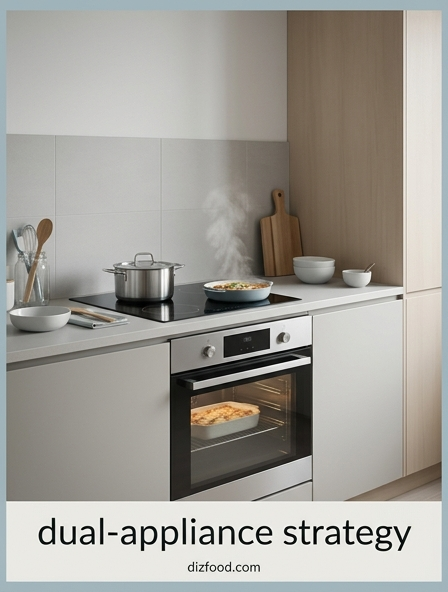
When cooking for a large group, efficiency is found in parallel processing and station management. A family kitchen functions best when tasks are delegated and specialized tools are utilized. Using high-capacity appliances like slow cookers, instant pots, or double ovens allows multiple components of a meal to progress simultaneously. To maximize efficiency in a group setting, consider these tactics:
- Mise en Place: Prep all ingredients before a single burner is lit to prevent bottlenecks.
- Zone Defense: Assign specific areas of the kitchen for prepping, cooking, and plating to avoid collisions.
- Clean-As-You-Go: With more people, the volume of dishes can quickly become overwhelming; clearing the sink during downtime is essential.
- Batch Processing: If you need chopped onions for three different dishes, chop them all at once.
Whether you are working in a quiet kitchen for one or a bustling family hub, the key is to understand your constraints and choose recipes and methods that match your available time and energy levels.
Managing Food Waste in Single vs Family Homes
Food waste is a significant economic and environmental concern, but its causes differ by household scale. In single-person homes, waste usually occurs because ingredients are sold in sizes meant for families. A single person may only need two stalks of celery, but they are forced to buy the entire bunch. To combat this, solo diners should prioritize frozen vegetables, which allow for "pour-out" portioning, or shop at bulk bins where they can take exactly the amount of grains or spices required for a single meal.
In large family homes, food waste typically stems from "plate waste" or forgotten leftovers in a crowded refrigerator. Children may not finish their portions, or a large container of leftovers may get pushed to the back of the shelf until it is no longer edible. Managing waste for a family requires a proactive approach to inventory. Implementing a "Use First" bin in the fridge can help family members identify which items are nearing their expiration date. Strategies for both include:
- For Solo Diners: Learning to preserve half-used ingredients by pickling, freezing, or dehydrating.
- For Families: Serving meals family-style (bowls on the table) so individuals only take what they will actually eat.
- Composting: A shared solution for unavoidable scraps like peels and shells.
- Inventory Checks: A weekly "fridge forage" meal where all nearing-expiration items are turned into a soup or stir-fry.
By tailoring waste-reduction strategies to the specific dynamics of the household, cooks can ensure that their grocery budgets are fully utilized rather than ending up in the bin.
Budgeting Tactics for Solo Diners and Large Families
Budgeting for a kitchen requires a balance between cost-per-meal and total monthly spend. Solo diners often face the "singles tax," where smaller packages have a higher price per unit. To mitigate this, solo diners should invest in high-impact pantry staples-like quality olive oils, spices, and vinegars-that can transform simple, cheap ingredients like beans or eggs into gourmet meals. Budgeting for one is about maximizing the value of every square inch of the pantry, focusing on versatility rather than sheer volume.
For large families, budgeting is an exercise in scale and timing. Leveraging seasonal sales and "loss leaders" (items sold at a loss to get customers into the store) is vital. A family budget benefits greatly from a "stock up when low" mentality for non-perishables. If pasta or canned tomatoes go on a deep discount, the family cook should buy enough to last several months. Consider the following budgeting comparison:
| Strategy | Solo Diner Benefit | Family Benefit |
|---|---|---|
| Store Brands | Moderate savings | Massive cumulative savings |
| Frozen Goods | Prevents spoilage waste | Cost-effective for large sides |
| Meat Purchases | High-end, small cuts | Primal cuts or bulk packs |
While the solo diner might spend more per ounce to ensure they only buy what they need, the family diner spends less per ounce by committing to larger volumes. Both must remain vigilant about tracking their spending to ensure the kitchen remains a source of nourishment rather than a financial drain.
Time Management Strategies for Quick vs Batch Meals
Time is the most precious resource in any kitchen, and managing it effectively depends on the desired output. Solo diners often prioritize "quick-fix" meals that can be prepared in under 20 minutes. Since the effort of a complex three-hour meal often feels disproportionate for just one person, the solo cook should master high-heat, fast-cooking techniques like sautéing, broiling, and stir-frying. Utilizing "shortcut" ingredients-like pre-washed greens or canned chickpeas-can further reduce the time from fridge to table.
Large families, conversely, are the primary beneficiaries of "batch cooking." While the initial time investment is higher (often a few hours on a weekend), the time saved during the week is exponential. Spending a Sunday afternoon prepping four gallons of marinara sauce or rolling sixty meatballs pays dividends on a busy Wednesday when dinner only requires boiling water. Effective time management for these scales involves:
- The 15-Minute Rule: For solo diners, keep five recipes in rotation that take 15 minutes or less.
- Staggered Cooking: For families, use appliances like the oven and slow cooker simultaneously to maximize output.
- Passive Time: Prioritize dishes that simmer or roast without constant supervision, allowing the cook to handle other household tasks.
- Double-Batching: Whenever a family cook makes a freezer-friendly meal, they should double the recipe and freeze half for a future "zero-effort" night.
By choosing the right strategy-speed for the individual and volume for the group-cooks can maintain a healthy diet without becoming slaves to the kitchen.
Storage and Pantry Organization for Different Scales
A well-organized kitchen is the foundation of culinary success, but the scale of the household dictates the organizational logic. For the solo diner, the challenge is often limited space. Organization should focus on accessibility and multi-functionality. Using tiered shelving for spices or hanging racks for pots can free up precious counter space. In a small kitchen, every item must earn its keep; if a gadget only performs one obscure task, it is likely taking up space that could be better used for storage.
In a family kitchen, the challenge is volume and visibility. A pantry can quickly become a "black hole" where cans of beans are buried behind boxes of cereal. The "First-In, First-Out" (FIFO) method is essential here: new groceries are placed behind older ones to ensure nothing expires. Large families should categorize their storage into "zones," such as a baking zone, a breakfast zone, and a school lunch packing station. Key organization tips include:
- Clear Containers: Use transparent bins for bulk dry goods so you can see exactly when you are running low.
- Labeling: Crucial for families so that everyone knows where things belong, reducing the time spent searching.
- Vertical Space: Utilizing the full height of a pantry with over-the-door racks or extra-tall shelving units.
- Under-Counter Storage: For solo diners, using rolling carts can provide extra prep surface and storage that can be tucked away.
Whether managing a studio apartment kitchenette or a walk-in suburban pantry, the goal is to create a system that reflects the household's usage patterns and prevents the frustration of lost ingredients.
Designing Menus for Solitary or Shared Dining Experiences
Menu design is an art that balances nutritional needs with the social context of the meal. For the solo diner, the menu is a personal expression of preference. There is no need to compromise on ingredients or spice levels to satisfy a picky eater. However, the challenge lies in creating a menu that is varied enough to be interesting but cohesive enough to share ingredients. A solo "theme week"-such as a Mediterranean focus-allows for the use of feta, olives, and cucumbers across multiple different dishes, ensuring variety without waste.
Designing for a family requires a "crowd-pleaser" mindset, often focusing on customizable meals. "Build-your-own" bars (tacos, baked potatoes, or salads) are highly effective because they allow individuals to tailor their plates while the cook only prepares one set of base ingredients. This approach accommodates different dietary restrictions and preferences within a single household. Consider these menu-building philosophies:
- The "Anchor" Ingredient: For families, choose one large protein (like a whole roasted ham) and plan three different ways to serve it over three days.
- Flavor Profiles: Solo diners can experiment with bold, niche flavors (like fermented pastes or pungent cheeses) that might not appeal to a large group.
- Nutritional Balance: Families must ensure menus hit a broad range of vitamins and minerals to support growing children and varying adult needs.
- Occasion: Solo menus often prioritize ease and comfort, while family menus often revolve around the ritual of gathering and sharing.
Ultimately, a successful menu reflects the identity of the household, whether it is a quiet, contemplative meal for one or a boisterous, shared feast for many.

Comments