
When it comes to achieving the ultimate golden crunch, the debate between beef tallow vs. lard for frying is a masterclass in culinary chemistry. Beef tallow, rendered from bovine suet, is the heavy hitter for high-temperature deep frying; its high saturated fat content and impressive smoke point create a rigid, shatter-crisp exterior that famously defined the original McDonald's French fry. In contrast, lard-rendered pig fat-boasts a higher monounsaturated fat profile, delivering a lighter, more delicate crispiness that is prized in Southern fried chicken and traditional pastries. While tallow imparts a rich, savory depth of flavor, lard offers a more neutral profile with a legendary ability to produce flaky textures, making the choice between them a balance of desired heat stability and the specific flavor profile of your dish.
| Feature | Beef Tallow | Pork Lard |
|---|---|---|
| Smoke Point | High (~400°F - 420°F) | Moderate (~370°F - 375°F) |
| Flavor Profile | Rich, buttery, distinctly beefy | Mild, neutral to slightly savory |
| Primary Fat Type | Saturated (High stability) | Monounsaturated (Heart-healthy) |
| Crispness Level | Heavy, "shatter-style" crunch | Light, flaky, and tender crisp |
| Best Application | French fries, steaks, searing | Fried chicken, donuts, pie crusts |
| Shelf Stability | Extremely stable (long life) | Stable (shorter than tallow) |
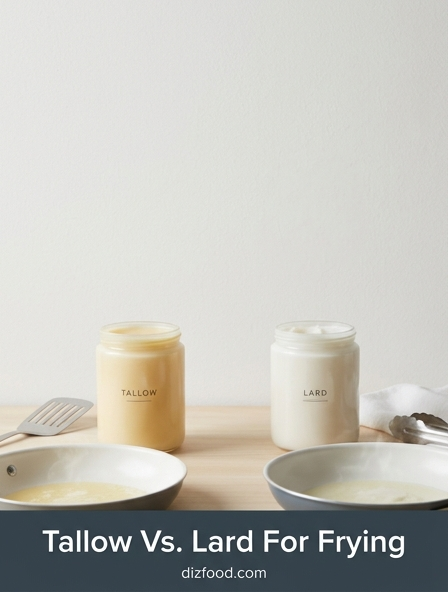
Beef Tallow versus Pork Lard Basics
Understanding the fundamental differences between beef tallow and pork lard is essential for any home cook or professional chef looking to elevate their frying technique. Beef tallow is the rendered form of suet, which is the hard white fat found around the kidneys and loins of cattle. In its processed state, tallow is solid at room temperature and possesses a waxy consistency that is highly stable. Historically, it was the gold standard for commercial frying due to its abundance and unique chemical properties that prevent it from breaking down quickly under high heat.
Pork lard, on the other hand, is rendered from the fatty tissue of pigs. It is generally softer and more pliable than tallow at room temperature, making it easier to cream or spread. Lard can vary significantly depending on where on the pig the fat was harvested. Leaf lard, taken from around the kidneys, is considered the highest quality due to its neutral flavor and fine texture, whereas fatback or caul fat may have a more pronounced "porky" aroma. While both are traditional animal fats, they offer distinct profiles:
- Tallow: Highly saturated, firm, and boasts a distinct savory essence.
- Lard: Contains more monounsaturated fats, is softer, and offers a more delicate or neutral palate.
- Consistency: Tallow is brittle when cold; lard remains somewhat scoopable.
Both fats have seen a resurgence in modern kitchens as cooks move away from highly processed seed oils. Choosing between them often comes down to the specific temperature requirements of the recipe and the desired flavor profile of the finished dish.
Deep Frying Smoke Point Comparison
The smoke point of a fat is the temperature at which it begins to break down, release smoke, and produce acrid flavors. In the context of deep frying, maintaining a high smoke point is critical for both safety and culinary quality. Beef tallow is widely regarded as the superior choice for high-heat applications because it typically has a smoke point around 400°F (204°C). This high threshold allows for aggressive frying techniques that seal the exterior of food rapidly, preventing excessive oil absorption.
Pork lard has a slightly lower smoke point, generally ranging between 370°F and 385°F (188°C to 196°C), depending on the purity and the rendering method used. While this is sufficient for most standard frying tasks, it offers less of a buffer if the stove temperature spikes. Using a fat beyond its smoke point not only ruins the taste but also creates free radicals and harmful compounds. The following table provides a quick reference for these thermal limits:
| Fat Type | Typical Smoke Point | Best Frying Application |
|---|---|---|
| Beef Tallow | 400°F (204°C) | Deep frying potatoes and searing meats |
| Pork Lard | 370°F - 385°F | Shallow frying and high-heat sautéing |
| Refined Lard | Up to 390°F | General purpose frying |
Because tallow can withstand higher temperatures for longer periods, it is often favored for large-batch frying where the oil must remain at a consistent heat for several hours without degrading.
Flavor Impacts on Fried Foods
The choice between tallow and lard significantly alters the sensory experience of fried food. Beef tallow carries a distinct, "beefy" richness that imparts a deep umami flavor to anything cooked within it. This is the primary reason why vintage fast-food fries are so fondly remembered; the tallow provided a savory complexity that vegetable oils simply cannot replicate. When you fry in tallow, the fat acts as a seasoning agent itself, enhancing the natural flavors of starches and proteins.
Lard is prized for its relative neutrality, especially if it is high-quality leaf lard. When used for frying, lard creates a clean finish that allows the ingredients of the batter or the food itself to shine through without being overshadowed by a heavy animal taste. However, if using less-refined lard, a subtle, sweet pork flavor may persist, which is often desirable in specific regional cuisines. Key flavor considerations include:
- Savory Depth: Tallow adds a robust, meaty layer perfect for savory dishes.
- Clean Finish: Lard provides a crispness without a lingering heavy aftertaste.
- Aroma: Tallow smells like a steakhouse; lard has a milder, slightly nutty scent.
Ultimately, tallow is the better choice when you want the fat to contribute to the dish's identity, while lard is ideal when you want a stealthy fat that provides texture without dominating the palate.
Saturated Fat and Heat Stability
Heat stability is determined by the fatty acid composition of the oil. Beef tallow is comprised of approximately 50-55% saturated fat, which makes it incredibly resistant to oxidation. Saturated fats lack the double bonds found in polyunsaturated fats, which are the primary sites where oxygen can attack and break the molecular chain. This structural integrity means that tallow does not become "gummy" or rancid easily when exposed to the repeated heating and cooling cycles inherent in deep frying.
Pork lard is slightly more unsaturated, typically containing about 40% saturated fat and 45% monounsaturated fat. While it is significantly more stable than soybean or canola oil, it is marginally less hardy than tallow over the long term. Under high heat, the monounsaturated fats in lard are relatively stable, but the small percentage of polyunsaturated fats can eventually lead to breakdown if the oil is used excessively. This stability is why animal fats produce better results in a domestic kitchen; they do not polymerize on your pans or your food as quickly as vegetable-based alternatives. This chemical resistance ensures that the food remains light and crisp rather than greasy or sticky, as the fat does not penetrate the food as deeply during the cooking process.
Achieving Maximum Culinary Crispiness
Crispiness in fried food is the result of rapid moisture evaporation from the surface, creating a dehydrated crust. Both tallow and lard are exceptional at facilitating this process, but they do so in slightly different ways. Tallow's high melting point and saturated nature allow it to form a very hard, protective seal on the food. This results in a crunch that is often described as "glass-like" or substantial. It is particularly effective for thick-cut foods that require a long time in the fryer.
Lard is the secret weapon for a "flaky" crispness. Because of its unique crystal structure, lard creates tiny pockets of air when used in breading or when frying doughs. This is why lard is the traditional choice for southern fried chicken or tempura-style batters where a delicate, shattering texture is preferred over a hard crunch. To maximize crispiness, follow these steps:
- Preheat the fat to at least 350°F before adding food to ensure immediate steam release.
- Do not crowd the pot, as animal fats need space to maintain their thermal mass.
- Pat food dry before frying; moisture on the surface causes the fat to splutter and prevents a proper crust.
- Drain the fried items on a wire rack rather than paper towels to allow air circulation.
By leveraging the specific properties of these fats, a cook can dictate whether the final result is a heavy, satisfying crunch or a light, airy snap.
Nutritional Differences of Animal Fats
While both are animal-derived fats, their nutritional profiles reflect the biology of the animals they come from. Beef tallow is a significant source of Conjugated Linoleic Acid (CLA), a type of fatty acid that has been studied for its potential anti-inflammatory properties. It also contains higher concentrations of fat-soluble vitamins, particularly Vitamin K2, which is vital for bone health and calcium metabolism. Tallow's higher saturation level makes it a favorite among proponents of certain high-fat diets.
Pork lard is famously high in Vitamin D, provided the pigs were pasture-raised and exposed to sunlight. In fact, lard is one of the best dietary sources of Vitamin D3, surpassed only by cod liver oil. It also contains more oleic acid-the same heart-healthy monounsaturated fat found in olive oil-than tallow does. The following table summarizes the key nutritional components:
| Nutrient | Beef Tallow | Pork Lard |
|---|---|---|
| Saturated Fat | ~50% | ~40% |
| Monounsaturated Fat | ~42% | ~45% |
| Vitamin D | Low | High (if pastured) |
| CLA Content | Higher | Lower |
Both fats are free of trans fats, provided they have not been hydrogenated during commercial processing. Choosing between them nutritionally often depends on whether one prioritizes Vitamin D or CLA intake.
The Best Foods for Tallow
Beef tallow is the undisputed king of savory, high-heat frying. Its robust nature makes it the perfect partner for root vegetables and red meats. The most famous application is the classic French fry. When potatoes are fried in tallow, they develop a golden-brown exterior and a fluffy, mashed-potato interior with a flavor profile that is deeply satisfying. This "beef tallow fry" is a culinary benchmark for quality in traditional bistros.
Beyond potatoes, tallow is excellent for frying proteins. Searing a steak in a small amount of tallow enhances the meat's own flavor, creating a crust that is far superior to one made with butter or vegetable oil. It is also an exceptional choice for making "tallow-fried" chicken, which results in a darker, richer crust. Some of the best foods to prepare with tallow include:
- Beef Empanadas: The tallow in the dough and the frying vat provides a thematic flavor match.
- Hash Browns: The high smoke point allows for a very dark, crispy exterior without burning.
- Onion Rings: The savory notes of tallow complement the sweetness of the onions.
- Fried Brussels Sprouts: The fat cuts through the bitterness of the greens.
If the goal is to create a dish that feels hearty, traditional, and packed with umami, tallow should be the first choice on the counter.
When to Use Lard Instead
Lard excels in scenarios where texture is more important than a specific "beefy" flavor. Its lower melting point and fat crystal size make it the superior fat for anything involving dough or batter. In Mexican cuisine, lard is indispensable; it is used to fry carnitas, providing a succulent texture that tallow cannot match, and it is the base for authentic tamales. Because lard is more neutral, it is also the preferred choice for frying sweet items like doughnuts or funnel cakes, where a beefy aftertaste would be unwelcome.
Lard's versatility extends to "surf and turf" frying. While tallow might overpower delicate seafood, lard provides a clean, crisp coating for fried shrimp or fish fillets. It is also the traditional choice for "schnitzel," providing a light, golden crust that adheres perfectly to the meat. Consider using lard for:
- Fried Doughnuts: Achieves a crisp exterior with a soft, neutral-tasting interior.
- Carnitas: The pork-on-pork combination is culturally and culinarily authentic.
- Fried Chicken: Especially when a lighter, Southern-style golden crust is desired.
- Vegetable Tempura: Provides a crisp snap without overwhelming the delicate vegetables.
Lard is the "all-purpose" animal fat of the kitchen, bridging the gap between savory frying and delicate pastry work.
Storage and Shelf Life Differences
The shelf life of animal fats is primarily dictated by their degree of saturation. Because beef tallow is more highly saturated, it is exceptionally shelf-stable. When stored in a cool, dark place in an airtight container, tallow can last for a year or more without turning rancid. It is very resistant to room-temperature oxidation, which made it a vital survival food in the era before refrigeration. While it can be kept on the counter, refrigeration will extend its life even further, potentially indefinitely.
Pork lard is slightly more sensitive due to its higher monounsaturated and polyunsaturated fat content. While it is still quite stable, it is more prone to oxidation than tallow. Commercial lard often contains antioxidants like BHT to increase shelf life, but pure, home-rendered lard should ideally be stored in the refrigerator to maintain its freshness. If left at room temperature in a warm kitchen, lard may begin to develop an "off" smell within a few months. To maximize the life of your frying fats, follow these storage steps:
- Filter the fat through a fine-mesh sieve or cheesecloth after frying to remove food particles.
- Store in glass jars rather than plastic to prevent chemical leaching.
- Keep away from direct sunlight and heat sources like the oven.
- Freeze any fat that you do not plan to use within six months for long-term preservation.
Tallow is generally the more "set it and forget it" fat, whereas lard requires a bit more environmental control to stay at peak quality.
Final Verdict on Frying Fats
Choosing between tallow and lard is not a matter of which is objectively better, but rather which is better for the specific culinary task at hand. Beef tallow is the champion of high-heat stability and savory flavor. Its high smoke point and robust chemical structure make it the ideal choice for deep-frying potatoes, searing steaks, and creating dishes with a heavy, satisfying crunch. If you want your food to have a bold, meaty presence and you need a fat that can be reused multiple times without breaking down, tallow is the winner.
Pork lard is the king of versatility and texture. Its ability to create light, flaky crusts and its more neutral flavor profile make it better suited for a wider range of foods, including fried doughs, poultry, and traditional Mexican dishes. While it has a slightly lower smoke point, it is more than sufficient for most home frying needs and offers a cleaner finish that doesn't linger on the tongue. Many professional kitchens actually use a blend of both fats to capture the stability of tallow and the textural benefits of lard. Ultimately, a well-stocked kitchen benefits from having both: tallow for the ultimate French fry and lard for everything from fried chicken to the perfect flaky pie crust.



Comments