
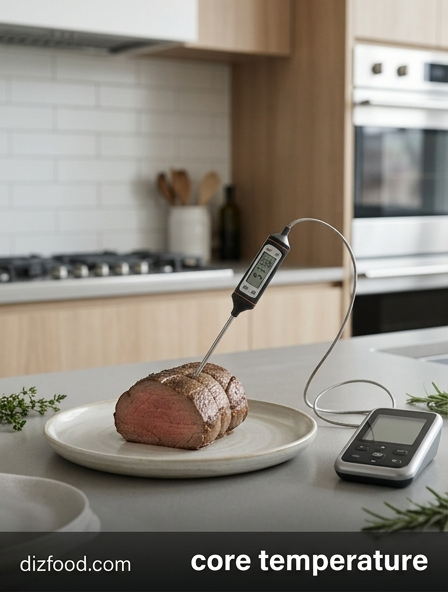
Precision Over Guesswork in Frying
Frying is often misunderstood as a purely surface-level cooking method, yet the core temperature of the food determines the success of the dish. When submerged in hot oil, the exterior undergoes rapid dehydration and the Maillard reaction, creating a crisp crust. However, the internal temperature must reach its safety threshold simultaneously. If the oil is too hot, the outside chars while the center remains raw. Conversely, low temperatures lead to excessive oil absorption, resulting in a greasy texture.
To achieve culinary precision, chefs must monitor the relationship between the frying medium and the food's core. Using an instant-read probe is the only way to ensure deep-fried items, such as thick poultry cuts or scotch eggs, are cooked through. Key considerations include:
- The displacement of moisture as steam, which prevents oil from entering the core.
- The recovery time of the oil after adding cold ingredients.
- The specific heat capacity of the food being fried.
Relying on visual cues like golden-brown color is a dangerous gamble. True mastery in frying requires verifying that the core has reached the target temperature before the exterior loses its structural integrity.
The Science of Optimal Heat Transfer
Understanding how heat moves from the kitchen environment into the center of a protein is fundamental to thermal control. Heat transfer occurs through conduction, where kinetic energy is passed from molecule to molecule toward the colder core. In an oven or pan, the exterior temperature is significantly higher than the target internal doneness, creating a temperature gradient. The steepness of this gradient dictates how quickly the core temperature rises and how much the outer layers will overcook.
Managing this process requires an awareness of the physical properties of the food. Water content, fat distribution, and density all influence the rate of thermal penetration. For instance, air pockets in baked goods act as insulators, slowing the heat transfer compared to the dense muscle fibers of a beef roast. By controlling the ambient heat, a chef can manipulate the "thermal bridge," ensuring that energy reaches the core efficiently without damaging the delicate proteins near the surface. This scientific approach replaces the traditional reliance on intuition, allowing for repeatable results regardless of the cooking medium used.
Achieving Perfect Internal Doneness Every Time
The transition from a raw state to a perfectly cooked core is a narrow window. Doneness is defined by the coagulation of proteins and the transformation of connective tissues, both of which are strictly temperature-dependent. For red meats, a difference of just five degrees Celsius can mean the difference between a succulent medium-rare and an unappealing medium-well. Precision probes allow the cook to monitor this progression in real-time, removing the "poke test" or other unreliable tactile methods.
Consistency is the hallmark of professional cooking. Whether preparing a single steak or a hundred, the target core temperature remains the objective constant. Achieving this requires a systematic approach to temperature monitoring. The following steps help ensure perfect doneness:
- Calibrate your thermometer regularly in ice water.
- Insert the probe into the thickest part of the meat, avoiding bone or fat deposits.
- Account for the specific target temperature of each unique protein.
- Track the rate of temperature rise to anticipate the pull-off point.
By focusing on the internal core rather than the elapsed time, the chef ensures that every serving meets the exact specifications desired by the guest.
Why Timers Fail Where Probes Succeed
Kitchen timers are relics of an era before precision instrumentation. They operate on the flawed assumption that all variables remain constant. In reality, the weight of the protein, its initial starting temperature, the humidity of the oven, and even the altitude can significantly alter cooking durations. A timer does not know if a chicken breast is two centimeters thick or four; it simply counts down, leading to inconsistent and often unsafe results.
In contrast, temperature probes provide empirical data from the heart of the food. They measure the only metric that actually matters: the internal thermal state. When a probe indicates that a roast has reached 55°C, it is a factual statement of its physical condition, regardless of whether it took forty minutes or an hour. Probes account for the "cold spot" in the center, which is the last area to reach a safe temperature. Relying on a probe transforms the cooking process from a chronological estimate into a data-driven certainty, eliminating the anxiety of cutting into undercooked food or serving dry, over-processed proteins to guests.
Ensuring Food Safety Without Overcooking
The primary goal of monitoring core temperature is the destruction of harmful pathogens like Salmonella and E. coli. Regulatory bodies establish specific temperature thresholds that must be reached to ensure food is safe for consumption. However, the common mistake in domestic kitchens is overshooting these temperatures "just to be safe," which results in dry, flavorless meals. The professional challenge is hitting the safety mark with surgical precision.
Modern culinary science recognizes that food safety is a function of both temperature and time. While 75°C is the standard for instantaneous pathogen death, lower temperatures held for longer periods can achieve the same level of pasteurization. This allows for more tender results in items like poultry or pork. By using a leave-in probe with an alarm, cooks can pull food at the exact moment it satisfies safety protocols. This balance preserves the cellular structure and moisture content of the food while providing absolute peace of mind. Safety should be a baseline for quality, not a reason to sacrifice the sensory attributes of the dish through excessive heat exposure.
Maximizing Texture and Moisture Retention
The texture of meat and seafood is largely determined by the state of its muscle proteins, specifically myosin and actin. As the core temperature rises, these proteins begin to denature and contract. If the temperature exceeds a certain threshold, the proteins squeeze out the moisture stored within the cells, resulting in a tough and dry mouthfeel. Mastering the core temperature is essentially the art of moisture management.
For example, at 50°C, fish proteins begin to firm up but retain their translucent juiciness. Once the core hits 60°C, the flakes become opaque and the moisture loss accelerates. By using high-precision thermometers, a chef can halt the cooking process at the exact millisecond the texture is optimal. This is particularly crucial for lean proteins that lack fat to buffer against dryness. Utilizing core temperature data allows for the following benefits:
- Minimal protein fiber shrinkage.
- Retention of natural juices and fat.
- Optimal tenderness in connective tissues without drying the surrounding meat.
Precision control ensures that every bite is as succulent as possible, highlighting the natural quality of the ingredients.
Understanding the Impact of Carryover Cooking
Carryover cooking is the phenomenon where the core temperature of a food item continues to rise after it has been removed from the heat source. This occurs because the exterior of the food is significantly hotter than the center; once off the heat, the energy continues to migrate inward to reach thermal equilibrium. Ignoring this effect is a frequent cause of overcooking, as a steak pulled at its final target temperature will inevitably exceed it during resting.
The amount of carryover depends on the cooking temperature, the size of the item, and the density of the food. A large prime rib roasted at a high temperature may see a rise of up to 10°C, whereas a small piece of fish cooked gently may only rise by 1°C or 2°C. To master this, chefs must calculate the "pull temperature"-the core temperature at which the food is removed from the heat. Resting the meat is vital during this phase to allow the temperature to stabilize and the juices to redistribute, ensuring a uniform doneness from the edge to the very center.
Consistency Standards in Professional Kitchens
In a professional kitchen, consistency is the foundation of brand reputation. A signature dish must taste exactly the same on a Tuesday night as it does during a busy Saturday service. Core temperature standards are the primary tool used to achieve this uniformity. Every chef on the line is trained to use standardized temperature charts, ensuring that no dish leaves the pass unless it meets the established thermal criteria. This rigor eliminates the variance introduced by different chefs' individual "feel" for the food.
Furthermore, maintaining meticulous temperature logs is often a legal requirement under HACCP (Hazard Analysis and Critical Control Points) systems. These logs document that every batch of food reached the necessary core temperature to prevent foodborne illness. Professional kitchens use a combination of instant-read thermometers for quick checks and integrated oven probes for long-term roasts. This data-driven environment ensures that quality control is a measurable metric rather than a subjective opinion, allowing for a seamless operation that prioritizes both guest safety and culinary excellence at every turn.
Critical Temperatures for Different Protein Types
Different proteins require distinct core temperatures to achieve the ideal balance of safety, texture, and flavor. While some items are best served at lower temperatures for tenderness, others require higher heat to break down tough collagen or ensure the elimination of bacteria. Knowing these specific milestones is essential for any serious cook. The following table outlines the standard target core temperatures for common kitchen proteins:
| Protein Type | Desired Doneness | Core Temperature (°C) |
|---|---|---|
| Beef / Lamb | Medium Rare | 52°C - 55°C |
| Pork | Medium | 63°C - 65°C |
| Poultry (Whole) | Safe / Juicy | 74°C - 75°C |
| Fish | Opaque / Moist | 50°C - 52°C |
| Ground Meats | Fully Cooked | 71°C |
Adhering to these values ensures that each specific fiber structure is respected, providing the best possible gastronomic experience while maintaining strict safety standards.
Mastering Internal Temperature Control Tools
To master core temperature, one must master the tools of the trade. Not all thermometers are created equal, and choosing the right one depends on the task at hand. Thermocouples are the gold standard for professional chefs, offering near-instantaneous readings with high accuracy, making them perfect for fast-moving line work. Thermistors, while slightly slower, are often found in leave-in probes that are ideal for monitoring large roasts over several hours inside the oven.
Effective tool mastery also involves proper maintenance and technique. Calibration is the most critical step; a thermometer that is off by just three degrees can ruin a delicate protein. Testing in a 50/50 ice and water bath should yield a reading of exactly 0°C. Additionally, the technique of "probing through" is vital-pushing the needle past the center and pulling it back slowly to find the lowest temperature reading (the true core). By understanding the technology and the physics of the probe, a cook moves from guessing to knowing, ensuring every dish is executed with scientific precision and culinary flair.


Comments