
Choosing between shallow and deep frying can make or break the texture and flavor of your favorite meals. While shallow frying uses a minimal amount of oil to achieve a golden-brown crust on delicate items like fish fillets or fritters, deep frying fully submerges ingredients to create that signature, uniform crunch found in classic comfort foods like french fries and donuts. Understanding the nuances of heat distribution and oil absorption is essential for any home cook looking to master these techniques; picking the right method depends entirely on the thickness of your ingredients and the specific culinary finish you want to achieve without leaving your dish feeling overly greasy.
| Feature | Shallow Frying | Deep Frying |
|---|---|---|
| Oil Quantity | Fills 1/3 to 1/2 of the food height | Food is fully submerged in oil |
| Ideal For | Cutlets, eggs, pancakes, fish fillets | Wings, donuts, fries, battered snacks |
| Heat Distribution | Conductive (from bottom of pan) | Convective (even, 360° coverage) |
| Cooking Effort | Requires flipping to cook both sides | Self-contained; no flipping required |
| Texture Result | Crispy exterior with tender, moist top | Uniformly crunchy and bubbly surface |
| Oil Absorption | Lower overall; better for lean dishes | Higher; results in calorie-dense finish |
The Fundamentals of Shallow Frying versus Deep Frying
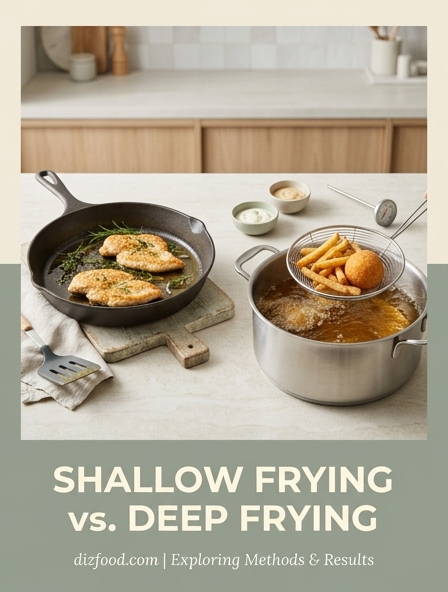
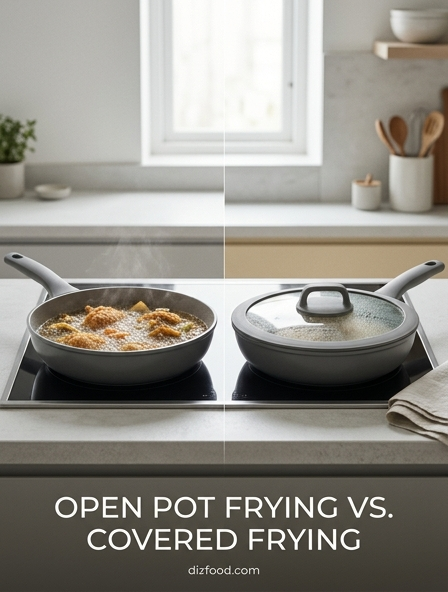
Shallow frying and deep frying are two pillar techniques in the culinary world, each relying on hot oil as a heat transfer medium to cook food. While they share the goal of creating a browned, flavorful exterior, the mechanics of how heat is applied differ significantly. Shallow frying involves cooking food in a pan with a relatively small amount of oil, typically covering only one-third to one-half of the food's height. This method relies on the contact between the food and the hot surface of the pan, as well as the surrounding oil, to conduct heat. It is a technique favored for its precision and the ability to monitor the cooking process closely.
In contrast, deep frying is a method where the food is completely submerged in a large volume of hot fat or oil. This total immersion ensures that the entire surface of the food is subjected to uniform heat simultaneously. The fundamental difference lies in the method of heat transfer: shallow frying utilizes a combination of conduction from the pan and convection from the oil, whereas deep frying relies almost exclusively on convection. Because deep frying surrounds the ingredient entirely, it creates an immediate steam barrier that prevents the interior from drying out while rapidly dehydrating the exterior. Understanding these basics is essential for any cook looking to master the textures and flavors associated with fried cuisine.
Oil Volume and Food Submergence Differences
The most visible distinction between these two methods is the quantity of oil required and how the food interacts with it. Shallow frying requires just enough fat to coat the bottom of a skillet and reach partway up the sides of the ingredient. This requires the cook to manually flip the food to ensure both sides are cooked and browned evenly. Because the top of the food remains exposed to the air, steam can escape more freely, which is ideal for certain proteins but can lead to uneven cooking if the heat is not managed correctly.
Deep frying necessitates a much larger volume of oil, often requiring several liters depending on the vessel size. The food must be able to "swim" freely without touching the bottom of the pot, which prevents scorching and ensures a consistent crust. This method is often preferred for high-volume cooking or for items with irregular shapes that would be difficult to brown evenly in a shallow pan. The following table summarizes the key physical differences:
| Feature | Shallow Frying | Deep Frying |
|---|---|---|
| Oil Level | 1/3 to 1/2 of food height | Complete immersion |
| Movement | Requires flipping | Usually floats or suspended |
| Contact | Direct pan contact | Oil contact only |
Comparing Crispy Textures and Flavor Profiles
Texture is the primary reason chefs choose one frying method over the other. Deep frying is the undisputed champion of uniform crispness. Because the oil surrounds the food, it dehydrates the entire surface at once, creating a 360-degree crust that traps juices inside. This is what gives tempura, fried chicken, and french fries their characteristic "crunch." The flavor profile in deep frying is often dominated by the Maillard reaction occurring evenly across the entire surface, resulting in a rich, savory taste that is consistent in every bite.
Shallow frying produces a different textural experience. Since the food sits against the bottom of the pan, the side in contact with the metal often develops a thicker, more localized crust. This can lead to a pleasant contrast between a heavily seared side and a more tender, gently cooked side. This method is excellent for developing complex flavors in items like crab cakes or schnitzel, where the goal is a delicate golden brown rather than a hard shell. The flavor in shallow frying is also influenced by the ability to use flavored fats like butter or infused oils, which would burn or become too expensive to use in a deep fryer.
Health Impacts and Caloric Content Analysis
A common misconception is that deep frying is always significantly unhealthier than shallow frying. However, the caloric impact depends largely on oil temperature and technique. When food is deep-fried at the correct temperature (usually between 350°F and 375°F), the internal steam pressure prevents excessive oil from soaking into the food. If the oil is too cool, the food acts like a sponge, absorbing a massive amount of fat. Properly executed deep frying can actually result in a relatively low-grease finish because the oil is shed quickly once the item is removed from the vat.
Shallow frying is often perceived as "lighter" because less total oil is used in the pan. However, because the cooking time is often longer and the temperature may fluctuate more as the food sits in the oil, the food may actually absorb a higher percentage of fat relative to its weight. To maintain a healthier profile regardless of the method, it is vital to follow these steps:
- Maintain high, consistent temperatures to minimize absorption.
- Drain all fried items on wire racks or paper towels immediately.
- Use oils with high smoke points to avoid the formation of harmful compounds.
- Avoid overcrowding the pan, which drops the oil temperature rapidly.
Essential Cookware for Each Frying Technique
The success of your frying depends heavily on the vessel used. For shallow frying, a wide, heavy-bottomed skillet is the gold standard. Cast iron is particularly favored for its heat retention capabilities, ensuring that the temperature doesn't plummet when cold food is added. Stainless steel tri-ply pans are also excellent for their even heat distribution. The pan should have relatively low flared sides to allow steam to escape, which prevents the food from soggy "steaming" instead of frying.
Deep frying requires depth and volume. A heavy Dutch oven or a dedicated electric deep fryer is necessary to hold the large quantity of oil safely. The high sides of a Dutch oven serve a dual purpose: they provide enough room for the oil to bubble up without overflowing and they contain most of the splatter. Specialized tools are also required for deep frying, such as a "spider" or slotted spoon for retrieving items, and a high-quality clip-on thermometer. Without a thermometer, deep frying becomes a guessing game that usually ends in either burnt exteriors or raw, oily centers.
Best Foods for Shallow Frying versus Deep Frying
Not all ingredients are suited for both techniques. Shallow frying is ideal for delicate items that might break apart if submerged or tossed around in a deep vat. It is the preferred method for proteins that require precise internal temperature control. Items like fish fillets, scallops, burgers, and thin cutlets like scaloppine thrive in a shallow pan environment where they can be monitored and flipped at the exact moment of perfection.
Deep frying is best reserved for items that are irregularly shaped, battered, or require a very rapid cook time. This includes breaded vegetables, donuts, arancini, and thicker cuts of meat like bone-in chicken. The buoyancy provided by a deep pool of oil allows these items to cook without becoming misshapen by the weight of sitting on a pan bottom. The following list highlights the best candidates for each:
- Shallow Frying: Potato pancakes, omelets, salmon fillets, gyoza, and breaded pork chops.
- Deep Frying: Calamari, churros, mozzarella sticks, hushpuppies, and spring rolls.
Temperature Control and Heat Distribution Factors
Managing heat is the most challenging aspect of frying. In shallow frying, the heat is localized. The bottom of the pan is significantly hotter than the oil surface, and the air above the pan is much cooler. This creates a temperature gradient that requires the cook to adjust the burner frequently. If the pan is too crowded, the moisture released from the food can cool the oil so much that the "frying" stops and "stewing" begins, leading to a soggy texture.
Deep frying offers more thermal mass, meaning the large volume of oil holds onto heat better than a thin layer in a skillet. However, there is a "recovery time" to consider. When you drop a batch of cold wings into a deep fryer, the oil temperature can drop by 50 degrees or more instantly. The goal is to have a heat source powerful enough to bring that temperature back up quickly. Professional deep fryers have thermostats to handle this, but home cooks using a pot on the stove must be vigilant with a thermometer to ensure the oil returns to the target range between batches.
Oil Management and Cleanup Considerations
Cleanup is where these two methods diverge most sharply. Shallow frying is relatively easy to manage. After cooking, you are left with a small amount of oil that can be wiped away with paper towels or poured into a small glass jar for disposal once cooled. Because the volume is low, there is less waste and less specialized equipment needed for maintenance. The main cleanup challenge is the grease splatter on the stovetop, which can be mitigated with a splatter screen.
Deep frying presents a significant logistical challenge regarding oil management. You cannot simply pour two liters of used oil down the drain, as it will clog plumbing and damage the environment. The oil must be cooled, filtered through a fine-mesh sieve or cheesecloth to remove food particles, and stored in a cool, dark place if it is to be reused. Eventually, the oil will break down, become dark, and smell "off," at which point it must be taken to a recycling center or disposed of in a sealed container in the trash. The process is time-consuming and often deters home cooks from deep frying frequently.
Safety Tips for Home Frying Methods
Working with hot oil is inherently dangerous, and safety should be the top priority. For both methods, the "water is the enemy" rule applies. Even a small drop of water hitting hot oil will vaporize instantly, causing the oil to splatter violently. Always pat food dry with paper towels before frying. For shallow frying, the primary risk is a grease fire from oil jumping out of the pan onto a gas flame. Keeping a lid nearby to smother any potential flames is a vital precaution.
Deep frying carries higher risks due to the sheer volume of hot liquid. Never fill a pot more than halfway with oil, as the oil will rise and foam significantly when food is added. This is known as "boil-over" and is a leading cause of kitchen fires. If a fire does occur, never use water to extinguish it; instead, use a fire extinguisher rated for grease (Class B or K) or cover the pot with a metal lid. Here are three essential safety rules:
- Never leave a frying pan or pot unattended, even for a moment.
- Use a thermometer to ensure oil does not reach its flash point.
- Keep children and pets away from the stove during the frying process.
Choosing the Right Frying Style for Your Recipe
Deciding between shallow and deep frying involves balancing convenience, health, and the desired final texture. If you are looking for a quick weeknight meal with minimal cleanup, shallow frying is almost always the better choice. It uses less oil and is better suited for the types of lean proteins usually found in daily cooking. It allows for more nuance in seasoning and the ability to baste the food with butter or aromatics as it cooks.
On the other hand, if the recipe calls for a heavy batter (like beer-batter) or if you are aiming for that iconic, uniform crunch of professional snacks, deep frying is necessary. A battered piece of fish will stick to the bottom of a shallow pan and lose half its coating, whereas it will puff up and float beautifully in a deep fryer. Ultimately, the choice depends on the structure of the food. If it's flat and sturdy, go shallow. If it's delicate, coated in wet batter, or chunky and irregular, deep frying will yield the superior culinary result.

Comments