
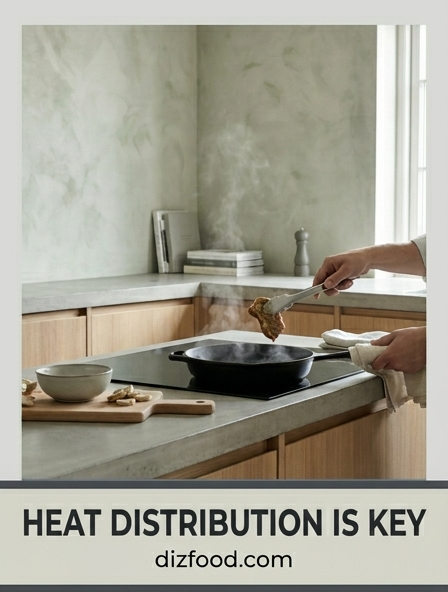
The Science of Uniform Heat in Frying
Uniform heat distribution is the cornerstone of successful frying, governed by the principles of thermodynamics and fluid dynamics. When a pan is heated, thermal energy travels from the source through the cookware material via conduction. Ideally, this energy should spread evenly across the entire cooking surface before it interacts with the frying medium. In a frying context, the oil acts as a heat transfer agent, filling the microscopic gaps between the pan surface and the food item. Achieving a state of thermal equilibrium ensures that every part of the ingredient experiences the same kinetic energy simultaneously.
Without uniformity, the cooking process becomes unpredictable, leading to structural failures in the food's exterior. The following factors influence how heat is dispersed during the frying process:
- The thermal diffusivity of the cookware material.
- The thickness of the pan's base, which acts as a buffer.
- The viscosity and volume of the oil used for submerged cooking.
- The contact surface area between the burner and the vessel.
Impact of Pan Material on Thermal Conductivity
The material composition of a frying pan dictates how rapidly and evenly heat moves from the burner to the food. Materials with high thermal conductivity, such as copper and aluminum, allow heat to spread laterally across the bottom of the pan with minimal resistance. This prevents the energy from concentrating directly above the flame or heating element. In contrast, materials like stainless steel have poor conductivity, often requiring an internal core of more conductive metal to function effectively in a professional kitchen environment.
Understanding the thermal properties of different materials helps in selecting the right tool for specific frying tasks. The table below outlines the general performance of common kitchen materials:
| Material | Conductivity | Heat Retention |
|---|---|---|
| Copper | Excellent | Low |
| Aluminum | Very High | Moderate |
| Cast Iron | Low | Very High |
| Stainless Steel | Poor | Moderate |
Eliminating Hot Spots for Balanced Browning
Hot spots are localized areas of intense heat that occur when a pan fails to distribute energy evenly. These fluctuations are often the result of thin metal construction or a mismatched burner size. When frying, hot spots cause certain sections of the food to carbonize while other areas remain undercooked or pale. This lack of balance ruins the aesthetic appeal and the flavor profile of the dish, as scorched sections introduce bitterness. To eliminate these issues, high-quality cookware often utilizes "clad" construction, layering different metals to harness both conductivity and durability.
To ensure balanced browning throughout the cooking process, chefs can follow these steps:
- Match the diameter of the pan to the size of the heating element.
- Allow the pan to come to temperature slowly to encourage lateral heat flow.
- Use heavy-bottomed cookware to increase the distance between the heat source and the oil.
- Agitate the oil or move the food items periodically to disrupt stagnant heat zones.
Role of Heat Distribution in the Maillard Reaction
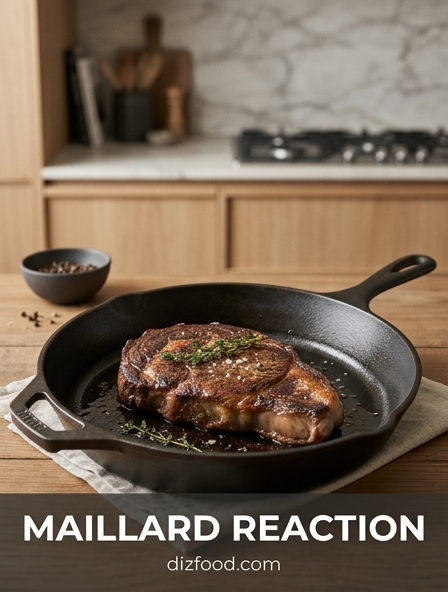
The Maillard reaction is the complex chemical process between amino acids and reducing sugars that gives fried food its distinctive brown color and savory flavor. This reaction is highly sensitive to temperature, typically requiring a range between 280°F and 330°F. If the heat distribution is uneven, the Maillard reaction will occur sporadically across the surface of the food. Some areas might reach the desired temperature and produce aromatic compounds, while others may stay too cool, resulting in a boiled or steamed flavor rather than a fried one. Conversely, if the temperature spikes too high in a specific spot, the reaction bypasses browning and moves directly into pyrolysis, or burning. Consistent heat ensures that the entire surface of the food reaches the chemical "sweet spot" at the same time, creating a complex, savory crust that is uniform in both taste and appearance. This synchronicity is essential for high-volume frying where consistency is the primary metric of quality.
Maintaining Oil Temperature Stability
Oil temperature stability is the ability of the frying medium to maintain a constant heat level despite the introduction of cold ingredients. When food is added to hot oil, it absorbs energy, causing the oil's temperature to drop sharply. This is known as "recovery time." If the cookware and oil have poor heat distribution or low thermal mass, the temperature may fall below the threshold required for effective frying, leading to grease-soaked food. Maintaining stability requires a balance between the heat source's output and the pan's ability to store and distribute energy.
Effective temperature management can be achieved by monitoring several key variables:
- Total volume of oil relative to the mass of the food.
- The initial temperature of the food (room temperature vs. chilled).
- The BTU output or wattage of the kitchen range.
- The frequency at which food is added or removed from the vessel.
The Relationship Between Even Heat and Crispiness
Crispiness in fried food is the result of the rapid dehydration of the surface layer. As heat is applied, moisture within the food turns to steam and escapes, leaving behind a porous, rigid structure of proteins and starches. If heat distribution is uneven, the rate of evaporation will vary across the surface. Areas exposed to lower heat will retain moisture longer, leading to a leathery or soft texture, while higher-heat areas may become brittle or burnt. Even heat ensures a consistent "steam front" that pushes moisture out of the entire crust simultaneously. This allows the starches on the surface to gelatinize and then dehydrate into a uniform, crunchy matrix. Because the oil temperature is held steady by an even distribution of energy from the pan, the oil cannot penetrate the food as easily. Instead, it stays on the surface, facilitating heat transfer without making the interior greasy. This synergy between energy flow and moisture loss is what defines the perfect fried texture.
Why Preheating Prevents Soggy Texture
Preheating is the essential first step in frying that establishes a thermal reservoir in both the pan and the oil. When a pan is properly preheated, the thermal energy is evenly dispersed across the metal's crystalline structure. This readiness is crucial because the first few seconds of contact between food and oil determine the final texture. If the pan is not sufficiently preheated, the food will sit in lukewarm oil, allowing the oil to seep into the cell walls of the ingredient before a protective crust can form. This leads to the dreaded soggy texture that plagues poorly executed fried dishes.
The benefits of a disciplined preheating routine include:
- Immediate vaporization of surface moisture upon contact.
- The creation of a steam barrier that repels excess oil absorption.
- Faster activation of leavening agents in batters for a light, airy crunch.
- Prevention of the food sticking to the bottom of the pan.
Thermal Mass and Consistent Frying Results
Thermal mass refers to the ability of a material to absorb and store heat energy. In the kitchen, a pan with high thermal mass, such as a thick cast iron skillet, acts like a battery. Once it reaches the target temperature, it is much harder to fluctuate, providing a steady stream of energy to the oil even when a large amount of cold food is added. This consistency is vital for deep-frying or pan-frying multiple batches of food. While materials with high thermal mass take longer to heat up initially, their ability to distribute that heat over time is superior for heavy-duty cooking tasks.
The following table compares how thermal mass impacts different aspects of the frying experience:
| Feature | High Thermal Mass | Low Thermal Mass |
|---|---|---|
| Heat Up Time | Slow | Fast |
| Recovery Time | Fast | Slow |
| Risk of Overheating | Low | High |
| Temperature Control | Steady | Reactive |
How Heat Flow Affects Moisture Evaporation
The physics of frying is essentially a race between heat moving inward and moisture moving outward. Efficient heat flow ensures that the surface of the food stays hot enough to convert water into steam continuously. This steam creates an internal pressure that prevents the cooking oil from entering the food. If the heat flow is interrupted or uneven, the steam pressure drops in certain areas, allowing oil to infiltrate the gaps left by the retreating water. This results in an oily, heavy product. Proper heat distribution maintains a vigorous "bubbling" effect, which is actually the visual representation of steam escaping. The intensity and uniformity of these bubbles indicate how well the heat is being managed. By ensuring a steady heat flux, a cook can control the rate of dehydration, ensuring the interior stays moist while the exterior becomes a dry, crispy shell. This balance is particularly important for delicate items like fish or vegetables, where over-evaporation leads to a tough, stringy internal texture.
Mastering Temperature Control for Golden Crusts
Mastering temperature control is the final step in leveraging heat distribution for culinary excellence. It requires a keen understanding of how your specific stove interacts with your cookware. Achieving a perfect golden crust is not about using the highest heat possible, but rather maintaining a specific range where browning occurs faster than the interior overcooks. This often involves adjusting the burner dial to compensate for the pan's thermal properties-turning it down once the pan has reached its thermal capacity or turning it up just before adding a new batch of food. Using tools like infrared thermometers or clip-on oil thermometers can provide the precision needed to monitor these shifts. Ultimately, the goal is to create a stable environment where the oil stays within the "golden zone" of 350°F to 375°F. With consistent heat distribution, the cook is no longer fighting against the pan, but rather working with it to produce repeatable, professional-quality results every time the oil hits the heat.

Comments