
Choosing between the effortless charm of finger foods and the refined structure of utensil-based meals can define the entire pulse of your gathering. Finger foods foster a high-energy, mobile atmosphere where networking flows as freely as the appetizers, making them the gold standard for lively mixers and casual celebrations where movement is key. Conversely, utensil-heavy dining signals a more intentional, sophisticated pace, grounding guests in a shared culinary narrative that demands focus and elegance. Whether you are aiming for the spontaneous, "grab-and-go" vibrance of artisanal skewers or the curated ceremony of a sit-down gala, understanding how each format dictates guest interaction is the secret to elevating your social dining experience from a simple meal to a memorable event.
| Feature | Finger Foods | Utensil Meals |
|---|---|---|
| Guest Mobility | High; encourages mingling and standing. | Low; guests are generally seated/stationary. |
| Social Atmosphere | Casual, energetic, and multitasking-friendly. | Formal, intimate, and focused on table talk. |
| Portion Control | Bite-sized; allows for 10+ flavor varieties. | Full-sized; focuses on 3-5 balanced courses. |
| Setup Logistics | Minimal; fewer linens and zero cutlery needed. | Complex; requires full place settings and service. |
| Dining Duration | Flexible; continuous grazing over hours. | Structured; usually fixed 60-90 minute window. |
| Best For | Cocktail parties, networking, and open houses. | Weddings, awards dinners, and executive galas. |
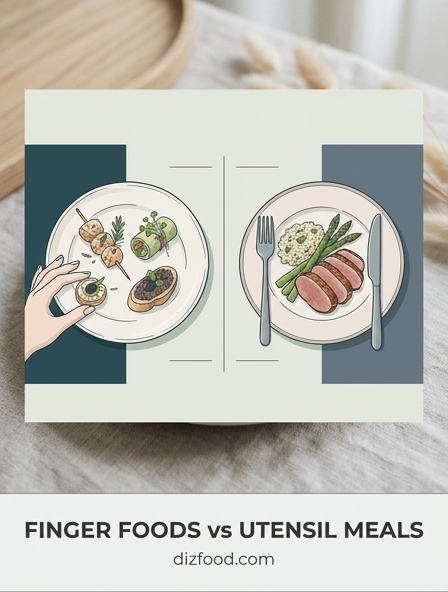
The Science of Sensory Satisfaction in Finger Foods
The experience of eating with one's hands triggers a complex neurological response that begins long before the food reaches the tongue. Scientific studies suggest that the tactile feedback provided by the fingertips allows the brain to pre-process the texture, temperature, and weight of the food, creating a multi-sensory expectation that enhances the eventual flavor. When we touch a piece of crusty bread or a crisp vegetable, our somatosensory cortex sends signals that prime the digestive system, often leading to a more satisfying eating experience than when using cold, metallic utensils as intermediaries.
Furthermore, the absence of cutlery can alter the perceived richness of the food. Research indicates that direct contact with food can make the meal feel more indulgent and "real," bridging the gap between the diner and their sustenance. This sensory intimacy is why certain foods, such as sliders, tapas, or wings, are almost universally preferred as finger foods. The primary benefits of this tactile interaction include:
- Immediate temperature assessment, preventing oral burns.
- Increased mindfulness regarding food texture and structural integrity.
- A heightened release of dopamine associated with "primal" or natural feeding behaviors.
- Better control over dipping and seasoning distribution.
By removing the sterile barrier of silverware, the kitchen becomes a space of direct connection. This mechanical simplicity allows the brain to focus more on the aromatics and the mouthfeel, ultimately leading to a higher level of "sensory-specific satiety," which can help diners feel full and satisfied more quickly than when distracted by the mechanics of knives and forks.
Elegance on a Plate: The Psychology of Utensil Dining
Utensil dining is often synonymous with civilization, restraint, and the formalization of the culinary arts. Psychologically, the use of a knife, fork, and spoon creates a physical and emotional distance between the diner and the raw components of the meal. This distance serves a dual purpose: it establishes a sense of decorum and allows for the consumption of complex, multi-layered dishes that would be impossible to manage by hand. The precision afforded by silverware enables the chef to plate delicate emulsions, foams, and stacked textures, knowing the diner can navigate them with surgical accuracy.
The pacing of a meal is significantly influenced by the tools used. Utensils naturally slow down the rate of consumption, as each bite must be cut, speared, or scooped. This deliberate cadence is often associated with higher social status and "slow food" movements, where the focus is on appreciation rather than pure sustenance. The clink of silver against porcelain creates an auditory backdrop that signals a formal environment, subconsciously encouraging diners to lower their voices and engage in more structured social interactions. In the kitchen, designing a meal for utensils allows for the inclusion of sauces with low viscosity and ingredients with varied temperatures that would be uncomfortable to hold, thus expanding the creative palette of the cook.
Cultural Heritage: Why Some Traditions Eschew Silverware
Across the globe, the rejection of silverware is not a lack of sophistication but rather a deeply rooted cultural choice that emphasizes community and spiritual purity. In many South Asian, Middle Eastern, and African cultures, eating with the hands-specifically the right hand-is a practice dictated by religious and historical traditions. For instance, in India, it is believed that the fingers represent the five elements (space, air, fire, water, and earth), and using them to eat brings a spiritual balance to the body. This connection transforms a simple meal into a holistic experience that nourishes both the physical and metaphysical self.
Many of these traditions have developed specific culinary techniques to facilitate hand-based dining, making the food itself the vessel. These methods include:
- Injera in Ethiopia: A sourdough flatbread used to scoop up spicy stews and lentils.
- Nasi Padang in Indonesia: Where rice is pressed into small balls with the fingers to soak up rich curries.
- Banana Leaves in South India: Serving as biodegradable plates where the heat of the food releases the leaf's aroma.
- Mezze in the Levant: Small plates designed to be shared and scooped with pieces of pita or lavash.
These practices foster a sense of egalitarianism. When everyone shares from a communal plate using their hands, the social barriers of individual "territory" vanish, reinforcing the idea of the family or the community as a single unit. The kitchen in these cultures is designed to produce textures that are "hand-friendly," emphasizing the tactile harmony of the meal.
Portion Control and Nutrition in Bite-Sized Meals
The shift toward bite-sized finger foods has significant implications for nutritional science and weight management. Small-format meals, often referred to as "cicchetti" or "tapas" in different cultures, naturally encourage portion control by breaking down the dining experience into discrete units. When a person eats a large steak with a fork, they often continue eating until the plate is empty, regardless of hunger levels. Conversely, when consuming bite-sized items, the diner must make a conscious decision to reach for each subsequent piece, creating natural "stopping points" that can prevent overeating.
Nutritionists often point out that finger foods can be a gateway to a more diverse diet. Because the portions are small, a single meal can include a wider variety of food groups. This diversity is summarized in the following table:
| Food Type | Nutritional Benefit | Typical Format |
|---|---|---|
| Crudités | High fiber, low calorie | Vegetable batons |
| Skewered Proteins | High protein, lean fat | Satay or kebabs |
| Grain-based Bites | Complex carbohydrates | Arancini or sushi |
| Nut-encrusted bites | Healthy fats and omega-3s | Stuffed dates or truffles |
By focusing on nutrient-dense, bite-sized components, the kitchen can produce meals that are visually stunning and calorically efficient. This "grazing" style of eating allows the metabolism to process smaller amounts of food more consistently, reducing the lethargy often associated with heavy, utensil-heavy feasts.
The Social Impact of Shared Platters vs Individual Plates
The way food is served dictates the social choreography of the room. Individual plates, typical of utensil dining, create a "private zone" for each diner. This format respects personal space and allows for a customized pace of eating, but it can also lead to a more insular experience. In contrast, shared platters and finger foods break down these invisible walls. When diners reach into a common center to grab a slider or a spring roll, they are engaging in a communal act that dates back to the earliest human settlements. This shared physical space fosters conversation and a sense of collective enjoyment.
The social impact of shared dining is particularly evident in celebratory contexts. A large platter of appetizers encourages movement and mingling, as guests are not tethered to a specific seat or a set of heavy tools. It levels the social playing field; the act of sharing food from the same vessel is a universal sign of trust and friendship. However, this format requires a higher level of social awareness. Diners must navigate the "unspoken rules" of sharing, such as not taking the last piece without asking or ensuring that everyone has had a turn. This interplay of generosity and restraint makes shared-platter dining a complex and rewarding social exercise that individual plate dining simply cannot replicate.
Table Manners Decoded: When Hands Replace Forks
Contrary to the belief that eating with hands is a "free-for-all," hand-based dining cultures often have stricter etiquette rules than those using silverware. The transition from fork to hand requires a mastery of specific techniques to ensure cleanliness and respect for other diners. In many traditions, the "art" of the hand-meal is a sign of good breeding and upbringing. The rules are designed to maintain the sanctity of the communal meal and to ensure that the process remains hygienic despite the lack of metal tools.
Key etiquette rules often include:
- The Right-Hand Rule: In many cultures, the left hand is considered "unclean" and is never used to touch food.
- The "Two-Knuckle" Rule: Food should only touch the first two phalanges of the fingers, never the palm or the base of the hand.
- Bread as a Tool: Using a piece of bread to create a "pouch" or "barrier" so that fingers never directly touch wet sauces.
- The Order of Consumption: Starting with lighter bites and moving toward heavier items to avoid "contaminating" the flavor profiles.
Even in Western contexts, finger food etiquette exists. For instance, knowing which hors d'oeuvres require a napkin and which can be eaten in a single bite is a hallmark of sophisticated dining. The transition to hands does not mean an abandonment of manners; it merely shifts the focus from how one handles a tool to how one handles the food itself.
Modern Convenience: The Rise of On-the-Go Finger Foods
In the fast-paced modern landscape, the kitchen has had to adapt to the "on-the-go" lifestyle. The rise of finger foods in the 21st century is largely driven by the need for portability and efficiency. As traditional sit-down lunch hours vanish, the demand for high-quality, handheld nutrition has skyrocketed. This has led to the "premiumization" of items once considered low-brow snacks. Gourmet wraps, protein-packed bistro boxes, and sophisticated handheld pastries are now staples of the urban diet, allowing individuals to consume a balanced meal while commuting or working.
The engineering of these foods is a specific discipline within the culinary arts. A successful "on-the-go" finger food must possess structural integrity; it cannot crumble, leak, or require excessive napkins. This has led to innovations in edible "packaging," such as reinforced tortillas, sturdy lettuce wraps, and even savory cones. The convenience factor is not just about time, but also about the liberation from the dining table. By removing the need for a flat surface and a set of utensils, these foods allow the modern consumer to turn any location-a park bench, a train seat, or a standing desk-into a functional dining area.
Fine Dining Evolution: Deconstructed Meals and Utensil Use
Fine dining is currently undergoing a fascinating evolution where the line between finger foods and utensil meals is becoming increasingly blurred. Modern chefs are experimenting with "deconstructed" meals that challenge the diner's expectations of how to interact with their food. In many Michelin-starred establishments, the meal may begin with a series of highly technical finger foods-miniature spheres of flavor that explode on the tongue-before transitioning into formal courses that require specialized silver. This progression is designed to engage all the senses and build a narrative throughout the evening.
The evolution of utensil use is also visible in the tools themselves. Rather than just a standard fork and knife, diners may be presented with tweezers, glass pick-up sticks, or specialized seafood picks. These tools are designed to handle ingredients that are too delicate for hands but too small for traditional cutlery. This "micro-dining" requires a high level of dexterity and focuses the diner's attention on the minute details of the dish. The kitchen, in this case, becomes a laboratory where the method of delivery is just as important as the flavor profile, proving that the choice between hand and utensil is a powerful tool for culinary storytelling.
The Sensory Connection Between Touch and Taste
The relationship between the sense of touch (haptics) and the sense of taste is a burgeoning field of gastro-physics. When we hold food, the receptors in our skin provide immediate data about its density and moisture content, which the brain uses to "calculate" the flavor intensity. For example, a heavy, dense brownie feels more caloric and rich to the hands than a light, airy macaron, and this physical perception carries over into the tasting experience. This is why many people report that "food tastes better when eaten with hands"-the tactile engagement provides a fuller picture of the meal's identity.
Moreover, the temperature of the food as felt by the fingers can alter the perception of sweetness and acidity. Warm finger foods can feel more comforting and aromatic, while cold handheld items feel more refreshing and sharp. This sensory connection is exploited by chefs who design "hand-to-mouth" courses to maximize the emotional impact of their cooking. By removing the insulating layer of stainless steel, the diner experiences a more direct and unadulterated version of the chef's intent. The kitchen's challenge is to balance these tactile elements, ensuring that the food is not just delicious, but also "feels" right to the touch, creating a harmonious loop between the skin and the palate.
Strategic Catering: Choosing the Right Format for Events
Choosing between finger foods and utensil-based meals is one of the most critical decisions in event planning and catering. The format of the food dictates the "flow" of the event and the level of formality. Strategic catering involves analyzing the venue, the guest list, and the intended atmosphere to select the most appropriate delivery method. Finger foods are the undisputed king of networking events and cocktail hours, where mobility is key. Conversely, utensil-based meals are essential for galas and weddings where the food is meant to be the central focus of a seated experience.
The following table outlines the strategic considerations for selecting a catering format:
| Event Type | Recommended Format | Strategic Reason |
|---|---|---|
| Networking Mixer | Finger Foods | Allows for one hand to remain free for drinks or handshakes. |
| Formal Award Gala | Utensil-Based | Signifies prestige and encourages a focused, seated audience. |
| Casual Outdoor Party | Hybrid (Skewers/Wraps) | Combines the ease of hands with the cleanliness of "handles." |
| Technical Workshop | Individual Boxes (Utensil) | Prevents "greasy fingers" on laptops and paperwork. |
A well-planned kitchen will often provide a mix, starting with high-energy finger foods to "break the ice" before moving to a structured utensil meal that anchors the event. This strategic transition manages the energy of the room, moving from the kinetic excitement of shared platters to the calm, refined atmosphere of the dinner table.

Comments