
When planning your next event or stocking a sustainable kitchen, the debate between plastic and bamboo cutlery centers on balancing convenience with long-term ecological impact. While traditional single-use plastic utensils offer an inexpensive, familiar solution, they carry a heavy environmental price, often ending up in landfills or oceans where they persist for centuries as harmful microplastics. In contrast, bamboo cutlery has emerged as the premier eco-friendly alternative, offering a sturdy, heat-resistant, and naturally antimicrobial dining experience. By choosing bamboo, you aren't just selecting a biodegradable tool; you are investing in a rapidly renewable resource that matures in a fraction of the time it takes for trees to grow, providing a sophisticated, splinter-free aesthetic that elevates any meal while keeping your carbon footprint to a minimum.
| Feature | Plastic Cutlery | Bamboo Cutlery |
|---|---|---|
| Material Source | Non-renewable petroleum/fossil fuels | 100% renewable, fast-growing bamboo grass |
| Decomposition | 400-1,000 years; breaks into microplastics | 90-180 days in commercial composting |
| Durability & Heat | Flimsy; may melt or leach toxins in high heat | High tensile strength; heat-resistant and rigid |
| Chemical Safety | Contains BPA, phthalates, and PVC | Naturally antimicrobial; chemical and dye-free |
| Carbon Footprint | High; energy-intensive manufacturing | Carbon-neutral; bamboo sequesters CO2 as it grows |
| User Experience | Often sharp edges; perceived as "cheap" | Smooth, premium feel; aesthetically elegant |
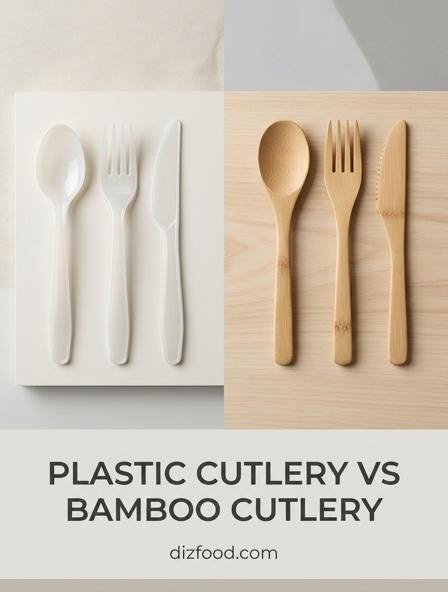
Environmental Impact of Plastic vs Bamboo Cutlery
The environmental footprint of plastic cutlery is a significant concern for modern ecosystems, primarily due to its reliance on fossil fuels. Traditional plastic utensils are manufactured from petroleum-based resins, a process that releases substantial greenhouse gases and contributes to resource depletion. Once discarded, these items often bypass recycling streams due to their small size and low weight, eventually finding their way into oceans where they fragment into microplastics, harming marine life and entering the global food chain.
In contrast, bamboo cutlery represents a regenerative approach to kitchenware. Bamboo is one of the fastest-growing plants on Earth, requiring no pesticides and very little water to thrive. It functions as a carbon sink, absorbing more carbon dioxide and producing more oxygen than equivalent stands of trees. When harvested, the root system remains intact, preventing soil erosion and allowing for rapid regrowth. The following table highlights key environmental metrics between the two materials:
| Metric | Plastic Cutlery | Bamboo Cutlery |
|---|---|---|
| Raw Material | Petroleum/Fossil Fuels | Renewable Bamboo Grass |
| Carbon Sequestration | Negative (Releases CO2) | Positive (Absorbs CO2) |
| Ocean Lifespan | Hundreds of years | Months to a few years |
| Resource Renewal | Non-renewable | Highly renewable (3-5 years) |
Choosing bamboo significantly reduces the volume of permanent waste generated by households and the food service industry, aligning consumer habits with planetary health goals.
Durability and Strength Comparison of Utensils
When assessing the functionality of kitchen utensils, durability and structural integrity are paramount. Plastic cutlery is notorious for its fragility, particularly when encountering dense or tough food items. Polypropylene or polystyrene forks often suffer from "tine snap," where the prongs break off during use, posing a potential choking hazard or at least interrupting the dining experience. Furthermore, plastic loses its structural rigidity when exposed to high temperatures, often warping or melting when used with hot soups or grilled meats.
Bamboo cutlery offers a superior strength-to-weight ratio. The natural cellulose fibers in bamboo provide an inherent flexibility and tensile strength that exceeds many hardwoods and nearly all disposable plastics. Bamboo utensils are less likely to splinter or snap under pressure, making them suitable for a wider variety of cuisines. Key durability advantages of bamboo include:
- Heat Resistance: Bamboo does not melt or leach chemicals when exposed to boiling temperatures.
- Tensile Strength: The dense fiber structure resists snapping even when cutting through firm proteins.
- Surface Hardness: Bamboo is naturally resistant to scratching and denting compared to soft plastics.
- Longevity: While often sold as disposables, high-quality bamboo sets can be washed and reused multiple times.
While plastic is designed for a single, fleeting use, bamboo provides a sturdy, reliable tool that feels substantial in the hand, ensuring that the utensil performs its primary function without failure.
Health Risks of Plastic vs Benefits of Bamboo
The chemical composition of plastic cutlery presents various health concerns, particularly when the material interacts with heat or acidic foods. Many disposable plastics contain Bisphenol A (BPA) or phthalates, which are known endocrine disruptors. When these utensils come into contact with hot food, the molecular bonds can weaken, causing these chemicals to leach into the meal. Long-term exposure to these substances has been linked to hormonal imbalances, metabolic issues, and other chronic health conditions.
Bamboo, conversely, is a naturally hypoallergenic and antimicrobial material. It contains a unique bio-agent called "bamboo kun," which helps the plant resist pests and bacteria naturally without the need for chemical treatments. This makes bamboo cutlery an exceptionally safe choice for food contact. The benefits of bamboo for personal health include:
- Chemical-Free Composition: Natural bamboo utensils are typically free from dyes, lead, and toxins.
- Antimicrobial Properties: The surface of bamboo is less hospitable to bacterial growth than porous or scratched plastic.
- Non-Reactive Surface: Bamboo does not react with acidic foods, ensuring no metallic or chemical taste is transferred.
- BPA-Free: Being a plant-based material, it is inherently free from synthetic estrogenic compounds.
For families and health-conscious consumers, eliminating plastic from the dining table removes a significant source of daily chemical exposure. Bamboo provides a clean, neutral medium that prioritizes the safety of the consumer while maintaining the integrity of the food served.
Biodegradability and Decomposition Timeframes
The ultimate fate of a utensil after it leaves the kitchen is the most stark difference between plastic and bamboo. Plastic cutlery is designed for "convenience," yet its environmental legacy lasts for centuries. Because most plastic utensils are made of Grade 6 polystyrene, they are not biodegradable. Instead, they undergo photodegradation, where sunlight breaks them into smaller and smaller pieces. These microplastics never truly disappear; they persist in the soil and water indefinitely, attracting toxins and entering the biological cycle.
Bamboo is fully biodegradable and returns to the earth as organic matter. Because it is a complex organic carbohydrate (cellulose), fungi and bacteria can easily break it down once it is discarded in a composting environment. The timeframe for decomposition is significantly shorter, often taking only 90 to 180 days in a managed composting facility. Even in a home compost bin or a landfill, bamboo will break down in a fraction of the time required for plastic. While a plastic fork may take 450 to 1,000 years to fragment, a bamboo fork will be gone in less than a year under the right conditions. This rapid reintegration into the nitrogen cycle ensures that today's waste becomes tomorrow's fertilizer, closing the loop on resource consumption and preventing the permanent accumulation of trash in global landscapes.
Cost Analysis of Disposable vs Reusable Options
At first glance, plastic cutlery appears to be the most economical choice due to its extremely low per-unit price. For large-scale events or high-volume takeout, the upfront cost of bulk plastic is often measured in fractions of a cent. However, this "low cost" is an illusion that ignores the externalized costs of waste management and environmental remediation. Furthermore, because plastic is strictly single-use, the cost is recurring and perpetual for the consumer or business owner.
Bamboo cutlery, while having a slightly higher initial purchase price, offers better long-term value through its potential for reuse and its lower environmental tax. Many consumers find that a single set of bamboo travel cutlery can replace hundreds of plastic sets over a year. For businesses, the "green premium" paid for bamboo can be offset by improved brand loyalty and the avoidance of plastic taxes or bans. A comparison of the cost structures reveals the following:
| Feature | Disposable Plastic | Reusable Bamboo |
|---|---|---|
| Initial Price | Very Low | Moderate |
| Number of Uses | 1 | 50+ (if maintained) |
| Waste Disposal Cost | High (Municipal/Landfill) | Low (Compostable) |
| Cost Per Use | Static | Decreases over time |
When factoring in the durability of bamboo, it frequently emerges as the more cost-effective solution for households that prioritize sustainability without sacrificing quality.
Manufacturing and Carbon Footprint Differences
The manufacturing process for plastic cutlery is energy-intensive and chemically volatile. It begins with the extraction of crude oil or natural gas, followed by refining and polymerization. This process consumes massive amounts of electricity and water while emitting volatile organic compounds (VOCs). The supply chain is often global, involving multiple stages of transport from oil fields to refineries to injection molding factories, further inflating the carbon footprint before the product even reaches the consumer.
Bamboo manufacturing is significantly cleaner and more localized. The process primarily involves harvesting the stalks, cutting them to size, and steam-pressing or carving them into shapes. There are no complex chemical reactions required to create the final form. Because bamboo grows so rapidly, it sequesters more carbon during its growth phase than is emitted during its production. This leads to a carbon-neutral or even carbon-negative product profile. Furthermore, many bamboo production facilities are located near the source of the raw material, reducing the transit-related emissions. By choosing bamboo, the kitchen industry moves away from a linear, extractive model toward a circular, regenerative one that respects the atmospheric limits of our planet while providing necessary tools for daily life.
Aesthetic and Sensory Dining Experience
The sensory experience of eating is often overlooked when discussing cutlery materials, yet it plays a vital role in food enjoyment. Plastic cutlery is generally perceived as "cheap" and utilitarian. It has a smooth, synthetic texture that can sometimes feel oily or leave a chemical aftertaste. The edges of plastic spoons and forks are often sharp or have "flash" (excess plastic from the mold), which can be uncomfortable against the lips and tongue. Visually, plastic adds little to a table setting, often appearing as a necessary evil rather than an intentional choice.
Bamboo cutlery elevates the dining experience through its organic aesthetic and tactile warmth. Each piece of bamboo has a unique grain pattern, providing a sophisticated, earthy look that complements both casual and formal settings. The sensory advantages of bamboo include:
- Neutral Taste: Unlike plastic, bamboo does not impart a "factory" flavor to the food.
- Tactile Comfort: The natural wood-like texture is pleasant to hold and has a warmer temperature than cold plastic.
- Lightweight Elegance: Bamboo is light enough for travel but feels more premium than thin plastic.
- Quietness: Bamboo does not make the harsh clicking sounds on plates that plastic or metal can.
By using bamboo, the act of eating becomes more connected to nature, turning a simple meal into a more mindful and aesthetically pleasing event.
Compostability of Bamboo vs Plastic Waste
Waste management systems are currently overwhelmed by non-recyclable plastics. Plastic cutlery is typically made from resins that are not accepted by most curbside recycling programs. Because these items are contaminated with food oils, they are even less likely to be processed. Consequently, billions of plastic utensils end up in landfills where they take up space and leach toxins into the leachate system, or in incinerators where they release toxic fumes into the air.
Bamboo offers a seamless exit strategy from the waste stream through compostability. As a organic material, it can be processed in several ways:
- Industrial Composting: In high-heat facilities, bamboo cutlery can break down in as little as 12 weeks.
- Home Composting: While it takes longer in a backyard bin, bamboo will eventually break down into nutrient-rich humus.
- Mulching: Old bamboo utensils can be chipped and used as garden mulch.
The transition from "disposable" to "compostable" is a critical shift. Instead of creating a permanent waste problem, bamboo cutlery becomes a resource that can improve soil health. This eliminates the need for expensive sorting and recycling infrastructure, allowing consumers to dispose of their kitchen waste in a way that directly supports the local environment and reduces the burden on municipal landfills.
The Shift Toward Sustainable Food Service Trends
The global food service industry is undergoing a massive transformation driven by consumer demand and legislative changes. In many jurisdictions, including parts of the European Union, Canada, and various U.S. states, single-use plastics are being phased out or banned entirely. Restaurants, cafes, and catering companies are now forced to find alternatives that comply with these new regulations while satisfying a more environmentally conscious customer base.
Bamboo has emerged as the leading alternative in this transition. Modern food service trends indicate a strong preference for materials that signal a brand's commitment to sustainability. Businesses that switch to bamboo often report:
- Enhanced Brand Image: Customers perceive the business as more responsible and high-quality.
- Regulatory Compliance: Bamboo meets most "plastic-free" legislative requirements.
- Customer Satisfaction: Diners generally prefer the feel and performance of bamboo over flimsy plastic or soggy paper alternatives.
- Marketing Opportunities: Companies can highlight their eco-friendly choices in their advertising.
This shift is not merely a fad; it represents a fundamental change in how the hospitality industry operates. By adopting bamboo, food service providers are future-proofing their operations against upcoming environmental laws and aligning themselves with the values of the modern, eco-aware diner.
Final Verdict on Choosing the Best Cutlery
When comparing plastic and bamboo cutlery across environmental, health, and functional metrics, the conclusion is clear: bamboo is the superior choice for the modern kitchen. While plastic offers a slight advantage in terms of initial cost and ubiquity, these benefits are far outweighed by the catastrophic environmental impact and potential health risks associated with synthetic polymers. Plastic's inability to biodegrade and its reliance on non-renewable resources make it an unsustainable relic of a previous industrial era.
Bamboo provides a holistic solution that addresses the needs of the consumer, the business owner, and the planet. It is durable enough to handle a variety of foods, safe enough for children and health-conscious individuals, and aesthetically pleasing enough to enhance any meal. Most importantly, its lifecycle is circular. From its rapid growth as a carbon-sequestering grass to its quick return to the soil as compost, bamboo embodies the principles of sustainability. For anyone looking to reduce their ecological footprint without sacrificing the convenience of disposable or lightweight utensils, bamboo is the definitive winner. Switching to bamboo is a small but powerful change that every household and restaurant can make to contribute to a cleaner, healthier, and more sustainable world.

Comments